

TL;DR: DHT blockers like finasteride cause sexual side effects (low libido, erectile dysfunction, reduced ejaculate volume) in roughly 2 to 4% of men in placebo-controlled trials. Most side effects resolve after stopping the drug. A smaller subset, possibly 1 to 2% of long-term users, report symptoms that persist. Other effects include breast tenderness, mood changes, and reduced PSA levels. Natural DHT blockers have far thinner evidence on both efficacy and safety.
What do DHT blockers actually do in the male body?
Dihydrotestosterone (DHT) is made when the enzyme 5-alpha reductase converts testosterone into a more potent androgen. DHT drives the miniaturization of genetically vulnerable hair follicles, which is the core mechanism behind male pattern baldness. [1]
DHT blockers, also called 5-alpha reductase inhibitors (5-ARIs), block that conversion. The two prescription drugs in this class approved by the FDA for hair loss are finasteride (1 mg daily, brand name Propecia) and dutasteride (0.5 mg daily, approved for benign prostatic hyperplasia but used off-label for hair loss). [2]
Finasteride blocks Type II 5-alpha reductase only, cutting scalp and serum DHT by roughly 60 to 70%. Dutasteride blocks both Type I and Type II, suppressing DHT by roughly 90 to 95%. [3] That difference matters. It probably explains why dutasteride has a somewhat stronger effect on hair but also a somewhat longer hormonal recovery time after stopping.
There are also over-the-counter products marketed as "natural DHT blockers," including saw palmetto, pumpkin seed oil, and biotin-heavy blends. We'll cover those separately. They're not in the same safety or efficacy conversation as the prescription drugs, and the honest answer is that the evidence on both their benefits and their risks is thin.
To understand the dht blocker class properly, separate what happens while you're taking the drug from what happens when you stop. Then separate the common, mild side effects from the rare, serious ones. Most articles blur all of this together.
What are the most common side effects of DHT blockers in men?
The randomized controlled trials are the right place to start, because anecdotal reports on forums skew heavily toward bad experiences. The main finasteride trials behind the FDA label enrolled roughly 1,879 men with male pattern baldness over two years. Sexual adverse effects showed up in a low single-digit percentage of men on the drug. Some showed up in the placebo group too. [4]
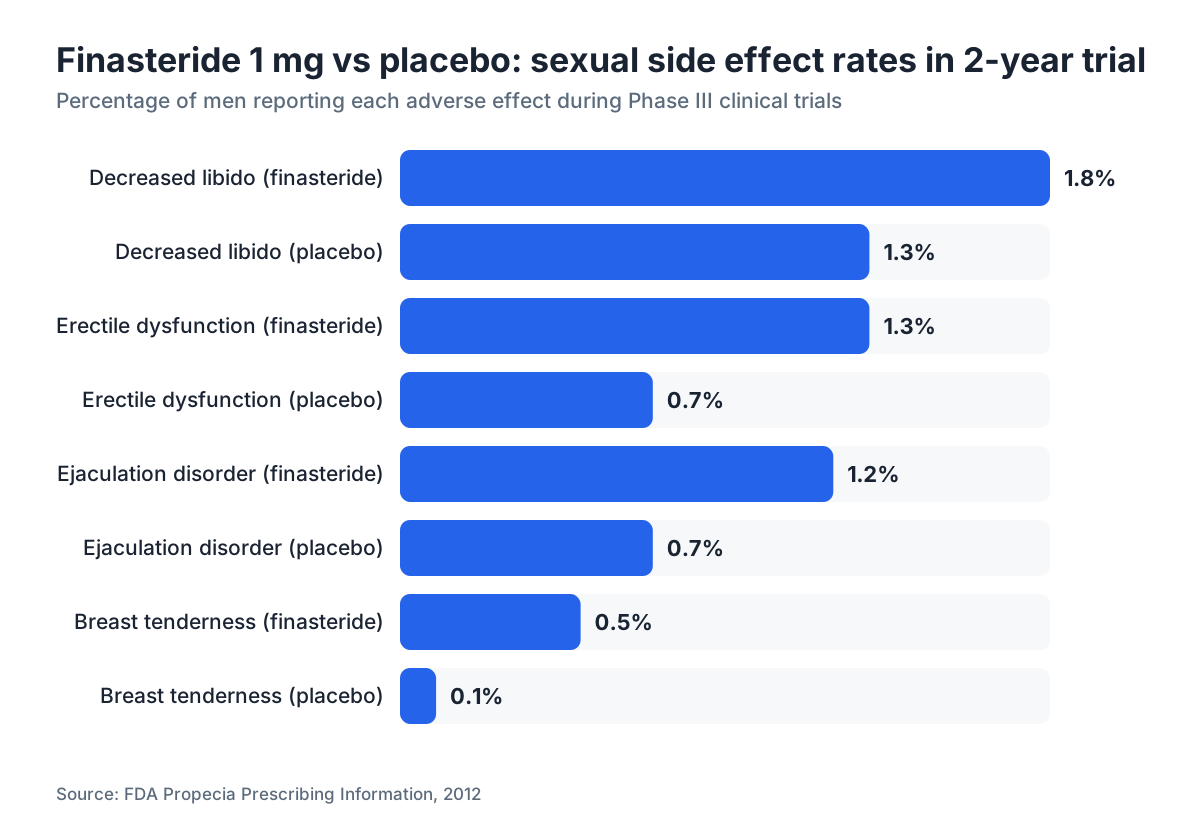
Here's what the 2-year Phase III trial found for finasteride 1 mg vs. placebo:
| Side effect | Finasteride 1 mg | Placebo |
|---|---|---|
| Decreased libido | 1.8% | 1.3% |
| Erectile dysfunction | 1.3% | 0.7% |
| Ejaculation disorder | 1.2% | 0.7% |
| Breast tenderness or enlargement | 0.5% | 0.1% |
Those numbers look small. They are. But they're not zero, and the gap between drug and placebo is real. [4]
Breast tenderness (gynecomastia) is worth flagging separately. It's less common than the sexual effects but it's also less reversible. You can't just wait for breast tissue to reabsorb once it's formed. Breast swelling or persistent tenderness is a reason to call your doctor promptly rather than wait it out.
Mood changes get reported too, including higher anxiety and, in rarer cases, depressive symptoms. The FDA updated the label in 2012 to list depression and suicidal ideation as potential side effects after post-marketing reports. [2] The causation here is genuinely unclear. Hair loss itself is associated with depression in some men, which muddies any signal from the drug. Nobody has clean data on this. The closest systematic analysis found an association in pharmacovigilance databases but cannot establish whether the drug caused the mood changes.
PSA (prostate-specific antigen) levels drop by roughly 50% on finasteride. This matters clinically because PSA is used to screen for prostate cancer. Any man on finasteride who gets a PSA test needs to tell his doctor, or the number reads lower than it really is. Doubling the PSA result is the standard correction factor, though it's imprecise. [2]
How often do sexual side effects actually occur, and how serious are they?
The trial rates (1 to 2% per symptom) are probably the floor, not the ceiling. Observational studies and post-marketing reports find higher rates. Part of that is because men in trials are selected, monitored, and more likely to be reassured by their doctors. Part of it is dropout that can hide signals.
A 2011 study published in the Journal of Sexual Medicine found that men who took finasteride for more than five years had significantly higher rates of sexual dysfunction than matched controls, even after adjusting for age. The authors estimated the risk of persistent sexual dysfunction at roughly 8% in long-term users, though the study design had limitations. [5]
The question most men actually have is simple: "If I stop taking it, will this go away?" For most men, yes. The FDA label states that in clinical trials, side effects resolved in men who discontinued treatment. [2] But for a subset of users, symptoms have persisted months or years after stopping. This cluster of persistent effects has been named Post-Finasteride Syndrome (PFS). The Post-Finasteride Syndrome Foundation estimates it affects roughly 1 to 2% of users, though there's no agreed diagnostic criteria or definitive prevalence study. [6]
PFS is real enough that the FDA has acknowledged it in label updates, and the European Medicines Agency strengthened its labeling in 2017 with warnings about persistent sexual dysfunction and mood changes after stopping the drug. [2]
The honest position: most men who develop side effects on finasteride see them resolve when they stop. A minority do not. Nobody can tell you in advance which group you'll land in.
Does finasteride affect testosterone levels or masculinity broadly?
This is a common fear and mostly a misunderstanding.
Finasteride blocks the conversion of testosterone to DHT. It does not suppress testosterone production. Total testosterone actually rises slightly on finasteride, because the feedback loop senses less DHT and signals for more testosterone. [3] So your testosterone isn't dropping. What changes is the DHT-to-testosterone ratio.
DHT is a more potent androgen than testosterone, binding androgen receptors with about five times the affinity. Some tissues lean heavily on DHT, including the prostate and certain areas of the brain. That's why prostate size decreases on finasteride (useful for BPH) and also why neurological and mood effects are plausible even if not fully characterized.
Muscle mass and athletic performance don't appear to be meaningfully affected by finasteride at normal doses. The worry is more theoretical than supported by sports medicine data.
Body fat distribution might shift slightly in some men given the hormonal changes, but this isn't well documented at the 1 mg hair loss dose. The 5 mg BPH dose, with its larger hormonal footprint, has more data pointing to minor metabolic effects.
Worried about broader hormonal changes? A baseline hormone panel before starting, then again at three to six months, is a reasonable move. Most dermatologists don't order this routinely, but it's worth asking.
What are the side effects of dutasteride compared to finasteride?
Dutasteride has a broader enzyme blockade and a longer half-life (roughly five weeks versus six to eight hours for finasteride). It stays in your system longer after you stop, so if side effects show up, you're waiting longer for clearance. [3]
The adverse effect profile is similar in character, but sexual dysfunction rates in trials tend to run slightly higher. In the EPICS trial comparing dutasteride 0.5 mg and finasteride 1 mg for androgenetic alopecia over 24 weeks, dutasteride showed greater hair regrowth but also a numerically higher rate of sexual adverse events. Both rates were low, and the trial wasn't powered to detect safety differences. [7]
Gynecomastia reports are more common with dutasteride than finasteride in BPH trials. Given that dutasteride suppresses DHT more aggressively, that tracks biologically.
Dutasteride also costs more and isn't FDA-approved for hair loss specifically, so you're in off-label territory. Some men and their doctors decide the extra efficacy is worth it. Others aren't comfortable with the longer washout time if they might want to stop.
For most men trying DHT blockers for the first time, finasteride is the reasonable starting point. Dutasteride is a second step if finasteride doesn't do enough.
Do topical finasteride or topical DHT blockers have fewer side effects?
Topical finasteride isn't FDA-approved as a standalone product in the US, but compounding pharmacies make it and it's increasingly prescribed. The logic is simple: apply it directly to the scalp, get local DHT suppression, minimize systemic absorption, and hopefully cut the sexual side effect risk.
The data is early but promising here. A 2018 randomized trial published in the Journal of the American Academy of Dermatology found that topical finasteride 0.25% solution significantly reduced scalp DHT without the same magnitude of serum DHT reduction as oral finasteride. [8] Lower systemic DHT should, in theory, mean lower systemic side effects.
In practice, "lower" doesn't mean zero. The scalp absorbs, and some drug always enters circulation. But several small trials have found sexual adverse event rates near or at placebo levels with topical formulations. The American Academy of Dermatology treats topical finasteride as an emerging option, though the evidence base is smaller than for the oral form. [9]
If you're thinking about combining approaches, the article on finasteride and minoxidil covers how the two drugs are often used together. That pairing is now a pretty standard first-line approach.
Saw palmetto is the main natural topical DHT blocker you'll see marketed. It inhibits 5-alpha reductase, but weakly and inconsistently. The side effect profile is thought to be benign. The efficacy profile is also minimal. One small randomized trial found it inferior to finasteride for hair growth. It's probably not harming you. It's probably not doing much either.
Can DHT blockers cause permanent hair loss or a shedding phase?
Starting a DHT blocker sometimes triggers a temporary shedding phase in the first two to three months. This isn't the drug failing. It's a hair cycle reset where follicles stuck in a prolonged miniaturized resting phase get pushed into active shedding before new growth begins. Same process discussed in telogen effluvium.
The shedding almost always fades by month four to six. If it drags past six months or gets severe, take that to a dermatologist.
As for permanent loss from the drug itself: there's no good evidence that finasteride causes permanent hair loss in men. The concern runs the other direction. Stop finasteride after years of use and the hair you preserved starts to miniaturize again, because DHT is no longer blocked. Most men who stop lose the gains within 12 months. That's not a side effect exactly. It's just what happens when an ongoing treatment ends.
If you're at an early enough stage, like a receding hairline with limited vertex thinning, DHT blockers tend to work best because there's more to preserve. The further along the loss, the more you're trying to regrow rather than maintain, and regrowth is harder.
Are there side effects specific to younger men or older men on DHT blockers?
Age shifts the risk-benefit math meaningfully.
Younger men, typically those in their 20s, have higher baseline DHT levels and more active androgen signaling. That may make them more responsive to DHT blockers for regrowth. It also means they're blocking DHT during a period of ongoing hormonal development. Whether this matters long-term isn't fully established, but it's part of why some physicians are cautious about prescribing finasteride to men under 18 or even in their early 20s.
Sexual side effects in younger men may be amplified by anxiety about the drug, the nocebo effect, which is real and documented in finasteride studies. A study in the Journal of Sexual Medicine found that men warned about sexual side effects before starting finasteride reported them at higher rates than men who were not warned, on the same drug. [10] This doesn't mean the side effects are imaginary. It means expectations shape reporting.
Older men, particularly those over 50, already carry higher baseline risk for erectile dysfunction and BPH. For them, the 5 mg finasteride dose is FDA-approved for BPH and comes with the secondary benefit of helping with hair loss. Sexual side effects can be harder to pin on the drug versus baseline aging.
For men over 55, the Prostate Cancer Prevention Trial found that finasteride cut overall prostate cancer incidence by about 25%, but there was a signal for higher-grade tumors in the finasteride group. [11] The FDA reviewed this and did not restrict use, but it's a data point worth knowing if you're older and considering long-term use.
To understand what's driving your hair loss in the first place, the what causes hair loss article covers the genetics and hormonal factors in detail.
How do you decide if the side effect risk is worth it for hair loss?
This is a personal decision and nobody can make it for you. Here's how to think through it clearly.
The trial data puts the sexual side effect risk at 2 to 4% per individual symptom, with most resolving on stopping. If you're a man who would be devastated by six months of reduced libido, that's a different calculation than a man losing hair fast who finds it more distressing than any sexual side effect sounds. Both are valid.
You also don't have to commit forever. Starting finasteride doesn't lock you in. Most dermatologists suggest a 12-month trial before judging efficacy, because hair cycles are slow. If side effects show up, you stop. The drug clears within a week or two.
Before starting, a few things worth doing. Get a baseline PSA if you're over 40. Note your current sexual function clearly so you have something to compare against. Make sure your prescribing doctor knows your history, and flag any personal or family history of depression.
If you're combining finasteride with minoxidil, the minoxidil side effects article covers the separate risk profile of that drug, which is quite different.
Want a clearer picture of your current loss pattern before deciding? The free AI scan at MyHairline can map your hairline and flag your likely Norwood stage, which gives you a baseline without seeing a dermatologist first.
If DHT blockers aren't right for you, the next options are topical minoxidil (no anti-androgen effect, different mechanism), oral minoxidil (a more potent vasodilator), or eventually surgical options like hair transplant. No current non-surgical treatment works as well as finasteride for slowing genetic hair loss. That's the honest answer.
What about natural DHT blockers, do they cause side effects too?
Saw palmetto, pumpkin seed oil, pygeum, green tea extract, and reishi mushroom all get marketed as natural DHT blockers. The mechanism claim is plausible (some do weakly inhibit 5-alpha reductase) but the evidence for meaningful hair regrowth is poor. [12]
Natural supplements aren't automatically safe. Saw palmetto has been linked to headache, dizziness, and GI upset in some users. There are rare case reports of liver injury with high-dose saw palmetto. The FDA doesn't regulate supplements with the same rigor as drugs, so you're taking a product with uncertain potency and purity.
Biotin (vitamin B7) is heavily marketed for hair and is usually safe, but it causes a specific clinical problem. High-dose biotin supplementation (above 5 mg/day, and some hair supplements pack 10 mg or more) interferes with certain immunoassay lab tests, including thyroid panels and troponin (a cardiac enzyme). The FDA issued a safety communication on this in 2019. [13] If you're taking a biotin-heavy supplement, tell your doctor before any blood work.
For a broader view of what's in these products and what's actually supported, the hair loss supplements guide breaks them down one by one.
If you've wondered whether creatine, which raises DHT indirectly, could be worsening your hair loss, the does creatine cause hair loss article covers that specific question.
What should you monitor if you're taking a DHT blocker?
If you start finasteride or dutasteride, here's a practical monitoring plan based on what clinicians actually track.
PSA: Baseline test before starting, then annually. Tell every lab and every doctor that you're on finasteride, because the result needs to be doubled for accurate interpretation. A rising PSA on finasteride is more concerning than an absolute low number.
Liver function: Routine monitoring isn't required for finasteride at 1 mg, but dutasteride carries a longer list of potential hepatic effects given its longer half-life. Some clinicians check liver function at baseline for dutasteride users.
Sexual function: Note your baseline honestly before starting. If changes show up, track when they started relative to the drug. That helps separate drug effect from coincidence.
Mood: Tell someone close to you that you're starting the drug and ask them to flag changes they notice. Mood shifts are hard to self-report accurately.
Hair: Take standardized photos in consistent lighting every three months. Hair progress is slow and your memory of what it looked like six months ago is unreliable. A tool like the MyHairline AI scan gives you a documented starting point.
For men using DHT blockers alongside minoxidil, a common pairing, the finasteride overview page covers the full prescribing picture including interactions.
Sources
- StatPearls, NCBI Bookshelf – Androgenetic Alopecia
- Urology Care Foundation – 5-Alpha Reductase Inhibitors
- Irwig MS, Kolukula S – Journal of Sexual Medicine 2011: Persistent sexual side effects of finasteride
- Post-Finasteride Syndrome Foundation – About PFS
- Olsen EA et al. – Journal of the American Academy of Dermatology 2006 (EPICS trial): Dutasteride vs finasteride for hair loss
- Caserini M et al. – Journal of the American Academy of Dermatology 2018: Topical finasteride 0.25% for androgenetic alopecia
- American Academy of Dermatology – Hair Loss Treatment Overview
- Mondaini N et al. – Journal of Sexual Medicine 2007: informed consent and sexual side effects of finasteride (nocebo effect)
- Thompson IM et al. – New England Journal of Medicine 2003: Prostate Cancer Prevention Trial
- Evron E et al. – Skin Appendage Disorders 2020: Systematic review of saw palmetto for hair loss
- U.S. Food and Drug Administration – Safety Communication on biotin interference with lab tests (2019)
- Samplaski MK et al. – Fertility and Sterility 2013: Finasteride and male infertility