

TL;DR: Telogen effluvium (TE) is temporary, diffuse shedding triggered by a physical or emotional stressor 2-3 months before the hair falls out. Fixing it means finding and removing the trigger, correcting nutritional deficiencies (especially ferritin, vitamin D, and zinc), and giving your follicles 3-6 months to recover. Most acute cases resolve on their own. Chronic cases past 6 months need a dermatologist workup.
What is telogen effluvium and why does it happen?
Telogen effluvium is diffuse hair shedding that happens when a large batch of follicles gets pushed out of their growth phase (anagen) and into the resting phase (telogen) all at once [1]. Those resting hairs shed 2-3 months later. That's when you notice handfuls in the shower or on your pillow, seemingly out of nowhere.
Normally about 10-15% of your scalp hairs sit in telogen at any given moment. During a TE episode that number can jump to 30% or more [11]. With roughly 100,000 hairs on a typical scalp, the daily shed climbs from the normal 50-100 hairs to several hundred.
The trigger almost always happened 6-12 weeks before the shedding started. Common ones: childbirth (postpartum TE is one of the most common presentations), rapid weight loss, crash dieting, major surgery, a high fever or serious illness, severe psychological stress, starting or stopping hormonal contraceptives, and nutritional deficiencies [2]. The body diverts resources away from hair growth, which is metabolically expensive, during a crisis.
For a full breakdown of what causes hair loss at a physiological level, see what causes hair loss.
Here's the thing to hold onto. TE is not androgenetic alopecia. The follicles aren't miniaturizing or dying. They're paused. That distinction changes everything about treatment, because it means fixing the trigger is the real therapy, not aggressive hair loss drugs.
How do you know if it's telogen effluvium and not something else?
The clinical signature of TE is diffuse shedding across the whole scalp, not patterned loss at the temples or crown. You lose hair everywhere, more or less evenly. The scalp itself looks normal. No redness, no scaling, no bald patches.
A pull test gives you a rough signal. Grab 40-60 hairs between your fingers, apply gentle but firm tension, and pull slowly toward the ends. Pulling out more than 6 hairs counts as positive, and those hairs should show a white club-shaped bulb at the root. That bulb is the telogen root. Pigmented, tapered roots point to a different diagnosis [3].
A dermatologist can run trichoscopy (dermoscopy of the scalp) and look for upright regrowing hairs, which is a reassuring sign that the anagen phase is restarting. They may also order bloodwork: a complete blood count, ferritin, thyroid panel (TSH and free T4), vitamin D, zinc, and sometimes a full metabolic panel.
TE can layer on top of androgenetic alopecia (AGA). In women especially, both conditions stack together. A board-certified dermatologist usually sorts this out with a clinical exam and bloodwork, plus a scalp biopsy when the picture is murky. Getting it right matters, because the fix for TE and the fix for AGA are not the same.
Our explainer on telogen effluvium covers the stages and clinical presentation in more depth.
What bloodwork should you get before trying to fix telogen effluvium?
Bloodwork isn't optional if your shedding has run past 8 weeks. The most useful panel:
| Test | Why it matters for TE | Threshold to note |
|---|---|---|
| Ferritin | Low iron stores are the most consistently cited nutritional driver of TE | Many dermatologists target >70 ng/mL for hair, well above the lab "normal" of 12-15 [4] |
| TSH | Both hypo- and hyperthyroidism cause shedding | Outside 0.4-4.0 mIU/L warrants endocrinology referral |
| Free T4 | Reflex test if TSH is abnormal | Confirms or rules out thyroid disease |
| Vitamin D (25-OH) | Deficiency linked to TE in multiple studies | <20 ng/mL is deficient; aim for 40-60 per most dermatologists |
| Zinc | Deficiency causes shedding, and so does excess | Serum zinc 70-120 mcg/dL is the normal range |
| CBC | Rules out anemia and infection-related causes | Low hemoglobin compounds iron deficiency findings |
| ANA screen | If autoimmune cause suspected | Positive screen sends you toward a rheumatologist |
The ferritin threshold deserves its own paragraph. A ferritin of 14 ng/mL sits inside the normal reference range on most lab reports, but it's far too low for healthy hair cycling. The American Academy of Dermatology doesn't publish one magic ferritin number, but dermatology researchers have argued for a floor of 40-70 ng/mL [4]. If your ferritin is anywhere in the teens or twenties and you're shedding, fix that first.
Get your results in hand before you spend a dollar on supplements. Supplementing zinc when your levels are already fine does nothing, and high-dose zinc causes shedding on its own [12]. Same story with iron. Loading up when you aren't deficient is not harmless.
Step 1: Remove or address the root trigger
This sounds obvious, and it's the step most people skip, because they want to treat the hair instead of the cause.
If the trigger was a one-time event (surgery, illness, childbirth, a brutal few months of stress), your job is mostly to wait and support recovery. The follicles restart on their own once the body stabilizes. The average acute TE episode runs its course within 3-6 months of trigger removal [2].
An ongoing trigger is a different problem. Chronic psychological stress, continued caloric restriction, an uncontrolled thyroid condition, ongoing medication side effects, or untreated iron deficiency all keep the stress signal live and the shedding going. Figuring out which one is yours takes honest self-assessment and often medical help.
Caloric restriction is a common driver that gets missed. Crash diets, bariatric surgery, or any diet below roughly 1,200 calories per day for weeks on end can sustain TE [5]. The body deprioritizes hair protein synthesis (keratin is expensive to build) under calorie scarcity. If you've been eating very low calorie to lose weight, that's almost certainly part of it.
Medications get overlooked too. Anticoagulants, retinoids, some antidepressants, antihypertensives (beta-blockers in particular), and hormonal contraceptives (both starting and stopping them) are all documented causes of TE [2]. If your shedding timeline matches a new medication, bring it to your prescribing doctor. Do not stop any medication on your own.
Step 2: Fix nutritional deficiencies in the right order
Once your bloodwork is back, go after deficiencies one at a time. Iron first, then vitamin D, then zinc. Fixing everything at once makes it impossible to know what actually worked.
Iron deficiency: the preferred form for repletion is ferrous sulfate 325 mg (65 mg elemental iron), taken every other day on an empty stomach with vitamin C to help absorption. A 2017 study in eClinicalMedicine found that alternate-day dosing gives similar total absorption to daily dosing with fewer GI side effects [6]. If you have inflammatory bowel disease or can't tolerate oral iron, your doctor may consider IV iron.
Expect ferritin repletion to take 3-6 months to show hair improvement after your levels normalize. You're restocking a depleted store, then waiting on the hair cycle to catch up. This is not a fast fix.
Vitamin D: supplementing 2,000-4,000 IU daily is generally safe for most adults and moves you from deficient to sufficient in 2-3 months. Vitamin D3 (cholecalciferol) absorbs better than D2. Recheck your 25-OH vitamin D level after 12 weeks.
Zinc: if your level is low, zinc gluconate or zinc picolinate at 25-40 mg elemental zinc per day is common. Don't exceed 40 mg elemental zinc daily without medical supervision. The NIH lists 40 mg as the tolerable upper limit for adults [12]. Long-term high-dose zinc depletes copper, and that secondary deficiency causes its own hair loss.
For a closer look at which supplements have real evidence behind them, the article on hair loss supplements walks through the trial data.
Step 3: Optimize protein and overall diet
Hair is about 95% keratin, a protein. Skimp on protein and you're starving your follicles of the raw material they need, no matter what else you do.
The commonly cited target for hair health is 1.2-1.6 grams of protein per kilogram of body weight per day, though this comes more from general protein metabolism data than hair-specific trials. For a 70 kg (154 lb) person, that's roughly 84-112 grams daily. Vegetarians and vegans should watch lysine and methionine, the amino acids most relevant to keratin synthesis.
Biotin gets a mountain of marketing. The honest answer: biotin only helps if you're actually deficient, which is rare. The FDA has warned that high-dose biotin can interfere with certain lab tests, including thyroid and troponin assays [7]. If you take biotin, tell your doctor before any bloodwork.
Calories matter on their own, separate from protein. In a real caloric deficit, even adequate protein may fall short, because the body burns amino acids for gluconeogenesis before it spends them on hair. Eating at or above maintenance for 3-6 months is often what recovery takes.
Does minoxidil help with telogen effluvium?
Minoxidil is not a cure for TE the way fixing iron or thyroid is. But it has a practical role for a lot of people going through an episode.
Topical minoxidil (2% or 5%) shortens the telogen phase and pushes follicles back into anagen. It won't fix the trigger, but it can soften the visual hit of shedding and speed up regrowth once you've handled the cause [8]. The FDA has approved 2% minoxidil for women and 5% for men for androgenetic alopecia, and dermatologists commonly use it off-label for TE shedding.
One warning. Minoxidil itself can trigger an initial shed in the first 2-6 weeks, because it forces resting hairs into growth. If you're already mid-TE, that early dump can look terrifying. It's temporary.
For men dealing with TE stacked on top of AGA, minoxidil makes sense as a long-term play. If your shedding is pure TE with no AGA underneath, you may not need it once the trigger is gone. That's a judgment call worth making with a dermatologist.
See the minoxidil for men guide for dosing and application, or oral minoxidil for the pill form. Review the possible minoxidil side effects before you start.
Want a quick read on where your own shedding and hairline stand? The free AI scan at MyHairline helps you tell diffuse TE-pattern shedding from patterned AGA before your dermatology appointment.
What about chronic telogen effluvium, which lasts more than 6 months?
Chronic telogen effluvium (CTE) is diffuse shedding that lasts longer than 6 months. It's a distinct and more maddening entity than acute TE. The good news: it's still generally non-scarring, and the follicles stay intact.
CTE most often hits women in their 30s to 50s. The scalp shows diffuse thinning across the whole top, sometimes most obvious at the frontal hairline, while density at the back and sides stays relatively preserved. It tends to come in waves, heavier shedding, then lighter, then heavier again.
Fixing CTE means doing everything in steps 1-3 more rigorously and for longer. It also means ruling out the conditions that keep chronic shedding alive: uncontrolled thyroid disease (even subclinical hypothyroidism), ferritin that stays stubbornly low, chronic stress that's never been dealt with, ongoing dietary restriction, and autoimmune conditions like lupus or celiac disease. Celiac earns a direct mention. Undiagnosed gluten intolerance causes diffuse malabsorption that drops ferritin, zinc, and vitamin D all at once.
For CTE that won't budge with nutritional and trigger correction, some dermatologists prescribe low-dose oral minoxidil (0.625-1.25 mg daily for women) with good results in their own practice, though large randomized trials specific to CTE are limited. A 2021 paper in JAAD described low-dose oral minoxidil as a well-tolerated option for diffuse hair loss in women [9].
CTE can drag on for years if the trigger is never fully found and removed. If you've been shedding past 6 months and your bloodwork keeps coming back normal, push your dermatologist for a scalp biopsy. It's the definitive way to separate TE from early scarring alopecia or early AGA, and it changes the treatment path a lot.
How long does it take to see regrowth after treating telogen effluvium?
This is the question everyone wants answered, and the honest answer is: slower than you'd like.
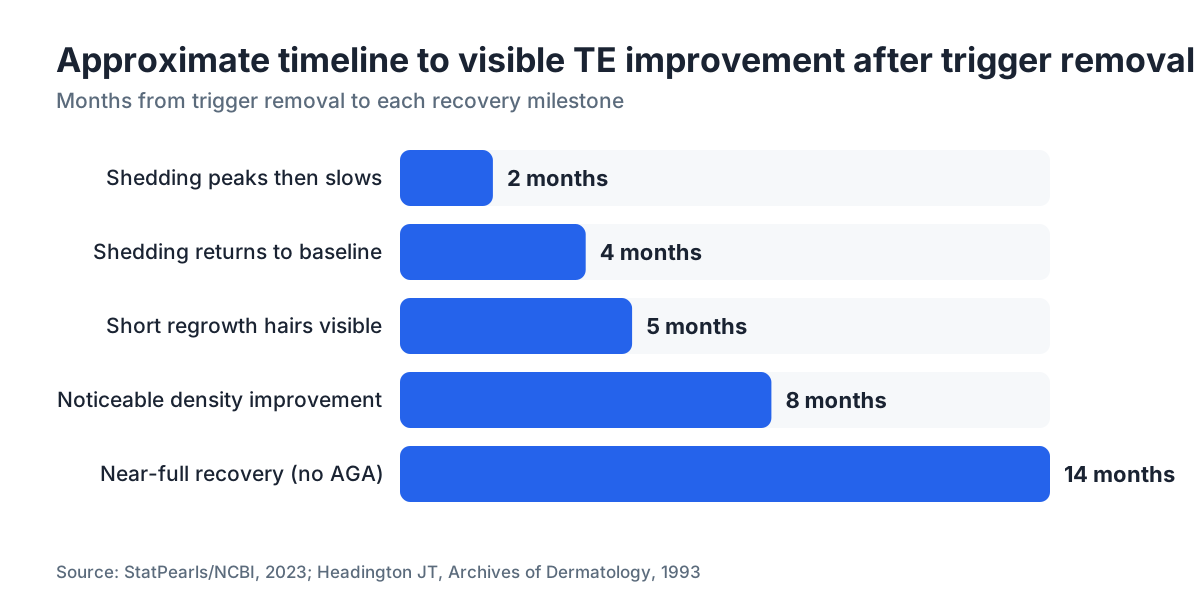
Once the trigger is gone and deficiencies are corrected, follicles restart anagen. New hairs are only about 1 cm long after a month of growth, and scalp hair grows roughly 1-1.5 cm per month [1]. So it takes 6-12 months to see real density improvement even when the biology is firing on all cylinders.
The timeline runs roughly like this:
| Phase | Approximate timing after trigger removal |
|---|---|
| Shedding peaks, then slows | Weeks 4-8 |
| Shedding returns to baseline (~100/day) | Months 2-4 |
| Short regrowth hairs visible ("baby hairs") | Months 3-5 |
| Noticeable density improvement | Months 6-9 |
| Near-full recovery (if no AGA) | Months 9-18 |
If your shedding rate hasn't budged by month 4-5 after addressing nutrition and the trigger, go back to your dermatologist. Either something is still fueling the shedding, or the diagnosis needs a second look.
Patience is genuinely the hard part. The biology is slow. Checking your pillow every morning and spiraling about shed hairs raises cortisol, which is itself a TE trigger. That's not a lecture. It's physiology.
Are there any treatments that don't work for telogen effluvium?
Yes, and being blunt about this saves you money.
Shampoos marketed for hair loss (thickening formulas, "volumizing" products, caffeine shampoos) do not fix TE. Some make hair look fuller for a few hours, which is fine for your confidence, but none of them alter the hair cycle or correct the trigger. Caffeine shampoo has shown some effects on follicles in lab dishes, but no clinical trial shows it reverses TE in humans.
Platelet-rich plasma (PRP) injections have a growing evidence base for AGA, but the data for TE specifically is thin. A 2018 meta-analysis in the International Journal of Trichology found PRP promising for AGA while noting that study quality was generally low [10]. Spending $1,500-$3,000 on PRP before correcting a ferritin of 14 puts the cart way before the horse.
Hair transplants are wrong for active TE. Full stop. A hair transplant moves permanent follicles from the back of the scalp to thinning areas. In active TE, the grafts and your native hair are all exposed to the same shedding trigger. Most reputable surgeons won't transplant into an active TE episode for exactly this reason.
Finasteride (a DHT blocker for male pattern baldness) is not a TE treatment, because TE isn't driven by DHT. If there's also an AGA component, finasteride matters for that part of the picture, but it won't stop TE shedding. See the finasteride and DHT blocker articles for what those drugs actually do.
When should you see a dermatologist rather than treating this yourself?
Most acute TE cases can be handled with the steps above and no specialist. But some situations call for professional eyes.
See a board-certified dermatologist if:
- Shedding has lasted more than 6 months (chronic TE by definition)
- You have patches of complete hair loss rather than diffuse thinning (that points toward alopecia areata, not TE)
- The scalp is red, scaly, itchy, or painful (possible scarring alopecia, scalp psoriasis, or seborrheic dermatitis)
- Your bloodwork keeps coming back normal but shedding continues
- You're pregnant or postpartum and shedding is severe
- You've had significant unintentional weight loss alongside the shedding
- You're also losing eyebrows, eyelashes, or body hair (systemic or autoimmune cause likely)
The AAD recommends seeing a dermatologist for hair loss that affects quality of life or that has no obvious recent trigger [2]. That's a reasonable bar.
A referral to an endocrinologist may fit too, if thyroid disease, insulin resistance, or adrenal dysfunction is on the table. These conditions sustain TE and won't respond to hairline treatments until the hormonal environment settles.
Want a visual baseline before your appointment? A free AI scan at MyHairline helps you understand your current hair and hairline pattern, which is useful context to bring in.
What is the complete step-by-step fix for telogen effluvium?
Here's the practical sequence, in priority order:
-
Get bloodwork done. Ferritin, TSH, free T4, vitamin D, zinc, CBC. Do this before buying anything.
-
Identify your trigger. Think back 2-3 months before the shedding started. Write it down. Stress event, surgery, new medication, diet change, illness.
-
Remove or address the trigger. If it's a medication, talk to your doctor. If it's stress, hit stress directly (therapy, sleep, less on your plate). If it's diet restriction, add calories and protein.
-
Correct deficiencies in order. Iron first if ferritin is below 40-70 ng/mL, then vitamin D if below 30 ng/mL, then zinc if below the normal reference range.
-
Eat adequate protein. 1.2-1.6 g per kilogram of body weight daily. Stay out of a significant caloric deficit during recovery.
-
Consider topical minoxidil if you want to actively push regrowth, particularly if there's any underlying AGA, after talking it through with a dermatologist.
-
Recheck bloodwork at 3 months to confirm levels are normalizing.
-
Expect visible improvement at 6-9 months. Before then, reduced shedding (back under 100-150 hairs per day) is a valid early sign the treatment is working.
-
If nothing improves by month 5-6, see a dermatologist for a formal workup including a possible scalp biopsy.
What doesn't work tells you as much as what does. Expensive shampoos, supplements you don't need, and PRP before bloodwork correction all add cost and delay the real fix. Most acute TE resolves with nothing fancier than time, adequate nutrition, and removal of the trigger.
Sources
- StatPearls (NCBI/NIH), Telogen Effluvium
- American Academy of Dermatology, Hair loss overview
- Whiting DA. Chronic telogen effluvium. Dermatologic Clinics, 1996
- Rushton DH. Nutritional factors and hair loss. Clinical and Experimental Dermatology, 2002
- Guo EL, Katta R. Diet and hair loss: effects of nutrient deficiency and supplement use. Dermatology Practical & Conceptual, 2017
- Stoffel NU et al. Iron absorption from oral iron supplements given on consecutive versus alternate days. eClinicalMedicine (Lancet), 2017
- U.S. Food and Drug Administration, Biotin (Vitamin B7) safety communication
- StatPearls (NCBI/NIH), Minoxidil
- Randolph M, Tosti A. Oral minoxidil treatment for hair loss. Journal of the American Academy of Dermatology, 2021
- Giordano S et al. A meta-analysis on evidence of platelet-rich plasma for androgenetic alopecia. International Journal of Trichology, 2018
- Headington JT. Telogen effluvium: new concepts and review. Archives of Dermatology, 1993
- NIH Office of Dietary Supplements, Zinc Fact Sheet for Health Professionals