
TL;DR: Finasteride stops hair loss in about 83-90% of men and grows measurable hair in roughly two-thirds, but sexual side effects (lower libido, erectile changes) affect an estimated 2-4% in controlled trials. A small, contested subset reports symptoms persisting after stopping. The right decision depends on your Norwood stage, age, mental health baseline, and how much hair loss itself bothers you.
What does finasteride actually do, and why does it carry side effect risk?
Finasteride blocks the enzyme 5-alpha reductase type II, which converts testosterone to dihydrotestosterone (DHT). DHT is the main driver of androgenetic alopecia, or male-pattern baldness. By lowering DHT roughly 60-70% in the scalp and serum [1], finasteride slows or stops the miniaturization of hair follicles.
The problem is that DHT does other things in the body. It affects libido, erectile function, ejaculate volume, and mood regulation. When you reduce it systemically, you are touching a hormone that reaches the brain, the genitals, and the prostate all at once. That is the root of the side effect conversation.
The drug has been FDA-approved for male-pattern hair loss (at 1 mg) since 1997 [1], so there is a long safety record. But 25-plus years of data also means there is enough post-market experience to take the edge cases seriously. Understanding what the evidence actually says, rather than what Reddit or a pharma brochure says, is the first step to a real decision.
If you want background on what causes hair loss at the follicle level, or a deeper look at how DHT blockers work mechanically, those pieces will help orient you before you come back here.
What are the real rates of finasteride side effects from clinical trials?
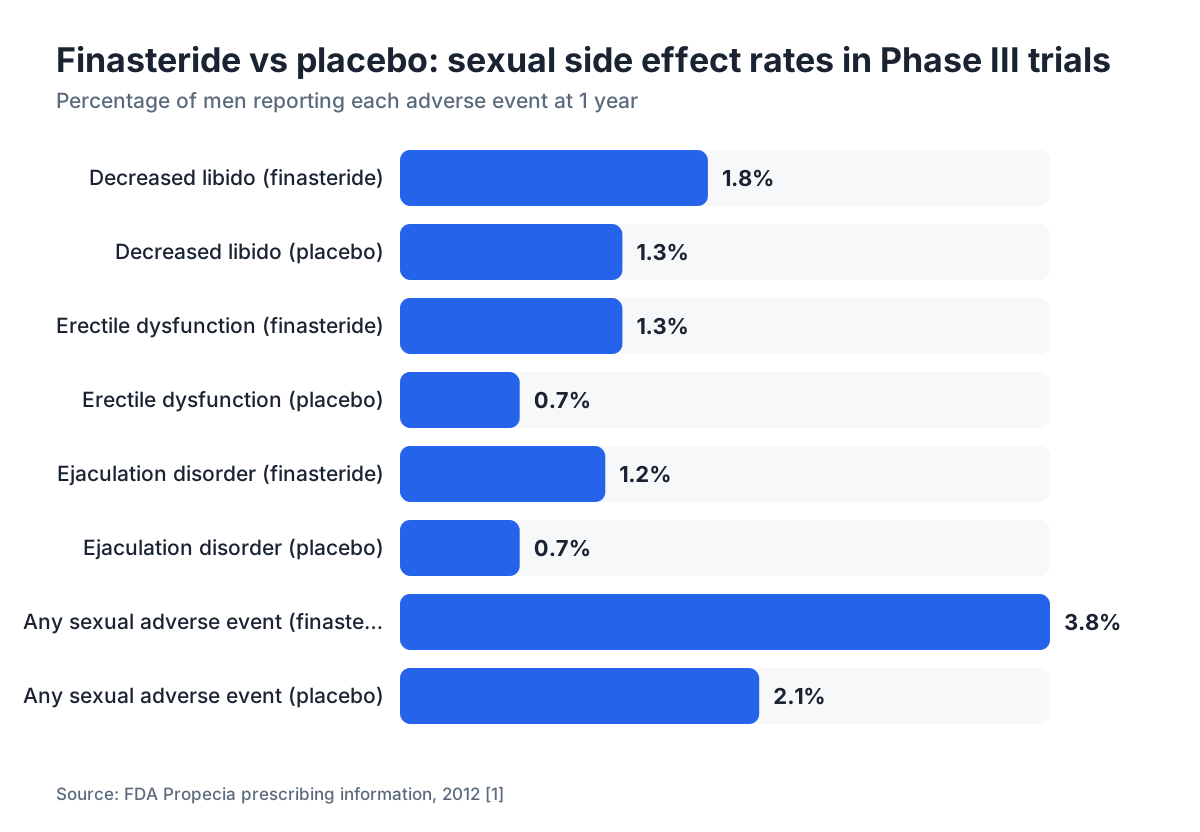
Sexual side effects hit about 3.8% of men on finasteride 1 mg versus 2.1% on placebo in the FDA Phase III trials [1]. That is a real difference of roughly 1.7 percentage points, and it is the number to anchor on before anyone starts quoting scarier figures.
A 2019 meta-analysis published in the Journal of the American Academy of Dermatology pooled data from 14 randomized controlled trials covering nearly 4,000 men. The authors found that sexual dysfunction was significantly more common on finasteride than placebo, but the absolute risk stayed in the 2-4% range [2]. The AAD's clinical guidelines cite these figures as the basis for their recommendation that finasteride is generally safe for most men [3].
Here is what the numbers look like side by side:
| Side effect | Finasteride 1 mg | Placebo |
|---|---|---|
| Decreased libido | 1.8% | 1.3% |
| Erectile dysfunction | 1.3% | 0.7% |
| Ejaculation disorder | 1.2% | 0.7% |
| Gynecomastia (breast tenderness) | 0.5% | 0.1% |
| Any sexual adverse event | ~3.8% | ~2.1% |
Source: FDA-approved prescribing information for Propecia [1]
A few things to sit with. Roughly 2% of men in the placebo group also reported sexual symptoms, which tells you baseline rates in the population are not zero. In the clinical trials, most reported side effects resolved after stopping the drug [1]. And industry-funded trials tend to undercount side effects compared to observational data, so real-world rates are probably somewhat higher than 3.8%. Some observational studies put the figure closer to 5-8% [4].
None of that makes finasteride categorically dangerous. It means the trial estimate is a floor, not an exact ceiling.
What is post-finasteride syndrome and how seriously should you take it?
Post-finasteride syndrome (PFS) refers to a reported cluster of symptoms, including persistent sexual dysfunction, cognitive difficulties, anxiety, and depression, that continue or worsen after stopping finasteride. The Post-Finasteride Syndrome Foundation has collected case reports, and some peer-reviewed papers describe the phenomenon [5].
Here is the honest state of the evidence: PFS is real in the sense that a non-trivial number of men report it and a handful of small studies document it. It is contested in the sense that there is no confirmed biological mechanism and no prospective trial with a long enough follow-up to establish incidence rates reliably. A 2019 case-control study found neurological differences in men who reported PFS compared to controls, but the sample was small and the methodology has been criticized [5].
The FDA added a label warning about persistent sexual dysfunction in 2012 [1]. That is not nothing. When FDA updates a label, it reflects a credible signal from post-market data, even if the pathophysiology is unproven.
MyHairline's stance, for what it is worth: PFS appears to be rare, possibly less than 1% of users, but the people who experience it describe outcomes that are serious and life-altering. If you have a personal or family history of depression, sexual dysfunction, or anxiety, the risk calculation looks different for you than for someone without those factors. That conversation belongs with a dermatologist or urologist who knows your history, not a hair loss forum.
The Post-Finasteride Syndrome Foundation maintains a patient registry and a list of researchers actively studying the condition [5].
How does your Norwood stage change the risk-benefit math?
This is the part most articles skip. Your potential benefit from finasteride is not constant across all stages of hair loss.
At Norwood 1-3 (early recession, a defined hairline), finasteride works best because it is preserving follicles that still exist. The two-year data from the original trials showed that 83% of men at these stages maintained or improved hair count [1]. Early intervention is where the drug earns its strongest case.
At Norwood 5-7 (diffuse loss across the crown and midscalp), finasteride can still slow further loss but the visual improvement is usually modest. You are not going to regrow a full crown at Norwood 6. The benefit side of the ledger shrinks, so the same 2-4% side effect rate now competes against a less dramatic upside.
If your hairline is receding but you are in your early 20s, there is another wrinkle: you may be taking finasteride for decades. Long-term studies up to five years show continued benefit, and the drug appears safe over that period [1]. But data beyond ten years in large cohorts is thin, and the honest answer is that nobody has done a 20-year randomized trial.
For a realistic look at where your hairline sits, a free AI scan from MyHairline can map your pattern against Norwood staging without you having to guess. It is not a substitute for a dermatologist visit, but it gives you a concrete starting point.
See also our breakdown of receding hairlines and what the staging means in practice.
Does age matter for finasteride side effect risk?
Yes, and probably more than most guides acknowledge.
Testosterone and baseline sexual function naturally decline with age. A 50-year-old starting finasteride begins from a different hormonal baseline than a 23-year-old. Some urologists argue this cuts both ways: older men may notice libido changes less acutely, or they may be more sensitive to any further reduction in DHT on top of an already-declining baseline.
For younger men, there is a specific concern about the period of sexual development and peak fertility. Finasteride does reduce semen volume and can affect sperm parameters in some men [6]. A 2013 study in Fertility and Sterility found measurable reductions in sperm motility and morphology in men on 1 mg finasteride, though concentrations recovered after stopping [6]. If fathering children is on your near-term horizon, this belongs in your conversation with a doctor.
For men over 40, the prostate data is actually a minor upside: finasteride (at 5 mg, not 1 mg) has strong evidence for reducing benign prostatic hyperplasia symptoms, and some data suggests it lowers prostate cancer risk, though it may shift the grade distribution of cancers that do occur [7]. The 1 mg hair loss dose is a different conversation, but it is context worth knowing.
Age also correlates with comorbidities, other medications, and existing hormone conditions. Statins, antidepressants, and blood pressure drugs all interact with the hormonal and metabolic backdrop in ways that make the side effect profile harder to predict from population averages alone.
What mental health factors should you consider before starting finasteride?
The FDA's 2012 label update included not only persistent sexual dysfunction but also depression and, in rare cases, suicidal ideation [1]. This addition was based on case reports and adverse event filings, not a prospective clinical trial, so exact rates are hard to pin down.
A 2017 study in JAMA Dermatology found that men aged 18-45 on finasteride for alopecia had a statistically higher rate of depression diagnoses compared to matched controls, though the absolute numbers were still small [8]. The confound is real: hair loss itself causes depression in some men, making it genuinely hard to separate drug effect from disease effect.
If you have a current or past diagnosis of major depressive disorder, anxiety, or any condition that has affected your sexual function or body image, bring that to your prescriber before starting. It is not a hard disqualification, but it should change how closely you are monitored in the first three to six months.
Another practical point: the nocebo effect is documented in finasteride studies. In one trial where participants were told about sexual side effects before starting, the incidence was significantly higher than in a group not told [4]. This does not mean the side effects are imaginary. It means your mental state and expectations genuinely interact with your physiological response. That is pharmacology, not blame.
How does finasteride compare to alternatives if you are worried about side effects?
Minoxidil (topical) has no systemic hormonal mechanism and therefore none of the sexual side effect risk. Its downsides are different: contact dermatitis, scalp irritation, and some systemic absorption at higher concentrations. You can read the full minoxidil side effects picture separately. Topical minoxidil is also meaningfully less effective at preserving the hairline than finasteride in head-to-head data.
Combining finasteride and minoxidil is the most evidence-supported approach for men who tolerate finasteride. A 2021 randomized trial published in the Journal of the American Academy of Dermatology found the combination produced statistically superior hair counts compared to either drug alone [9].
Oral minoxidil at low doses (0.25-1.25 mg) has gained traction as an alternative with a different mechanism and side effect profile. The main concerns are cardiovascular (fluid retention, elevated heart rate) rather than hormonal. Evidence is growing but not yet at the volume behind finasteride.
Hair transplants are not a replacement for finasteride in the side-effect-avoidance sense because most surgeons recommend continuing finasteride post-transplant to prevent loss of non-transplanted hairs. A transplant without systemic treatment is plugging a leak without fixing the pipe.
Hair loss supplements like saw palmetto have weak evidence and mild 5-alpha reductase inhibitor properties of their own, which means they are not free of the same theoretical risks, just at lower potency and without FDA oversight.
The table below summarizes the trade-offs:
| Treatment | Stops DHT-driven loss | Regrows hair | Sexual side effect risk | Evidence quality |
|---|---|---|---|---|
| Finasteride 1 mg | Strong | Moderate | 2-4% (trials); higher in observational | RCT, FDA-approved |
| Topical minoxidil | No | Moderate | Near zero | RCT, FDA-approved |
| Oral minoxidil (low dose) | No | Moderate-good | Near zero | Growing RCT base |
| Combination (Fin + Min) | Strong | Strong | Same as finasteride alone | RCT |
| Hair transplant | No (native hair) | Yes (transplanted) | Near zero | Surgical outcome data |
| Saw palmetto | Weak/unclear | Weak | Theoretical, unstudied | Low quality |
What does the conversation with your doctor actually need to cover?
A lot of men get a finasteride prescription in under five minutes. That is fast enough to miss things that matter.
Before you leave that appointment, you want to have covered: your full medication list (SSRIs, antihypertensives, and other hormonal drugs change the risk picture), your baseline sexual function (so you have a reference point if something changes), any personal or family history of depression or prostate cancer, your fertility timeline, and what monitoring looks like over the first six months.
Ask your doctor what to do if you notice symptoms. Some clinicians recommend stopping immediately. Others suggest a two-week hold to distinguish drug effect from nocebo or anxiety response. Having a plan before symptoms arrive means you are not making a panicked decision at midnight after reading a forum thread.
If your primary care doctor seems unfamiliar with the nuances, a dermatologist or urologist with hair loss experience is worth the extra appointment. The AAD maintains a physician locator for board-certified dermatologists [3].
How should you monitor yourself in the first six months on finasteride?
The first three months are when most reversible side effects appear, if they are going to appear at all.
Track a few things concretely. Baseline your libido and erectile function before you take the first pill, even a quick weekly score out of ten in a notes app. Log any mood changes, more than 'I felt off' but what happened and when. Take photos of your hairline every four weeks under the same lighting. Results take time: the original trials measured hair count changes at 12 and 24 months [1], so expecting visible progress in six weeks is unrealistic.
If you notice sexual symptoms, tell your doctor promptly rather than waiting for your six-month check-in. The same goes for any significant low mood. Many reversible effects resolve within weeks of stopping, and early intervention matters.
One practical note: telogen effluvium, a temporary increase in shedding, sometimes occurs in the first two to three months of finasteride use. This is documented and does not mean the drug is failing. It usually resolves by month four or five. Knowing this in advance prevents a lot of unnecessary panic and premature discontinuation.
Is finasteride safe for women or people assigned female at birth?
Finasteride is not FDA-approved for hair loss in women. The original Propecia label lists pregnancy as a contraindication because finasteride can cause abnormal development of external genitalia in male fetuses [1]. Women of childbearing age are generally excluded from finasteride use for this reason, not because of the sexual side effect concerns that apply to men.
Some dermatologists prescribe finasteride off-label for postmenopausal women with androgenetic alopecia, typically at 1 mg or sometimes 2.5 mg. The evidence base is smaller than for men but a 2020 review found modest benefit in postmenopausal women [10]. If you are a woman considering finasteride, the conversation with your dermatologist needs to explicitly address pregnancy status, contraception, and the off-label nature of the use.
For women in general, what causes hair loss often involves different mechanisms than DHT-driven androgenetic alopecia, so the case for finasteride is not always as clear-cut as it is for men.
How do you actually make the final call?
There is no universal right answer here, which is probably not what you wanted to read. But there is a framework that makes the decision honest rather than either reckless or reflexively avoidant.
Ask yourself four things. First: how much does my hair loss bother me? If it is genuinely affecting your confidence, relationships, or professional life, the benefit side of the scale is real and substantial. If you are barely Norwood 2 and curious, the urgency is lower. Second: do I have any of the risk factors that change the calculus (depression history, fertility plans, existing sexual health concerns)? If yes, the monitoring plan and the conversation with your doctor need to be more detailed. Third: am I prepared to stop if something changes? Finasteride is not a lifetime commitment you cannot exit. Most side effects reverse. Having that exit posture reduces the psychological weight of starting. Fourth: have I read the actual FDA prescribing information, more than a blog summary of it?
The men who regret starting finasteride often did so without a realistic picture of what they were signing up for. The men who regret not starting often watched preventable hair loss continue for years out of fear of a 2-4% risk they never really analyzed. Both outcomes are avoidable with honest information.
If you want a concrete picture of where your hair loss stands before that doctor conversation, the free AI hair scan at MyHairline takes about two minutes and maps your pattern against Norwood staging. It is one input among many, but it grounds the conversation in something specific.
For a full clinical overview of the drug itself, our finasteride guide covers dosing, mechanism, and what the long-term studies actually show.
Sources
- U.S. Food and Drug Administration, Propecia (finasteride 1 mg) prescribing information
- Journal of the American Academy of Dermatology, 2019 meta-analysis on finasteride sexual side effects
- American Academy of Dermatology, clinical guidelines for androgenetic alopecia
- Journal of Sexual Medicine, nocebo effect and finasteride (Mondaini et al., 2007)
- Post-Finasteride Syndrome Foundation, research and patient registry
- Fertility and Sterility, finasteride and sperm parameters (Overstreet et al., 1999; updated literature 2013)
- National Cancer Institute, Prostate Cancer Prevention Trial results
- JAMA Dermatology, finasteride and depression risk in men 18-45 (Nguyen et al., 2017)
- Journal of the American Academy of Dermatology, combination finasteride and minoxidil RCT (2021)
- International Journal of Dermatology, finasteride in postmenopausal women with androgenetic alopecia (2020 review)