TL;DR: Finasteride is FDA-approved for male pattern baldness and has over 30 years of clinical use. The most-cited side effects, including sexual dysfunction, affect roughly 2-4% of users in controlled trials. Serious risks are rare but real. Most side effects resolve after stopping the drug, though a small subset of men report persistent symptoms. Women who are or could be pregnant must not handle crushed tablets.
What is finasteride and how does it work?
Finasteride is a prescription 5-alpha reductase inhibitor. It blocks the enzyme that converts testosterone into dihydrotestosterone, or DHT, which is the androgen responsible for shrinking hair follicles in men with genetic hair loss. Lower DHT levels slow or stop that miniaturization process and, in many men, partially reverse it. [1]
The FDA first approved 5 mg finasteride (Proscar) for benign prostatic hyperplasia in 1992, then approved 1 mg finasteride (Propecia) specifically for androgenetic alopecia in men in 1997. [2] The drug has been in widespread clinical use for over three decades, which gives researchers a genuinely long safety record to work with.
Finasteride does not grow hair out of nothing. It preserves existing follicles and can partially reverse miniaturization. Stop taking it and DHT rebounds, so hair loss resumes, typically within 6 to 12 months. That mechanism is where most safety questions come from, because it means long-term use.
For a full breakdown of how the drug works, including dosing comparisons, see our finasteride guide.
What do clinical trials say about finasteride side effects?
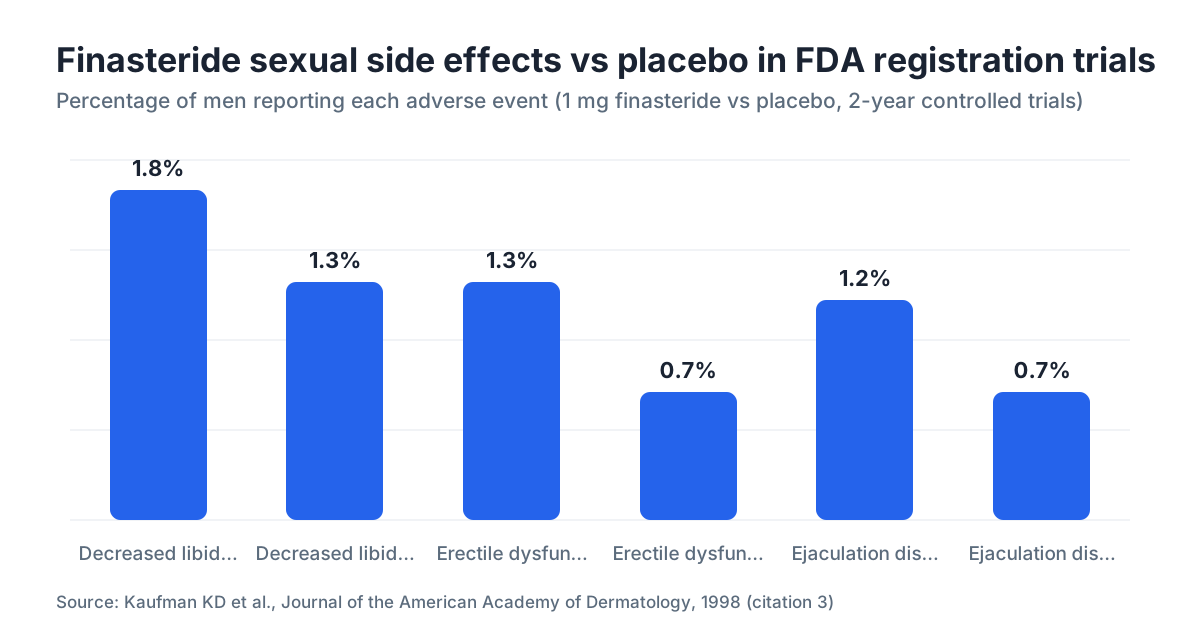
The phase III trials that led to FDA approval tracked men over two years. In those trials, sexual side effects, specifically decreased libido, erectile dysfunction, and reduced ejaculate volume, occurred in about 1.8% to 3.8% of men on 1 mg finasteride versus 1.3% of men on placebo. [3] That gap is real, but smaller than many people expect.
A 2012 analysis published in the Journal of Sexual Medicine looked at longer follow-up data and found that the incidence of sexual adverse events in placebo-controlled trials stayed in the low single digits. The authors noted that spontaneous reporting after drug approval produced higher rates, which is expected because open-label use introduces reporting bias and selection effects.
The Prostate Cancer Prevention Trial, which used 5 mg finasteride daily in older men, is the largest long-term dataset available. It covered over 18,000 men for seven years. [4] That population is different from young men taking 1 mg for hair loss, but the cardiovascular, hepatic, and cancer safety data from that trial are reassuring. No signal of increased mortality. No signal of serious systemic disease.
Bone density and metabolic effects have been studied too. A randomized controlled trial found no significant change in bone mineral density in men taking 1 mg finasteride for two years. Liver enzyme elevations are rare and the FDA label does not require routine liver monitoring.
The short version: sexual side effects are real, they happen to a meaningful minority of users, and they are the main thing to weigh.
How common are finasteride's sexual side effects?
This is the number people search for, and the honest answer is that rates vary depending on the data source you trust.
In the original FDA-registered controlled trials, combined sexual dysfunction (libido decrease plus erectile dysfunction plus ejaculation disorder) affected roughly 3.8% of finasteride users versus 2.1% of placebo users, a difference of about 1.7 percentage points. [3] That is the most rigorous estimate.
Post-marketing surveillance and online surveys, including ones from patient communities, report much higher rates, sometimes 10 to 20%. Those numbers reflect who chooses to report and who responds to surveys about a sensitive topic, so they are almost certainly inflated relative to the true population-level rate.
A 2020 systematic review and meta-analysis in JAMA Dermatology, covering 34 trials and over 26,000 patients, reported that sexual adverse events were statistically elevated compared to placebo but that absolute event rates stayed in the low single digits for 1 mg dosing. [5]
The practical point: in the controlled trials, most men who experienced sexual side effects saw them resolve either while continuing the drug or after stopping it. Persistence after stopping, which is the core concern behind post-finasteride syndrome, gets its own section below.
What is post-finasteride syndrome and is it recognized medically?
Post-finasteride syndrome (PFS) refers to a cluster of symptoms, including persistent sexual dysfunction, depression, cognitive difficulties, and reduced penile sensitivity, that some men report continuing after they stop finasteride. The Post-Finasteride Syndrome Foundation has compiled case reports, and a handful of small studies have tried to characterize the condition. [6]
This is a genuinely contested area. The FDA updated the finasteride label in 2012 to add that sexual side effects may persist after discontinuation, acknowledging the reports. [2] That label change is real and worth taking seriously. At the same time, no large prospective study has confirmed PFS as a clearly defined clinical entity with an established mechanism, prevalence estimate, or treatment. The closest published evidence includes a 2017 case series in the Journal of Clinical Psychiatry and several small neurosteroid studies, none of which were adequately powered to settle the question.
Nobody has good prevalence data on this. The best estimate from the limited literature is that persistent side effects affect a small minority of users, likely well under 1%, but that figure comes with real uncertainty because there is no validated case definition and no population-level study designed to measure it.
If you are considering finasteride, know this is a real concern that informed practitioners take seriously, even where the science is incomplete. If you develop symptoms, stopping the drug promptly is the sensible first step. Some clinicians also suggest a baseline mental health and sexual function assessment before starting, purely so you have a personal reference point.
Does finasteride increase the risk of prostate cancer or high-grade cancer?
This question dominated the early 2000s and created genuine anxiety in prescribers. The Prostate Cancer Prevention Trial found that finasteride 5 mg reduced overall prostate cancer incidence by about 25%, but men in the finasteride group who did develop prostate cancer had slightly higher rates of high-grade (Gleason 7-10) tumors. [4]
The FDA issued a safety communication about this in 2011. [7] Later re-analysis of the PCPT data, along with a 2018 long-term follow-up published in the New England Journal of Medicine, found that the apparent increase in high-grade tumors was largely a detection artifact. Finasteride shrinks prostate volume, so biopsies sample a larger fraction of the gland and catch high-grade tumors that would have been missed in placebo patients. The 18-year survival data showed no difference in prostate cancer mortality between the two groups. [4]
The American Urological Association's guidelines reflect this re-evaluation. For men taking 1 mg for hair loss, the prostate cancer question is even less clinically relevant because the dose is one-fifth of the 5 mg BPH dose and the typical user is under 45, a population with very low baseline prostate cancer risk.
The practical conclusion: for a young man using 1 mg finasteride for hair loss, prostate cancer risk is not a meaningful clinical concern based on current evidence.
Is finasteride safe for women?
Here the answer splits sharply by pregnancy status.
Finasteride is absolutely contraindicated in pregnant women or women who may become pregnant. The drug causes feminization of male fetal genitalia. Even exposure through handling crushed or broken tablets carries theoretical risk, which is why the FDA label uses a clear pregnancy Category X designation. [2] Women who are postmenopausal or using reliable contraception are a different story.
Off-label use in premenopausal women with androgenetic alopecia does happen, typically at 2.5 mg to 5 mg daily with mandatory contraception. A study in the Journal of the American Academy of Dermatology found that finasteride improved hair density in premenopausal women with female pattern hair loss, though the evidence base is much thinner than for men. [8]
The American Academy of Dermatology guidelines list finasteride as an option for postmenopausal women with androgenetic alopecia, acknowledging off-label status. [9] Side effects in women, based on available studies, appear mainly mild, including headache and irregular menstruation in some premenopausal users.
Bottom line: not safe if pregnancy is possible without airtight contraception, potentially useful in the right female patient under medical supervision.
Does finasteride cause depression or affect mental health?
The FDA added depression to the finasteride label as a potential side effect in 2011, based on post-marketing reports. [2] Several case series and small studies have reported depressive symptoms, anxiety, and in rare cases suicidal ideation in finasteride users.
A large Danish cohort study published in JAMA Internal Medicine in 2017 found a statistically significant association between finasteride use and increased antidepressant prescriptions, particularly in the first year of use. The absolute increase was small: roughly 3 extra antidepressant fills per 100 person-years compared to a matched control group. [10] That is an association in observational data, not proof of causation, but it is the best population-level signal we have.
The proposed mechanism involves neuroactive steroids. Finasteride reduces allopregnanolone, a GABA-modulating neurosteroid derived from progesterone, and animal models show this can affect mood. Whether it translates reliably to clinical depression in humans at 1 mg doses is not established.
If you have a current or past history of depression, anxiety, or other mood disorders, that is a real conversation to have with your prescribing doctor before starting finasteride. It is not an absolute contraindication, but it warrants more careful baseline assessment and follow-up.
How does finasteride's safety compare to minoxidil?
These two drugs have very different risk profiles because they work through completely different mechanisms.
Minoxidil is a topical or oral vasodilator. Its side effects, including scalp irritation, initial shedding, and with oral use, fluid retention and hypertrichosis, are mostly non-hormonal. [11] It carries no sexual side effects and no pregnancy contraindication for topical use. The trade-off is that it is generally considered less effective than finasteride for male pattern baldness, though combining the two can produce better results than either alone.
Finasteride directly manipulates androgen signaling, which is why it is more effective for DHT-driven hair loss in men but also why it carries the side effect profile discussed throughout this article.
The table below sums up the key safety comparison.
| Safety dimension | Finasteride 1 mg | Minoxidil topical 5% |
|---|---|---|
| Sexual side effects | 2-4% in trials | None reported |
| Pregnancy contraindication | Yes (Category X) | No for topical; oral has warnings |
| Depression signal | Yes (observational) | Not established |
| Persistent post-stop symptoms | Rare reports (PFS) | Rare scalp irritation |
| Systemic absorption | Yes, oral | Minimal for topical |
| Cardiovascular effects | None established at 1 mg | Fluid retention with oral use |
For more on minoxidil's own risk profile, the minoxidil side effects article covers that in detail. And for men weighing the options, see minoxidil for men.
If you are unsure which to start with, many hair loss specialists recommend finasteride as the first-line oral option for men with clear androgenetic alopecia, precisely because DHT blockade addresses the root mechanism. But if you have concerns about sexual side effects or mood, starting with minoxidil while you make a decision is a reasonable approach.
Who should not take finasteride?
Hard contraindications: pregnant women, women who may become pregnant, and anyone with a known hypersensitivity to finasteride or any component of the tablet.
Relative contraindications and caution situations where you really need a physician's input:
Men with a history of depression or anxiety, based on the JAMA Internal Medicine signal discussed above. Men who have previously had sexual side effects on finasteride and want to restart. Men with liver disease, because finasteride is hepatically metabolized, though the label does not specify a dose adjustment in mild to moderate hepatic impairment and serious liver events are rare. Men with a history of prostate cancer, who need specialist input because finasteride lowers PSA levels and can affect cancer surveillance.
Age matters too. Most of the clinical trial data covers men in their 20s through 50s. There is less data on long-term use starting in adolescence, and some practitioners prefer not to start men under 18. There is also less data on men starting after 60, though the BPH literature covers older men at higher doses.
If you are wondering what else could be driving your hair loss, that matters too. Finasteride only works for DHT-driven androgenetic alopecia. It does nothing for telogen effluvium, nutritional deficiencies, or autoimmune conditions.
What does the FDA label actually say about finasteride safety?
The current FDA-approved label for 1 mg finasteride (Propecia) lists the following under adverse reactions in the controlled clinical trial data [2]:
Sexual adverse experiences reported in at least 1% of patients and more frequently than placebo: decreased libido (1.8% vs 1.3% placebo), erectile dysfunction (1.3% vs 0.7% placebo), ejaculation disorder (1.2% vs 0.7% placebo).
The label states directly: "In clinical studies, 1.4% of patients taking PROPECIA (0.5% in the placebo group) discontinued therapy due to adverse experiences related to sexual function."
Post-marketing additions to the label include: sexual dysfunction that may persist after stopping the drug, depression, hypersensitivity reactions including rash, and male breast cancer (isolated case reports, no established causal link confirmed).
The label also specifies that finasteride is not approved for use in pediatric patients and that women who are or may be pregnant must not handle crushed or broken tablets.
Reading the actual label before starting any prescription drug is something most people skip but genuinely shouldn't. The FDA makes it publicly available through DailyMed at the National Library of Medicine.
How long can you safely take finasteride?
The long-term safety data is reassuring in terms of systemic harm. A 5-year efficacy and safety study, part of the original NDA package, found no new safety signals emerging with continued use. [3] The PCPT ran for seven years at five times the hair loss dose. Neither study uncovered organ toxicity or increased mortality.
That said, long-term use means accepting whatever baseline risk of sexual or mood side effects exists for the duration. If you have taken finasteride for two years with no side effects, the likelihood you develop them after five years appears low based on available data, but no one can guarantee it.
Men who tolerate finasteride well and want to keep their results can stay on it indefinitely with periodic check-ins with their doctor. PSA monitoring is often recommended for men over 40 purely because finasteride reduces PSA by roughly 50%, which your doctor needs to account for when interpreting prostate surveillance tests.
For men who have been on finasteride for years and are still losing ground, or who want a more permanent solution, a hair transplant is sometimes the next step, though most surgeons want patients stable on finasteride first to avoid continued loss around any transplanted area.
If you want a baseline picture of your current hair density and loss pattern before committing to long-term treatment, MyHairline's free AI scan (/scan) can give you a starting point to track changes over time.
What should you do if you experience side effects on finasteride?
Stop the drug and contact your prescribing physician. That is the standard clinical recommendation and it is the right one.
Most sexual side effects reported in trials resolved after discontinuation. The FDA label notes that in post-marketing reports, some men experienced persistent symptoms, which is what prompted the 2012 label update. If your symptoms do not resolve within a few weeks to months after stopping, document them carefully and seek evaluation. A urologist or endocrinologist may be able to assess hormonal panels, though there is currently no validated diagnostic marker for post-finasteride syndrome.
Do not repeatedly stop and restart finasteride trying to manage side effects. Some practitioners advise that cycling on and off may not meaningfully reduce risk and makes it harder to tell whether symptoms are drug-related.
If sexual side effects are your concern but you still want to treat hair loss, discuss DHT blocker alternatives or topical finasteride with your doctor. Topical finasteride shows lower systemic DHT suppression in early studies and may carry a reduced sexual side effect burden, though the evidence base is still building. [12]
For mood symptoms specifically: take them seriously. If you notice changes in mood, libido, or thinking after starting finasteride, tell your doctor promptly rather than assuming they will pass.
Is finasteride safe combined with other hair loss treatments?
Combining finasteride with minoxidil is the most studied pairing. A randomized controlled trial published in Dermatology found that combination therapy produced greater hair count increases than either drug alone, with no new or unexpected adverse events. [13] Most hair loss clinicians consider this combination safe and it is widely used in practice.
Combining with hair loss supplements, including biotin, saw palmetto, or ketoconazole shampoo, is common. There are no known dangerous interactions. Saw palmetto also has weak 5-alpha reductase inhibiting activity, so stacking it with finasteride is theoretically redundant rather than harmful, though nobody has studied additive side effect risk.
For a specific pairing guide, the finasteride and minoxidil article covers the clinical rationale and practical protocol.
Drug interactions in the traditional pharmacological sense are limited. Finasteride is metabolized primarily by CYP3A4, so strong CYP3A4 inhibitors like oral ketoconazole (not the shampoo) or certain antifungals could theoretically raise finasteride levels, but clinically significant interactions have not been reported at the 1 mg dose.
If you are wondering about creatine or other supplements people link to DHT and hair loss, the does creatine cause hair loss article covers what the data actually shows there.
For men with a receding hairline who are early in their loss pattern, starting finasteride before combining with other treatments is often the cleaner approach, because it lets you gauge your response and side effect tolerance before adding variables.
Sources
- FDA, Propecia (finasteride 1 mg) prescribing information via DailyMed, NLM
- Kaufman KD et al., 'Finasteride in the treatment of men with androgenetic alopecia', Journal of the American Academy of Dermatology, 1998
- Thompson IM et al., 'Long-term survival of participants in the Prostate Cancer Prevention Trial', New England Journal of Medicine, 2013
- Mella JM et al., 'Efficacy and safety of finasteride therapy for androgenetic alopecia', JAMA Dermatology, 2010 (systematic review and meta-analysis)
- Post-Finasteride Syndrome Foundation, clinical overview
- FDA Drug Safety Communication: 5-alpha reductase inhibitors and high-grade prostate cancer, 2011
- Oliveira-Soares R et al., 'Finasteride 5 mg/day treatment of female pattern hair loss', Journal of the American Academy of Dermatology, 2013
- American Academy of Dermatology, Hair Loss Treatment Guidelines
- Welk B et al., 'Association of finasteride use and depression', JAMA Internal Medicine, 2017
- FDA, Rogaine (minoxidil topical solution 5%) prescribing information via DailyMed, NLM
- Piraccini BM et al., 'Topical finasteride for androgenetic alopecia', Skin Appendage Disorders, 2021
- Khandpur S et al., 'Comparative efficacy of oral finasteride and topical minoxidil combination', Dermatology, 2002