TL;DR: Minoxidil causes a temporary shedding phase in most users, typically starting around weeks 2 to 8 and resolving by month 3 to 4. This happens because the drug pushes resting follicles into an active growth cycle, forcing out old hairs first. It is not a sign the treatment is failing. If heavy shedding continues past 4 months, see a dermatologist.
What actually causes hair fall when you start minoxidil?
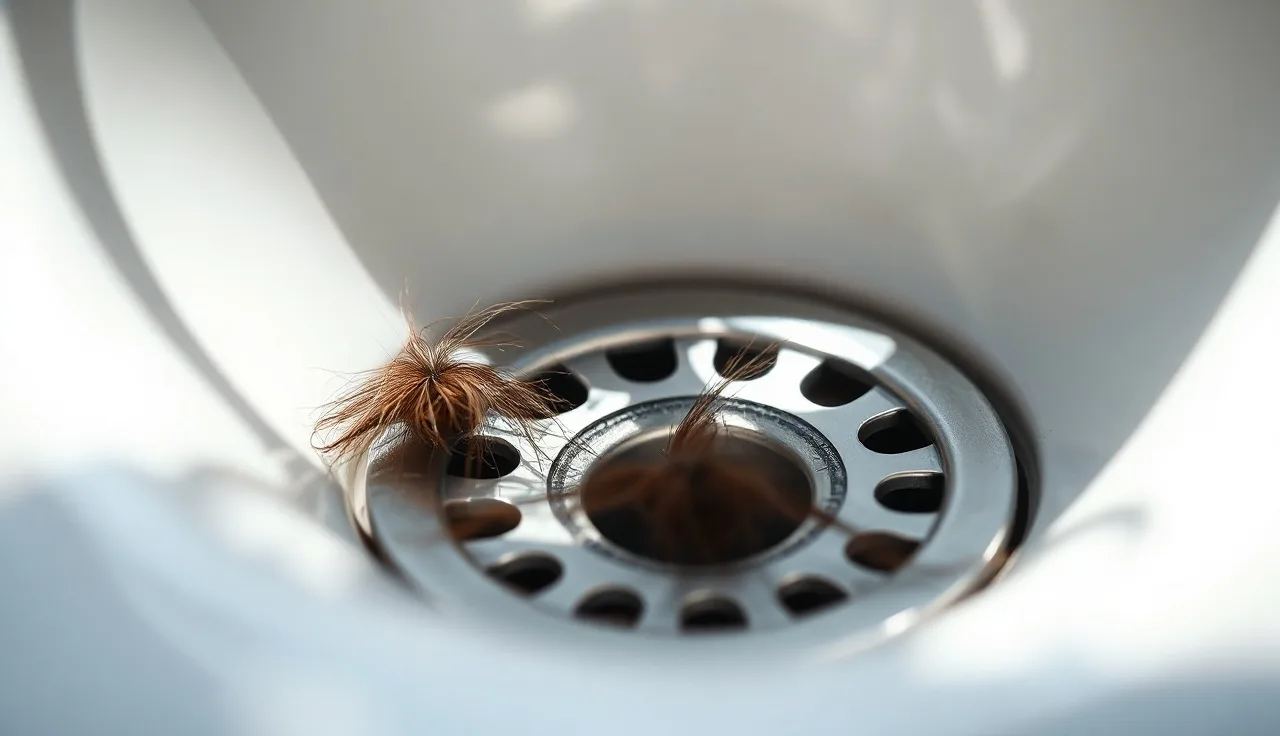
Minoxidil works by prolonging the anagen (active growth) phase of the hair cycle and shortening the telogen (resting) phase. When a follicle that has been sitting idle gets pushed into anagen, it physically ejects the old club hair that was parked in the follicle first. That ejection is what you see on your pillow or in the shower drain.
This is called telogen effluvium, and it is a known pharmacological consequence of any treatment that strongly recruits resting follicles into growth. It is not unique to minoxidil. Finasteride, low-level laser therapy, and even platelet-rich plasma can trigger the same response, though the timing differs.
Here is the part that trips people up. The hair you are losing was already dead in the follicular sense. It was a telogen hair with no future growth potential in its current state. Losing it makes room for a new anagen shaft growing from the same follicle. So the shedding is, strangely, evidence the drug is doing something biologically real.
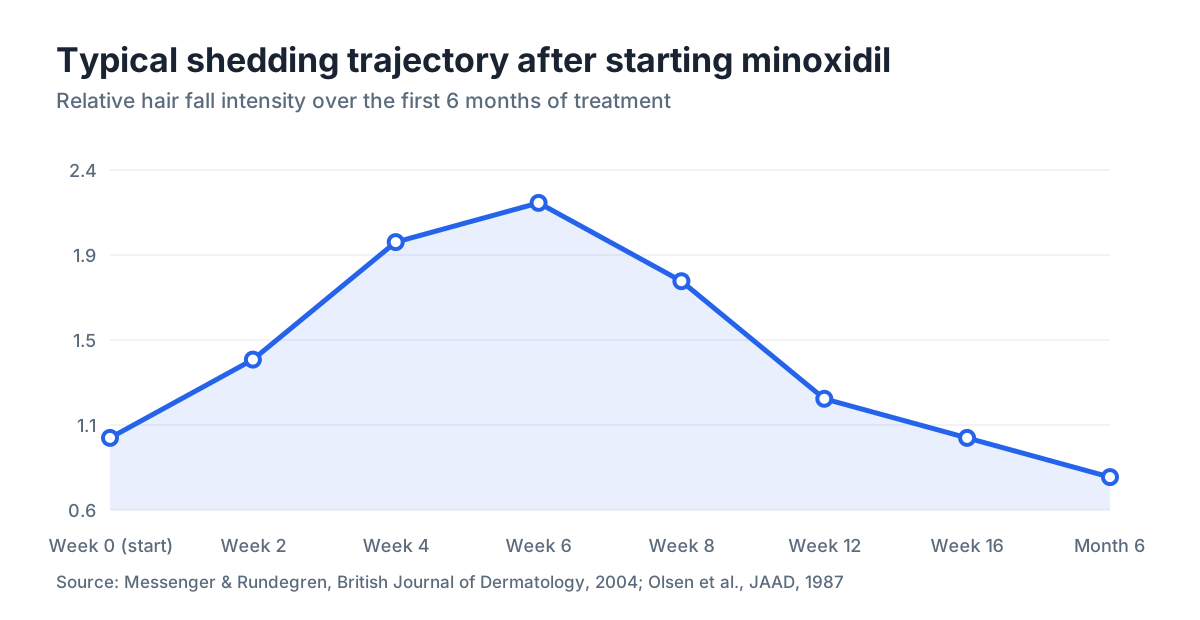
This mechanism is described in the FDA prescribing information for topical minoxidil, which notes that "a temporary increase in hair loss may occur" at the start of treatment [1]. The label does not specify an exact duration, but clinical studies place the shedding window at roughly 2 to 8 weeks after initiation, with most resolution by month 3 to 4 [2].
For more on the underlying biology of why follicles stall in the first place, the what causes hair loss overview is worth reading before you make decisions about treatment.
How much extra hair fall is normal on minoxidil?
There is no published count that defines "normal" shedding on minoxidil specifically. What the literature does show is that diffuse shedding is common enough that researchers in the 1987 Olsen et al. trial documented it as an expected early finding rather than an adverse event [2].
A rough clinical rule: if you were losing around 100 hairs per day before starting (a commonly cited baseline for normal daily loss, per the American Academy of Dermatology) [3], you might see that number jump to 150 to 250 for a few weeks. That range fits what dermatologists see in practice, though individual variation is wide.
Some users barely notice a change. Others describe alarming handfuls in the shower for three or four weeks. Both experiences can be normal. The thing that separates drug-induced telogen effluvium from ongoing genetic hair loss is trajectory: shedding from minoxidil peaks and then declines. Progressive androgenetic alopecia does not spontaneously plateau in the same short timeframe.
Want a concrete benchmark? Look at your hairline and crown. If the shed hairs have small, pale bulb ends (telogen bulbs), that fits the expected mechanism. If you see thin, miniaturized shafts with no bulb, you may have ongoing androgenetic thinning that is independent of the drug. A trichoscopy exam from a dermatologist can tell the difference definitively.
When does the shedding phase start and how long does it last?
Most people notice the first increase in shedding between days 14 and 21 of starting minoxidil. Some see it as early as week 1. The shedding usually peaks somewhere between weeks 4 and 8, then starts to ease.
By month 3, the majority of users are back to their pre-treatment shedding rate or below it. By month 4 to 6, the new anagen hairs recruited during that initial cycle begin to become visible, which is when many people first notice regrowth or at least that their part looks less wide.
The 2004 systematic review by Messenger and Rundegren, published in the British Journal of Dermatology, noted that in trials lasting 12 months, topical minoxidil 5% produced statistically significant increases in total hair count compared to baseline, meaning the net result after the shedding phase was positive [4].
If your shedding has not noticeably improved by month 4, that is worth a conversation with a dermatologist. Extended shedding past that window can point to something else: nutritional deficiency, thyroid dysfunction, a new stressor, or an unrelated scalp condition.
Timing your shedding relative to starting minoxidil matters. If you started three weeks ago and you are shedding heavily, that is expected. If you started two years ago and shedding just restarted after a stable period, look elsewhere for the cause rather than blaming the drug.
Does minoxidil hair fall mean the treatment is not working?
No. This is probably the most common misunderstanding that makes people quit minoxidil early, which is a real shame because the treatment genuinely takes 6 to 12 months to show its full effect.
Studies have found no correlation between the severity of early shedding and the eventual outcome. Some people who shed heavily in weeks 2 to 8 go on to show the best regrowth at month 12. Others who shed very little see similar regrowth. The shedding amplitude is just not a predictor.
What does predict failure is stopping the drug. Minoxidil works while you use it. The mechanism is not curative: it does not fix the underlying androgen sensitivity of the follicle. If you stop, hair growth reverts to its pre-treatment trajectory within roughly 3 to 6 months, and any hair grown on the drug will typically shed [1].
So quitting because of the early shedding phase means you endure the worst cosmetic period of the treatment and never reach the payoff. Frustrating, yes. It is also why informed expectations matter before you start.
Does it matter whether you use 2% or 5% minoxidil, or the topical versus oral form?
Higher concentrations tend to recruit follicles more aggressively, so 5% topical is generally linked to a more noticeable shedding phase than 2% topical. The trade-off is that 5% also shows better efficacy in most trials. The FDA has approved 5% topical minoxidil for men and 2% for women, though the 5% formulation is also used off-label in women under dermatologist supervision [1].
Oral minoxidil, typically prescribed at low doses (0.625 mg to 2.5 mg per day for hair loss, off-label), appears to cause a similar or somewhat more pronounced early shedding phase in some patients. A 2020 retrospective study by Randolph and Tosti in the Journal of the American Academy of Dermatology found that shedding was among the most commonly reported initial complaints in low-dose oral minoxidil users, though it was also described as self-limiting [5].
Foam formulations of 5% minoxidil tend to have less propylene glycol than the liquid versions. Propylene glycol can cause scalp irritation in some users, and irritation itself can trigger a low-grade reactive shedding on top of the drug-induced telogen effluvium. If you are using the liquid solution and getting a lot of scalp redness along with your shedding, switching to the foam formulation is a reasonable experiment.
For a full breakdown of the oral option, the oral minoxidil article covers dosing, side effects, and how the evidence compares to topical.
For everything specific to the men's topical dosing protocol, minoxidil for men has the detail.
How does minoxidil shedding compare to other causes of hair fall?
Not all shedding looks the same, and mixing up the cause is one of the most common mistakes people make when self-diagnosing.
| Cause | Onset after trigger | Peak shedding | Duration | Pattern |
|---|---|---|---|---|
| Minoxidil initiation | 2 to 4 weeks | Weeks 4 to 8 | 2 to 4 months | Diffuse, all over scalp |
| Classic telogen effluvium (illness, surgery, stress) | 2 to 4 months after trigger | Weeks 6 to 12 post-trigger | 3 to 6 months | Diffuse |
| Androgenetic alopecia (genetic) | Gradual, no distinct trigger | Ongoing | Permanent without treatment | Patterned (temples, crown) |
| Alopecia areata | Days to weeks | Variable | Variable | Patchy |
| Nutritional deficiency (iron, ferritin, zinc) | Months after deficiency begins | Variable | Until corrected | Diffuse |
Minoxidil shedding is diffuse and has a predictable time relationship to starting the drug. Androgenetic alopecia is patterned and slow. Classic telogen effluvium has a 2 to 4 month delay from the triggering event. These distinctions matter because someone who starts minoxidil, then hits a classic telogen effluvium from an unrelated stressor two months later, can mistake that second wave for a drug failure.
The telogen effluvium article goes into the broader diagnosis in detail and is worth reading if your shedding pattern does not cleanly fit the minoxidil timeline.
Should you keep using minoxidil through the shedding phase?
Yes, assuming you do not have a contraindication and your dermatologist has cleared you to use it. Stopping and restarting minoxidil does not necessarily reset the shedding clock, but it can cause another round of shedding when you restart, and it delays the point at which you see real results.
The only reasons to stop during the shedding phase are: a confirmed allergic contact dermatitis to an ingredient, significant cardiovascular symptoms (minoxidil is a vasodilator and can cause systemic effects, particularly with oral forms), or a dermatologist telling you to stop based on examination findings.
If the cosmetic impact of shedding is severe and hurting your quality of life, there are a few practical options. Switching to once-daily application instead of twice-daily may slightly reduce the early shedding intensity, though it also cuts efficacy somewhat. A gentle volumizing shampoo can make remaining hair look fuller. Some clinicians add low-dose oral finasteride to the regimen during this period because finasteride does not typically cause a shedding phase and can offset the telogen effluvium from minoxidil.
For more on the combination approach, finasteride and minoxidil covers what the evidence says about using both together.
Can minoxidil cause permanent hair loss?
No credible evidence supports this. Topical minoxidil applied at recommended doses does not damage follicles. The hairs that fall during the shedding phase are telogen hairs that had already exited the active growth cycle. The follicles themselves stay intact.
What can cause problems is a prolonged allergic reaction to an ingredient in the formulation, particularly propylene glycol, that is left untreated. Chronic scalp inflammation can, over time, damage follicles. But that is an allergic contact dermatitis issue, not a direct effect of minoxidil itself, and it resolves when you switch to a propylene glycol-free formulation and treat the inflammation.
Permanent hair loss from minoxidil is not documented in the peer-reviewed literature. The FDA adverse event reporting system does contain some individual reports of patients who felt their hair did not recover after stopping, but the causality in those cases is almost impossible to establish because androgenetic alopecia progresses on its own regardless of treatment.
For a complete picture of what minoxidil can and cannot do to your hair and body, the minoxidil side effects article covers everything from scalp irritation to systemic absorption.
What if your hair is still falling out after 4 months on minoxidil?
This is where you need a real evaluation, not more self-research. Extended or worsening shedding after month 4 suggests something is either wrong with the diagnosis, or a second condition is layered on top of the androgenetic alopecia you were treating.
Common culprits include iron deficiency or low ferritin. A 2006 study by Trost, Bergfeld, and Calogeras published in the Journal of the American Academy of Dermatology found that maintaining serum ferritin above 70 ng/mL may support hair growth, though the evidence is not conclusive [6]. A basic metabolic panel and thyroid function tests are also reasonable. TSH levels outside the normal range can cause diffuse shedding that looks exactly like drug-induced telogen effluvium.
Another possibility: you have reached the limits of what minoxidil alone can do for your degree of hair loss. If you are at a Norwood 5 or 6, topical minoxidil is unlikely to produce dramatic results, and the ongoing shedding you see may simply be continued androgenetic progression that the drug is only partly slowing.
If you want a quick, no-cost starting point before booking a dermatologist appointment, the free AI hair analysis at MyHairline can help you assess your current loss pattern and think through next steps. It does not replace a clinical exam, but it can help you frame the right questions.
At that point, the conversation with a dermatologist may shift toward adding finasteride or discussing whether a hair transplant is appropriate for your stage of loss. Options like DHT blockers or adjunct hair loss supplements are worth discussing in that context too, though the evidence base varies a lot across those categories.
Does stopping minoxidil cause a massive shed?
Yes, and this is probably the second-biggest fear people have after the initial shedding phase.
When you stop minoxidil after sustained use, follicles that were held in anagen by the drug return to their natural, androgen-driven cycle. Because minoxidil was artificially prolonging anagen, many follicles were kept in active growth longer than they would have been naturally. When the drug stops, they collectively enter telogen and shed at roughly the same time, producing a noticeable shed over weeks 4 to 8 after cessation.
This is a cessation telogen effluvium, and it is real. The FDA label acknowledges that hair loss resumes following the discontinuation of treatment [1]. The shed can look alarming, but it typically represents the hairs that would have been lost anyway over the next several months, compressed into a shorter period.
After the cessation shed, your hair pattern settles back to roughly where it would have been without treatment, minus the benefit of whatever net growth the drug gave you. In someone with aggressive androgenetic alopecia who was on minoxidil for several years, this can mean a real step backward.
The practical implication: minoxidil is a long-term or indefinite commitment if you want to keep its benefits. That is a conversation worth having before you start, not after two years of use.
Are women more likely to experience hair fall on minoxidil than men?
Women are not more biologically prone to the minoxidil-induced shedding phase than men, based on available data. But women are more likely to notice and report diffuse shedding as alarming, because female pattern hair loss tends to present as overall thinning rather than a receding hairline, making any increase in shed count more visually obvious.
Women are typically started on 2% minoxidil rather than 5% in many clinical protocols, though the FDA approved 5% foam for women in 2014 [7]. The lower initial dose may mean a milder shedding phase, but it can also mean a longer wait to see results in some cases.
Pregnancy and postpartum hormonal changes are a separate confounding factor. A woman who starts minoxidil postpartum and is already going through postpartum telogen effluvium may find it very hard to separate the two causes of shedding. Minoxidil is also not recommended during pregnancy, so timing of initiation matters [1].
For anyone with a receding hairline specifically, the pattern and cause differ between men and women, and that affects how well minoxidil works and what the shedding experience looks like.
Sources
- FDA, Prescribing Information for Topical Minoxidil (Rogaine)
- Olsen EA et al., Journal of the American Academy of Dermatology, 1987. Topical minoxidil in early male pattern baldness.
- American Academy of Dermatology, Hair Loss: Who Gets and Causes
- Messenger AG, Rundegren J. Minoxidil: mechanisms of action on hair growth. British Journal of Dermatology, 2004.
- Randolph M, Tosti A. Oral minoxidil treatment for hair loss: a review of efficacy and safety. Journal of the American Academy of Dermatology, 2020.
- Trost LB, Bergfeld WF, Calogeras E. The diagnosis and treatment of iron deficiency and its potential relationship to hair loss. Journal of the American Academy of Dermatology, 2006.
- FDA, Drug Approval Package: Women's Rogaine 5% Foam, 2014
- National Library of Medicine, MedlinePlus: Minoxidil Topical
- Shapiro J. Hair loss in women. New England Journal of Medicine, 2007.