TL;DR: The FDA-approved maximum for topical minoxidil is 5% solution or foam, applied twice daily. Higher concentrations (10 to 15%) are sometimes compounded off-label but haven't been shown to work meaningfully better, and they carry a steeper side-effect profile. Oral minoxidil has its own separate dosing ceiling. Most people who plateau haven't hit a dose problem, they've hit a biology problem.
What is the maximum approved dose of minoxidil?
The FDA approved 2% topical minoxidil for men in 1988 and then 5% in 1997. Those are the ceilings for over-the-counter use. The approved dosing schedule for the 5% product is 1 mL (or half a capful of foam) applied directly to the scalp twice a day, which works out to 100 mg of minoxidil per day on the skin, before absorption losses. [1]
Nothing stronger than 5% is FDA-approved for any topical hair-loss indication. A handful of compounding pharmacies offer 10%, 12.5%, or 15% formulations, but those are off-label, made outside the FDA approval framework, and the evidence for them is thinner than most people assume.
For women, the approved max is lower: 2% solution twice daily, or 5% foam once daily. The 5% foam got a label update in 2014 that extends it to women at the once-daily dose. [1] Applying more than the labeled amount doesn't get more drug to the follicle. It mostly increases systemic absorption and side-effect exposure.
So the short version. 5% topical twice daily is the ceiling with actual FDA backing. Everything above that is compounded, off-label, and carries risk without matching reward.
Does using more than 5% topical minoxidil actually work better?
The data here is weak and the results are underwhelming. A few small trials have looked at concentrations above 5%, and none of them makes a convincing case.
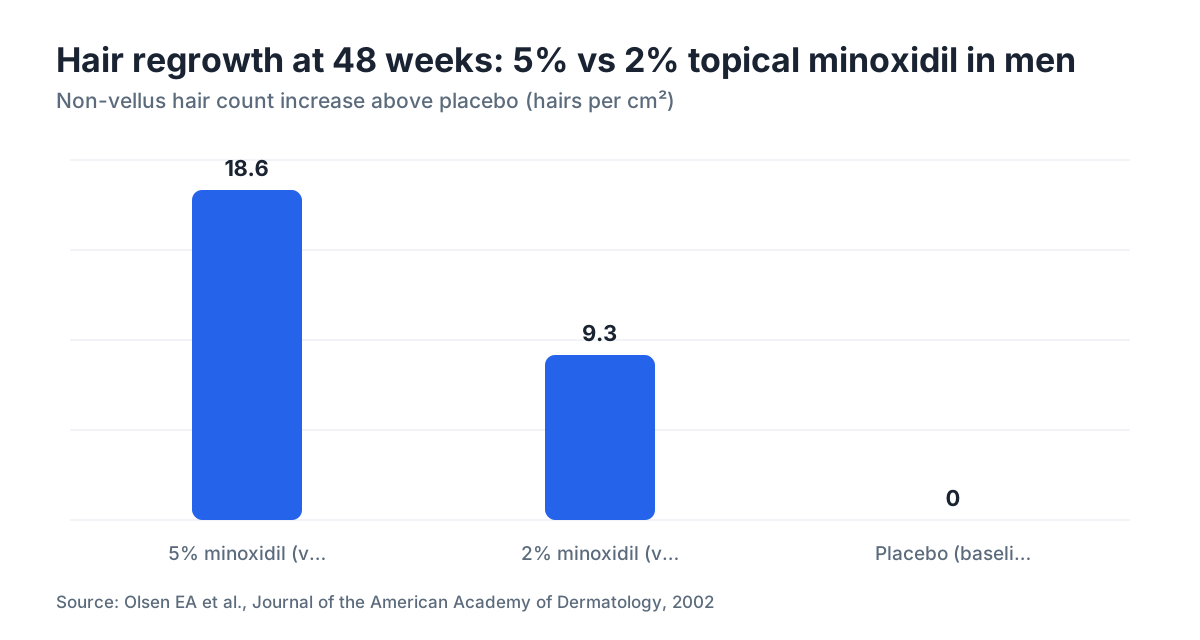
A randomized controlled trial in the Journal of the American Academy of Dermatology compared 5% minoxidil solution to a 2% formulation and found the 5% produced roughly twice the hair count at 48 weeks. [2] But the curve doesn't keep climbing as you go higher. The trials on 10% and 15% formulations are mostly small, uncontrolled, or funded by compounders with an obvious interest in the result. Nobody has published a clean head-to-head RCT showing 10% beats 5% in any way that matters.
The biology is simple. Minoxidil has to be converted to its active form, minoxidil sulfate, by the enzyme sulfotransferase in the scalp. That enzyme is the rate-limiting step, not the amount of minoxidil sitting on your skin. Once you've saturated that pathway, more minoxidil just means more absorption into your bloodstream and more chance of cardiovascular side effects. [3]
Some compounders argue that penetration enhancers like tretinoin or extra propylene glycol improve delivery at higher concentrations. There is modest evidence that tretinoin 0.01% combined with minoxidil increases efficacy compared to minoxidil alone. [4] That's a different mechanism than simply raising the minoxidil percentage.
Here's the takeaway. If 5% isn't working after 12 months, the answer is almost never 10%. It's either adding a different drug like finasteride, or getting a formal evaluation to figure out what's actually going on.
What is the maximum safe dose of oral minoxidil for hair loss?
Oral minoxidil is a different animal. It started as an antihypertensive drug, approved at 10 to 40 mg per day for severe high blood pressure. The doses used for hair loss are far lower, typically 0.625 mg to 5 mg per day, and even at those small amounts it causes measurable side effects in a meaningful share of users. [5]
The most commonly cited effective range in dermatology literature is 1.25 to 2.5 mg per day for women and 2.5 to 5 mg per day for men. Some dermatologists go up to 5 mg for men who tolerate lower doses well. Very few push above 5 mg for hair purposes. The hypertensive dose range starts there, and the risk-benefit math turns unfavorable fast.
The American Academy of Dermatology recognizes oral minoxidil as an option for androgenetic alopecia and recommends cardiology consultation for anyone with underlying cardiovascular risk. [6] The main side effects at hair-loss doses are fluid retention, a drop in blood pressure (especially on standing), and hypertrichosis, meaning unwanted hair growth on the face and body.
There is no single agreed maximum for off-label oral use in hair loss, because no dose has gone through an FDA approval process for this indication. Most dermatologists treat 5 mg/day as a practical ceiling for hair purposes, with some going higher in select patients who are also monitored by a cardiologist.
If you're considering oral minoxidil, read more at oral minoxidil for a full breakdown of the evidence and what to expect.
What happens if you apply minoxidil more than twice a day?
The twice-daily schedule isn't arbitrary. Pharmacokinetic studies show that 5% minoxidil twice daily produces roughly 1 to 2% systemic absorption on average, which already puts measurable drug in your plasma. A third application doesn't proportionally raise follicular drug levels, because the sulfotransferase conversion rate stays the same. [3]
What a third or fourth application does give you is more systemic drug. That means more risk of the side effects tied to minoxidil's vasodilatory action: headaches, scalp itching from irritant dermatitis (especially with solutions containing propylene glycol), facial puffiness, and in rare cases a blood pressure drop big enough to cause lightheadedness.
The scalp also has a limited reservoir. Applying more than the labeled 1 mL just runs off onto your pillow or forehead, which raises the chance of unwanted facial hair growth, one of the more annoying side effects women in particular report.
For a complete rundown of what to watch for, see the full article on minoxidil side effects.
Applying more often than directed is a common habit among people who aren't seeing results and figure more is better. It almost never is. The upside is essentially zero.
How does minoxidil max dose compare between solution and foam?
The 5% foam and 5% solution carry the same active ingredient at the same percentage, but they behave differently in practice.
The 5% solution uses propylene glycol as its main solvent, which improves drug penetration but also causes contact dermatitis in a notable subset of users, with estimates around 6 to 7% experiencing significant irritation. [7] The foam skips propylene glycol and uses butane and ethanol as carriers, which makes it gentler on the scalp but also means it evaporates faster.
On max dose, both cap at the same labeled amount. For the solution it's 1 mL twice daily, measured with the dropper applicator. For the foam it's half a capful twice daily, though the FDA-approved labeling for women allows once-daily foam use at 5%.
A 2004 trial comparing the two delivery systems found similar efficacy at equivalent concentrations. [7] The foam wins on tolerability. The solution sometimes wins on cost. Neither has a higher dose ceiling.
| Formulation | Max approved concentration | Labeled frequency | Main vehicle |
|---|---|---|---|
| Topical solution (men) | 5% | Twice daily | Propylene glycol |
| Topical foam (men) | 5% | Twice daily | Ethanol/butane |
| Topical solution (women) | 2% | Twice daily | Propylene glycol |
| Topical foam (women) | 5% | Once daily | Ethanol/butane |
| Oral (off-label, hair) | No FDA approval | Once daily (typically) | N/A |
| Compounded topical | Up to ~15% (off-label) | Varies | Varies |
Who should not use minoxidil at any dose?
Minoxidil isn't right for everyone, and some contraindications go well beyond fine print.
People with known cardiovascular disease, heart failure, or low blood pressure should talk to a cardiologist before using it, especially the oral form. Even topical absorption is enough to cause measurable blood pressure drops in sensitive individuals. The FDA label states: "Patients should not use topical minoxidil if there is no family history of hair loss or if the hair loss is sudden, patchy, differs from the pattern shown, or is of unknown reason." [1]
Pregnant or breastfeeding women should avoid it entirely. Animal studies showed fetal harm at systemic doses, and the topical version carries a Category C pregnancy risk classification.
People with scalp conditions like psoriasis, seborrheic dermatitis, or open wounds on the scalp shouldn't apply it to affected areas, because a disrupted skin barrier dramatically increases systemic absorption in an unpredictable way.
If your hair loss comes from something other than androgenetic alopecia, minoxidil is the wrong starting point. Alopecia areata, telogen effluvium, and other inflammatory or nutritional causes won't respond the way pattern hair loss does, and throwing the max dose at them just exposes you to side effects without touching the actual problem. Understanding what causes hair loss is the better first step.
Is higher-concentration compounded minoxidil worth trying?
Compounded minoxidil above 5% is legal in the US under 503A and 503B pharmacy rules, meaning a licensed compounding pharmacy can make it with a prescription. Legal and evidence-backed are different things.
The argument for going higher rests on the idea that individual differences in scalp sulfotransferase activity mean some people are "poor converters" who need more raw minoxidil to make enough active drug. There's a grain of biological truth there. A study in the British Journal of Dermatology found scalp sulfotransferase activity correlated with minoxidil response in a small group, meaning low-enzyme individuals responded less well at standard doses. [8] The jump from that finding to "use 15% compounded minoxidil" is not one the study makes.
The practical problem is quality control. Compounded formulations don't go through the FDA's manufacturing consistency review. Concentration, stability, and sterility can vary between batches and between pharmacies. What's on the label may not be what's in the bottle.
If you're a non-responder to 5% topical and you're thinking about going higher, the better move is combining 5% topical with oral finasteride or dutasteride, which addresses the hormonal side of androgenetic alopecia. [9] That combination has far better controlled-trial data than chasing higher topical concentrations. See finasteride and minoxidil for the specifics.
Compounded higher-concentration minoxidil might fit a very select case under close dermatologist supervision. As a DIY upgrade, it's a bad idea.
What results should you expect at the maximum approved dose?
Set realistic expectations, because a lot of people escalate to max dose expecting dramatic results and end up disappointed.
At 5% twice daily, the FDA registration trials showed average increases of about 18.6 non-vellus hairs per cm² above placebo at 48 weeks in men with vertex hair loss. [2] That's a real increase, not a full head of hair. In the same trials, roughly 48% of men reported moderate to dense regrowth, about 36% saw minimal regrowth, and 16% saw no change.
For women using 2% twice daily, a 32-week trial showed 22.6 non-vellus hairs per cm² versus 11.1 for placebo, a statistically significant but modest clinical effect. [2]
Hair count isn't the only metric that matters. Minoxidil also extends the anagen (growth) phase of existing hairs, so hairs that were thinning often get thicker before you'd count any new ones. Many users notice better density and caliber before they notice actual new hairs.
Timeline matters too. Don't judge minoxidil at any dose before 6 months of consistent use, and 12 months is the better target. The first 2 to 3 months often bring a shedding phase (that shedding is telogen effluvium triggered by follicles cycling into a new anagen phase, which is normal and not a sign the drug is failing).
If you're using it for a receding hairline specifically, the data is weaker. Minoxidil works best on the vertex and crown. Hairlines are harder.
Can you take oral and topical minoxidil at the same time?
This comes up a lot, especially now that oral minoxidil gets more attention in dermatology circles. The honest answer: sometimes, with careful monitoring, never casually.
Running oral and topical minoxidil together means you're getting the drug systemically through two routes at once. Total systemic exposure goes up. For most healthy young men that's probably fine at conservative doses, but the cardiovascular effects stack. Fluid retention and blood pressure changes are more likely with both forms than with either alone.
No well-designed trial has studied the oral-plus-topical combination for safety. The few case series and retrospective reports in dermatology literature don't show a dramatic safety signal, but they're too small to catch rare cardiovascular events.
If a dermatologist prescribes both, they should check baseline blood pressure and keep monitoring it. This isn't a combination to self-prescribe. The oral minoxidil article covers what prescribers look for before starting the oral form.
For most people, pairing minoxidil (either form) with a DHT blocker like finasteride is better studied and more logical than doubling up on minoxidil, because the two drugs address different parts of the hair loss mechanism. Read more about DHT blockers and how they complement minoxidil.
How long should you stay on maximum dose minoxidil?
Minoxidil is a maintenance drug, not a cure. Understand that before you start.
When you stop, the hairs minoxidil pushed into active growth shed within 3 to 4 months as those follicles return to their shortened baseline cycle. You end up roughly where you'd have been without ever starting. This isn't unique to the max dose. It's true at every dose.
So how long do you stay on it? Indefinitely, if it's working. Most people who start minoxidil and see results should plan to use it long-term. The FDA labeling says to use it continuously for "at least 4 months" before expecting results, which is a minimum evaluation window, not a treatment course. [1]
What changes over time is whether it keeps working. Some people hold their gains at year 5 or year 10. Others find the benefit fades as the underlying androgenetic alopecia keeps progressing. Minoxidil slows the process. It doesn't stop the hormonal mechanism driving it. Combining it with a drug that does address the hormonal side, like finasteride, gives you better odds of durable results.
If you've been on the max dose for 12 months with zero response, continuing is unlikely to change the outcome. That's a good time for a proper evaluation: checking scalp sulfotransferase activity if available, looking at iron or thyroid levels, and asking whether androgenetic alopecia is even the right diagnosis. A free AI hair scan at MyHairline can be a useful first step before a clinical visit, giving you a visual baseline and helping you frame what to ask a dermatologist.
What's the difference between minoxidil max for men versus women?
The FDA-approved max doses differ by sex, and the difference matters for more than regulatory reasons.
For men: 5% solution or foam, twice daily. For women: 2% solution twice daily, or 5% foam once daily. The 5% solution isn't FDA-approved for women, though dermatologists do prescribe it off-label.
Why the lower ceiling for women? Two reasons. The clinical trials that got 5% approved for men enrolled men. The 2% formulation had been tested in women and met the efficacy bar set at the time. Second, and more clinically relevant, women have a higher rate of facial hypertrichosis from topical minoxidil, likely because women typically have lower body mass and may absorb proportionally more of the drug. [7]
Women also experience androgenetic alopecia differently, usually as diffuse thinning across the top of the scalp (Ludwig pattern) rather than the vertex bald spots more common in men. The once-daily 5% foam approval for women reflects later trial work showing efficacy comparable to twice-daily 2% solution with better tolerability.
For men weighing the full picture of minoxidil for men, twice-daily 5% remains the most evidence-backed topical regimen. Whether to combine it with other treatments depends on Norwood stage, family history, and how the first year of monotherapy goes.
If hair loss is more severe or fast-moving, a hair transplant consultation becomes relevant, though minoxidil is often used after a transplant to preserve non-transplanted hairs.
Are there signs you've hit your personal maximum minoxidil benefit?
There's a difference between the FDA's dose ceiling and your individual biological ceiling, and they aren't always the same.
If you've been consistent with 5% twice daily for 12 months and seen no meaningful change in density, caliber, or coverage, you've likely hit your response ceiling for this drug at this dose. The sulfotransferase activity in your scalp may simply not convert enough minoxidil to its active form to drive a response. A test for sulfotransferase activity exists (done on plucked hairs) but it's not widely available and not standard of care as of 2025. [8]
Other plateau signs: the improvement you saw in months 3 to 6 slowly reverses over the next year despite consistent use, and the thinning keeps progressing at areas the drug doesn't reach well.
At that point the realistic options are: add finasteride or dutasteride to address the androgenic component, consider oral minoxidil under supervision, get a full workup to rule out other causes, or start seriously evaluating hair transplant candidacy. MyHairline's free AI scan can document your current state with photos and give you a baseline to track against before those conversations.
Don't confuse a temporary plateau with the ceiling. Normal hair cycles mean the drug's effects can appear to stall for 2 to 3 months before the next wave of improvement. Give it the full 12 months before deciding it's not working. Impatience is probably the most common reason people conclude the drug failed.
Sources
- FDA, Rogaine (minoxidil) 5% Topical Solution label
- Olsen EA et al., Journal of the American Academy of Dermatology, 2002 to 5% vs 2% minoxidil trial
- Suchonwanit P et al., Drug Design, Development and Therapy, 2019, minoxidil mechanisms review
- Bazzano GS et al., Archives of Dermatology, 1986, tretinoin plus minoxidil trial
- Randolph M, Tosti A, Journal of the American Academy of Dermatology, 2021, oral minoxidil review
- American Academy of Dermatology, Hair Loss: Diagnosis and Treatment guidelines
- Lucky AW et al., Journal of the American Academy of Dermatology, 2004 to 5% foam vs solution trial
- Messenger AG, Rundegren J, British Journal of Dermatology, 2004, sulfotransferase activity and minoxidil response
- Khandpur S et al., Journal of Dermatology, 2002, finasteride plus minoxidil combination trial
- FDA Drug Approval History, minoxidil NDA 19-501 and NDA 20-834