

TL;DR: Topical minoxidil rarely causes body-wide side effects, but headaches and palpitations happen, mostly in people who absorb more than expected. Mild headaches usually pass within a week or two. Palpitations, chest pain, swelling, or fainting are stop-now symptoms. Oral minoxidil carries higher cardiovascular risk. If symptoms don't clear within 48 hours of stopping, see a doctor.
Why does minoxidil cause headaches and heart palpitations at all?
Minoxidil began as a blood pressure drug. The FDA approved the oral version (Loniten) in the 1970s for severe hypertension [1]. The mechanism is plain: it relaxes the smooth muscle in blood vessel walls, blood pressure drops, and the heart compensates by beating faster or harder. That compensatory response is exactly what produces palpitations and headaches in people who are sensitive to it.
Apply the topical version (2% or 5% solution, or 5% foam) and most of it stays local. Scalp absorption is real but low. Studies measuring serum minoxidil after topical use put systemic bioavailability at roughly 1.4% from solution, slightly less from foam [2]. For most people that absorbed sliver does nothing you'd notice. But "most" is not "all". Skin condition, application area, how often you apply, and whether you cover your scalp afterward all change how much gets in.
Oral minoxidil (0.25 mg to 5 mg off-label for hair loss) is a different animal. You absorb essentially the whole dose. That's why cardiologists co-manage some patients on it, and why the Loniten label carries a black-box warning about fluid retention and tachycardia [1].
Headaches from topical minoxidil probably run one of two routes. One is vasodilation: widened vessels in the scalp and neck can set off a vascular headache like the kind some people get from nitrate heart medications. The other is the pressure swing itself, a brief dip followed by reflex tachycardia, which the body reads as a pounding behind the eyes or temples. Neither is mysterious. Both tell you the drug is reaching your bloodstream more than it should.
How common are these side effects, really?
Good numbers are harder to find than you'd expect. Most large trials chased hair regrowth, not cardiovascular events. Here's what the data actually show.
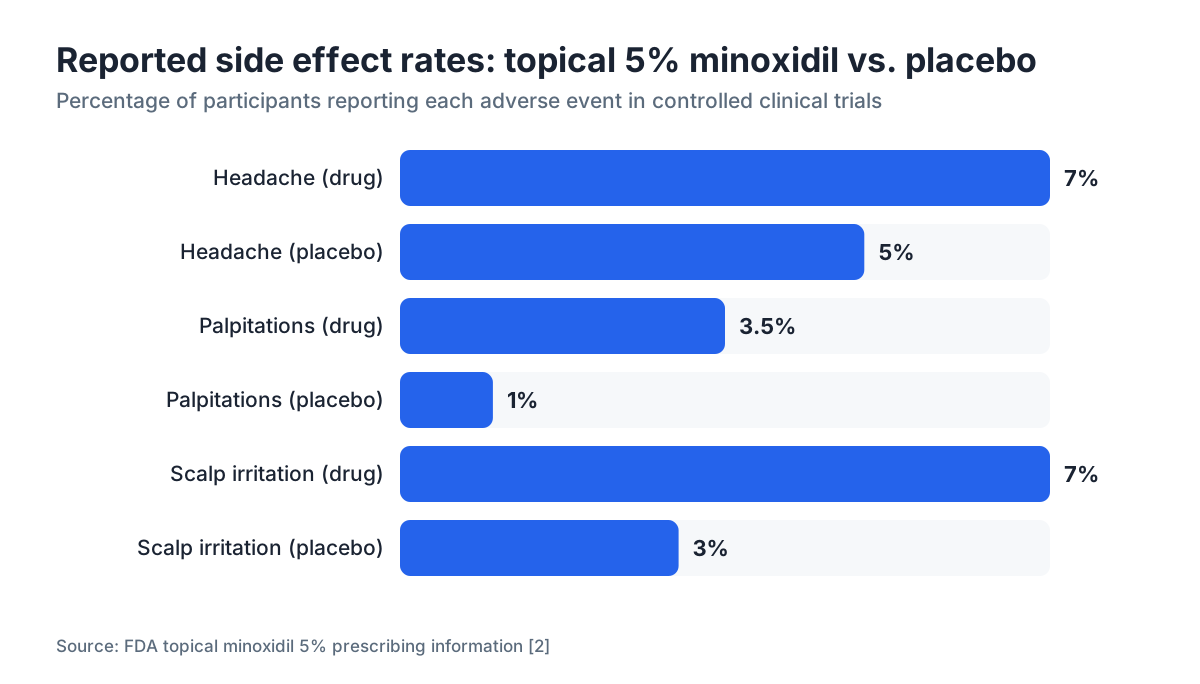
The FDA prescribing information for topical minoxidil (Rogaine and generics) lists adverse reactions from controlled clinical trials. Headache turned up in roughly 7% of users on the 5% solution versus about 5% on placebo, so the drug-attributable jump is modest [2]. Palpitations showed up in about 3 to 4% of the 5% group. These are the professional labeling figures, not marketing copy.
For oral minoxidil, the cardiovascular signal gets louder. A 2022 review in the Journal of the American Academy of Dermatology looking at low-dose oral minoxidil for hair loss found fluid retention (leg edema, periorbital edema) was the most reported adverse event, hitting 6 to 14% of patients depending on dose. Tachycardia ran 1 to 3% [3]. Low in absolute terms, but real people with real symptoms.
The placebo rates matter. About 5% of people in the placebo arms of minoxidil trials reported headaches too. So the background rate for anyone anxious about their hair, and therefore watching every twinge, is already elevated. That doesn't mean your headache isn't real. It means not every headache on minoxidil comes from minoxidil.
| Side effect | Topical 5% (drug) | Topical 5% (placebo) | Oral low-dose |
|---|---|---|---|
| Headache | ~7% | ~5% | Limited data |
| Palpitations | ~3.5% | ~1% | 1-3% |
| Edema | <1% | <1% | 6-14% |
| Scalp irritation | ~7% | ~3% | N/A |
Source: FDA prescribing information for topical minoxidil [2] and the 2022 JAAD oral minoxidil review [3].
Which symptoms mean you should stop minoxidil immediately?
Some symptoms are watch-and-wait. Others are stop-now. The difference matters. Quitting a treatment you didn't need to quit costs you months of progress, but ignoring a real cardiovascular signal can hurt you.
Stop right away and call your doctor or seek urgent care if you get:
- Chest pain or chest tightness, even mild
- Palpitations that last more than a few minutes, come back over several days, or feel like a fast irregular flutter rather than one strong beat
- Fainting, near-fainting, or sudden severe dizziness
- Swelling of the hands, feet, face, or abdomen that wasn't there before you started
- Rapid weight gain of more than 2 to 3 lbs in a day or two, a sign of fluid retention the FDA Loniten label flags by name [1]
- Shortness of breath at rest
The FDA's guidance for Loniten states that minoxidil "can cause serious side effects including fast or irregular heartbeat, sudden unexplained weight gain, and swelling of hands, feet, or face" [1]. That warning is written for the oral antihypertensive dose, but the American Academy of Dermatology tells topical users to stop and contact a physician if they get chest pain, tachycardia, faintness, or dizziness [4].
Watch-and-wait symptoms (reassess after a few days) include:
- A dull, all-over headache that showed up in the first week and is getting better
- One or two noticeable heartbeats that resolve in seconds and don't return
- Mild scalp tingling that stays on the scalp
Here's the honest rule of thumb. Any symptom you'd call a doctor about regardless of minoxidil is a stop-now symptom. If you're asking yourself "should I be worried?", you're probably describing something worth a phone call.
Why do some people absorb more minoxidil through the scalp than others?
Skin absorption is not uniform. Several things push scalp absorption past that average 1.4% figure.
Scalp inflammation or damage matters a lot. Seborrheic dermatitis, psoriasis, scratches, even hard towel-drying right before you apply can break down the stratum corneum and let more drug through. People with active scalp conditions absorb more.
Application area is the other big lever. The studies behind the 1.4% estimate used controlled surface areas. Plenty of users hit their hairline, temples, crown, and diffuse thinning zones in one session, covering far more scalp than any protocol intended. More surface area, more absorption.
Occlusion drives it up too. A hat, helmet, or swim cap put on soon after application creates a warm, humid layer that pushes more drug through the skin. Most product instructions say to let the scalp dry completely before covering it, and this is exactly why. NIH MedlinePlus repeats that same instruction and warns against applying to irritated or sunburned scalp [6].
Body weight and baseline blood pressure count as well. A 130-pound person with low-normal blood pressure feels the vasodilatory effect of the same absorbed dose more than a 200-pound person running normal-high pressure. That's part of why young women using minoxidil for hair loss, often lighter and lower-BP than the men the drug was first studied in, sometimes report stronger body-wide symptoms.
Getting headaches or palpitations from the topical form? Before you quit outright, shrink the dose and the area. Drop from 5% to 2%, go once daily instead of twice, and apply only to the specific thinning zone. See minoxidil side effects for the full picture on adjusting rather than abandoning the drug.
Can you manage the headaches without stopping minoxidil entirely?
Often, yes. Headaches from topical minoxidil tend to follow a tolerance curve. They're worst in the first one to two weeks, then fade a lot as your vascular system adapts to the mild vasodilation. If you're in week one, waiting beats quitting.
A few practical moves that tend to cut headache severity without giving up the treatment:
Timing helps. Some people apply at night before bed, so peak absorption happens while they're asleep and they never consciously feel the headache. Others do better in the morning. There's no universal answer, but testing your timing costs nothing.
Dropping the concentration is a real option. For some people the efficacy gap between 2% and 5% is smaller than the side effect gap. A 2023 Cochrane review found 5% produced statistically faster regrowth than 2%, but the absolute difference at 48 weeks was modest [5]. If 5% keeps giving you headaches, 2% may keep most of the benefit while cutting symptoms.
Stay hydrated. Vasodilatory headaches get worse when you're dry. Basic, but it works.
A standard OTC painkiller (ibuprofen, acetaminophen) can carry you through the adjustment window, assuming you have no contraindications. Skip the vasoconstrictive headache drugs (triptans, ergotamines) unless a doctor signs off, because pairing a vasoconstrictor with a vasodilator creates pressure swings nobody can predict.
If the headaches hold at the same intensity past two to three weeks, they're not a passing adaptation. That's when switching strategy makes more sense. Finasteride and minoxidil combinations work through a different mechanism, and finasteride on its own carries no cardiovascular signal at hair-loss doses.
Are palpitations from minoxidil actually dangerous?
For most people on topical minoxidil, a brief palpitation is more alarming than dangerous. The mechanism is reflex tachycardia: the drug drops peripheral resistance a little, the baroreceptors in your aorta notice, and the heart speeds up to catch up. In a healthy cardiovascular system, it self-corrects in seconds to minutes.
But palpitations aren't always harmless, and minoxidil isn't right for everyone. The Loniten black-box warning notes minoxidil "can exacerbate angina" and lists pheochromocytoma as a contraindication [1]. People with existing arrhythmias, uncontrolled hypertension, or structural heart disease have genuine reason to be careful even with topical doses.
Pattern is the thing to read. A single noticeable heartbeat after applying, especially in the first few days, is usually the compensatory response above. Palpitations that come back daily, last more than a minute, feel irregular (skipping, fluttering), or arrive with lightheadedness are a different clinical picture. Those need evaluation, not patience.
Have a known heart condition and thinking about minoxidil for men or women? Talk to your cardiologist before you start, not after symptoms show up. The risk from topical use is likely low for most cardiac patients, but it isn't zero, and your cardiologist may want baseline and follow-up blood pressure and heart rate checks.
For context, the dermatology literature treats oral minoxidil as the bigger cardiovascular concern. Many practices prescribing it now get an ECG and a basic metabolic panel before starting, especially for patients over 50 or with any cardiac history [3]. That level of caution is the right yardstick for judging topical minoxidil, which sits well below it.
Is oral minoxidil more likely to cause these symptoms than topical?
Yes, and it isn't close. With topical application, the fraction reaching your bloodstream is roughly 1 to 2%. With oral minoxidil at hair-loss doses (commonly 0.625 mg to 2.5 mg daily), you absorb close to 90% of the dose [1]. Even at 1.25 mg you're getting far more systemic exposure than any topical routine delivers.
The 2022 JAAD systematic review of oral minoxidil for hair loss, covering 634 patients across 17 studies, found edema in 6 to 14% of patients, hypertrichosis (unwanted body hair) in 14 to 17%, and tachycardia in 1 to 3% [3]. The authors flagged that these figures come from short-to-medium follow-up and that longer use may turn up cardiovascular events the literature hasn't caught yet.
None of this rules oral minoxidil out. For people who can't or won't use topical products (scalp sensitivity, daily-routine reasons), low-dose oral minoxidil under a physician is a legitimate path. It just asks for more oversight than grabbing a box of Rogaine at the drugstore. Blood pressure checks at baseline and during treatment are standard in most dermatology offices that prescribe it.
Started oral minoxidil and now have palpitations or headaches that won't quit? Those belong in a conversation with the prescribing physician, not a wait-and-see. See the full breakdown at oral minoxidil for dosing and monitoring specifics.
What happens to your hair if you stop minoxidil because of side effects?
This is the part nobody wants to hear. Minoxidil works by stretching the anagen (growth) phase of the hair cycle. Stop, and the hairs it was holding in growth mostly shift to the telogen (shedding) phase over the next two to three months. Most people see a clear shed around the 8 to 12 week mark after stopping, landing back roughly where they were before treatment [4].
The AAD's patient guidance on androgenetic alopecia is blunt about it: regrowth from minoxidil is not permanent, and hair loss typically returns within several months of stopping [4]. Worth sitting with before you start. Minoxidil is maintenance, not a cure.
If you stop for side effect reasons, you've got a few moves. Wait for symptoms to clear completely (usually 24 to 48 hours after your last topical application), then think about restarting at a lower dose or reduced frequency. Or talk to a dermatologist about a systemic option with a different mechanism, a DHT blocker like finasteride, which has no cardiovascular signal at the 1 mg dose used for hair loss.
Some people run both: finasteride long-term as the foundation, plus a cautious low-dose, once-daily topical minoxidil attempt once side effects clear. Others find finasteride alone does the job and never go back to minoxidil.
If your hair loss predates minoxidil or has a different cause, a dermatologist can sort it out. What causes hair loss walks the diagnostic tree in more depth. Sometimes a telogen effluvium episode mimics androgenetic alopecia and neither drug is the right tool anyway.
Does stopping minoxidil fix the headaches and palpitations?
Almost always, and fast. Topical minoxidil has a short half-life in the blood. Peak serum concentration after topical use lands within 1 to 2 hours, and the drug clears most people's bodies within about 24 hours [10]. Stop applying and the vasodilatory effect falls off quickly. Most people say headaches ease within 24 to 48 hours and palpitations stop in the same window.
If headaches or palpitations hang on more than 48 to 72 hours after you've fully stopped topical minoxidil, they aren't coming from minoxidil. That's the point to get a medical workup for the real cause. Palpitations that started during a stretch of hair-loss anxiety might trace to stress, caffeine sensitivity, anemia, thyroid trouble, or plenty else that deserves a proper diagnosis. Don't pin something on minoxidil that minoxidil didn't do.
Oral minoxidil clears at a similar speed in the short term (plasma half-life about 4 hours), but fluid that built up in the tissues during use takes longer to drain. Edema can linger for several days. If the fluid retention was significant, a physician may run a short course of diuretics to move it out.
The honest bottom line: if 48 hours off minoxidil doesn't clear the symptom, the symptom has another cause, and you need a doctor, not a hair loss article.
Who should not use minoxidil at all?
The FDA labeling and AAD clinical guidance name several groups who should either steer clear of minoxidil or use it only under direct medical supervision.
People on other blood pressure medications carry the highest cardiovascular risk from topical minoxidil. Even a small extra drop in blood pressure from the absorbed fraction can matter if a beta-blocker, ACE inhibitor, or similar drug is already actively lowering your pressure [1].
Pregnancy is an absolute no. Minoxidil is FDA Pregnancy Category C (animal studies showed harm, no adequate human studies) [2]. Women who are pregnant or trying to conceive should not use it, full stop.
People with pheochromocytoma should not use minoxidil. The Loniten label spells this out because minoxidil can stimulate catecholamine release, which is dangerous in this adrenal tumor.
Anyone with a history of arrhythmia, valvular heart disease, heart failure, or recent heart attack should talk to a cardiologist before starting, even the topical form.
Children under 18 aren't an approved population, though pediatric dermatologists sometimes use it off-label for alopecia areata under close supervision.
Not sure whether you fall into any risk group? A ten-minute conversation with your primary care provider before starting is genuinely worth it. It also helps to know your hair loss pattern first. The free AI hair analysis at MyHairline (/scan) can at least tell you whether you're likely dealing with androgenetic alopecia before you commit to a drug with any side effect profile.
Practical checklist: when to push through vs. when to stop
This is everything above, distilled into a decision guide instead of a narrative.
Push through (reassess after 2 to 3 weeks):
- Mild dull headache that started in the first week and is gradually improving
- Single noticeable heartbeat after application that resolves in under a minute
- Slight scalp tingling or mild dryness
- Mild brief lightheadedness that only shows up right after applying, not at other times
Reduce the dose first, then reassess:
- Headaches that are consistent but not severe after 2-plus weeks
- Palpitations that happen only on days you apply and stop within a few minutes
- Symptoms that clearly track with application timing and don't escalate
Stop now, consult a doctor:
- Any chest pain, even mild
- Palpitations lasting more than a few minutes, recurring daily, or feeling irregular
- Swelling of feet, ankles, face, or hands
- Unexpected weight gain of 3-plus lbs in 24 to 48 hours
- Fainting or near-fainting
- Shortness of breath
- Symptoms that started with minoxidil but persist more than 48 hours after stopping
Never restart without medical clearance:
- If you stopped for any of the stop-now symptoms above
- If a doctor has told you that you have an arrhythmia or structural heart problem
- If you're pregnant or become pregnant
Comparing options? Finasteride and minoxidil as a combination versus finasteride alone is worth understanding before you make a final call. And if you've run out of medical options, or had strong regrowth that then plateaued, a consult about hair transplant options is a logical next step with a dermatologist or hair restoration surgeon.
MyHairline's free AI scan (/scan) gives you a baseline read on your hairline pattern, a useful starting point before any of those conversations.
Sources
- FDA, Loniten (minoxidil tablets) prescribing information
- FDA, Rogaine (topical minoxidil 5% solution) prescribing information
- Randolph M, Tosti A. Journal of the American Academy of Dermatology, 2022 - oral minoxidil systematic review
- American Academy of Dermatology, Hair loss: diagnosis and treatment
- van Zuuren EJ et al. Cochrane Database of Systematic Reviews, 2023 - interventions for androgenetic alopecia
- NIH MedlinePlus, Minoxidil topical
- FDA Drug Safety and Availability
- Suchonwanit P et al. Drug Design, Development and Therapy, 2019 - minoxidil and its use in hair disorders
- Olsen EA et al. Journal of the American Academy of Dermatology, 2002 - 5% topical minoxidil versus 2%
- NIH National Library of Medicine, Minoxidil - StatPearls