TL;DR: Minoxidil produces measurable hair regrowth in about 40 to 60% of users, with most clinical trials showing peak results at 12 months of continuous use. You won't see anything useful before 3 to 4 months, and shedding in the first 6 weeks is normal. Results stop if you quit the drug. It does not work for everyone, and the honest data shows modest average gains, not a full reversal.
What do minoxidil results actually look like?
Modest but real improvement in hair density for a good share of users. A smaller fraction see dramatic regrowth. A meaningful chunk see very little. That range is wider than most marketing admits.
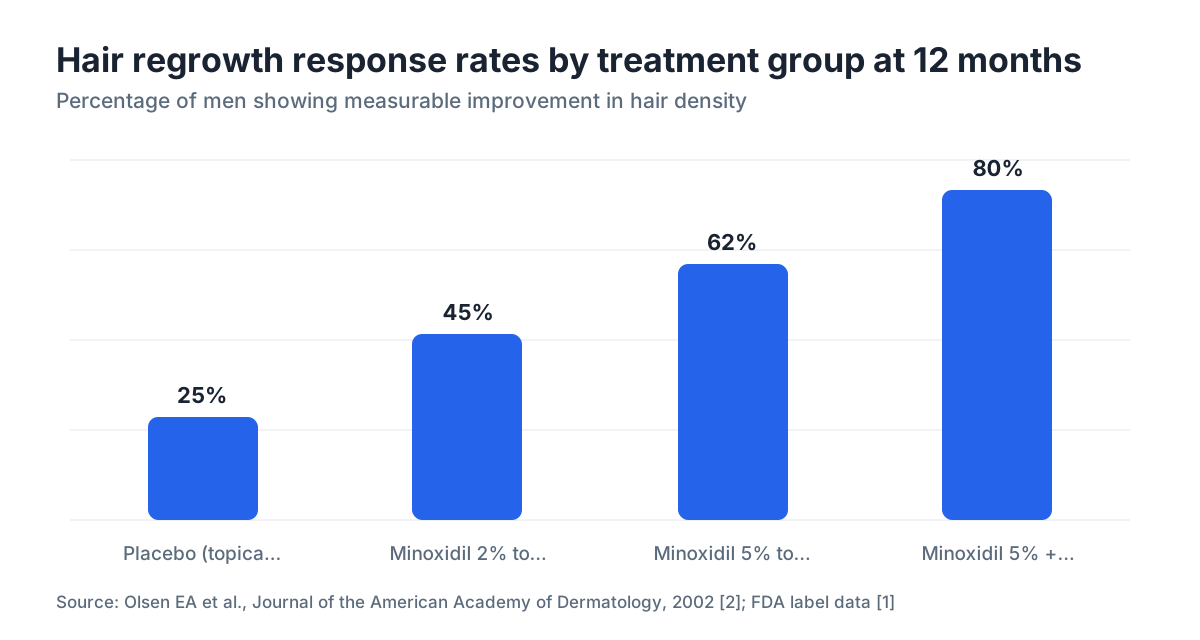
The FDA approved 5% topical minoxidil for men and 2% for women specifically for androgenetic alopecia, the pattern baldness driven by genetics and hormones [1]. The agency reviewed controlled trials before approval, and those trials are the most reliable data we have. In the Rogaine (minoxidil 5% foam) trials cited on the FDA label, about 62% of men using 5% minoxidil for 16 weeks showed "minimal to moderate" regrowth compared to about 25% on placebo, and roughly 16% showed "moderate to dense" regrowth [1]. That is not the same as "you'll get your hair back." More than half see something. About one in six sees a real cosmetic difference. A third to a half see little to none.
For women, the 2% solution trials showed that at 32 weeks, minoxidil users had a mean of 23 new hairs per 1 cm² target area compared to 11 in the placebo group [1]. Meaningful, but not dramatic.
Results also vary by where on your scalp you're treating. The crown responds better than the hairline. The frontal hairline is notoriously resistant to minoxidil, which is why many people feel it "isn't working" when they're watching the temples. If you have a receding hairline, know upfront that topical minoxidil's strongest evidence is for vertex (crown) loss, not hairline recession.
How long does minoxidil take to work?
The realistic timeline has four phases, and confusing them is the number-one reason people quit too early.
Weeks 1 to 6: Shedding. Most users get an increase in shedding in the first 4 to 8 weeks. This is not failure. Minoxidil pushes resting (telogen) hairs out so anagen (growth phase) hairs can take their place. It looks alarming, and it makes people panic. It's sometimes called telogen effluvium and it's a documented, expected effect. Quit here and you lose the chance to see results.
Months 2 to 3: Nothing visible. New hairs grow at roughly 1 to 1.5 cm per month. Even if your follicles are responding, you won't see it yet. This is the second abandonment window.
Months 3 to 6: Fine vellus hairs appear. Many users start noticing thin, colorless hairs in the target area. Those are real signs of follicular activity. They thicken over time.
Months 6 to 12: Terminal hair growth. Clinical trials consistently use 12 months as the primary endpoint because that's when most meaningful regrowth has happened. The Olsen et al. trial in the Journal of the American Academy of Dermatology found that 5% minoxidil significantly beat 2% at both 8 and 16 weeks, with the gap in hair count widening through week 48 [2].
At 12 months, results plateau. Some studies suggest a very slow continued improvement into year two, but for practical purposes, what you see at one year is close to your maximum response. Continuing indefinitely is what keeps it.
What does minoxidil regrowth look like at 3, 6, and 12 months?
Here's what you can reasonably expect at each milestone, based on trial data.
| Timepoint | What's typically happening | What trials report |
|---|---|---|
| 4 to 8 weeks | Increased shedding | Normal in most users; not a sign of failure |
| 3 months | Possible fine vellus hairs | Some users see early fuzz; many see nothing yet |
| 6 months | Early terminal hair growth | Hair count improvements often measurable by count |
| 12 months | Peak response | 40 to 60% of users show clinically measurable improvement [1][2] |
| 18 to 24 months | Maintenance | Continued use preserves gains; stopping reverses them within 3 to 6 months |
The American Academy of Dermatology recommends giving any topical hair loss treatment at least 12 months before deciding it isn't working [3]. That's not a sales pitch for the product. It's the biology of the hair growth cycle.
One thing worth saying plainly: photographs taken in consistent lighting are almost always more reliable than how your hair feels day to day. Hair density changes slowly, and perception lies. If you want to track progress, take monthly photos in the same light, same angle, with wet hair so styling doesn't hide what's actually there.
Does minoxidil work for everyone?
No. And the reasons why are getting clearer.
Minoxidil is a prodrug. It needs an enzyme called sulfotransferase (SULT1A1) in scalp follicles to convert it into its active form, minoxidil sulfate, which does the biological work [4]. People with lower SULT1A1 activity are poor converters and tend to be poor responders. A study in the British Journal of Dermatology found that patients with high baseline sulfotransferase activity had significantly better hair regrowth than those with low activity [4].
There is now a commercial test that measures your sulfotransferase enzyme activity from a finger-prick blood sample to predict response likelihood, though it isn't mainstream yet and isn't universally covered by insurance.
Beyond enzyme activity, non-response also ties to:
- How long you've had the hair loss (follicles dormant for years may be past reactivation)
- The extent of loss (Norwood V, VII men tend to respond less than Norwood II, III)
- Consistent application (irregular use is probably the most common real-world failure)
- Using an insufficient dose or concentration
If you're a consistent non-responder at 12 months with proper technique, oral minoxidil is worth discussing with a dermatologist. Oral minoxidil at low doses (0.625 to 2.5 mg daily for women, 2.5 to 5 mg for men) skips the scalp conversion problem entirely and has shown strong results in several recent open-label trials.
Topical vs. oral minoxidil: which gets better results?
Direct head-to-head randomized trial data is thin, but early evidence suggests oral minoxidil may match or beat topical for hair density, with a different side effect profile.
A 2022 randomized trial in JAMA Dermatology by Randolph and Tosti compared low-dose oral minoxidil (1 mg/day) to topical 5% minoxidil in women with androgenetic alopecia over 24 weeks. Both groups improved in hair density, with oral performing roughly equivalently on the primary outcome [5]. The oral group had more body hair growth (hypertrichosis); the topical group had more scalp irritation.
For men, the evidence base for oral minoxidil is newer and mostly observational, but the results look good. A 2020 retrospective study in the Journal of the American Academy of Dermatology reported that 79 of 100 men on low-dose oral minoxidil (mean dose 1.77 mg/day) showed physician-rated improvement in hair density, with a low rate of serious adverse events [6].
The practical part: oral minoxidil removes the compliance problem. You take a pill once a day. With topical, you apply solution or foam twice daily, wait for it to dry, and avoid washing your hair within four hours. Inconsistent application is a major reason topical results disappoint.
That said, oral minoxidil carries systemic risks that topical doesn't, including fluid retention and, rarely, cardiovascular effects. It needs a prescription and periodic monitoring. More detail at oral minoxidil.
How much hair growth should you expect in numbers?
This is where expectations need careful calibration. Clinical trials measure hair count in a fixed scalp area (usually 1 cm²), hair width, and sometimes overall scalp coverage scores. Here are the real numbers from published trials.
The Olsen et al. (2002) trial in the Journal of the American Academy of Dermatology found a mean increase of about 18.6 hairs per 1 cm² in the 5% topical minoxidil group at 48 weeks, versus about 12.7 in the 2% group and near zero in placebo [2]. The difference is real and statistically significant. Whether it's cosmetically meaningful depends on your baseline density and hair color, because darker, thicker hair shows improvement more visibly than fine, light hair.
Hair diameter also increases with minoxidil use. Multiple studies show increased fiber diameter in minoxidil users, and thicker hairs catch more light, which creates the perception of fuller coverage even before count changes get dramatic.
What you will not see: full restoration of a bald area that has had no hair for years. Minoxidil cannot revive follicles that have fully miniaturized and scarred. It works best when follicles are still present and minimally active, which is why starting early matters a great deal.
For a closer look at what minoxidil does specifically for male-pattern loss, see minoxidil for men.
Does minoxidil work better with finasteride?
Yes. The combination beats either drug alone, and it's one of the better-supported findings in hair loss research.
Minoxidil is a vasodilator and hair growth stimulator. Finasteride is a 5-alpha reductase inhibitor that cuts scalp DHT by about 60 to 70%, hitting the hormonal cause of androgenetic alopecia [7]. They work through different mechanisms, so combining them covers more of the problem.
A 2015 randomized controlled trial in Dermatologic Therapy compared men using finasteride alone, minoxidil alone, and the combination over 12 months. The combination group had significantly higher hair counts and a better global photographic assessment score than either monotherapy [8]. The combination's hair count improvement was roughly twice that of either drug alone.
If you're deciding between the two, a dermatologist who specializes in hair loss will almost certainly bring up both. More on the combined approach at finasteride and minoxidil.
Finasteride has its own side effect profile, including sexual side effects in a minority of users, and it isn't appropriate for women of childbearing potential. See finasteride for the full picture.
The combination is increasingly studied in low-dose oral and topical forms. A topical finasteride plus minoxidil spray is now available by prescription and shows comparable DHT reduction with potentially less systemic absorption than oral finasteride.
What happens when you stop taking minoxidil?
You lose the gains. This is the part people most often discover the hard way.
Minoxidil keeps follicles in the anagen (growth) phase and increases follicle size. Stop, and follicles revert. Most users see significant shedding within 3 to 6 months of stopping, and within a year they typically return to where they would have been had they never started, sometimes faster because of the synchronized shed [1].
That's not a reason to never start. It's a reason to treat minoxidil as a long-term maintenance commitment, not a one-time course. If you're not willing to use it indefinitely, know the results won't last.
Stopping finasteride does the same thing. Hair loss drugs, as a category, need sustained use to keep the benefit. The one exception is a hair transplant, which moves follicles that are genetically resistant to DHT. More on that at hair transplant.
If you decide to stop minoxidil, some dermatologists suggest tapering rather than quitting cold, though the evidence that tapering prevents the shed is weak. Switching from topical to oral minoxidil (or the reverse) does not appear to cause a shed if you do it without a gap.
Are minoxidil results different for women?
Yes, in several ways. The approved concentration for women is 2% (the 5% foam is now also FDA-approved for women, though originally approved for men only) [1]. Women typically have a more diffuse pattern of loss, often centered on the crown and part line rather than the hairline recession common in men.
Trial results in women are generally favorable. A 48-week trial in the Journal of the American Academy of Dermatology found that women using 2% minoxidil had significantly more hair and reported greater satisfaction than placebo users, with 63% of minoxidil users reporting moderate to dense regrowth versus 39% on placebo [9].
Women should not use oral minoxidil during pregnancy. The drug was originally developed as a blood pressure medication, and cardiovascular effects are a real concern at systemic doses. Topical minoxidil at standard doses produces low but detectable serum levels, so this concern applies even to the topical form, though at much lower magnitude [1].
Hair loss in women is also more hormonally complex than in men. What causes hair loss covers the broader picture, including thyroid issues, iron deficiency, and hormonal shifts that can drive shedding independently of androgenetic alopecia. Treat the wrong cause with minoxidil and you'll get weak results.
What can you do if minoxidil isn't giving you results?
First, confirm you've actually given it enough time and used it consistently. Irregular use is the most common real-world reason for poor results, not true non-response. Applying once a day instead of twice, or skipping days, is the problem to fix first.
If you've been consistent for 12 months and seen nothing, these are your realistic options:
Check the underlying cause. Minoxidil works for androgenetic alopecia. If something else is driving your loss, it won't help much. A dermatologist can run blood work to rule out thyroid issues, ferritin deficiency, and hormonal causes. A scalp biopsy can confirm whether your follicles are miniaturizing (androgenetic) or whether there's scarring alopecia, which minoxidil cannot treat.
Try oral minoxidil. As covered above, skipping the scalp conversion step can help genuine non-responders.
Add finasteride (for men and some women). The combination is more effective than either drug alone. DHT blockers work on the causative mechanism minoxidil doesn't directly touch.
Consider a hair transplant. For men with stable, well-defined loss patterns who want permanent results in a specific area, a hair transplant moves DHT-resistant follicles from the back of the scalp to balding areas. The transplanted hairs are permanent; the surrounding native hairs still need ongoing medical management. More detail at hair transplant.
Manage expectations honestly. Some people have biology that simply doesn't respond well to available treatments. That's not a failure of willpower. It's the current state of the medicine.
If you want a faster read on where your hair loss stands before talking to a doctor, the free AI hair analysis at MyHairline can map your pattern and track progression over time, which at minimum gives you better information going into any consultation.
Common minoxidil side effects that can affect your results
Side effects matter here because some of them directly change how people use the drug, and therefore what results they see.
The most common issue with topical minoxidil is scalp irritation: itching, dryness, and flaking. It's often caused by propylene glycol, a solvent in many liquid formulations. Switching to a propylene-glycol-free foam usually clears it. Persistent irritation pushes people to apply less or skip days, which directly cuts efficacy.
Contact dermatitis is less common but real. If you develop a rash, the culprit may be the minoxidil molecule itself or an excipient. Stop and see a dermatologist.
Hypertrichosis (unwanted facial or body hair growth) is most common with topical application in women and with oral minoxidil in both sexes. For women using topical products, keeping it off the face during application and letting it dry fully before lying down cuts this down a lot.
The early shedding phase mentioned above is technically a side effect, though it's a sign the drug is working. The full list of possible effects is at minoxidil side effects.
For most users, topical 5% minoxidil is well tolerated when used correctly. Serious systemic cardiovascular effects are rare with topical use at standard doses. Oral minoxidil at higher doses (it was originally approved as a 10 to 40 mg/day blood pressure medication) can cause fluid retention, rapid heart rate, and other effects, but the low doses used for hair loss carry much lower risk.
How do you know if minoxidil is working before the full 12 months?
Tracking gets easier once you know what early signals actually mean something.
The most reliable early signal is the end of the initial shedding phase. If heavy shedding starts around weeks 2 to 6 and then settles down by months 2 to 3, that's often a sign follicles are cycling correctly. Continued heavy shedding past month 3 is worth discussing with a dermatologist.
Fine vellus hairs appearing in previously thinning areas by month 3 to 4 are a good prognostic sign. They're often soft and colorless, but they mean follicular activity.
Hair pull test: gently grasp a small section of hair (about 60 strands) between thumb and forefinger and pull with firm, steady traction. Losing 6 or more hairs per pull is generally considered abnormal and suggests active shedding [3]. An improving pull test over months is a reasonable progress metric.
The most reliable method is probably consistent standardized photography. Wet hair, same angle, same lighting, monthly. Human perception of gradual density change is poor. Photos aren't. Some people use a dermatoscope (a handheld magnifier available for under $30) to examine hair caliber and follicle density up close.
What not to use as a metric: how your hair looks after styling, how much you're shedding on a given day (normal daily shedding is 50 to 100 hairs regardless of treatment status [3]), or other people's comments. All three are too variable to be useful signals.
Sources
- FDA, Rogaine 5% Topical Foam prescribing information and OTC labeling
- Olsen EA et al., Journal of the American Academy of Dermatology, 2002: 5% vs 2% minoxidil in men
- American Academy of Dermatology, Hair Loss: Tips for Managing
- British Journal of Dermatology: scalp sulfotransferase activity and minoxidil response
- Randolph M, Tosti A. JAMA Dermatology, 2022: oral vs topical minoxidil in women
- Sinclair RD et al., Journal of the American Academy of Dermatology, 2020: low-dose oral minoxidil in men
- FDA, Propecia (finasteride 1mg) prescribing information
- Khandpur S et al., Dermatologic Therapy, 2015: combination minoxidil and finasteride vs monotherapy
- Lucky AW et al., Journal of the American Academy of Dermatology, 2004: minoxidil 2% in women over 48 weeks
- FDA, MedWatch: minoxidil topical safety information