TL;DR: Oral minoxidil pills are low-dose versions of a blood pressure drug that has been used off-label for hair loss since the 1980s. Doses of 0.25 to 5 mg daily show real regrowth in androgenetic alopecia in both men and women. They work at least as well as topical minoxidil for many people, but carry systemic side effects including fluid retention and unwanted body hair that topical does not.
What are minoxidil pills and how are they different from the topical?
Minoxidil started as a pill. Upjohn developed it in the 1970s as an oral drug for high blood pressure, and doctors quickly noticed that patients on it grew hair they had not expected. That observation eventually produced the topical Rogaine formula, which the FDA approved in 1988. The pill itself never got a separate FDA approval for hair loss, so when dermatologists prescribe it today for that purpose, they are prescribing it off-label [1].
The chemistry is the same either way. Minoxidil is a potassium channel opener that widens small blood vessels and, through a still partly understood mechanism, prolongs the anagen (growth) phase of the hair follicle. What changes between oral and topical is how the drug reaches the follicle. Topical minoxidil relies on skin absorption, which is inconsistent. Only about 1 to 2% of a topical dose reaches your bloodstream. The pill delivers the drug systemically, so every follicle on your body gets exposed, not only the ones you managed to coat with foam or solution [2].
That systemic delivery is both the advantage and the problem. It improves consistency and you skip the scalp irritation, greasy residue, and daily application hassle of the topical. But side effects can show up anywhere: your legs, face, or back. More on that below.
The doses used for hair loss are much smaller than the blood pressure doses. Treating hypertension historically required 10 to 40 mg per day. Hair loss protocols typically use 0.25 to 5 mg per day, with women most often starting at 0.25 to 1 mg and men at 2.5 to 5 mg [3].
Does the oral minoxidil pill actually regrow hair? What do the studies show?
The evidence base has grown fast over the last six years. A 2021 review in the Journal of the American Academy of Dermatology pooled data from 634 patients across multiple studies and found that low-dose oral minoxidil produced significant hair density improvement in androgenetic alopecia, with most patients responding at doses of 0.25 to 5 mg daily [3]. The authors described it as "an effective and well-tolerated treatment for hair loss," which is about as close to an endorsement as reviews tend to get.
A randomized controlled trial published in JAMA Dermatology in 2022 compared 5 mg oral minoxidil to 1 mg oral finasteride in 90 men with androgenetic alopecia over 24 weeks. Both drugs produced similar hair count increases, and the minoxidil group had slightly better patient-reported satisfaction scores. Neither was dramatically better [4].
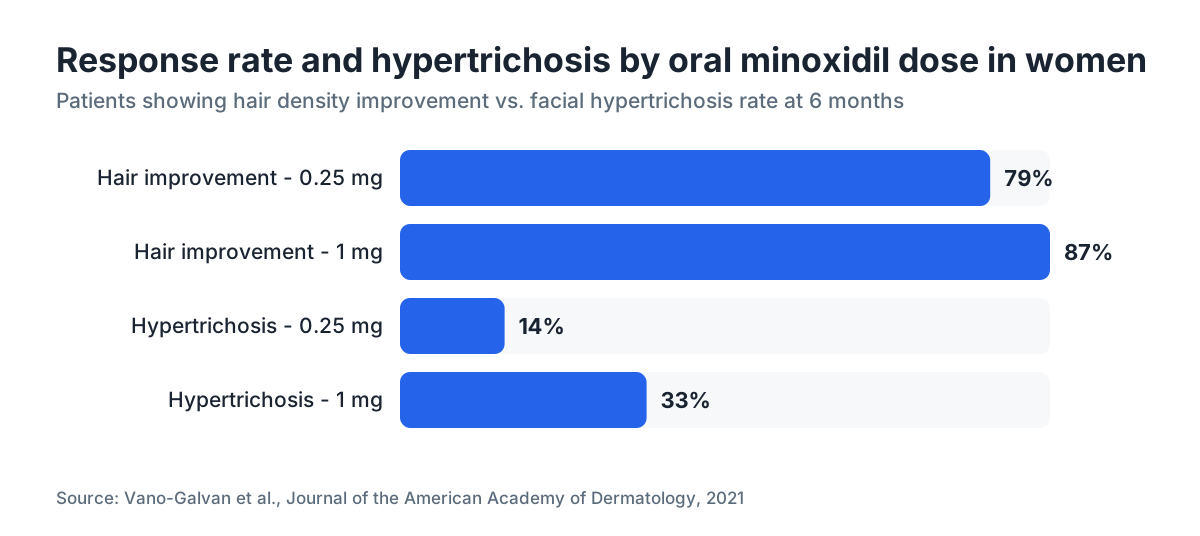
For women, a 2021 prospective study in the same journal followed 100 women taking low-dose oral minoxidil (mostly 0.25 mg or 1 mg) and found that 84% showed improvement in hair density at six months, judged by global photographic review [5]. That beats most topical trials, though the head-to-head comparison is muddied by different measurement methods.
Growth is not instant. Most people see the first visible change at three to four months. Peak benefit typically shows up at 12 months. Stop, and the hair you gained tends to shed within three to six months, same as topical minoxidil. This is a long-term commitment, not a course of treatment.
See oral minoxidil for a more detailed breakdown of the evidence by dose and hair loss type.
What dose of minoxidil pill is used for hair loss?
There is no FDA-approved dose for hair loss specifically, so dosing comes from the published trial literature and individual dermatologist judgment.
| Population | Typical starting dose | Typical maintenance dose |
|---|---|---|
| Women (androgenetic alopecia) | 0.25 mg/day | 0.5 to 1 mg/day |
| Men (androgenetic alopecia) | 2.5 mg/day | 2.5 to 5 mg/day |
| Women (other alopecia types) | 0.25 to 1 mg/day | 1 to 2.5 mg/day |
| Men (other alopecia types) | 2.5 mg/day | 5 mg/day |
These are ranges from published protocols, not a prescription. Your doctor may choose differently based on your blood pressure, kidney function, and heart history.
The standard 5 mg tablet that pharmacies stock can be cut into halves or quarters for lower doses. Compounding pharmacies also make 0.25 mg, 0.5 mg, and 1 mg tablets. Some dermatology practices prefer compounded doses because cutting tablets introduces dosing variability, though whether that matters clinically at these low doses is debated.
Start low, then increase. That is the dominant approach. Most protocols start women at 0.25 mg for at least four weeks before stepping up, partly to screen for low blood pressure symptoms and partly because hypertrichosis (unwanted body hair) is less common at lower doses [3].
What are the side effects of oral minoxidil pills?
Hypertrichosis is the most common one. It means hair growth where you did not want it, typically on the face (upper lip, cheeks, forehead) and legs. It affects somewhere between 15% and 40% of patients across trials, with higher rates at higher doses and in women [3][5]. For some patients it is mild and manageable. For others it is the reason they quit. There is no clean way to predict who will get it before trying.
Fluid retention is the other big one. Minoxidil is a vasodilator, and widening those vessels prompts the kidneys to retain sodium and water. At blood pressure doses this is clinically significant. At hair loss doses most patients do not notice, but ankle swelling, puffiness, or a small weight gain (often 1 to 2 kg) can occur, especially at 5 mg doses in men. Patients with existing heart or kidney disease should talk this through carefully with their doctor before starting [1].
Blood pressure effects come next. At the 0.25 to 1 mg doses used in women, meaningful blood pressure changes are uncommon. At the 2.5 to 5 mg doses used in men, mild drops in systolic pressure can occur and occasionally cause light-headedness or fatigue. The FDA label for oral minoxidil (at hypertensive doses) carries a boxed warning about serious cardiac effects, though those warnings apply to doses many times higher than hair loss protocols use [1]. A baseline blood pressure check is still worth it.
Tachycardia (elevated heart rate) is possible, again more likely at higher doses. The original blood pressure labeling pairs minoxidil with a beta-blocker for exactly this reason. At hair loss doses, a clinically significant heart rate jump is uncommon but not impossible.
See minoxidil side effects for the full picture across both oral and topical formulations.
Who should not take oral minoxidil pills?
The contraindications are not trivial. People with pheochromocytoma (a rare adrenal tumor) should not take minoxidil because it can trigger severe hypertension in that context. People with severe kidney disease or on dialysis need specialist review because minoxidil clearance depends on how well the kidneys work [1].
People with active cardiovascular disease including heart failure, a recent heart attack, or a significant arrhythmia should be cautious. The boxed warning on the FDA label specifically calls out cardiac risk at higher doses. Most cardiologists and dermatologists want to clear any cardiac history before prescribing even low-dose oral minoxidil [1].
Pregnancy is a clear contraindication. Minoxidil crosses the placenta and has been linked to fetal abnormalities in animal studies. The FDA assigns it Pregnancy Category C [1]. Women of childbearing age who are not using reliable contraception should not take it.
Age matters too. The safety and efficacy data in patients under 18 are limited. Most dermatologists do not prescribe oral minoxidil for adolescents.
Are oral minoxidil pills better than topical minoxidil?
For consistency of delivery, probably yes. Topical application means getting the right amount on the right areas every single day, and absorption varies with scalp condition, hair density, and whether you washed recently. The pill sidesteps all of that.
For efficacy in controlled trials, the two land in roughly the same place. A 2021 review in Dermatology and Therapy found no strong evidence that oral minoxidil produced higher hair density counts than topical at equal follow-up periods, but noted that adherence was better in the oral group, which may explain the stronger real-world outcomes some clinicians report [6].
The practical difference most people notice is the burden. Topical minoxidil twice a day on a full head of hair is genuinely annoying. One pill with breakfast is not. If you have been inconsistent with topical use, the pill may produce better results for the simple reason that you actually take it.
Side effect profiles differ in real ways. Topical minoxidil mostly causes scalp irritation, initial shedding, and (rarely) contact dermatitis. Systemic absorption from topical is low enough that hypertrichosis and fluid retention are uncommon. The pill does not irritate your scalp but exposes your whole body to the drug. That is a genuine trade-off, not a clear win for either form.
If you are weighing options, minoxidil for men covers how topical and oral fit into a broader treatment plan.
Can women take oral minoxidil pills for hair loss?
Yes, and the evidence for women is stronger than many people realize. The 2021 prospective study above found an 84% response rate in women at low doses [5]. Female pattern hair loss is one of the most common reasons dermatologists write these prescriptions right now.
Minoxidil pills for women are dosed much lower than for men, starting at 0.25 mg and going up to 1 to 2.5 mg. Hypertrichosis is the main concern. In one study, 14% of women on 0.25 mg reported facial hypertrichosis versus 33% of women on 1 mg [5]. Many women find the facial hair fine, manageable, or fading over time. Others stop treatment because of it. Discuss it honestly with a prescribing dermatologist before you start.
Women who are pregnant, planning pregnancy, or breastfeeding should not take oral minoxidil. This is a hard contraindication, not a precaution [1].
Female pattern hair loss also has causes beyond androgen sensitivity. Thyroid dysfunction, iron deficiency, and telogen effluvium can all mimic it. Treating hair loss with minoxidil without ruling those out first is treating a symptom while ignoring the cause. A reasonable workup before starting includes ferritin, TSH, and a look at recent stressors or hormonal changes. See what causes hair loss for the full differential.
Can you combine oral minoxidil with finasteride or other treatments?
Combination therapy is common in clinical practice. Oral minoxidil with oral finasteride is probably the most frequently written combination for men with androgenetic alopecia. They work through different mechanisms: minoxidil prolongs the growth phase and improves follicle blood supply, while finasteride reduces DHT, the hormone that shrinks follicles in genetically susceptible men. Using both at once hits both pathways [7].
A retrospective analysis published in the Journal of the American Academy of Dermatology in 2021 found that the combination of low-dose oral minoxidil (2.5 mg) and finasteride (1 mg) produced greater hair density improvement than either drug alone in men with androgenetic alopecia at 12 months [7].
For women, combining oral minoxidil with spironolactone is sometimes used. Spironolactone is an androgen blocker, and the pairing targets both follicle blood supply and androgenic miniaturization. The evidence base for this combination is smaller, and blood pressure monitoring matters more when you stack two drugs that lower it.
Topical minoxidil plus oral minoxidil is generally not done. There is no clear evidence it adds efficacy, and you would be doubling systemic exposure for no reason.
If you are thinking about combination therapy, finasteride and minoxidil covers the clinical evidence and the practical questions about stacking treatments. And if finasteride worries you because of its DHT-blocking mechanism, dht blocker lays out the broader landscape of options.
How do you get a prescription for minoxidil pills?
In the United States, oral minoxidil requires a prescription. It is not sold over the counter like topical minoxidil. You need a licensed prescriber, most commonly a board-certified dermatologist or a telehealth platform with dermatology oversight [1].
The appointment usually involves a review of your medical history, a baseline blood pressure measurement, and sometimes basic labs (a BMP to check kidney function, particularly if you are older or have risk factors). Some telehealth platforms skip the labs for otherwise healthy young patients, which is a reasonable shortcut for some and not for others.
Cost varies. A 30-day supply of generic oral minoxidil 5 mg tablets runs roughly $10 to $30 at major pharmacy chains with a GoodRx coupon. Compounded lower doses (0.25 mg, 1 mg) run higher, often $40 to $80 per month, because compounding adds cost. Most insurance plans do not cover minoxidil for hair loss because it is prescribed off-label for that use. The drug itself is cheap. The dermatology consultation is the main upfront cost, ranging from $150 to $400 without insurance.
Not sure whether your hair loss pattern suggests you would benefit? MyHairline's free AI scan can analyze photos of your scalp and give you a preliminary read on your pattern and Norwood or Ludwig stage before you book a paid appointment.
What should you realistically expect in the first year on oral minoxidil?
Month one is usually nothing visible. Some people notice initial shedding in weeks two through six, which happens because minoxidil pushes hair follicles to cycle, and cycling means shedding old telogen hairs before new anagen growth begins. This shed is temporary and not a sign the drug is failing. See telogen effluvium for the biology behind that initial shed.
Months three to four: most patients start seeing less shedding and some early regrowth, especially at the hairline and crown. Photos under consistent lighting beat mirror checks by a wide margin for tracking this.
Months six to twelve: this is when density changes become visible to other people. Studies that report the strongest results usually measure at 12 months [3][5]. If you reach six months with no change at all, raise it with your prescriber. Dose adjustment or switching to combination therapy is the usual next step.
Year one and beyond: maintenance. The drug does not cure the underlying cause of your hair loss. It manages it. Most patients who respond stay on it indefinitely. Stopping usually means losing the gains within three to six months.
If you are at a more advanced stage of loss where regrowth alone may not restore the density you want, hair transplant explains how surgical and medical treatments work together rather than as either-or choices.
Is oral minoxidil FDA-approved for hair loss?
No. Worth being clear about. The FDA has approved topical minoxidil (2% and 5% solutions and 5% foam) for androgenetic alopecia. The oral tablet is FDA-approved only for high blood pressure under the brand name Loniten [1]. Every prescription written for oral minoxidil for hair loss is off-label use.
Off-label prescribing is legal and common. The FDA states that "once the FDA approves a drug, healthcare providers generally may prescribe the drug for an unapproved use when they judge that it is medically appropriate for their patient" [8]. Dermatologists prescribing low-dose oral minoxidil for hair loss are acting well within normal medical practice.
What off-label means in practice: insurance is less likely to cover it (also true of many approved treatments), and the FDA has not independently reviewed the hair-loss dose range for safety and efficacy. The evidence comes from investigator-initiated trials and systematic reviews, not a dedicated FDA review process. The studies are real and the data are solid, but this sits in a different regulatory category than an approved drug.
Evidence-based dermatology guidelines for androgenetic alopecia already list minoxidil as a first-line agent [10].
How does oral minoxidil compare to other hair loss treatments?
Here is an honest side-by-side:
| Treatment | Evidence level | Typical regrowth | Main limitation |
|---|---|---|---|
| Oral minoxidil 2.5 to 5 mg | Good (multiple RCTs, systematic reviews) | Moderate to significant | Hypertrichosis, requires Rx |
| Topical minoxidil 5% | Strong (FDA-approved, 30+ years data) | Moderate | Application hassle, scalp irritation |
| Finasteride 1 mg | Strong (FDA-approved for men) | Moderate to significant | Sexual side effects, men only for FDA indication |
| Low-level laser therapy | Moderate (FDA-cleared devices) | Mild to moderate | Cost, time commitment |
| Hair transplant | Strong for right candidates | Permanent in grafted areas | Cost ($4,000 to $15,000), surgery |
| Ketoconazole shampoo | Limited | Mild at best | Adjunct only |
For most men with androgenetic alopecia, oral minoxidil and finasteride are now the two first-line oral options, and combining them is increasingly standard. For women, oral minoxidil is often the first systemic option tried, sometimes paired with spironolactone.
If you are dealing with a receding hairline specifically, rather than diffuse thinning, know that the hairline is often less responsive to minoxidil than the crown. Calibrate your expectations accordingly.
For anyone curious about other systemic options, finasteride is the most studied alternative, and hair loss supplements covers what is worth considering below the prescription tier.
Sources
- U.S. Food and Drug Administration, Loniten (minoxidil) prescribing information and drug label
- Gupta AK et al., Journal of the American Academy of Dermatology, 1987 (minoxidil pharmacology review)
- Randolph M, Tosti A. Oral minoxidil treatment for hair loss: A review of efficacy and safety. Journal of the American Academy of Dermatology, 2021.
- Oliveira-Soares R et al., JAMA Dermatology, 2022 - oral minoxidil vs finasteride RCT
- Vano-Galvan S et al., Journal of the American Academy of Dermatology, 2021 - low-dose oral minoxidil in women
- Jimenez-Cauhe J et al., Dermatology and Therapy, 2021 - oral vs topical minoxidil comparative review
- Vano-Galvan S et al., Journal of the American Academy of Dermatology, 2021 - combination oral minoxidil and finasteride
- FDA, Understanding Unapproved Use of Approved Drugs (off-label guidance)
- Blumeyer A et al., Journal of the German Society of Dermatology (JDDG), 2011 - evidence-based guidelines for androgenetic alopecia