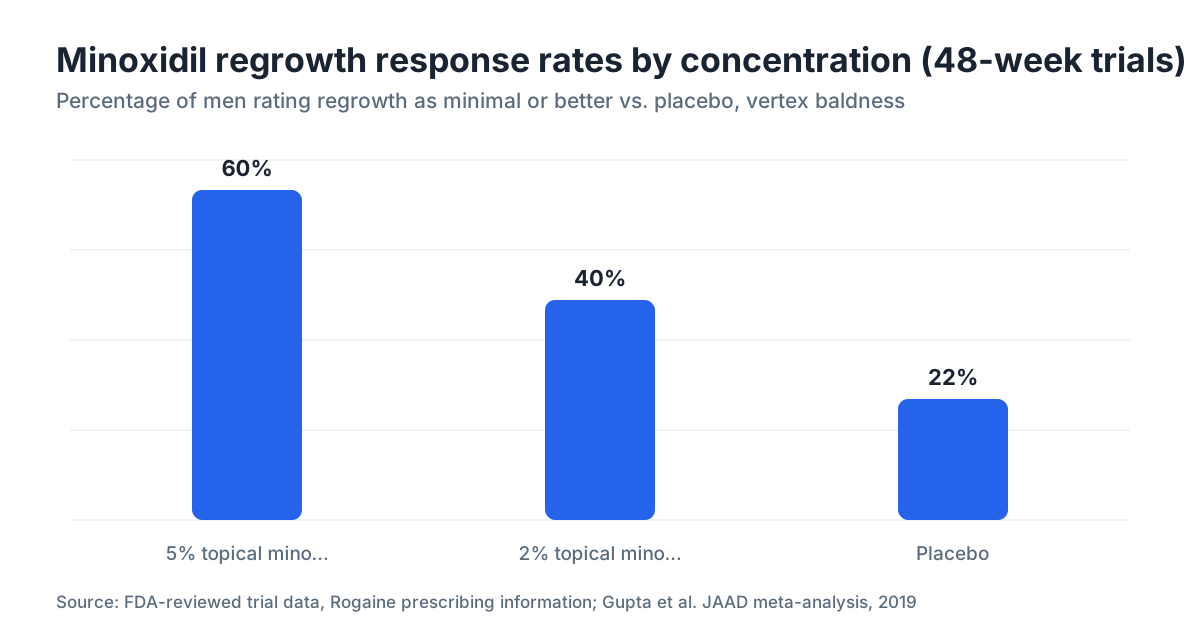
TL;DR: Minoxidil is a potassium channel opener first developed as a blood pressure drug. On the scalp it widens blood vessels near follicles, extends the anagen (growth) phase, and partially reverses follicle miniaturization. It does not touch DHT. About 60% of men see meaningful regrowth within 4 to 6 months of consistent use, per FDA-reviewed trial data.
What does minoxidil actually do to a hair follicle?
Minoxidil's core job is to open ATP-sensitive potassium channels in the smooth muscle cells surrounding hair follicles. When those channels open, potassium floods out of the cell, the membrane hyperpolarizes, and voltage-gated calcium channels close. Less calcium means less smooth muscle contraction, so the arterioles feeding the dermal papilla (the cluster of cells at the follicle base that controls hair cycling) dilate.
Wider blood vessels mean more oxygen and nutrients reaching a follicle that, in androgenetic alopecia, has been slowly strangled by DHT-driven miniaturization. That improved blood supply is real. The honest caveat is that it is almost certainly not the whole story.
Researchers have identified at least two other effects that probably matter as much. First, minoxidil prolongs anagen, the active growth phase of the hair cycle. A follicle normally spends a set number of weeks in anagen before it rests (telogen) and sheds. Minoxidil pushes that timer back, so more follicles are growing at any given moment. Second, at the cellular level, minoxidil appears to stimulate the proliferation of dermal papilla cells and suppress their apoptosis (programmed cell death), giving shrunken follicles a partial structural rescue [1][2].
None of this cures androgenetic alopecia. Stop minoxidil and the benefits reverse within roughly 3 to 6 months, because the underlying DHT sensitivity of your follicles stays untouched. For that part of the equation, you need a different drug entirely, like finasteride or another DHT blocker.
How was minoxidil discovered as a hair loss treatment?
Minoxidil started life as a systemic antihypertensive. Upjohn developed oral minoxidil in the 1970s under the brand name Loniten to treat severe, treatment-resistant high blood pressure. Doctors prescribing it noticed an unexpected side effect: patients grew hair in unusual places, including the scalp. Physicians call this drug-induced hypertrichosis.
That observation drove the hypothesis that topical application might stimulate scalp hair specifically. Upjohn ran controlled trials through the late 1970s and early 1980s. The FDA approved a 2% topical minoxidil solution (Rogaine) for men with androgenetic alopecia in 1988, and a 5% solution followed in 1993 [3]. It went over-the-counter in 1996.
The irony is that researchers still do not have a single, clean molecular explanation for why a potassium channel opener causes hair growth. The vasodilation story is tidy, but the direct cellular effects on dermal papilla cells likely matter more at typical topical doses, since the drug concentrations reached in scalp skin are far below what would produce meaningful systemic vasodilation [2].
What is the role of sulfotransferase in how minoxidil works?
Minoxidil is a prodrug. The molecule you apply to your scalp is not the active compound. Your body must convert it into minoxidil sulfate before it can open potassium channels. The enzyme that does this conversion is sulfotransferase, specifically SULT1A1 and related isoforms found in the scalp's outer root sheath cells.
This is the single best explanation for why some people respond to minoxidil and others barely respond at all. People with naturally higher scalp sulfotransferase activity convert more minoxidil into the active sulfate form and, on average, show better regrowth. A 2014 study published in the British Journal of Dermatology measured sulfotransferase activity in hair follicles of 60 participants and found that high activity correlated with significantly better response at 12 months [4].
Commercial tests now exist that measure your sulfotransferase activity from a hair pluck sample, aiming to predict whether topical minoxidil will work for you. The science is real, but the clinical value is still debated, because even low-converter responders sometimes show benefit, and the tests are not cheap. If you respond well within the first 3 to 4 months, you probably have adequate enzyme activity. If you see essentially nothing after 6 months of consistent use, low sulfotransferase activity is one plausible reason worth discussing with a dermatologist.
Oral minoxidil bypasses this conversion bottleneck to a meaningful extent because the liver also expresses sulfotransferase. That is one reason oral minoxidil shows strong efficacy even in some topical non-responders.
How long does minoxidil take to work, and what should you actually expect?
Four to six months for the first signs of meaningful regrowth. That is the honest timeline from clinical trials, not marketing copy.
In the 48-week trials submitted to the FDA, 5% topical minoxidil produced a mean increase of about 18 hairs per cm² in vertex baldness compared to placebo. Roughly 60% of men rated their hair regrowth as minimal to moderate; a smaller fraction, around 15 to 20%, rated results as moderate to dense [3]. The numbers look different across studies because methodology varies, but the broad takeaway holds: most men get some benefit, a minority get impressive regrowth, and a meaningful minority see little to no change.
The first few weeks can actually look worse. Minoxidil forces resting (telogen) hairs to shed early so the follicle can restart in anagen. This is called minoxidil-induced telogen effluvium and it is normal. Seeing extra shedding in weeks 2 to 8 does not mean the drug is failing. It means follicles are cycling.
Peak benefit generally appears around the 12-month mark. After that, efficacy tends to plateau and, in many users, slowly erodes as androgenetic alopecia keeps progressing in untreated follicles. This is why combining minoxidil with a DHT blocker makes biological sense, which is discussed in more detail at finasteride and minoxidil.
Women tend to see somewhat better vertex response than men in trials, possibly because female pattern hair loss involves less complete follicle destruction, giving minoxidil more to work with.
Does minoxidil work differently for men vs. women?
The mechanism is identical: potassium channel opening, vasodilation, anagen prolongation, dermal papilla cell support. The approved doses differ because of how trials were structured, not because of any proven sex-specific pharmacology.
The FDA labels 5% foam and 5% solution for men, and 2% solution and 5% foam for women [3][5]. In practice, many dermatologists prescribe 5% to women off-label, and studies like the 2004 Olsen et al. trial in the Journal of the American Academy of Dermatology found 5% solution more effective than 2% in women at 48 weeks with a similar safety profile [6]. The main clinical reason the 2% dose existed for women at all was concern about hypertrichosis (unwanted body or facial hair), which appears to be concentration-dependent.
For more detail on dosing and what the trials show for male pattern hair loss specifically, see minoxidil for men.
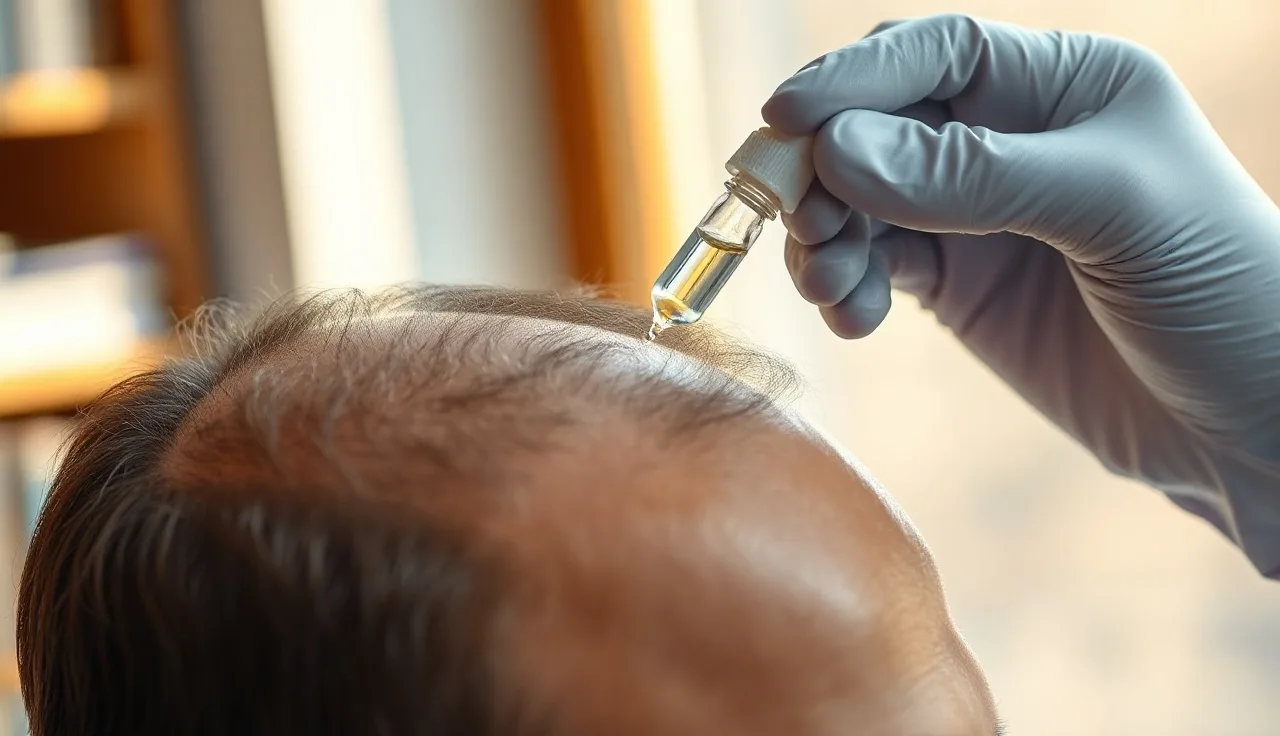
Does minoxidil block DHT or address the root cause of hair loss?
No. This is probably the most important thing to understand about minoxidil's mechanism.
Dihydrotestosterone (DHT) binds to androgen receptors in genetically susceptible follicles and gradually shrinks them over years. Minoxidil does nothing to DHT levels or androgen receptor sensitivity. It compensates for the damage by improving follicle nutrition and extending growth cycles, but the underlying shrinkage process keeps running in the background [1].
This is why minoxidil users often describe holding steady for years and then noticing gradual thinning returns, especially if they started treatment late. The drug manages a progressive condition. It does not reverse its cause. To actually lower scalp DHT, you need a 5-alpha reductase inhibitor like finasteride (which blocks conversion of testosterone to DHT) or a topical DHT blocker. Understanding what causes hair loss at a deeper level helps set realistic expectations for what any single drug can accomplish.
That said, managing the condition is worth doing. Consistent minoxidil use measurably slows miniaturization progression in most users, even when dramatic regrowth does not occur. Preserving what you have is a legitimate outcome.
How does topical minoxidil compare to oral minoxidil in terms of mechanism?
Same molecule, same mechanism, different delivery and systemic exposure.
Topical minoxidil relies on absorption through the scalp and local sulfotransferase conversion. Systemic absorption is low, typically 1 to 2% of the applied dose reaches circulation, which limits cardiovascular effects [3]. The tradeoff is that efficacy is partly limited by local enzyme availability.
Oral minoxidil, taken at low doses (0.625 mg to 5 mg daily, well below the antihypertensive doses of 10 to 40 mg), achieves consistent systemic delivery and relies on hepatic sulfotransferase conversion, bypassing the scalp enzyme bottleneck. Several trials found low-dose oral minoxidil effective for androgenetic alopecia with a tolerability profile that was acceptable at doses of 2.5 mg or below in men and 1 mg or below in women [7].
The tradeoffs are real. Oral dosing carries more systemic cardiovascular risk (fluid retention, tachycardia) and more systemic hypertrichosis. People with cardiac conditions or taking antihypertensives should be especially careful. Neither route is universally superior. The right choice depends on your individual response, enzyme activity, and risk tolerance.
More specifics are at oral minoxidil.
What does the clinical trial evidence say about minoxidil's effectiveness?
The FDA approval rests on controlled trials, mostly in vertex (crown) baldness. The core efficacy data from the prescribing information shows that 5% topical minoxidil produced statistically significant increases in hair count versus placebo from as early as 8 weeks, with peak effect at approximately 48 weeks [3].
A meta-analysis published in the Journal of the American Academy of Dermatology in 2019 (Gupta et al.) pooled data from multiple randomized controlled trials and found that topical 5% minoxidil produced greater hair count increases than 2% minoxidil, which in turn outperformed placebo, with the effect size largest for vertex scalp compared to frontal recession [8]. This matters practically: if your primary concern is a receding hairline, minoxidil's evidence base is weaker than for crown thinning.
The American Academy of Dermatology recommends topical minoxidil as a first-line treatment for both male and female pattern hair loss, with 5% preferred for men and either concentration considered appropriate for women [5]. That recommendation rests on multiple Level 1 randomized trial datasets.
Nobody has great long-term data beyond 5 years from randomized trials. Most of what we know about decade-long use comes from observational registry data and clinical practice, which suggests maintenance of benefit for many users who stay consistent, but that evidence is lower quality than the trial data.
The picture differs considerably when hair loss comes from something other than androgens. Conditions like alopecia areata, scarring alopecias, or nutritional deficiencies respond differently, and minoxidil's mechanism is not well-suited to addressing those causes.
Why do some people stop responding to minoxidil over time?
Several things happen at once.
First, androgenetic alopecia progresses. Minoxidil compensates for miniaturization but does not stop it, so as more follicles shrink below a functional threshold, fewer respond to the drug's vasodilatory and growth-extending effects. A follicle that has undergone fibrosis and complete miniaturization cannot be rescued by blood flow improvements alone.
Second, there may be tachyphylaxis (reduced response to a drug over time) at the receptor level, though the evidence for this specifically with minoxidil is not strong. Most dermatologists think the apparent loss of response is primarily the disease outrunning the drug rather than true pharmacologic tolerance.
Third, some users cut application frequency or apply less than the recommended 1 mL dose, quietly reducing drug delivery without realizing it.
If you notice your response fading, the practical step is to confirm you are applying the drug correctly and consistently, then talk to a dermatologist about adding a DHT blocker, considering a switch to oral minoxidil, or discussing whether a hair transplant is appropriate given where your loss has progressed.
For a full picture of what can go wrong and what side effects to watch for, minoxidil side effects covers that territory.
Can you use minoxidil indefinitely, and what happens if you stop?
You can use it indefinitely. There is no known upper limit on duration from a safety standpoint at standard topical doses, and many people use it for decades.
Stopping is a different story. When you discontinue minoxidil, the anagen-prolonging effect fades. Follicles that were being maintained in the growth phase cycle back into telogen, and a noticeable shed typically occurs within 3 to 6 months. Hair density returns to roughly where it would have been without treatment, meaning you lose the regrowth but not necessarily more than that, though you may feel worse off than baseline because the rapid shed is visible and concentrated.
This is not a dangerous withdrawal, just an aesthetic one. Worth knowing before you start, because minoxidil is effectively a commitment. Many people combine it with other treatments, including finasteride, a DHT blocker, or eventually a hair transplant, specifically to reduce dependence on any single approach.
If you want a structured way to track whether your current regimen is working before you commit for the long haul, MyHairline's free AI hair analysis at /scan can help you establish a baseline of your hairline and density so you have something concrete to compare against in 6 to 12 months.
Is minoxidil safe, and what are the most important risks to know?
At standard topical doses, minoxidil has a well-established safety record built on three decades of OTC use and FDA review. The most common issues are local: scalp irritation, dryness, and contact dermatitis, some of which comes from propylene glycol in solution formulations rather than minoxidil itself (foam formulations omit propylene glycol, which is why they were developed) [3].
Systemic effects from topical application are uncommon because absorption is low, but they are not zero. Scalp application of 1 mL twice daily produces plasma concentrations of roughly 1 to 4 ng/mL in most users, well below cardiovascular effect thresholds, but people with pre-existing cardiac conditions should discuss use with their doctor before starting [3].
Oral minoxidil carries meaningfully higher systemic risk. The FDA's prescribing information for oral Loniten includes a black box warning about cardiac effects at antihypertensive doses, and even at the low off-label doses used for hair loss, fluid retention and reflex tachycardia are real possibilities, especially in people with cardiac or renal disease [9].
The scalp shed in the first 2 to 8 weeks (telogen effluvium) is not a safety concern, just a physiologic one. It resolves on its own.
For a thorough breakdown of what to watch for, the minoxidil side effects article covers the full spectrum from annoying to when-to-call-a-doctor.
How does minoxidil fit into a broader hair loss treatment plan?
Realistically, minoxidil works best as one part of a strategy, not the whole strategy.
For androgenetic alopecia, the strongest evidence-based combination is minoxidil plus a 5-alpha reductase inhibitor like finasteride. Minoxidil handles the symptomatic side (blood flow, anagen extension) while finasteride addresses the cause (DHT-driven miniaturization). A randomized trial published in Dermatologic Therapy found the combination superior to either drug alone at 12 months [10]. If you are willing to take two drugs, the logic for combining them is solid.
For people at early stages, minoxidil alone may be enough for years. For people with moderate to advanced loss (Norwood 4 and above), minoxidil is less likely to produce dramatic results in already-bald areas and works better as a maintenance tool for remaining follicles while other options, including surgery, are considered.
Hair transplants do not rule out minoxidil use. Most surgeons recommend continuing minoxidil after transplant to protect non-transplanted native follicles from continued miniaturization.
Minoxidil is not indicated for alopecia areata (autoimmune hair loss), scarring alopecia, or most other non-androgenetic causes. If your hair loss pattern or history suggests something other than standard androgenetic alopecia, the mechanism described in this article may not apply to your situation at all. Getting the diagnosis right matters more than picking the right drug.
MyHairline's AI scan (/scan) is a reasonable starting point for getting a clearer picture of your pattern before you invest in a treatment course. It is free and takes about two minutes.
For a complete map of options including hair loss supplements, see the broader content on this site, but temper expectations: supplements have substantially weaker trial evidence than minoxidil or finasteride for androgenetic alopecia.
Sources
- Messenger AG, Rundegren J. Minoxidil: mechanisms of action on hair growth. British Journal of Dermatology, 2004
- Buhl AE et al. Minoxidil acts as a potassium channel agonist in hair follicles. Journal of Investigative Dermatology, 1992
- FDA. Rogaine (minoxidil topical solution) prescribing information / labeling
- Caserini M et al. Sulfotransferase activity and minoxidil response in androgenetic alopecia. British Journal of Dermatology, 2014
- American Academy of Dermatology. Hair loss: diagnosis and treatment guidance
- Olsen EA et al. A randomized clinical trial of 5% topical minoxidil versus 2% topical minoxidil and placebo in the treatment of androgenetic alopecia in men. Journal of the American Academy of Dermatology, 2002
- Randolph M, Tosti A. Oral minoxidil treatment for hair loss: A review of efficacy and safety. Journal of the American Academy of Dermatology, 2021
- Gupta AK et al. Systematic review of randomized controlled trials characterizing the efficacy of minoxidil for androgenetic alopecia. Journal of the American Academy of Dermatology, 2019
- FDA. Loniten (minoxidil tablets) prescribing information with black box warning
- Khandpur S et al. Comparative efficacy of minoxidil and finasteride combination versus minoxidil alone in androgenetic alopecia. Dermatologic Therapy, 2002