TL;DR: Minoxidil is an over-the-counter topical (and now low-dose oral) drug that prolongs the hair growth phase and widens follicles. About 40% of men see meaningful regrowth after one year of consistent use; women respond somewhat better. It does not block DHT, so it works best alongside a DHT blocker for androgenetic alopecia. You have to keep using it or the hair you gained falls out within months.
What is minoxidil and why does it grow hair?
Minoxidil started as a blood pressure pill in the 1970s. Patients taking it orally kept noticing unwanted hair growth all over their bodies, and researchers figured out the connection. By 1988 the FDA had approved a 2% topical solution for male pattern hair loss, the first hair loss drug ever approved in the US. The 5% foam and solution followed in the 1990s and 2000s, and Rogaine became a household name.
The exact mechanism is still not fully nailed down, which is honest to admit. The leading explanation is that minoxidil (or its active metabolite, minoxidil sulfate, produced by the enzyme sulfotransferase in the follicle) opens potassium channels in follicle cells. That action shortens the telogen (resting) phase, extends anagen (active growth), and increases blood flow around the follicle. The result is that fine, wispy vellus hairs can mature into thicker, pigmented terminal hairs, and follicles that have shrunk due to DHT-driven miniaturization get a partial size boost [1].
Minoxidil does not block dihydrotestosterone. This is the single most important thing to understand about it. If DHT is driving your hair loss, minoxidil buys you time and bulk, but it does not address the root cause. That is why the combination of minoxidil plus a DHT blocker is consistently more effective than either drug alone [2].
How effective is minoxidil, really?
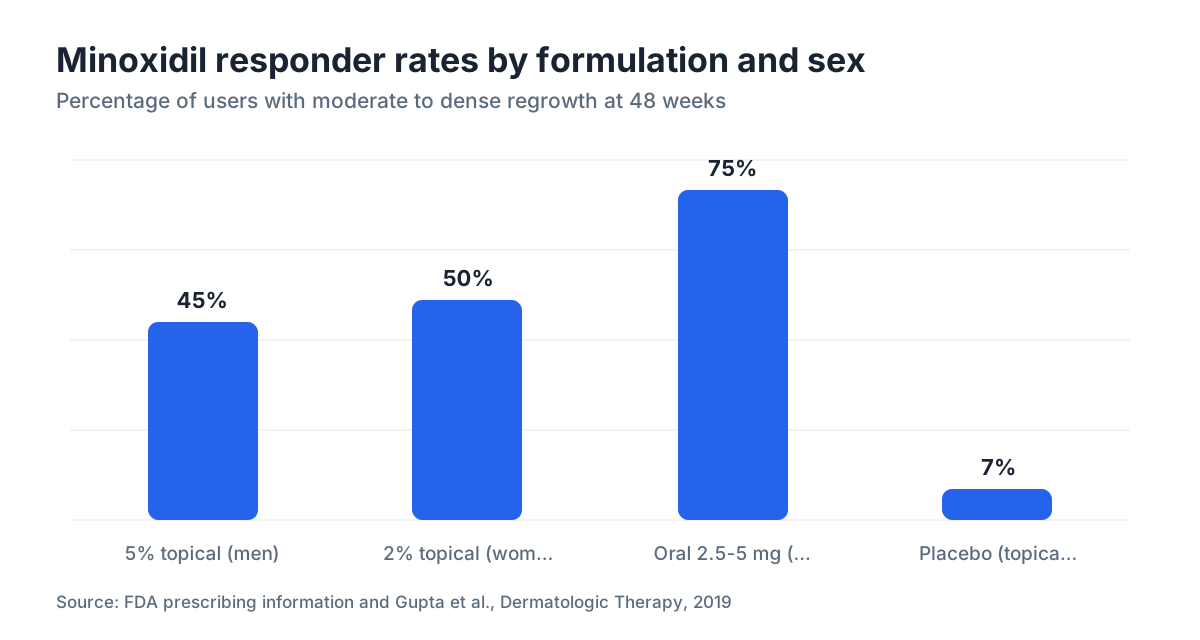
The 1990 FDA-reviewed trial of 5% topical minoxidil in men found that 45% of participants rated their regrowth as moderate to dense after 48 weeks, compared with 7% in the placebo group [1]. A Cochrane-style review of multiple randomized controlled trials concluded that 5% minoxidil produced significantly more hair growth than 2% minoxidil, and 2% beat placebo [3]. Women in the original 2% approval trials showed about 60% responder rates for minimal to moderate regrowth at 32 weeks [1].
Those numbers sound good in a press release. In practice, results vary enormously. Responder status is partly genetic: people with low follicular sulfotransferase activity metabolize minoxidil poorly and see almost no response topically. A 2014 study in the British Journal of Dermatology found that sulfotransferase activity measured from an eyebrow hair biopsy could predict topical responders with reasonable accuracy [4]. If you are a topical non-responder, oral minoxidil bypasses this bottleneck because the drug is metabolized systemically.
Nobody regrows a full head of hair with minoxidil alone after years of significant loss. Realistically, minoxidil is best at stabilizing loss and adding density to thinning areas that still have live follicles. Areas of complete baldness with no follicles left do not respond.
| Treatment | Responder rate (moderate to dense) | Timeline to visible result |
|---|---|---|
| 5% topical minoxidil (men) | ~45% | 3-6 months |
| 2% topical minoxidil (women) | ~40-60% | 4-8 months |
| Oral minoxidil 2.5-5 mg (men) | ~70-80% in small trials | 3-6 months |
| Placebo (topical) | ~7% | N/A |
Data from FDA prescribing information [1] and Gupta et al. 2019 [5].
What are the different forms of minoxidil?
Topical solution. The original form. It comes in 2% and 5% concentrations. It contains propylene glycol as a carrier, which causes scalp irritation and contact dermatitis in some people. Apply twice a day, let it dry for at least four hours before bed, and keep it away from your face and pillow. The dropper delivers 1 mL per application; the instructions say to spread it across the scalp, not dump it in one spot.
Topical foam. Same active drug, no propylene glycol. Better tolerated for most people with sensitive scalps. Half a capful applied twice daily equals the right dose. The foam dries faster than the solution, which people prefer. Slightly more expensive per month.
Oral minoxidil. This is not the same as the old blood pressure pill at full cardiac doses. Dermatologists prescribe 0.625 mg to 5 mg daily off-label for hair loss. At those doses the blood pressure effect is minimal for most healthy people, but it is real, and that is why it requires a prescription and periodic monitoring. The oral minoxidil article goes deeper on dosing and who is a good candidate.
Minoxidil in combination products. Several brands now sell topical minoxidil mixed with finasteride or other actives. Compounding pharmacies also produce custom formulations. The evidence for combination topical finasteride-minoxidil is early but promising, and the advantage is reduced systemic finasteride absorption compared to the oral pill [6].
How do you use topical minoxidil correctly?
Apply to a dry scalp, not wet hair. Part your hair to expose the thinning areas. For the solution, use 1 mL twice daily (2 mL total per day). For the foam, half a capful twice daily. Spread it with your fingertips, not a comb. Wash your hands immediately after.
Timing matters for adherence, not pharmacology. Pick two times you can hit every single day, because consistency is the whole game. Morning and evening works for most people. If you miss doses constantly, you might as well not bother.
Wait at least four hours before washing your hair after application. Some studies used longer windows but four hours appears to be sufficient for absorption. Sleeping with wet minoxidil on your pillow and then it transferring to your partner's face is a known nuisance, so let it dry.
Do not use more than the recommended dose. More minoxidil on your scalp does not mean more hair growth. The follicle's sulfotransferase enzyme saturates. Extra product just increases the chance of side effects and drips onto your face causing unwanted facial hair.
Give it 12 months before making any judgment. Seriously. The first three months sometimes bring a shed (more on that below), the next three months you are watching for early fuzz, and it is usually around months six to twelve that you see real density changes. Stopping at month three because you do not see results is the most common mistake.
Why am I losing more hair after starting minoxidil?
This is the shedding phase, and it is real and temporary. When minoxidil pushes follicles from telogen into anagen, the old resting hairs must fall out first to make room for the new growth cycle. This looks alarming, especially in the shower. It typically starts two to eight weeks after beginning treatment and lasts four to eight weeks.
The shedding is actually a sign the drug is working. Follicles that show no shedding response are often follicles that are not responding at all. That said, nobody enjoys losing what feels like a lot of hair, and many people quit right here, which is exactly the wrong time to quit.
If heavy shedding continues past three months, that is a different pattern and worth discussing with a dermatologist. Diffuse shedding that does not resolve could mean telogen effluvium from another cause, like a nutritional deficiency or thyroid issue, happening at the same time as your minoxidil use. These two things can coexist and are sometimes confused.
What are the side effects of minoxidil?
Topical minoxidil is generally safe. The most common side effects are scalp irritation, dryness, and flaking. These are often from the propylene glycol carrier in the solution, not the minoxidil itself. Switching to the foam formulation (propylene glycol-free) usually resolves this.
Unwanted facial or body hair (hypertrichosis) affects a meaningful minority of users, particularly women using 5% solution. The drug can drip from the scalp to the forehead and temples during application or exercise. Using foam, applying it properly, and not increasing dose helps.
Systemic absorption from topical minoxidil is low but not zero. Some people experience mild fluid retention, headaches, or a faster heart rate. These are more common with the solution than the foam, and more common with 5% than 2%. Anyone with a history of heart disease or low blood pressure should talk to a doctor before starting.
Oral minoxidil carries more systemic risk: fluid retention and pericardial effusion at higher doses, plus the hypertrichosis issue all over the body. At low dermatologic doses these are uncommon but real. See the minoxidil side effects page for a full breakdown by form and dose.
The FDA label states: "The precise mechanism by which minoxidil stimulates hair growth is not known" and also lists cardiovascular effects as a concern at systemic exposures [1]. That quote from the prescribing information is a useful reminder that even well-approved drugs have limits to what we know.
What happens if you stop taking minoxidil?
The hair you gained comes back out. This is the part that catches people off guard.
Minoxidil does not cure hair loss or permanently change your follicles. It keeps certain follicles in a growth phase they would not otherwise maintain. When you stop, those follicles return to their natural (often shrinking) trajectory within two to four months. Most users report returning to roughly their pre-treatment baseline within six months of stopping [7].
This is not a reason not to use it. It means you are making a decision to use it long-term if you want to keep the results. Think of it like contacts or glasses: they work while you use them.
If you want to stop, tapering (every other day, then twice a week) is sometimes suggested to reduce the stop-shed, though the evidence for this is mostly anecdotal. The stop-shed is real regardless.
Is minoxidil better for men or women?
Both sexes respond, but the approved doses and patterns differ. For men, the FDA approves 5% solution or foam twice daily for vertex (crown) hair loss under the Rogaine labeling. The 2% solution is also approved for men but is clearly less effective based on head-to-head data [1][3].
For women, the FDA has approved 2% solution (twice daily) and a 5% foam (once daily). Women tend to present with diffuse thinning across the top of the scalp rather than the crown recession pattern men show. Minoxidil works well for this pattern. See minoxidil for men for a deeper look at the male-pattern specifics.
One thing women should know: minoxidil is not safe during pregnancy. It is rated FDA Category C (animal studies showed harm, inadequate human studies), and the topical form also carries a caution. Women who are pregnant or trying to conceive should not use it [1].
Female pattern hair loss also often has hormonal drivers (androgens, thyroid, iron) that minoxidil alone does not address. A full workup before just grabbing a bottle off a drugstore shelf is worthwhile for women.
How does minoxidil compare to finasteride?
They work on completely different mechanisms and are not interchangeable. Minoxidil stimulates the growth cycle directly. Finasteride inhibits the enzyme 5-alpha reductase, reducing the conversion of testosterone to DHT and slowing or stopping the miniaturization of follicles that DHT causes.
In men with androgenetic alopecia, finasteride generally outperforms minoxidil alone in head-to-head trials. A comparative study in the Journal of the American Academy of Dermatology found that finasteride produced greater increases in hair count than 2% minoxidil, and the combination was better than either drug alone [2].
That combination approach is where most hair loss doctors land. Finasteride slows the DHT-driven loss; minoxidil stimulates growth in the follicles still alive. They target different parts of the same problem. The finasteride and minoxidil article covers the combined evidence in detail.
Finasteride is for men only in most contexts (hormonal effects are different in women and it is teratogenic). Women using topical combination products with low-dose topical finasteride is a newer option under investigation but not yet FDA-approved for women.
For anyone who wants a complete picture of their hair loss before choosing a protocol, the free AI hair analysis at MyHairline can help assess thinning patterns and flag which Norwood or Ludwig stage you might be dealing with.
Can you use minoxidil after a hair transplant?
Yes, and most surgeons recommend it. A hair transplant moves permanent follicles from the back and sides of the scalp to thinning areas, but it does not stop the ongoing miniaturization of native hairs surrounding the transplant. Using minoxidil after a transplant protects those native hairs and can improve the density around the grafts.
Most surgeons ask patients to pause minoxidil for two to four weeks immediately after surgery to avoid irritating the freshly implanted grafts, then restart. Some start oral minoxidil before surgery to pre-optimize the scalp environment. The protocol varies by surgeon.
Transplant patients who stop all medical therapy after surgery often see their non-transplanted hairs continue to thin, which can make the overall result look worse over five to ten years even if the grafts themselves are thriving. The transplanted hairs are DHT-resistant by genetics (they came from the back of the scalp) but the surrounding native hairs are not.
What does the research say about brand-name vs. generic minoxidil?
Minoxidil came off patent years ago. The active molecule in generic 5% minoxidil foam is chemically identical to Rogaine. The FDA requires bioequivalence for generic drugs, meaning they must deliver the same amount of active drug to the site of action within acceptable margins [8].
Generic minoxidil typically costs $8 to $20 per month vs. $25 to $50 for brand-name Rogaine, depending on the retailer and form. There is no credible clinical evidence that Rogaine outperforms a properly stored, FDA-approved generic at the same concentration and formulation. The money you save is real; the performance difference is not.
What does matter in the comparison: propylene glycol content (some generics use solution even where brand makes foam), inactive ingredient quality which affects stability, and storage (keep it away from heat and direct sunlight, which degrades the active ingredient). Check that any generic you buy has the FDA approval number on the box.
Compounding pharmacy versions that add extra ingredients (retinol, caffeine, peptides) are a different story. The evidence for these add-ons is thin, costs are higher, and quality control is harder to verify. Stick to straightforward minoxidil unless a dermatologist has specific reasons to suggest a compound.
Who should not use minoxidil?
People with a hypersensitivity to minoxidil or propylene glycol. The solution contains propylene glycol and will cause contact dermatitis in people sensitive to it. The foam does not, so switching form is usually the answer rather than stopping the drug entirely.
Pregnant women or women trying to conceive. Clear contraindication based on FDA Category C classification and the potential for systemic absorption [1].
People with certain cardiovascular conditions. Anyone with a history of heart disease, heart failure, or low blood pressure should get clearance from a cardiologist before using minoxidil, especially the oral form. Even topical minoxidil has measurable systemic absorption, and at higher doses the cardiovascular effects become significant.
People with scalp conditions causing open sores or inflammation. Broken skin significantly increases absorption. Treating the scalp condition first is the right sequence.
Children. Minoxidil is not approved for use under age 18. Pediatric hair loss has specific causes that need proper evaluation, not a grab for an OTC product designed for adult androgenetic alopecia.
If you are unsure about what is causing your hair loss, seeing a dermatologist before starting minoxidil is a genuinely good idea. Alopecia areata, scalp fungal infections, and hormonal imbalances all look like thinning hair but need different treatments. Minoxidil will not help them and may delay the right diagnosis.
How long does minoxidil take to show results?
The honest timeline: expect nothing for the first two to three months except possibly the shed. Weeks eight to sixteen is when some users notice baby hairs appearing. At months four to six you can start to assess whether the drug is doing anything for you. A full twelve months of consistent use is the standard evaluation period in clinical trials and the timeline most dermatologists use before calling someone a non-responder [1][3].
Photographs are your best tool. Take a photo of your hairline and crown in the same light, same angle, same time of day, once a month. Hair growth is slow enough that day-to-day observation creates false impressions. The monthly photograph shows you what is actually happening over six months in a way your mirror cannot.
If after twelve months of consistent twice-daily use you see zero change, you are likely a topical non-responder (low follicular sulfotransferase activity). At that point the conversation with a dermatologist shifts to oral minoxidil, switching or adding finasteride, platelet-rich plasma (PRP), or evaluating for transplant candidacy. MyHairline's free AI scan can help you document your starting point to make that twelve-month comparison more objective.
Response also depends heavily on how much follicle is left. Someone who starts minoxidil at the first sign of thinning has a much better biological substrate to work with than someone who has been significantly bald for a decade. Earlier is genuinely better.
Sources
- FDA, Rogaine (minoxidil) prescribing information / labeling
- Khandpur S et al., Journal of the American Academy of Dermatology, 2002. Comparative study of finasteride and minoxidil alone and in combination in male pattern alopecia
- Blumeyer A et al., European Journal of Dermatology, Cochrane-style review of minoxidil RCTs, 2011
- Goren A et al., British Journal of Dermatology, 2014. Predicting minoxidil topical response
- Gupta AK et al., Dermatologic Therapy, 2019. Oral minoxidil review
- Randolph M, Tosti A, Journal of the American Academy of Dermatology, 2021. Oral minoxidil treatment for hair loss
- Price VH, Archives of Dermatology, 1999. Treatment of hair loss
- FDA, Generic Drugs: bioequivalence requirements
- American Academy of Dermatology, Hair loss diagnosis and treatment guidelines
- Olsen EA et al., Journal of the American Academy of Dermatology, 2002. Five percent minoxidil vs. 2% in female AGA