

TL;DR: Nutrafol is a botanical supplement with two small company-funded trials showing modest hair growth and less shedding over six months in women. For telogen effluvium specifically, the evidence is thin but not zero. It targets real triggers: stress, inflammation, and nutrient gaps. It won't replace fixing the underlying cause, but it's unlikely to hurt and might help.
What is telogen effluvium and why does it cause so much shedding?
Telogen effluvium (TE) is diffuse shedding that happens when a big share of your follicles shift out of the growth phase (anagen) and into the resting-then-shedding phase (telogen) all at once. Normally about 10-15% of scalp follicles sit in telogen at any moment. During a TE episode that jumps to 30% or more, which is why people suddenly see handfuls of hair on the pillow or clogging the shower drain [1].
The trigger almost always happened two to four months before the shedding started. Common ones: crash dieting, major surgery, childbirth, a high fever, thyroid trouble, iron deficiency, and severe psychological stress. The delay exists because follicles need that long to finish the switch from anagen to telogen and eventually let go of the hair.
Most TE fixes itself. Once the trigger clears, hair usually starts recovering within three to six months, with full density back by nine to twelve [1]. The stubborn version is chronic TE, where the trigger keeps going or never gets pinned down. That's exactly when people start reaching for supplements like Nutrafol.
The telogen effluvium guide walks through how it's diagnosed and what separates it from pattern hair loss. Read it before you spend a dollar. Knowing the root cause changes everything about what you should buy.
What is Nutrafol and what is actually in it?
Nutrafol is a hair supplement line from Nutraceutical Wellness Inc. The main products are the Women's formula, Women's Balance (for post-menopausal women), the Men's formula, and a postpartum version. One bottle is four capsules a day and runs about $79-$90 a month, dropping to roughly $74-$85 on subscription depending on the product [2].
The formula is built around what Nutrafol calls a "Synergen Complex," their trademarked name for the blend. The ingredients themselves are well documented:
- Ashwagandha root extract (Sensoril, 300 mg): An adaptogen with real evidence for lowering cortisol.
- Saw palmetto berry extract (85 mg): A mild DHT-pathway inhibitor. Useful for androgenic loss, much less so for TE.
- Marine collagen peptides: Supply amino acids like glycine and proline that go into hair keratin.
- Curcumin (BCM-95 turmeric extract): Anti-inflammatory, poorly absorbed on its own, better in the BCM-95 form.
- Biotin (3,000 mcg): The famous one. Only helps if you're actually biotin deficient, and most adults aren't.
- Tocotrienols (a form of vitamin E): One small Malaysian RCT found tocotrienol supplementation raised hair count in people with hair loss [3].
- Zinc, selenium, iodine, vitamin C, and B vitamins: Standard micronutrients. Zinc, selenium, and iron shortfalls are all documented TE triggers.
Nothing here is dangerous at these doses. Nothing here is a cure either. Saw palmetto makes far more sense for androgenic hair loss than for TE. The stress-lowering and anti-inflammatory pieces are the parts that actually matter for a TE patient.
One thing to flag. Nutrafol contains both iodine (225 mcg per serving) and ashwagandha, and both have been linked, rarely, to thyroid changes [4]. If a thyroid problem is driving your TE, tell your doctor you're thinking about this before you start.
What does the clinical evidence actually show?
This is where you have to slow down. Nutrafol has funded two randomized controlled trials. Two is better than zero. But company-funded trials have a well-documented habit of coming back positive, so read the numbers with that in mind.
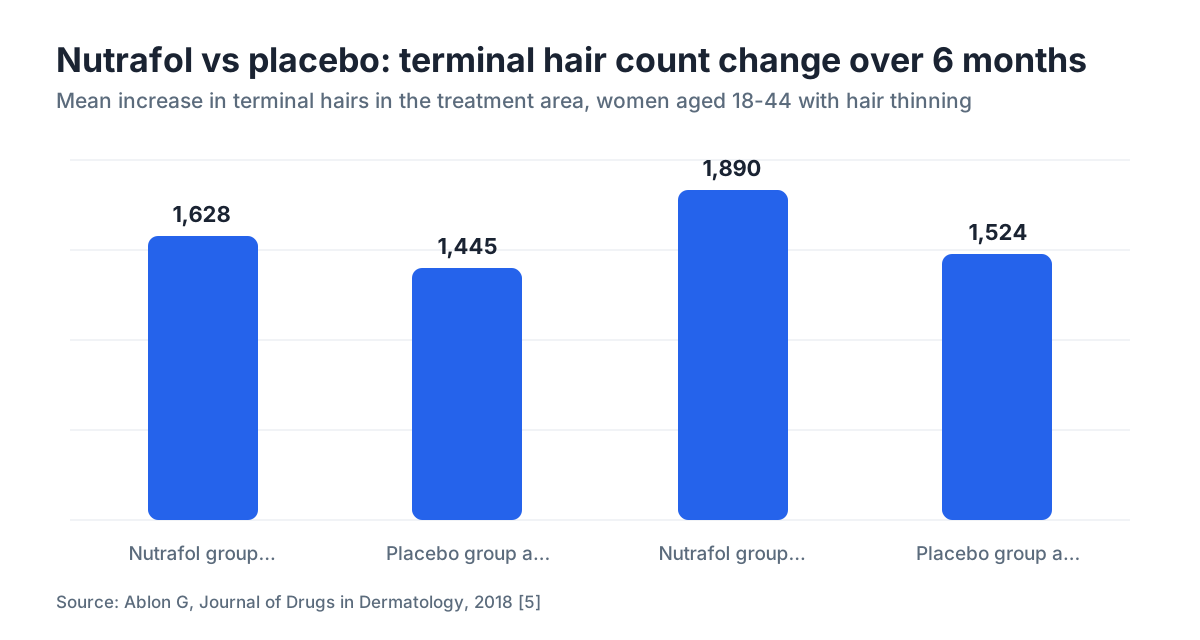
The main study ran in the Journal of Drugs in Dermatology in 2018 [5]. It enrolled 40 women aged 18-44 with self-perceived thinning and split them between Nutrafol and placebo for six months. What the company likes to quote: the Nutrafol group had a statistically significant rise in terminal hair count over placebo, plus patient-reported gains in thickness and less shedding. These women had mixed causes for their thinning, not TE alone.
A second study in 2021, also company-funded, followed 20 postpartum women and found less shedding versus their own baseline. Postpartum hair loss is basically TE with a known trigger (delivery and the hormone drop), so this one lands closer to the target [6].
What's missing is a large, independent, placebo-controlled trial in patients whose primary diagnosis is confirmed TE. The trials we have are small, short, and paid for by the maker. The authors of the 2018 study said it themselves in their limitations: "larger studies are needed to confirm these findings" [5].
A 2019 review in Dermatology and Therapy looked at supplements for hair loss across the board. It found the strongest independent support for the tocotrienol piece and for correcting micronutrient shortfalls like iron, zinc, and vitamin D, while noting that most commercial hair supplement blends lack solid independent validation [7].
The evidence is real. It isn't strong. For TE specifically, Nutrafol aims at the right mechanisms, but calling it proven would be a lie.
How does Nutrafol target the specific causes of telogen effluvium?
TE has several overlapping root causes, and Nutrafol's formula touches at least three of them.
Stress and cortisol. Chronic stress is one of the better-documented TE triggers, and high cortisol disrupts the hair cycle at the follicle. The ashwagandha (Sensoril) in Nutrafol has been studied on its own. A double-blind RCT in the Journal of the International Society of Sports Nutrition (2012) found 300 mg twice daily of Sensoril cut serum cortisol versus placebo [8]. Nutrafol delivers 300 mg per daily four-capsule dose, which sits at the low end of studied amounts. Whether that low dose moves the needle in a hair-loss setting is unknown, but the mechanism is not made up.
Inflammation. Low-grade scalp inflammation can keep shedding going. The curcumin and tocotrienol are anti-inflammatory. Whether oral doses this size do anything measurable at the scalp specifically hasn't been tested directly.
Micronutrient gaps. This is Nutrafol's strongest logical footing for TE. Iron deficiency, especially low ferritin, is a well-established TE driver. Zinc deficiency is another. Nutrafol leaves out iron on purpose (iron in someone with normal ferritin is useless and can be harmful), but it includes zinc, selenium, and a B-vitamin complex. If your TE has a nutritional piece, this could plug small gaps.
The catch: if you genuinely have iron deficiency driving your TE, Nutrafol is not the fix. You need iron supplementation with a doctor watching your ferritin. Nutrafol can't stand in for that.
People ask whether Nutrafol competes with or complements minoxidil for men or topical minoxidil. Different mechanisms entirely. Minoxidil is a vasodilator that stretches anagen. Nutrafol is a nutritional and adaptogenic supplement aimed at upstream triggers. You can take both, and some people do, though that doubles your monthly cost and doubles the unknowns.
How long does Nutrafol take to work for telogen effluvium?
Give it four to six months minimum before you judge it. Follicle cycling is slow. Even a treatment that works needs months for shed hairs to grow back far enough to change what you see in the mirror.
In the 2018 JDD trial, the statistically significant gap in terminal hair count between Nutrafol and placebo didn't show up until month three, and it was bigger at month six [5]. The shedding drop was patient-reported and came a bit earlier, around month two or three.
Here's the honest complication for TE: it very often recovers on its own with no treatment at all. That makes it genuinely hard to know whether Nutrafol helped or your hair was coming back anyway. A TE episode from a one-time stressor like surgery or illness usually resolves by month nine to twelve regardless [1]. Start Nutrafol at month three, feel better by month eight, and you can't confidently hand the supplement the credit.
Chronic TE with an ongoing trigger has no fixed timeline. You'd likely stay on it as long as the stressors last, which is where the cost question gets sharp.
| Milestone | Typical timeline |
|---|---|
| Shedding may begin to slow | 2-3 months on Nutrafol |
| Visible new growth starts | 3-5 months |
| Measurable density change | 5-6 months |
| Full recovery (if TE self-limiting) | 9-12 months from onset |
The trial data and the natural TE recovery curve point to the same place. This takes patience, and the supplement isn't speeding things up dramatically.
What do dermatologists actually recommend for telogen effluvium?
Board-certified dermatologists and the American Academy of Dermatology (AAD) put finding and fixing the trigger ahead of supplements [1]. In practice that means:
- Blood work to rule out thyroid dysfunction, iron deficiency (ferritin below 30-40 ng/mL is the threshold often cited as worth treating), vitamin D deficiency, and other systemic causes.
- A look at diet for crash dieting or protein restriction.
- Dealing with chronic stress, which is where the adaptogens in Nutrafol have their most defensible role.
- Patience, since most TE clears on its own.
Most dermatologists don't actively push Nutrafol, but plenty won't object if a patient wants to try it. The AAD endorses no specific supplement for TE. The position most derms seem to hold in the room is blunt: it probably won't hurt, the evidence is weak, fix the cause first.
The exception is when labs turn up a real deficiency. Correcting iron, zinc, or vitamin D with targeted supplementation (not a general hair product) has clearer evidence behind it. A 2017 review in Dermatology Practical and Conceptual concluded that iron deficiency may contribute to TE, particularly in premenopausal women, and that raising ferritin may support recovery, though whether it's cause or correlation is still debated [9].
This is why a hair loss workup comes before any supplement spend. If your TE has an identifiable cause, treating that cause directly beats stacking a supplement on top of an unsolved problem almost every time.
Are there any side effects or risks to taking Nutrafol?
Nutrafol is well tolerated in the reported trials. Side effects are uncommon and usually mild stomach complaints (nausea, upset) when taken without food.
Two areas deserve attention.
Thyroid effects. Nutrafol has 225 mcg of iodine per daily serving. The NIH sets the tolerable upper intake for iodine at 1,100 mcg a day for adults, so this dose sits well within safe limits for most people [10]. But ashwagandha has case reports of thyroid hormone changes, and iodine in someone with autoimmune thyroid disease can sometimes make things worse. Since thyroid dysfunction is itself a major TE trigger, if your TE is thyroid-related, talk to your endocrinologist before you start.
Biotin interference with lab tests. The 3,000 mcg of biotin in Nutrafol is high enough to skew certain immunoassay tests, including thyroid function (TSH) and cardiac troponin. The FDA issued a safety communication on this in 2019, warning that biotin can cause falsely high or falsely low results on biotin-based assays [11]. Stop Nutrafol at least 48-72 hours before any blood draw.
Pregnancy. Nutrafol specifically warns against use during pregnancy. The postpartum formula is built for after delivery.
Drug interactions. Saw palmetto mildly inhibits 5-alpha reductase. If you also take finasteride, the combination is unstudied, and any added benefit from saw palmetto over the drug is implausible given how much stronger finasteride is at that same mechanism.
Nothing in the ingredient list is alarming at these doses for a healthy adult. But natural doesn't mean consequence-free, especially with thyroid-sensitive ingredients in the mix.
How does Nutrafol compare to other options for telogen effluvium?
Here are the main options side by side, no spin.
| Approach | Evidence for TE | Monthly cost (approx.) | Notes |
|---|---|---|---|
| Fix underlying cause (iron, thyroid, diet) | Strongest | Varies by treatment | First step, not optional |
| Nutrafol | Weak-moderate (company trials) | $74-90 | Targets stress, inflammation, nutrients |
| Minoxidil (topical) | Moderate for growth, limited TE-specific data | $10-30 | Speeds anagen re-entry; doesn't address triggers |
| Biotin alone | Very weak (unless deficient) | $5-15 | Rarely the fix; does skew lab tests |
| Viviscal | Weak (also company-funded trials) | $40-50 | Marine protein/AminoMar complex; similar evidence quality to Nutrafol |
| Tocotrienol supplement alone | One independent RCT, positive | $20-40 | Cheaper route to Nutrafol's best-evidenced single ingredient |
Minoxidil earns its own comment. In TE, the follicles aren't miniaturizing the way they do in androgenetic alopecia. They're cycling off temporarily. Minoxidil can nudge follicles back into anagen and may speed recovery some, and a few dermatologists do prescribe it during drawn-out TE. But it works on the growth cycle, not on the stress or nutrient triggers. The minoxidil side effects article covers what to weigh there.
Viviscal is the closest competitor to Nutrafol on market position and evidence quality. Both have company-funded trials, similar prices, similar ingredient philosophies. Neither has a definitive independent RCT for TE.
On a budget? Buying tocotrienols and ashwagandha separately runs about $25-35 a month and covers Nutrafol's two most defensible actives. That comparison isn't perfect, since the bioavailability of Nutrafol's specific extracts may differ from generic versions.
To map which factors are actually driving your shedding, a free AI hair analysis tool like the one at MyHairline.ai can help you see the pattern of loss before you pick a path.
Who is most likely to actually benefit from Nutrafol for telogen effluvium?
Patient selection is the whole game here.
Nutrafol is most likely to help if your TE fits one of these:
Stress-driven chronic TE. If your shedding tracks clearly with ongoing psychological stress and you've ruled out thyroid, iron, and autoimmune causes, the adaptogenic and anti-inflammatory pieces have theoretical and some trial support.
Postpartum TE. The postpartum study, small as it is, is the most directly relevant evidence Nutrafol owns. Postpartum TE is extremely common (some estimates put it at 40-50% of new mothers), and pregnancy and lactation create exactly the deficiency-and-stress setting Nutrafol targets.
TE with a nutritional angle but no frank deficiency. If labs read borderline rather than clearly deficient, a broad micronutrient supplement may fill the small gaps.
Nutrafol is less likely to help if:
- You have clearly diagnosed iron-deficiency anemia. Treat the iron.
- You have active thyroid disease. Treat the thyroid.
- Your TE came from a one-time event (surgery, illness) and is already resolving. Your hair is probably coming back on its own.
- You have androgenetic alopecia with a TE component. Saw palmetto might help the androgenetic piece a little, but Nutrafol is no substitute for finasteride or minoxidil in pattern loss. The finasteride and minoxidil guide covers the standard combination for that.
Women tend to be better candidates than men, partly because the postpartum and stress-driven profiles show up more in women, and partly because the androgenetic loss that so often rides along with TE in men usually demands stronger tools.
How should you take Nutrafol and what should you watch for?
Four capsules a day, with a full meal. Fat helps you absorb the curcumin and tocotrienol. Taking them on an empty stomach is the top cause of the GI complaints people report.
Take baseline photos before you start. Scalp photos in the same light every four weeks are the best way to judge whether you're truly improving, because day-to-day perception is unreliable and colored by shedding anxiety. A simple trichoscopy shot, or even good phone photos of the part line each month, tells you more than how the drain looks on a given morning.
Get basic blood work first: CBC, ferritin, thyroid panel (TSH, free T4), and vitamin D. Two reasons. If a lab shows a clear deficiency, treat that directly. And it gives you a baseline to recheck at six months. Stop Nutrafol for 48-72 hours before any draw because of the biotin interference [11].
Set a decision point. Commit to six months, then judge honestly. No meaningful change in shedding or density by month six means it isn't working for you. Continuing past that on hope alone is a waste.
If you're weighing several treatments at once, the hair loss supplements roundup compares the evidence across the whole category, so you're judging Nutrafol against real alternatives instead of in a vacuum.
Is Nutrafol worth the cost for telogen effluvium?
At $74-90 a month, a six-month trial runs you $445-540. That's real money.
Here's the honest math. If your TE is stress-driven and you've already done the blood work and handled any clear deficiency, Nutrafol is a reasonable trial. The harm risk is low. The evidence is weak to moderate. And the odds that spontaneous recovery is happening alongside any supplement effect are high.
If you haven't gotten blood work, spending $90 a month on supplements before you know whether you have iron deficiency or thyroid disease is backwards. A ferritin test costs $30-50 cash-pay at most labs. Do that first.
If the price stings, targeted individual supplements (ashwagandha from a reputable brand, tocotrienols, and a basic zinc/selenium) can cover the most evidence-backed pieces for $25-35 a month. No head-to-head trial shows Nutrafol's proprietary blend beats good individual ingredients at comparable doses. What you lose is the convenience of one regimen.
The supplement won't push recovery faster than follicle biology allows. No supplement will. Anyone who tells you otherwise is overstating the evidence.
Six months in with no improvement? Book a dermatologist if you haven't. Shedding that runs past six to nine months deserves a workup beyond supplements, possibly trichoscopy or a scalp biopsy to rule out other diagnoses. If pattern loss is co-occurring, oral minoxidil may be worth raising with your doctor.
Sources
- American Academy of Dermatology, Hair loss types: Telogen effluvium
- Nutrafol official site, pricing page
- Beoy LA et al., Tropical Life Sciences Research, 2010 - Tocotrienols hair count RCT
- NIH National Center for Complementary and Integrative Health, Ashwagandha fact sheet
- Ablon G, Journal of Drugs in Dermatology, 2018 - Nutrafol Women's RCT
- Ablon G & Kogan S, Journal of Drugs in Dermatology, 2021 - Postpartum Nutrafol study
- Almohanna HM et al., Dermatology and Therapy, 2019 - Review of vitamins and minerals in hair loss
- Raut AA et al., Journal of the International Society of Sports Nutrition, 2012 - Sensoril ashwagandha cortisol RCT
- Guo EL & Katta R, Dermatology Practical and Conceptual, 2017 - Diet and hair loss review
- NIH Office of Dietary Supplements, Iodine fact sheet for health professionals
- U.S. Food and Drug Administration, Biotin safety communication