

TL;DR: Receding hairline corners, the temples pulling back while the frontal hairline stays lower, are usually the first visible sign of androgenetic alopecia. DHT miniaturizes follicles at the temporal corners first. Finasteride and minoxidil have the strongest evidence for slowing or partially reversing this. Transplants can restore the corners permanently once shedding stabilizes.
What are receding hairline corners exactly?
The hairline does not recede as one flat wall moving backward. It retreats from the corners first. Those two triangular zones above the temples, sometimes called the temporal peaks or frontal corners, are where androgenetic alopecia almost always begins.
A straight or slightly curved hairline across the forehead is common in adolescence. Sometime in the late teens or twenties, the corners start to pull back, creating an "M" shape even while the central forelock stays put. That M shape is the signature of early male pattern hair loss, and it sits at Norwood stage II on the most widely used classification scale [1].
Women can experience corner recession too, though it is far less common as a stand-alone pattern. Female pattern hair loss more often thins the central part and crown while the frontal hairline holds. When women do see corner recession, hormonal causes (polycystic ovary syndrome, post-menopausal androgen shifts) are worth investigating.
The corners are vulnerable because the follicles there are genetically sensitive to dihydrotestosterone (DHT). Sustained DHT exposure shortens the anagen (growth) phase, gradually producing finer, shorter hairs until the follicle stops producing visible hair. The underlying follicle is often still alive for years, which is part of why early treatment can work.
Why do hairline corners recede before anywhere else?
DHT sensitivity is not uniform across the scalp. Follicles at the frontal hairline and temporal corners carry far more androgen receptors than follicles at the back and sides of the head, which is exactly why the donor zone used in hair transplants is called the "permanent zone." [2]
When DHT binds to the androgen receptor inside a sensitive follicle, it triggers a signaling cascade that shortens the hair cycle. Each successive cycle produces a thinner, shorter hair, a process called miniaturization. A trichoscopy (dermoscopy of the scalp) can detect miniaturized hairs at the corners even before the recession is obvious to the naked eye.
Genetics loads the gun. If your father or maternal grandfather had significant temple recession by their thirties, your risk is meaningfully elevated, though the inheritance pattern is polygenic (many genes involved) and not a simple 50-50 prediction [3]. Stress, crash dieting, and illness can speed up shedding through telogen effluvium, but they do not cause the androgen-driven miniaturization behind corner recession.
Age matters too. Roughly 50 percent of men show some degree of male pattern baldness by age 50, and the process almost always starts at the temples or the crown, according to data from the American Academy of Dermatology [4].
How do I know what stage my corner recession is at?
The Hamilton-Norwood scale, published by O'Tar Norwood in 1975 and still the clinical standard, runs from I (no recession) to VII (only a horseshoe of hair remaining) [1].
| Norwood Stage | What the corners look like | Typical age of onset |
|---|---|---|
| I | No recession, juvenile hairline | Teens |
| II | Slight temple recession, M-shape forming | Late teens to mid-20s |
| III | Deeper temples, more defined M | 20s to 30s |
| III Vertex | Temple recession plus thinning crown | 20s to 40s |
| IV | Wide temple recession, islands of hair | 30s to 50s |
| V | Bridges between front and crown thinning | 40s to 60s |
| VI-VII | Extensive loss, only sides and back remain | Variable |
Most men who notice "just the corners going" are sitting at Norwood II or early III. That is the best time to act, because more follicles are still alive and miniaturized rather than gone.
A dermatologist can confirm your stage with a clinical exam and trichoscopy. If you want a quick preliminary read, the free AI scan at MyHairline maps photos against the Norwood scale and flags whether the pattern looks like androgenetic alopecia or something else worth investigating.
One honest caveat: the Norwood scale was built on male patients and is less reliable for assessing female hairline patterns. Women with corner thinning are better assessed with the Ludwig scale or the BASP (Basic and Specific) classification.
Is corner recession always male pattern baldness, or can something else cause it?
Androgenetic alopecia causes the overwhelming majority of corner recession in men. But a few other things can mimic or speed up it, and they are worth ruling out.
Traction alopecia from tight hairstyles (cornrows, high ponytails, tight buns) can pull back the frontal corners over time. Unlike androgenetic alopecia, traction loss often shows a band of thin, broken hairs along the traction line rather than clean miniaturization. Stopping the tension early can allow some recovery.
Frontal fibrosing alopecia (FFA) is a form of scarring alopecia that produces a progressive, band-like recession of the frontal and temporal hairline. It is more common in postmenopausal women but has been reported in men. FFA leaves a pale, atrophic band at the hairline margin and can cause eyebrow loss. This is a dermatologist diagnosis and requires different treatment than androgenetic alopecia.
Secondary syphilis, lupus, and certain fungal infections can occasionally cause hairline changes, but these almost always come with other symptoms (scaling, inflammation, systemic signs).
If your recession came on fast (months rather than years), is painful or itchy, or is accompanied by unusual scaling, see a dermatologist before assuming it is standard pattern loss. A scalp biopsy can rule out scarring conditions, which do not respond to minoxidil or finasteride.
For more on the broader causes, the what causes hair loss article covers them in detail.
Does a receding hairline corner mean full baldness is coming?
Not necessarily, and the progression is not predetermined.
Some men reach Norwood II or III in their twenties and then plateau there for decades. Others progress to Norwood VI or VII within ten years of noticing their first corner changes. Nobody can tell you with certainty which trajectory you are on, because progression depends on a set of genetic factors we cannot fully test for yet.
What the evidence does show is that men who carry more copies of the high-risk androgen receptor variant on the X chromosome tend to progress faster, and that the earlier in life recession starts, the further it typically advances [3]. So a 19-year-old with noticeable corner recession faces a statistically worse long-term outcome than a 35-year-old whose corners just started moving.
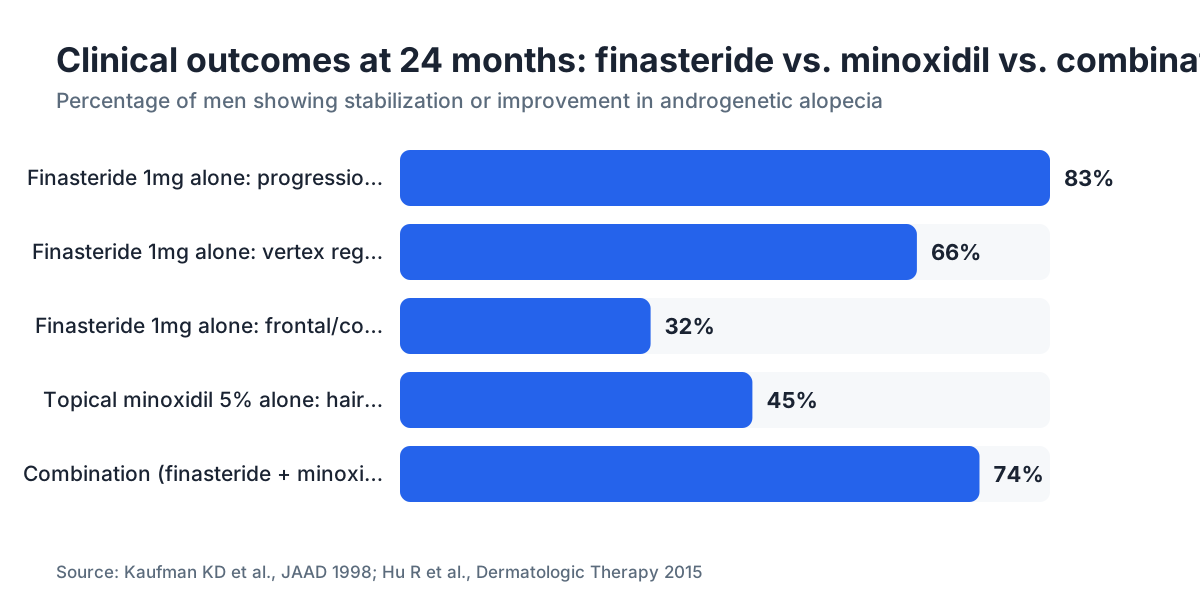
Treatment changes the trajectory. Finasteride, in a large multicenter trial, slowed or stopped progression in 83 percent of men and produced visible regrowth in the vertex in 66 percent over two years [5]. Corner (frontal) regrowth rates were lower, around 30-35 percent, because frontal follicles are more androgen-sensitive and some miniaturization is advanced by the time treatment starts. But slowing progression at the corners is still meaningful: it keeps more hair in place longer.
What treatments actually work for receding corners?
Three treatments have solid clinical evidence and FDA approval or clearance here. Everything else deserves more skepticism.
Finasteride (oral) Finasteride 1 mg daily is FDA-approved for male pattern hair loss [5]. It blocks 5-alpha reductase type II, the enzyme that converts testosterone to DHT, cutting scalp DHT by roughly 60 percent. The 2-year trial data showed it was more effective at the crown than the frontal scalp, but frontal stabilization was still significant compared to placebo. It requires a prescription in the US. The main risks discussed with patients are sexual side effects (reported in 3-4 percent of men in trials; most resolve on stopping the drug) and, at the higher doses used for prostate disease, a warning about high-grade prostate cancer detection. Read the full picture in the finasteride article before deciding.
Minoxidil (topical and oral) Minoxidil is FDA-approved as a topical at 2 percent (men and women) and 5 percent (men) for androgenetic alopecia [6]. It extends the anagen phase and may dilate scalp blood vessels to improve follicle nutrition. Topical 5 percent applied twice daily is the standard starting point. Oral minoxidil at low doses (0.625-2.5 mg daily for women, 2.5-5 mg for men) is increasingly used off-label and appears comparable or superior in some studies, though it is not FDA-approved for hair loss at those doses. The minoxidil for men guide covers application and realistic expectations.
Combination therapy Using both finasteride and minoxidil together beats either alone. A 2015 study comparing 5 percent topical minoxidil, 1 mg finasteride, and the combination found the combination produced significantly greater hair count increases than either monotherapy [7]. This is the approach most dermatologists recommend for men with progressive corner recession. The finasteride and minoxidil article goes deeper on this.
Hair transplants For corners that have receded a lot and where medical therapy has plateaued, follicular unit excision (FUE) or follicular unit transplantation (FUT) can restore the temporal corners with permanent donor-zone hair. Transplants do not stop ongoing loss elsewhere, so most surgeons want to see stable, medically managed hair loss before operating. A temple corner graft session might use 300-600 grafts per side. Costs vary widely: roughly $3,000-$8,000 for a frontal corner restoration in the US, though prices depend on graft count, clinic, and technique [8]. More on the procedure in the hair transplant article.
DHT blockers and supplements Topical DHT blockers like topical finasteride or topical dutasteride are being studied and show early promise, cutting some systemic side effect risk. Saw palmetto has weak evidence in small trials. The evidence for most hair loss supplements is thin. If you are comparing supplement options to prescription treatments, the prescription treatments win on evidence quality by a wide margin.
Can you regrow hair at the corners, or just stop the loss?
Both are possible, but regrowth at the corners is harder to get than at the crown.
The frontal scalp, including the temporal corners, has follicles that are more androgen-sensitive and often further along the miniaturization process by the time someone starts treatment. Completely miniaturized follicles that have produced no visible hair for several years are unlikely to reactivate with medical therapy.
That said, partially miniaturized follicles (the ones producing thin, short vellus-like hairs) can coarsen back toward terminal hairs with finasteride and minoxidil. The 2-year finasteride trial showed frontal area improvements in about 30 percent of men, which is not dramatic but is real [5].
Minoxidil's regrowth effect at the corners is modest. It works better at slowing loss than reversing it at this location.
For meaningful cosmetic regrowth at the corners, most people eventually consider transplantation. The donor follicles moved to the corners are genetically resistant to DHT and keep growing in their new location. The results look natural when done by a skilled surgeon because the graft direction and angle mimic the natural temporal hairline. Continuing finasteride or minoxidil after a transplant protects the native hair that remains.
One realistic framing: if you start finasteride at Norwood II, you may keep your corners largely in place for years. If you wait until Norwood IV to start, you might slow future loss but regrowth of what has already gone is unlikely without surgery.
How fast do hairline corners recede if left untreated?
The rate varies enormously between individuals. Some men move from Norwood II to Norwood IV in two to three years. Others stay at Norwood II for a decade or more.
A long-term cohort study published in Dermatology found that over a 10-year observation period without treatment, men with early androgenetic alopecia progressed an average of roughly 1 Norwood stage [3]. But that average hides a wide spread: fast progressors moved two to three stages; slow progressors barely moved at all.
Age at onset is the best predictor we have. Men who see Norwood II before age 25 tend to progress faster. This is partly because the genetic androgenic signaling is more intense and partly because they simply have more years of DHT exposure ahead of them.
If you are watching your corners and deciding whether to act, taking photos every 3 months against the same lighting and camera angle is the most practical way to track actual change rather than perceived change. Many men misread normal hair density variation (wet vs. dry hair, different lighting) as recession and panic, while others fail to notice real recession because it happens gradually.
What hairstyles can minimize the look of receding corners?
This is not a permanent solution but it is a practical one while treatment is working or being considered.
Short tapered cuts reduce the contrast between the hairline and the forehead, making corner recession less obvious. A number 2-3 fade on the sides with slightly more length on top is a common approach. The goal is to avoid length and volume concentrated exactly at the corners, which draws the eye there.
Textured, matte-finish styling products can add the appearance of density. Products with a wax or clay base work better than gel for this because they separate and define individual strands rather than matting them flat.
A slight fade toward the temples can blend the recession zone with the styled sides so the transition is less abrupt.
Some men use hairline concealers (Toppik, DermMatch, Caboki) at the corners for events or photos. These keratin fiber or pigment products cling to existing hairs and can convincingly fill a sparse corner area in seconds. They wash out with shampoo. They are a cosmetic bridge, not a treatment.
Scalp micropigmentation (SMP) is a tattooing technique that can shade the corner area to mimic a closely shaved hairline. It is a real cosmetic option with a few-year maintenance cycle as the pigment fades, but it does not add hair.
When should you see a dermatologist about corner recession?
The honest answer: earlier than most men actually go.
The window when medical treatment is most effective is when follicles are miniaturizing but still present. Once the corner is visibly bare skin for years, those follicles are likely gone and only surgery restores them. A board-certified dermatologist (ideally one with a hair loss subspecialty or fellowship) can confirm the diagnosis with trichoscopy, take a baseline hair count, and discuss whether prescription treatment makes sense for your pattern and health history.
Go sooner if: your recession is moving fast (visible change within a few months), it is accompanied by itching, scaling, or pain, you are a woman under 50 (because female hairline recession warrants hormone workup), or you have any personal or family history of thyroid disease, autoimmune conditions, or nutritional deficiencies.
The American Academy of Dermatology is a good starting point for finding board-certified dermatologists in your area [4]. Look for someone who lists hair disorders as a clinical interest.
For a quick, structured first look before the appointment, the free AI scan at MyHairline can give you a Norwood estimate and flag patterns worth discussing with a doctor. It is not a diagnosis, but it organizes what you are seeing.
Are there any proven ways to prevent corner recession from starting?
Prevention is trickier here than it sounds.
If you are genetically predisposed to androgenetic alopecia, DHT will eventually start miniaturizing your corner follicles. There is no diet, supplement, or lifestyle practice with strong evidence that stops this process. That said, a few things are worth knowing.
Hair follicles need adequate nutrition. Deficiencies in ferritin (stored iron), vitamin D, and zinc have been associated with hair loss, though correcting a deficiency treats the deficiency-related shedding, not the androgenetic component [9]. If you are a man in your twenties losing corners, a blood panel for these nutrients is reasonable but unlikely to change the androgenetic picture.
Chronic psychological stress raises cortisol and can speed up shedding (telogen effluvium), but it does not cause the genetic miniaturization at the corners. Managing stress is good for many reasons; it is not a hairline preservation strategy on its own.
Finasteride taken early, when the hairline is still completely intact but family history makes loss likely, is technically prophylactic. Some dermatologists prescribe it this way. The evidence supports it mechanistically but there are no large placebo-controlled trials designed around primary prevention at the hairline. The decision depends on weighing the side effect profile against the preventive benefit, which is a conversation worth having with a doctor rather than a solo call.
For a deeper look at the dht blocker options and how they compare, that article covers the pharmacology in more detail.
Sources
- Norwood OT. Male pattern alopecia: classification and incidence. Southern Medical Journal, 1975.
- American Academy of Dermatology, Hair loss types overview
- Birch MP, Messenger JF, Messenger AG. Hair density, hair diameter and the prevalence of female pattern hair loss. British Journal of Dermatology, 2001.
- American Academy of Dermatology, Hair loss: Who gets and causes
- Kaufman KD et al. Finasteride in the treatment of men with androgenetic alopecia. Journal of the American Academy of Dermatology, 1998.
- FDA, Drugs at FDA database (Rogaine minoxidil topical solution approval)
- Hu R et al. Combined treatment with oral finasteride and topical minoxidil in male androgenetic alopecia. Dermatologic Therapy, 2015.
- International Society of Hair Restoration Surgery, Practice Census Survey
- Almohanna HM et al. The role of vitamins and minerals in hair loss: a review. Dermatology and Therapy, 2019.
- van der Donk J et al. Psychological characteristics of men with alopecia androgenetica and their modification following treatment with topical minoxidil. Dermatology, 1994.
- van Neste D, Fuh V, Sanchez-Pedreno P et al. Finasteride increases anagen hair in men with androgenetic alopecia. British Journal of Dermatology, 2000.
- Hillmer AM et al. Genetic variation in the human androgen receptor gene is the major determinant of common early-onset androgenetic alopecia. American Journal of Human Genetics, 2005.