
TL;DR: Women absolutely get receding hairlines, most often from female-pattern hair loss, traction alopecia, or hormonal shifts. Minoxidil 2% or 5% is the only FDA-approved topical treatment for women. Hairstyles with curtain bangs, side parts, and strategic layering can cover a receding hairline effectively while treatment works.
Can women have receding hairlines?
Yes. Receding hairlines are not a male problem. Women can and do lose hair at the front hairline, the temples, or in a widening part. The pattern often looks different from male-pattern baldness, but the hairline itself absolutely retreats in millions of women.
The American Academy of Dermatology estimates that female-pattern hair loss affects about 30 million women in the United States [1]. That number does not include the additional women whose frontal hair loss comes from traction damage, hormonal conditions, or scarring forms of alopecia. So when you search "do women get receding hairlines" and wonder if you're seeing something unusual, you're not. It's one of the most common dermatology complaints women bring to their doctors.
The confusion partly comes from language. Men "recede." Women are told they "thin." But thinning that concentrates at the temples or front hairline is, functionally, a receding hairline. Calling it something else doesn't change what's happening or what to do about it.
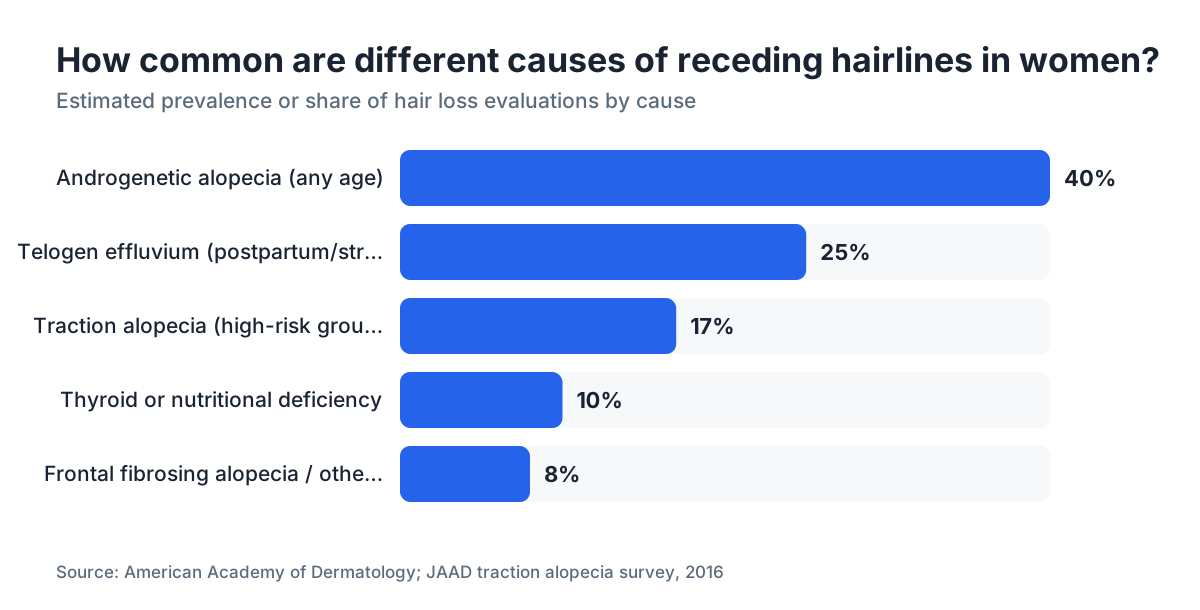
What causes receding hairlines in women?
There are several distinct causes, and the right treatment depends entirely on which one you're dealing with. Getting this wrong is expensive and frustrating.
Female-pattern hair loss (androgenetic alopecia). This is the most common cause. It's driven by sensitivity to dihydrotestosterone (DHT) in genetically susceptible follicles. In women, the pattern often starts at the part and temples rather than the classic male recession at the forehead corners. You can read more about how DHT works in our dht blocker guide. Family history on either side is the biggest risk factor.
Traction alopecia. Tight hairstyles, including braids, ponytails, weaves, and extensions, pull constantly at follicles near the hairline. Over time, that mechanical stress causes inflammation and then permanent follicle death. A 2016 survey published in the Journal of the American Academy of Dermatology found traction alopecia affects approximately 17% of African-American women examined, with frontal hairline recession being the most common presentation [2]. This one is preventable if caught early.
Hormonal changes. Pregnancy, postpartum shedding, menopause, thyroid dysfunction, and polycystic ovary syndrome (PCOS) all affect hair cycling. Postpartum shedding, technically called telogen effluvium, is usually temporary, but it can unmask underlying androgenetic alopecia that then persists.
Frontal fibrosing alopecia (FFA). This is a scarring alopecia that slowly destroys follicles at the frontal and temporal hairline, often leaving a pale, slightly shiny band of skin where hair used to grow. It's more common in postmenopausal women, and its incidence has been climbing for reasons researchers haven't fully pinned down [3]. It requires early diagnosis because once follicles are scarred, they don't come back.
Medications and nutritional deficiency. Certain drugs (chemotherapy agents, some blood pressure medications, high-dose vitamin A) cause diffuse shedding that can thin the hairline. Severe iron deficiency, crash dieting, and eating disorders do the same. These causes are worth ruling out with a basic blood panel before assuming it's genetic.
So when someone asks "what causes hair loss" in women, the honest answer is: several things, and they need to be told apart.
How do women's receding hairlines differ from men's?
The Norwood scale was designed for men. Women with androgenetic alopecia are more accurately classified using the Ludwig scale, which grades loss from a widening part (Ludwig I) to near-total crown thinning (Ludwig III). Frontal hairline recession appears on a separate female classification called the Olsen pattern, where hair loss starts with a "Christmas tree" shape at the part and spares a narrow band of hair at the frontal hairline.
Practically, women's receding hairlines tend to diffuse rather than create sharp bare patches. The temples thin, the part widens, and the hairline becomes less dense rather than drawing back in a clean line. That's actually useful for styling, because diffuse thinning responds well to volumizing techniques that sharper recessions don't.
Some women do develop the more classically male-looking temple recession, particularly those with hyperandrogenism from PCOS or those experiencing frontal fibrosing alopecia. In those cases the hairline retreats in a way that's visually indistinguishable from early male-pattern baldness.
See the table below for a quick comparison of the most common patterns.
How is a receding hairline in women diagnosed?
A dermatologist can usually identify the cause with a clinical exam and dermoscopy (a magnifying tool that shows follicle structure and scalp skin up close). Dermoscopy is important for distinguishing scarring alopecia like frontal fibrosing alopecia from non-scarring causes, because the treatment approach is completely different.
Blood work typically includes thyroid function (TSH), ferritin, complete blood count, and if PCOS or hyperandrogenism is suspected, free and total testosterone, DHEA-S, and prolactin. There's no single blood test that confirms androgenetic alopecia. It's a clinical diagnosis, supported by excluding other causes.
A scalp biopsy is sometimes done when the cause is unclear or when scarring alopecia is suspected. It's a minor office procedure, not surgery.
If you want a starting point before a clinical appointment, the free AI scan at MyHairline can help you identify your pattern and understand which questions to bring to a dermatologist. It won't diagnose you, but it gives you a clearer picture to work with.
What treatments actually work for women with receding hairlines?
Let's be direct about what has evidence and what doesn't.
Minoxidil (Rogaine and generics). This is the only FDA-approved topical treatment for female hair loss. The 2% concentration has been FDA-approved for women since 1991; the 5% foam has broader evidence and many dermatologists now recommend it off-label for women because the data is stronger [4]. The FDA label states minoxidil "has not been evaluated" in women under 18 or postmenopausal women without evidence of hyperandrogenism, so results vary by cause. You apply it once or twice daily to the scalp, not the hair shaft. It takes at least four months to see results. Stopping it means losing whatever you gained, usually within a few months.
Oral minoxidil at low doses (0.25 mg to 1.25 mg daily) has become popular off-label. Early trial data is promising for women, though it's not FDA-approved for this use. Read the full breakdown in the oral minoxidil article. Be aware of minoxidil side effects including unwanted facial hair growth, which is more common in women than men.
Finasteride. FDA-approved for male-pattern baldness, not women. It's contraindicated in premenopausal women who could become pregnant because of teratogenicity risk. Some dermatologists prescribe it off-label to postmenopausal women. The evidence for women is weaker than for men. See the finasteride article for a full breakdown.
Spironolactone. This is an anti-androgen widely used off-label in women with androgenetic alopecia or PCOS-related hair loss. It has decades of use data, though no large randomized controlled trials specifically for female hairline recession. Doses typically range from 50 to 200 mg daily. It requires monitoring for potassium and blood pressure.
Platelet-rich plasma (PRP). Injections of concentrated growth factors from your own blood into the scalp. A 2019 systematic review in the Journal of the American Academy of Dermatology found PRP improved hair density in most trials, but noted the studies were small and methodologically inconsistent [5]. It's expensive (typically $1,000 to $3,000 per session, usually 3 sessions to start) and not covered by insurance. Promising but not proven at scale.
Hair transplant. For women with stable androgenetic alopecia or traction alopecia, a hair transplant can restore the hairline. Women tend to be good candidates if they have donor hair that isn't also thinning. Frontal fibrosing alopecia is generally a contraindication because the transplanted follicles may also be destroyed by the same inflammatory process.
Treatments that are mostly a waste of money. Biotin supplements if you're not deficient. Laser combs that lack solid trial data. Most branded "hair growth" shampoos. The hair loss supplements piece goes through the evidence, ingredient by ingredient.
Hairstyles for women with receding hairline: what actually covers it
Styling is not giving up on treatment. It's what you do while treatment works, or permanently if you're managing rather than reversing. And good styling genuinely reduces distress, which matters.
Curtain bangs. These sweep down and outward from a center or off-center part, framing the face and covering the temples naturally. They don't sit flat across the forehead, so they look modern rather than like a hairpiece. They work for almost every face shape and grow out gracefully.
Side-swept bangs. A heavy side bang covers one temple entirely. If your recession is asymmetrical, this is the fastest cover. Let the bang fall naturally rather than pinning it aggressively, which draws attention.
A deeper side part. Moving your part away from its natural position adds volume on one side and shifts attention from the hairline. A part that sits above the ear can make the front hairline almost invisible from most angles.
Layers near the face. Face-framing layers that start at the chin or collarbone draw the eye down and away from the hairline. Ask for soft, blended layers rather than blunt cuts, which can expose thinning when hair parts.
Root-lifting techniques. Blow-drying with a round brush from the root outward, or using a volumizing mousse before drying, adds density that makes the hairline look thicker. This is especially effective for diffuse thinning.
Hair fibers and concealers. Products like Toppik or Caboki use keratin or cotton fibers that cling to existing hair and optically fill gaps. They wash out, so they're for events or days when you want the hairline to look fuller immediately. They're not a treatment, but they're genuinely effective coverage.
What to avoid. Tight ponytails and updos if traction is part of your problem. These hairstyles for women with receding hairline make the underlying cause worse while only covering the symptom. Also avoid very short, blunt haircuts that remove the weight of longer hair from the front, which often makes a receding hairline more visible, not less.
A word on hairstyles to cover a receding hairline when the recession is more advanced: a wig or hairpiece gives full coverage and control, and modern options are genuinely undetectable. This isn't a last resort. It's a tool.
How to hide a receding hairline for women: makeup and scalp products
Beyond hairstyling, there are products designed specifically to visually fill the hairline.
Hairline powder. A matte powder in your hair color applied along the hairline blends scalp skin with hair color, reducing the contrast that makes thinning visible. Several brands make hair-specific versions, but an eyeshadow in a matching tone works equally well.
Hairline-filling pens. These look like felt-tip markers and draw individual hair strokes along the hairline, which is useful for very small gaps at the temples. They're waterproof in most formulations and last through a full day.
Scalp micropigmentation (SMP). A tattoo technique that replicates the look of hair follicles on the scalp. For the hairline, it can create a soft, dense-looking frontal edge. Results last three to five years before fading and need touch-ups. Cost is typically $1,500 to $4,000 depending on area and provider. It doesn't grow hair, but for women who want a permanent cosmetic solution without surgery, it's worth knowing about.
None of these are treatments. They're tools for living confidently while you figure out or manage the medical side.
How to fix a receding hairline for women: the honest roadmap
"Fix" means different things depending on the cause and how far it's progressed. Here's the realistic framework.
First, get the cause confirmed. Traction alopecia caught early can stop progressing and partially regrow if you eliminate the traction immediately. Telogen effluvium from a major stressor or nutritional deficiency usually resolves on its own within six to twelve months once the trigger is addressed. Androgenetic alopecia is managed, not cured. Frontal fibrosing alopecia needs a dermatologist's hands quickly because every month of delay is permanent follicle loss.
For androgenetic alopecia, the realistic treatment hierarchy is: 1) topical minoxidil first because it's accessible and FDA-approved, 2) add spironolactone with a prescribing doctor if topical alone isn't enough, 3) consider oral minoxidil as an add-on or alternative, 4) evaluate PRP if budget allows and three to six months of medical therapy haven't produced enough results, and 5) consider hair transplant if hair loss is stable, donor hair is adequate, and you want a permanent structural change.
There's no combination proven to work faster than that sequence. The finasteride and minoxidil combination is well-studied in men. In women, the evidence base is thinner, and finasteride carries real contraindications.
Be patient. Hair grows about half an inch per month. Even a successful treatment takes a full year to show meaningful cosmetic change. This is not marketing puffery; it's just follicle biology.
For ongoing monitoring and to track whether a treatment is working, the MyHairline AI scan at myhairline.ai/scan lets you photograph your hairline over time and compare progress in a structured way.
When should women see a doctor about a receding hairline?
Go sooner than you think. Most women wait two to three years before seeking help, by which time scarring forms are harder to treat and androgenetic alopecia has progressed further than it needed to.
See a board-certified dermatologist, ideally one with a specific interest in hair disorders, if: your hairline has moved back even slightly over the past year; you're seeing a pale or shiny band of skin at the hairline (possible frontal fibrosing alopecia); you have other signs of androgen excess like irregular periods, acne, or unexpected hair growth elsewhere; your hair loss accelerated after starting a new medication; or you're losing more than 100 to 150 hairs per day consistently over weeks.
A GP can order the initial blood panel, but for anything more nuanced, a dermatologist with dermoscopy experience makes a real difference in getting the right diagnosis. The AAD has a find-a-dermatologist tool at their website [1].
Does lifestyle affect a receding hairline in women?
Somewhat, and it's worth being honest about which lifestyle factors matter and which ones are overhyped.
Iron and ferritin levels genuinely matter. A ferritin level below about 30 ng/mL is associated with hair loss in multiple observational studies, even when hemoglobin is normal [6]. If you're vegetarian, heavily menstruating, or have had recent surgery, getting this checked is low-hanging fruit.
Protein intake matters because hair is keratin. Crash dieting or very low protein intake causes shedding within three to six months. This isn't a marketing claim for protein powder; it's the basic physiology of the hair growth cycle.
Stress genuinely causes telogen effluvium, but it doesn't directly cause androgenetic alopecia. The relationship between psychological stress and female-pattern hair loss is indirect and not well-quantified.
DHT-linked hair loss can be modestly influenced by diet. Some evidence suggests diets high in refined carbohydrates and sugar may increase circulating androgens, which matters for women with PCOS. Nobody has good randomized trial data showing a specific diet reverses female-pattern hair loss.
Creatine supplementation has attracted attention. The proposed mechanism is that creatine raises DHT levels. The evidence is limited to one small study in rugby players [7]. If you want the full analysis, see does creatine cause hair loss.
Scalp hygiene and oiling have zero evidence for reversing androgenetic recession. Massage has weak evidence for increasing hair thickness in one small Japanese trial (nine participants, 24 weeks, no control group). Interesting, but not something to build a treatment plan around.
What do women with receding hairlines need to know about traction alopecia?
Traction alopecia is the most preventable cause of a receding hairline in women, and it's also the most misunderstood. Women are often told their hair loss is genetic when traction is the actual or co-contributing cause.
The hallmark is hair loss at the temples and frontal hairline following a hairline that perfectly mirrors where tension is highest. Dermoscopy shows broken hairs and, in later stages, absent follicles. In early cases, the follicles are still alive but inflamed. Stop the traction immediately and give it time, and partial regrowth is possible.
The Journal of the American Academy of Dermatology published a practical severity scale for traction alopecia in 2016, noting that early-stage loss (grades 1-2) can reverse with style changes, while grades 5-8 involve permanent follicle loss [2]. This is the clinical basis for saying early intervention matters.
Styles associated with high traction risk: box braids and cornrows with very tight tension, sewn-in weaves on natural hair, excessively tight buns or high ponytails worn daily, and chemical relaxers combined with mechanical tension at the hairline. Protective styles are genuinely protective when done with appropriate tension. The problem is chronic high tension, not braids or extensions per se.
If you've been wearing tight styles for years and your hairline has slowly moved back, this is a medical condition and deserves medical attention, more than a style change.
Sources
- Journal of the American Academy of Dermatology, Traction alopecia severity scale 2016
- FDA, Minoxidil topical solution drug label
- Journal of the American Academy of Dermatology, PRP systematic review 2019
- Journal of the American Academy of Dermatology, Ferritin and hair loss
- American Academy of Dermatology, Traction alopecia guidance
- National Institutes of Health, MedlinePlus, Female-pattern baldness
- FDA, Drugs@FDA database, Rogaine (minoxidil) for women
- American Academy of Dermatology, Diagnosis and treatment of female-pattern hair loss