

TL;DR: A receding hairline usually starts with temple thinning, a widening part, or a slight M-shape forming at the front. You may also notice more hair on your pillow, finer strands at the hairline, or scalp showing through that didn't before. Most early cases respond well to treatment if you act within the first two years of noticeable change.
What are the first signs of a receding hairline?
The earliest sign is almost always subtle. Most people notice the temples first: the hair on each side of the forehead starts to thin and pull back slightly, creating a faint M-shape where there used to be a straight or gently rounded line. This is not dramatic. In the first year it can look like a slightly higher hairline, easy to dismiss as normal variation.
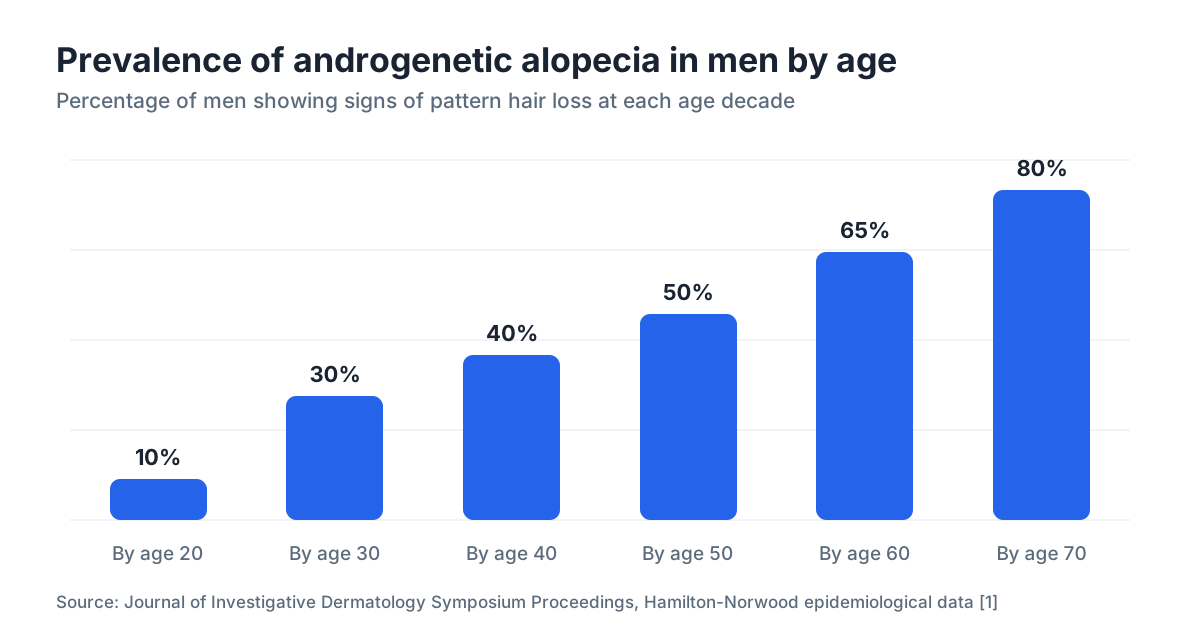
A second early signal is strand caliber. Run your finger across your hairline and compare it to the hair two inches back. If the front strands feel finer, almost wispy, that's miniaturization: the follicle is producing thinner and shorter hairs over successive growth cycles. Miniaturized hairs are the biological fingerprint of androgenetic alopecia, the most common cause of a receding hairline, affecting roughly 50 percent of men by age 50 [1].
A third sign catches people off guard. Because the hair at the very front is thinning, the part line broadens and scalp becomes visible where it wasn't before. Women in particular notice this earlier than temple recession.
Then there's the pillow and shower floor test. Losing 50 to 100 hairs per day is considered normal by the American Academy of Dermatology [2]. If you are consistently seeing clumps or the shower drain clogging more than before, that context matters, but shedding alone without hairline change does not confirm recession. It might be telogen effluvium instead, a temporary shedding condition triggered by stress or illness.
What does a receding hairline look like at each Norwood stage?
The Norwood-Hamilton scale is the standard classification used in clinical research and by hair loss specialists. It runs from Stage 1 (no recession) to Stage 7 (only a band of hair remaining at the sides and back). Where you sit on this scale tells you how far along the process is and, more usefully, how much time you likely have before the pattern becomes harder to treat.
| Norwood Stage | Visual Appearance | What you typically notice |
|---|---|---|
| 1 | No recession | Baseline, no symptoms |
| 2 | Slight temple recession | Subtle M-shape, easy to miss |
| 2A | Frontal band receding evenly | Part looks wider, forehead looks larger |
| 3 | Deeper temples, forehead exposed | Clear M-shape, visible in photos |
| 3 vertex | Temples plus crown thinning | Two separate thinning zones |
| 4 | Large frontal recession, crown bald patch | Solid band of hair between the two zones |
| 5 | Band between zones narrows | Two zones nearly connecting |
| 6 | Band gone, zones merge | Horseshoe shape forming |
| 7 | Minimal side/back hair only | Horseshoe fully established |
Most men who seek treatment are at Stage 2 or 3 [3]. That window matters. FDA-approved treatments like minoxidil and finasteride are far more likely to halt or partly reverse recession at early stages than at Stage 5 or beyond. By Stage 6 or 7, a hair transplant is usually the only option that produces visible improvement.
A note on self-assessment: it is easy to overestimate your stage when you're anxious. Take a photo in consistent lighting from above and from the front. Compare it to a photo from two years ago. Objective comparison beats daily mirror-checking every time.
How is a receding hairline different in women?
Women do get receding hairlines, but the pattern usually looks different. Female pattern hair loss (androgenetic alopecia in women) most often shows up as diffuse thinning across the crown and a widening central part, rather than the M-shaped temple recession common in men. The Ludwig scale is the female equivalent of the Norwood scale, running from Type I (minimal thinning) to Type III (severe diffuse loss).
That said, some women develop frontal fibrosing alopecia (FFA), a condition in which the hairline recedes in a band across the forehead, often with loss of eyebrows and eyelashes. FFA has been increasing in reported prevalence since the 1990s, though the reason is debated [4]. If the recession comes with a pale, slightly shiny band of skin at the hairline, or if eyebrow hair is also thinning, get a dermatologist to rule out FFA, because treatment differs a lot from standard androgenetic alopecia.
Hormonal events shape when women notice symptoms. The period after childbirth, stopping hormonal contraceptives, and the years around menopause are all common trigger points. Some of that is temporary shedding. Some is the unmasking of underlying genetic sensitivity to dihydrotestosterone (DHT), the hormone that drives most pattern hair loss.
What causes a hairline to recede?
The dominant cause is androgenetic alopecia, a genetically programmed sensitivity of hair follicles to DHT, a byproduct of testosterone metabolism. DHT binds to androgen receptors in susceptible follicles and shrinks them over years until they stop producing visible hair. This is why the condition is progressive: the follicle does not die suddenly, it miniaturizes cycle by cycle [5].
Genetics matter enormously. If your father and maternal grandfather both lost hair early, your risk is much higher. But genetics is not destiny. The age of onset, speed, and final pattern vary even among men with identical family histories, and things like chronic stress, nutritional gaps, and certain medications can speed up the timeline.
Other conditions can mimic or accelerate recession. Alopecia areata, an autoimmune condition, can cause patchy loss that includes the hairline. Traction alopecia, caused by tight hairstyles like high ponytails or cornrows, pulls the frontal hairline back mechanically and can cause permanent damage if the tension is kept up for years. Scalp psoriasis and seborrheic dermatitis do not directly cause recession but can inflame the scalp in ways that may worsen shedding.
Want to go deeper on root causes? What causes hair loss covers the full range including medications, thyroid conditions, and nutritional deficiencies.
Creatine is a newer worry for some people. One 2009 study found creatine supplementation raised DHT levels in rugby players, though no study has yet directly linked creatine to measurable hair loss. The evidence is still thin. Does creatine cause hair loss walks through what the current data actually shows.
Can you feel a receding hairline, or is it only visible?
Mostly visible. Hair loss is not painful. The follicle miniaturization that drives androgenetic alopecia happens without discomfort in the vast majority of people.
There are exceptions. Some people notice scalp tenderness, itching, or a burning sensation at the hairline, especially in the early stages of recession. Researchers call this "trichodynia," and while the mechanism is not fully understood, it may relate to neurogenic inflammation around the miniaturizing follicle [6]. Trichodynia is reported more often in women with hair loss than in men.
If your hairline is receding AND you have significant scalp pain, redness, or scarring, that combination points toward a scarring alopecia (like lichen planopilaris or the FFA mentioned above) rather than simple androgenetic alopecia. Scarring alopecias permanently destroy the follicle, so early diagnosis and treatment matter far more. See a dermatologist promptly in that scenario.
Itching alone, without recession, usually points to dandruff or seborrheic dermatitis rather than pattern hair loss.
How fast does a receding hairline progress?
Nobody can give you a precise timeline for your own recession. The rate varies a lot between individuals. Research on the natural history of male androgenetic alopecia suggests that about 30 percent of Caucasian men show recession by age 30, rising to about 50 percent by age 50, and around 80 percent by age 70 [1].
For most men, progression is slow. Moving one Norwood stage over several years is typical. For a minority, particularly those with early onset (recession noticeable before 25), it can be faster. Early onset generally predicts more extensive eventual loss, though again with wide individual variation.
Here is the reliable way to check yourself. If you think your hairline has moved but you aren't sure, take dated photographs every three months in identical lighting and position. That systematic comparison over 6 to 12 months tells you whether recession is active and how quickly it is moving. It also gives a dermatologist or trichologist the concrete visual evidence they need to assess your rate of change.
Treatment genuinely slows or halts progression in many people. The FDA-approved topical minoxidil for men and oral finasteride are the two treatments with the strongest clinical evidence. A large randomized controlled trial found finasteride 1 mg daily halted progression in 83 percent of men and produced regrowth in 66 percent over two years [7]. Those numbers drop at later Norwood stages.
What is the difference between a maturing hairline and a receding one?
This distinction trips people up more than almost anything else in early hair loss. A maturing hairline is a normal developmental change that happens to most men between their late teens and mid-twenties. The straight juvenile hairline of adolescence moves back slightly, usually a centimeter or less above the upper forehead crease, and takes on a more angular shape. It is not a sign of future baldness.
A receding hairline keeps moving. A maturing hairline stabilizes. The tell is time: if you photograph your hairline and it is in the same place 12 to 24 months later, it was likely just maturing. If it has moved further back, it is receding.
The other giveaway is miniaturization. A maturing hairline has normal-caliber, healthy hairs right at the edge. A receding hairline has fine, wispy, shorter hairs at the temples, often mixed with normal hairs, creating a slightly see-through look at the edge. A dermatologist can confirm this with a dermoscopy exam in minutes.
If you are unsure and want an objective starting point before seeing a doctor, the free AI scan at MyHairline can give you a preliminary read on your hairline pattern and approximate Norwood stage from a photo.
What symptoms should prompt you to see a doctor immediately?
Most receding hairlines are slow, not emergencies. But certain symptom combinations do warrant prompt medical evaluation.
See a dermatologist quickly if your hairline is receding along with visible scalp scarring, redness, or skin texture changes at the hairline edge. That pattern suggests scarring alopecia, which can only be confirmed by scalp biopsy and needs specific treatment to stop permanent follicle destruction.
Also seek evaluation if recession comes with systemic symptoms: unexplained weight change, fatigue, cold intolerance, or irregular periods (in women). Thyroid dysfunction and iron deficiency anemia are common, treatable causes of hair loss that can look a lot like androgenetic alopecia at first glance.
If you are a woman and your hairline is receding rapidly over weeks rather than months, or you have other signs of androgen excess (acne, irregular cycles, abnormal facial hair), a workup for polycystic ovary syndrome (PCOS) or other hormonal conditions is warranted.
Sudden patchy loss at the hairline or temples, rather than gradual diffuse thinning, points toward alopecia areata, an autoimmune condition. The American Academy of Dermatology recommends seeing a board-certified dermatologist for diagnosis because treatment options (topical, injected, or systemic immunosuppressants) depend on extent and pattern [2].
What treatments actually work for a receding hairline?
Two treatments have FDA approval for androgenetic alopecia and real clinical trial data behind them.
Minoxidil (topical, 2% or 5%) was the first FDA-approved treatment for hair loss and has been sold over the counter since 1996. It works mainly by prolonging the anagen (growth) phase of the hair cycle and increasing blood flow to the follicle. The 5% formula produced 45 percent more regrowth than the 2% formula in a controlled trial [8]. Oral minoxidil (off-label, typically 0.625 to 2.5 mg daily in women, 2.5 to 5 mg in men) is gaining traction in dermatology practices because it is easier to use, though it carries a different minoxidil side effects profile including possible fluid retention and unwanted facial hair in women.
Finasteride 1 mg daily (Propecia) is an oral prescription drug approved by the FDA in 1997 for male androgenetic alopecia. It blocks the enzyme 5-alpha reductase, which converts testosterone to DHT. The 2-year trial cited earlier found it halted progression in 83 percent of men and produced visible regrowth in 66 percent [7]. It is not FDA-approved for women of childbearing potential because of teratogen risk. Read more about how it works at finasteride.
Using both together beats either alone. A 12-month randomized trial found combination therapy produced significantly greater hair count improvement than monotherapy with either drug [9]. The practical guide at finasteride and minoxidil covers dosing and what to expect.
If you want to avoid prescription drugs, DHT blockers like saw palmetto have some limited evidence, but the data is much weaker than for finasteride. Hair loss supplements covers what has reasonable evidence and what is mostly marketing.
If recession has gone too far for medical treatment to restore coverage, hair transplant surgery, specifically follicular unit extraction (FUE) or follicular unit transplantation (FUT), can move permanent hair from the donor zone to the receded areas. Costs in the US typically run $4,000 to $15,000 depending on graft count and technique.
The honest summary: treating early matters. The AAD's position is that "starting treatment as soon as possible after hair loss begins" gives the best chance of maintaining coverage [2]. Waiting until recession is advanced and then expecting to reverse years of miniaturization is not realistic with current treatments. For a full look at the receding hairline treatment landscape, that article goes deeper on what a realistic outcome looks like at each stage.
How do you track whether your hairline is actually getting worse?
Anxiety about hair loss distorts perception. People who are worried check the mirror every day, in every lighting condition, usually fixating on the worst angle. That is not measurement, it is catastrophizing.
The most reliable tracking method is standardized photography. Set a recurring calendar reminder every 90 days. Stand in the same spot, use the same lighting (natural light facing a window works well), and take three shots: full front, overhead, and each temple. Store them in a dated folder. After 6 months you will have objective data instead of impressions.
A dermatologist can also use trichoscopy (dermoscopy of the scalp) to quantify follicle miniaturization. Some practices run automated hair counting software. These tools give you a percentage of miniaturized follicles at the hairline, which is a much earlier and more precise signal than visual recession alone.
If you want a free first read, MyHairline's AI scan analyzes your hairline from a photo and gives you an estimated Norwood stage and comparison baseline. It is not a clinical diagnosis, but it is a concrete starting point and something you can re-run in three months to check for change.
One thing to remember: daily shedding fluctuates, and slight visible variation based on lighting, hydration, and styling is normal. What you are looking for is a directional trend over months, not day-to-day noise.
Are there any lifestyle factors that speed up or slow down hairline recession?
Yes, though none of them are as powerful as genetics and DHT sensitivity. Think of lifestyle as adjusting the dial, not changing the channel.
Chronic psychological stress raises cortisol and has been linked to more hairs entering the telogen (shedding) phase, which can unmask or accelerate genetically predisposed recession. This is partly why some men notice recession starting or speeding up during high-stress stretches like medical school, military service, or major life disruption.
Nutrition matters too. Iron deficiency is one of the most common correctable contributors to hair shedding, especially in women. A ferritin level below 30 ng/mL is associated with hair loss in several studies, though the optimal ferritin for hair is debated and some dermatologists prefer levels above 70 ng/mL. Zinc deficiency and low protein intake are also documented contributors.
Smoking is linked to accelerated androgenetic alopecia in epidemiological data. A 2020 cross-sectional study found current smokers had significantly higher odds of moderate-to-severe male pattern baldness than non-smokers after adjusting for age and family history [10].
Scalp massage has drawn serious research attention lately. A small Japanese study found that 4 minutes of daily scalp massage increased hair thickness over 24 weeks by mechanically stimulating follicle gene expression [11]. The effect was modest, and no study has shown it halts recession, but it is safe, free, and has plausible biology behind it.
Ultraviolet radiation damages scalp skin and has been theorized to speed up follicle miniaturization, though the evidence tying sun exposure to pattern hair loss directly is thin. Wearing a hat outdoors is reasonable but is not a proven treatment.
Sources
- Springer, Journal of Investigative Dermatology Symposium Proceedings: Prevalence of androgenetic alopecia, Hamilton-Norwood classification
- American Academy of Dermatology, Hair Loss: Who Gets and Causes
- National Institutes of Health, StatPearls: Androgenetic Alopecia
- JAMA Dermatology, Frontal Fibrosing Alopecia prevalence increase
- National Institutes of Health, PubMed: DHT and follicle miniaturization in androgenetic alopecia
- PubMed, Journal of the American Academy of Dermatology: Trichodynia in patients with hair loss
- New England Journal of Medicine, Finasteride 1 mg in male androgenetic alopecia: 2-year randomized controlled trial (Kaufman et al. 1998)
- PubMed, Journal of the American Academy of Dermatology: 5% versus 2% topical minoxidil in men (Olsen et al. 2002)
- PubMed, Journal of Dermatology: Combination finasteride and minoxidil superior to monotherapy (Khandpur et al. 2002)
- PubMed, Skin Appendage Disorders: Smoking and male androgenetic alopecia association (2020)
- PubMed, ePlasty: Standardized scalp massage increases hair thickness in 24 weeks (Koyama et al. 2016)