

TL;DR: The two treatments with the strongest evidence for a receding hairline are minoxidil (topical or oral) and finasteride. Used together, clinical trials show they beat either one alone. Hair transplants restore a hairline permanently but cost $4,000 to $15,000. No treatment reverses advanced loss overnight, and none keep working once you quit, except surgery.
What causes a hairline to recede in the first place?
Before spending money on any treatment, it helps to understand why the hairline moves back. In roughly 95% of men and a meaningful share of women, the answer is androgenetic alopecia, also called male-pattern or female-pattern hair loss. [1]
The mechanism is not complicated. A hormone called dihydrotestosterone, or DHT, binds to receptors in genetically susceptible follicles and shortens their growth cycle over years. The follicle miniaturizes, produces finer and shorter hairs, and eventually stops producing visible hair at all. The temples and frontal hairline usually go first because those follicles tend to be the most sensitive. [1]
Genetics loads the gun, hormones pull the trigger. If your father and maternal grandfather both had significant recession, your odds are meaningfully higher. But the gene interaction is complex. You can't predict it with certainty from family history alone.
A smaller percentage of hairline recession in both men and women comes from other causes: severe nutritional deficiency, thyroid dysfunction, scarring from traction styles, or telogen effluvium, which is stress-triggered shedding. Those need different treatment. See more on what causes hair loss if you're not sure which category you're in, because treating androgenetic alopecia with the wrong approach wastes time and money.
How do doctors stage a receding hairline and why does it matter for treatment?
Dermatologists use the Norwood-Hamilton scale to classify male-pattern hair loss from Stage I (minimal recession) through Stage VII (only a band of hair around the sides and back). [2] Women use the Ludwig scale, which measures crown thinning rather than frontal recession.
Why does staging matter? Because the right treatment depends heavily on how much loss has already happened.
| Norwood Stage | What you see | Best-evidence treatment options |
|---|---|---|
| I-II | Slight temple recession | Finasteride, minoxidil, or both |
| III | Clear M-shape or early crown thinning | Finasteride + minoxidil; consider transplant consult |
| IV-V | Significant frontal and crown loss | Medical treatment to preserve existing hair; transplant if donor supply is adequate |
| VI-VII | Mostly lost on top | Transplant (if donor is strong); medications to protect remaining hair |
Here's the honest truth. Medications work best when follicles are miniaturized but still alive. Once a follicle has been dead for years, no drug revives it. Earlier treatment almost always produces better results. [3]
If you're not sure where you sit on this scale, MyHairline's free AI scan can analyze photos and give you a starting Norwood estimate before you book a dermatology appointment.
Does minoxidil work for a receding hairline?
Minoxidil is the only FDA-approved topical treatment for hair loss, and it has decades of trial data behind it. [4] Researchers first developed it as an oral blood pressure drug, then noticed patients grew extra hair as a side effect. Topical 2% and 5% formulas reached the market for hair loss in the late 1980s and early 1990s.
For the hairline specifically, the results are more modest than the marketing suggests. Minoxidil is best at holding onto existing hair and regrowing miniaturized (but still alive) follicles. It doesn't reliably restore a hairline that's been bald for more than a few years. A 1990 randomized controlled trial of topical minoxidil in men with androgenetic alopecia found "moderate to dense regrowth" in about 16% of participants in the 5% group after 48 weeks, with "minimal regrowth" in an additional 48%. [5] That leaves about 36% seeing little to no change.
Topical minoxidil comes as a liquid or foam. The foam tends to irritate less on sensitive scalps. Most people apply it twice daily. The catch: you have to keep using it indefinitely. Stop, and any hair you've maintained or regrown sheds within three to six months.
Oral minoxidil is a newer option growing in clinical use. Low doses (0.625mg to 2.5mg daily for women; 2.5mg to 5mg for men) appear to produce stronger response rates than topical in some studies, with a different side-effect profile. Read more in the full guide to oral minoxidil and the complete breakdown of minoxidil for men.
One thing to expect from minoxidil side effects: initial shedding in the first six to eight weeks is normal and does not mean the drug isn't working. It's the follicles cycling into a new growth phase.
Does finasteride stop a receding hairline?
Finasteride is an oral prescription medication that blocks the enzyme (5-alpha reductase type II) responsible for converting testosterone to DHT. Less DHT means less follicle miniaturization. [6]
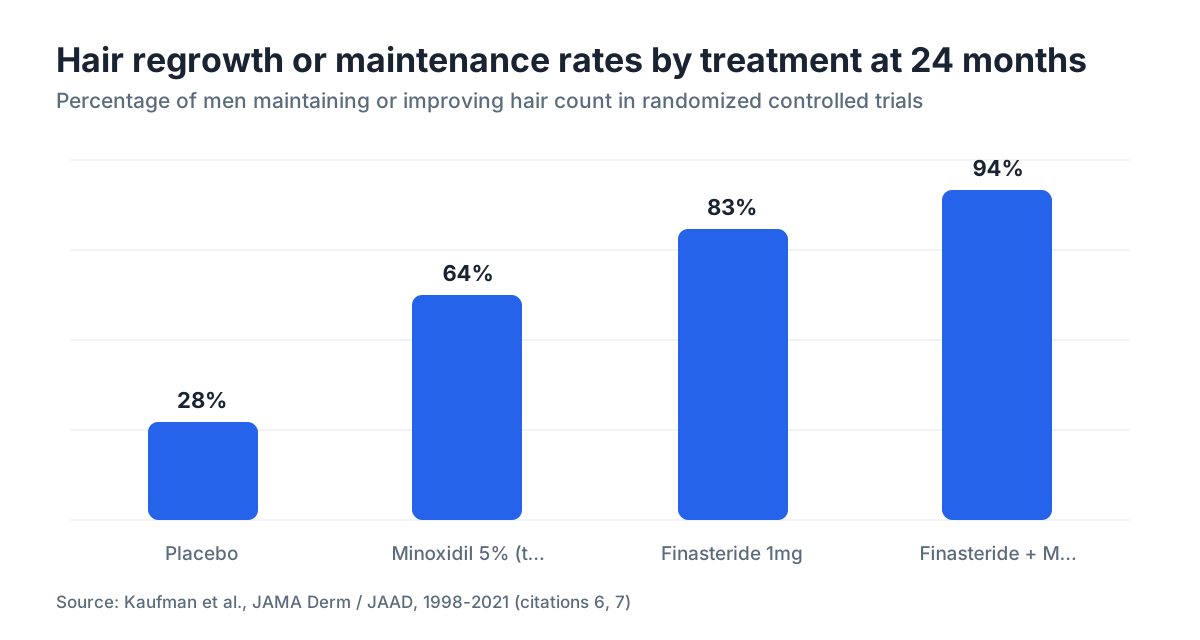
For men, the clinical evidence is strong. The registration trial that got the drug approved, published in the Journal of the American Academy of Dermatology, followed 1,553 men for two years. By month 24, 83% of men on finasteride 1mg daily maintained or improved their hair count, compared to 28% in the placebo group. [6] The frontal hairline tends to respond less than the crown, but many men see stabilization or modest improvement up front.
Finasteride is approved by the FDA for men only. It is not approved for women who are or may become pregnant because DHT has a role in male fetal development. Some dermatologists prescribe it off-label to postmenopausal women, but that's a conversation to have with a physician, not something to self-manage.
The sexual side effects get a lot of attention online. The registration trials reported them in roughly 1.8% to 3.8% of men. [6] Post-market reports suggest these can persist in a small subset of men after stopping the drug, sometimes called post-finasteride syndrome. The research on this is ongoing and the FDA has required label updates. Make sure you understand the full risk profile before starting. The deeper guide to finasteride covers dosing, side effects, and the difference between brand-name Propecia and generic versions.
One honest note: finasteride only works as long as you take it. Stop, DHT rebounds, and shedding typically restarts within a year.
Is combining finasteride and minoxidil better than using one alone?
For most men, yes. The two drugs work through completely different mechanisms. Minoxidil is a vasodilator that appears to extend the hair growth phase. Finasteride addresses the hormonal root cause. Using both together makes biological sense.
A 2021 randomized controlled trial in JAMA Dermatology compared three groups: finasteride alone, minoxidil alone, and combination therapy. After 24 weeks, the combination group had significantly greater improvement in global photographic assessment than either drug alone. [7] That's not proof the combination works for everyone, but it's the best head-to-head evidence we have so far.
Combination therapy does add cost and complexity. You're managing a daily oral pill and a topical application (or two oral medications if you use oral minoxidil). Side effect profiles compound. But if you're serious about slowing recession and want the best possible result from medication, this is what the evidence points to.
The full article on finasteride and minoxidil together covers the protocols dermatologists actually use.
What about DHT blockers, supplements, and other treatments?
This is where things get murkier. A lot of products marketed for hair loss have weak or no human trial data.
Saw palmetto is the most commonly cited natural DHT blocker. It's sold in oral supplements and some shampoos. The theoretical mechanism is similar to finasteride: it may inhibit 5-alpha reductase. The evidence is thin. A small study of 100 men published in the Journal of Alternative and Complementary Medicine found saw palmetto produced response in 38% versus 68% for finasteride over 24 months. [8] That gap matters. More on what the science actually shows in the guide to DHT blockers.
Ketoconazole shampoo (2% prescription strength) has modest evidence suggesting it reduces scalp DHT and may complement other treatments. It's not a standalone solution.
Platelet-rich plasma (PRP) injections involve drawing your own blood, spinning it to concentrate growth factors, and injecting it into the scalp. Some small trials show benefit. Larger randomized controlled trials are inconsistent. It's expensive ($500 to $2,500 per session, multiple sessions required) and not FDA-approved for hair loss.
Low-level laser therapy (LLLT) devices (combs, helmets) are FDA-cleared (a lower bar than FDA-approved) for both men and women. The mechanism isn't fully understood. Results in trials are statistically significant but often modest in absolute terms.
Nutritional deficiencies in iron, zinc, vitamin D, and biotin can contribute to shedding, but supplementing when you're not deficient doesn't grow hair. The article on hair loss supplements sorts through what's real and what's marketing.
So here's the takeaway. If you want the best chance of meaningful results from non-surgical treatment, finasteride and/or minoxidil are where to start, not supplements.
Can a hair transplant fix a receding hairline permanently?
Yes. A hair transplant is the only way to physically restore hair to an area where follicles are gone. The two main techniques are Follicular Unit Transplantation (FUT, strip method) and Follicular Unit Extraction (FUE). Both move follicles from the back and sides of the scalp (the donor zone, which is DHT-resistant) to the recession areas. [9]
Those transplanted follicles keep their DHT resistance. They don't miniaturize the way the original hairline follicles did. That's why the result is considered permanent, though "permanent" needs a caveat: the hair behind the transplant can keep thinning if you don't take medication, which can eventually leave the transplanted hairline looking isolated.
Costs vary enormously. In the United States, expect $4,000 to $15,000 depending on the number of grafts, technique, and surgeon. Some clinics in Turkey charge $2,000 to $5,000 for the same graft counts, which is why transplant tourism is common. Quality varies wildly. Board certification and viewing a surgeon's before-and-after portfolio from their own patients matters more than price.
Not everyone is a candidate. You need adequate donor density. Younger patients (under 25) are often advised to wait until their pattern stabilizes so the surgeon can plan a realistic long-term hairline. Operate too early and you risk designing a hairline that looks odd as the surrounding hair keeps thinning.
Recovery involves visible scabbing and redness for 10 to 14 days, and transplanted hairs shed at two to four weeks before regrowing starting at three to four months. Final results take 12 to 18 months. The full breakdown is in the hair transplant guide.
What's the best haircut for a receding hairline and thinning hair?
This isn't a medical treatment, but it's one of the most common questions people ask, and a good haircut genuinely changes the appearance of a receding hairline while you work on actual treatment.
A few principles that hold up:
Keeping the sides and back short (a fade or taper) reduces the contrast between the thinning top and thicker sides. Long hair on top with thick sides emphasizes the difference. Short all over reads more consistent.
A buzz cut or very short crop removes the variable of hair length entirely and kills the comb-over-to-hide-it look that almost always draws more attention to the recession than it deflects.
For partial recession (early Norwood II-III), textured crops and quiffs work well because they add volume at the front. Avoid hard parts directly over a thinning area.
For thinning hair rather than outright recession, a lightweight volumizing mousse or a matte pomade before styling can increase the appearance of thickness without the greasy flat look that heavy products create.
The honest thing to say: no haircut stops the biological process. It's a management tool, not a treatment. Use it while you figure out the medical side.
How long does receding hairline treatment take to show results?
This is where a lot of people give up too early. Hair grows slowly, and treatments work even more slowly.
Minoxidil: Most dermatologists say give it at least four to six months before judging it. The initial shed at weeks six to eight convinces many people it's failing. It usually isn't. Real regrowth or stabilization becomes visible between months four and twelve. [4]
Finasteride: Stabilization of loss typically takes three to six months. Visible regrowth, if it happens, takes six to twelve months or longer. Frontal hairline response is slower than crown response.
Combination therapy: Same timelines. Don't expect to see meaningful change in the mirror at month two.
Hair transplant: Transplanted hairs shed at two to four weeks and then lie dormant. Regrowth starts at three to four months, looks presentable at six months, and reaches final density at twelve to eighteen months.
PRP: Typically three sessions spaced four to six weeks apart, followed by maintenance. You might notice change after the second or third session.
The common thread: give it a twelve-month horizon before deciding a treatment failed. Taking photos under the same lighting every three months beats staring in the mirror daily.
Are receding hairline treatments safe for women?
Women get receding hairlines too, though the pattern is usually different. Female androgenetic alopecia more often causes diffuse thinning across the crown with a preserved frontal hairline, but true frontal recession (sometimes a distinct scarring subtype called frontal fibrosing alopecia) does happen.
For women, the options narrow.
Topical minoxidil 2% is FDA-approved for women. The 5% formula is used off-label. A clinical trial published in the Journal of the American Academy of Dermatology found the 5% foam produced better results than the 2% solution in women without a meaningful increase in side effects. [10] Oral minoxidil at low doses (0.625mg to 1.25mg) is an off-label but increasingly used option.
Finasteride is not FDA-approved for women and carries teratogenicity risk in women of childbearing potential. Some physicians prescribe dutasteride or spironolactone off-label for women with androgenetic alopecia. These are prescription decisions that require a physician's assessment.
Frontal fibrosing alopecia is a different condition and typically needs a dermatologist who specializes in scalp disorders. Standard hair loss treatments may not be appropriate.
If your shedding came on suddenly, read about telogen effluvium, which is far more common in women and responds to different management entirely.
What does receding hairline treatment cost, and is any of it covered by insurance?
Short answer: almost nothing is covered by insurance, because hair loss is classified as a cosmetic concern in most cases.
| Treatment | Typical US cost |
|---|---|
| Generic finasteride 1mg (monthly) | $10-$30/month |
| Brand Propecia (monthly) | $70-$100/month |
| Topical minoxidil 5% (monthly) | $10-$25/month |
| Oral minoxidil 2.5mg (monthly) | $15-$40/month |
| FUE hair transplant (1,500-3,000 grafts) | $6,000-$15,000 |
| FUT hair transplant (1,500-3,000 grafts) | $4,000-$10,000 |
| PRP session | $500-$2,500 per session |
| LLLT device (one-time) | $200-$900 |
Generic finasteride and generic minoxidil are genuinely cheap. Together you might spend $30 to $50 per month for the combination with the best clinical evidence. That's a reasonable starting point before considering anything pricier.
Medicated shampoos, supplements, and devices add cost without adding proportionate evidence. Spend there last, not first.
For transplants, the lowest-cost option (medical tourism) carries real risks: infection, uneven results, and no easy recourse if something goes wrong. If you go that route, verify the surgeon's credentials and view their actual portfolio.
How do you know which treatment to start with?
Here's the honest framework most dermatologists use, roughly in order.
First, confirm the diagnosis. Androgenetic alopecia looks different from telogen effluvium, traction alopecia, or scarring conditions. Blood work (thyroid, ferritin, zinc, vitamin D) rules out nutritional and metabolic causes. A board-certified dermatologist can do a scalp exam and often a dermoscopy to assess follicle miniaturization directly.
If it's androgenetic alopecia and you're a man, finasteride 1mg daily is the most evidence-backed single agent. Add topical or oral minoxidil for better results. That combination is also the cheapest long-term option.
If you're a woman, topical minoxidil is the first-line FDA-approved option. Talk to a dermatologist about whether a hormonal workup and off-label options make sense for you.
If you're at Norwood III or higher with significant hairline recession, start medication to protect remaining hair while you have a consultation with a hair restoration surgeon to understand your transplant options and candidacy.
Don't start with the most expensive or invasive option. Start with the options that have the strongest evidence and the lowest risk.
If you want a faster sense of your pattern before booking appointments, the free AI hair analysis at MyHairline can give you a starting point based on your photos.
Sources
- American Academy of Dermatology, Hair loss types: Androgenetic alopecia
- National Library of Medicine, StatPearls: Androgenetic Alopecia
- Journal of the American Academy of Dermatology, Olsen EA et al., 1992
- FDA, Drug Approvals and Databases: Rogaine (minoxidil) label
- Olsen EA et al., Journal of the American Academy of Dermatology, 1990, Topical minoxidil 5% vs 2% in androgenetic alopecia
- Kaufman KD et al., Journal of the American Academy of Dermatology, 1998, Finasteride 1mg in androgenetic alopecia
- Hu R et al., JAMA Dermatology, 2021, Combination finasteride and minoxidil vs monotherapy in androgenetic alopecia
- Prager N et al., Journal of Alternative and Complementary Medicine, 2002, Saw palmetto vs finasteride in androgenetic alopecia
- International Society of Hair Restoration Surgery (ISHRS), Practice Census
- Blume-Peytavi U et al., Journal of the American Academy of Dermatology, 2007, Minoxidil 5% foam vs 2% solution in women
- FDA, MedWatch Safety Labeling Changes: Propecia (finasteride) 2012