
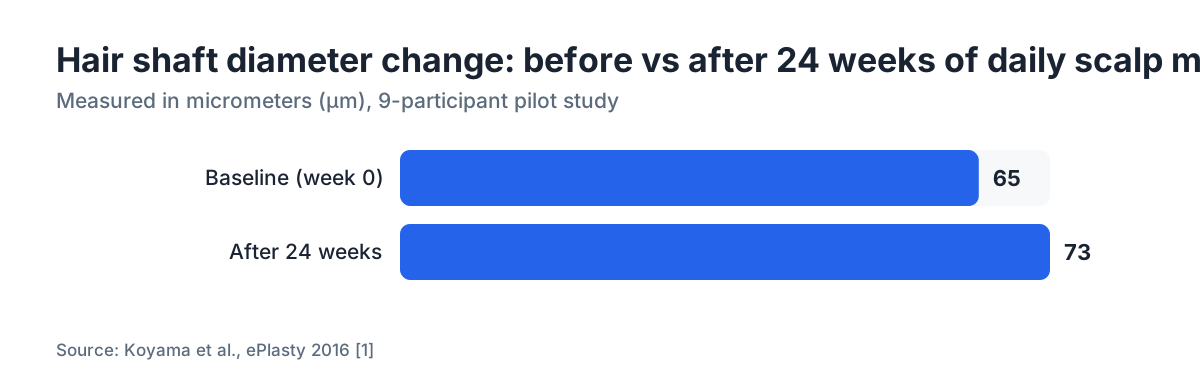
TL;DR: Scalp massage won't reverse a receding hairline on its own. A small 2016 Japanese trial found 4 minutes of daily standardized massage increased hair shaft thickness after 24 weeks, from 65 to 73 micrometers. It's safe, free, and may support proven treatments like minoxidil or finasteride. Don't expect it to replace either.
Does scalp massage actually help a receding hairline?
A little, maybe, and mostly for thickness rather than regrowing ground you've already lost. That's the honest answer.
A 2016 pilot study published in ePlasty followed nine healthy Japanese men who did 4 minutes of daily scalp massage with a device for 24 weeks. Researchers measured hair shaft diameter before and after. Mean thickness rose from 65 micrometers at baseline to 73 micrometers after 24 weeks. That's a real, instrument-measured change in strand diameter, not a self-reported impression [1].
The study was tiny. Nine men, no control group, and it looked at vertex thickness rather than a receding frontal hairline. Nobody has run a large randomized controlled trial on massage and hairline recession. The evidence exists, but it's thin. Take the social media enthusiasm with real skepticism.
What massage almost certainly doesn't do is stop the hormonal process behind most hairline recession. Androgenetic alopecia, the pattern baldness that causes a receding hairline, comes from dihydrotestosterone (DHT) shrinking follicles over years. Rubbing your scalp doesn't block DHT. If that's what's driving your recession, massage is an adjunct at best.
How is scalp massage supposed to work biologically?
Researchers have proposed two main mechanisms, and they're not equally supported.
The first is mechanical stretching of dermal papilla cells. The 2016 ePlasty team argued that repeated pressure stretches the cells at the base of each follicle, which may switch on genes that push toward thicker, longer growth cycles [1]. Lab work (in vitro, not in humans) found that stretching dermal papilla cells turned up genes tied to cell proliferation and hair growth [8]. That's genuinely interesting. It's also a long way from proof that fingers on your scalp do the same thing.
The second proposed mechanism is better blood flow. Kneading the scalp delivers more oxygen and nutrients to follicles, the theory goes. Plausible on paper, because follicles are metabolically busy and need a decent blood supply. But no strong human trial shows that massage-driven blood flow changes turn into meaningful regrowth. In people without scarring alopecia, follicle blood supply is generally fine already, so it's unclear how much room there is to improve.
A third, less-discussed idea is that regular massage eases scalp tension. Some researchers have speculated that chronic tension at the frontal and temporal zones, where hairlines retreat first, might impair follicle function. The evidence here is thinner still. Call it a hypothesis, not a mechanism.
Knowing what causes hair loss at the follicle level matters, because it tells you which treatments can actually reach the problem.
What does the clinical evidence actually look like?
Beyond the 2016 pilot, the literature is sparse.
A 2019 self-assessment survey in ePlasty (same research group) collected responses from 327 men who had self-administered scalp massage for roughly 6 months, averaging 11 to 20 minutes per day. 68.9% reported stabilization or regrowth [2]. Sounds impressive until you remember it was a self-selected online survey with no control group, no objective measurement, and heavy room for response bias. People who think massage is working are the ones who finish the survey.
There is essentially no high-quality randomized controlled trial of scalp massage for androgenetic alopecia in humans as of mid-2026. Compare that to the two FDA-approved hair loss drugs. Minoxidil has dozens of controlled trials going back to the 1980s. Finasteride earned approval on two large Phase III trials in which roughly 83% of men kept their hair count versus 28% on placebo over two years [3].
So the hierarchy is clear. Finasteride and minoxidil for men sit on solid ground. Scalp massage sits on a much smaller foundation, with a safety profile good enough that it's easy to add.
The American Academy of Dermatology does not list scalp massage as a standalone treatment for androgenetic alopecia in its patient guidance [4].
How much difference does scalp massage make compared to minoxidil or finasteride?
| Treatment | Mechanism | Evidence quality | Typical effect (published data) | Cost (monthly) |
|---|---|---|---|---|
| Scalp massage | Mechanical stretch, blood flow | Very low (1 small pilot, 1 survey) | +~12% hair shaft diameter [1] | Free |
| Minoxidil 5% topical | Vasodilation, prolongs anagen | High (multiple RCTs) | ~15-20% increase in hair count at 4 months [3] | $10-30 |
| Finasteride 1mg oral | DHT reduction ~70% | High (Phase III trials) | ~83% maintained count at 2 years [3] | $15-50 |
| Combined finasteride + minoxidil | Dual mechanism | Moderate (open-label trials) | Greater than either alone | $25-80 |
| Hair transplant | Surgical redistribution | High for coverage, permanent | Depends on donor supply | $4,000-15,000+ |
The gap between massage and the approved treatments is large. Massage carries no serious safety concerns, which is a genuine plus. But if your hairline has been actively retreating for years, massage alone is very unlikely to stop it.
For a fuller picture of how finasteride and minoxidil stack up together, see finasteride and minoxidil.
What is the best technique for scalp massage?
If you're going to do it, do it consistently and correctly. The 2016 study used a standardized scalp massage device for exactly 4 minutes per day. Doing it by hand means less consistent pressure, but here's the technique the researchers followed.
Place all ten fingertips on the scalp, pads down, not fingernails (nails scratch and cause inflammation). Apply moderate, firm pressure and move the scalp tissue in small circles instead of dragging your fingers across the surface. Work across the head systematically, spending time on the vertex and temporal areas. The study used a commercial massage device for consistent pressure, so if you're serious, a silicone scalp massager may be more reliable than finger technique alone.
Duration matters. The 2016 study ran 4 minutes daily for 24 straight weeks [1]. The self-survey group averaged 11 to 20 minutes daily and reported better perceived results, though that's tangled up with the fact that believers tend to do more [2].
Timing is flexible. Some people massage before applying topical minoxidil, on the theory that slightly increased blood flow helps absorption. No controlled trial shows that combination beats minoxidil alone, but it's plausible and adds no risk. If you're reading up on minoxidil side effects and hoping massage lets you use less of the drug, that isn't a validated workaround.
Don't massage hard if your scalp is irritated, sunburned, or inflamed. That helps no one.
Can scalp massage make hair loss worse?
For most people, no. Done correctly with fingertips and moderate pressure, scalp massage is safe.
One caveat is worth knowing. If you're in the middle of active telogen effluvium, a sudden shedding event triggered by stress, illness, or nutritional deficiency, aggressive rubbing during the shedding phase can dislodge telogen hairs that were already on their way out. This isn't new loss. Those hairs were going to fall anyway. But it can look alarming in the sink.
With androgenetic alopecia, follicles miniaturize rather than get physically pulled out, so massage won't speed that process up.
Scratching with fingernails is a different story. That causes micro-abrasions and low-grade inflammation, which is not what you want around follicles you're trying to protect. Use your fingertip pads and keep nails short if you're doing this daily.
There's also no evidence that skipping scalp massage protects hair. The old warning about not brushing thinning hair too hard is about mechanical breakage of fragile shafts, not about sparing follicles from stimulation.
Should you combine scalp massage with other hair loss treatments?
Yes, and this is probably where it earns its keep.
Scalp massage costs nothing, takes four minutes, and has a reasonable biological rationale. If you're already on finasteride or topical minoxidil, adding daily massage is a low-effort adjunct that won't fight either medication.
Some dermatologists suggest massaging right before applying minoxidil to help absorption through mild vasodilation, though that exact sequence hasn't been tested in a controlled trial. What we do know is that minoxidil's results depend partly on consistent daily application and good scalp contact, both of which massage can support mechanically.
If you're taking finasteride or thinking about starting, massage doesn't replace the DHT-blocking mechanism. Think of it as tending the scaffold while the real structural work happens pharmacologically.
For anyone who has had or is considering a hair transplant, gentle post-operative massage on non-grafted areas is sometimes recommended to reduce fibrosis around the donor site. The recipient area needs to be left alone for weeks after surgery, so check with your surgeon before touching it.
If you want to understand where DHT fits into all of this, the dht blocker article covers the pharmacology in detail.
How long does scalp massage take to show results?
The only controlled measurement we have comes from the 2016 study: 24 weeks of daily 4-minute massage before any measurable change in hair shaft diameter showed up [1].
Hair growth is slow. The anagen (active growth) phase of a scalp follicle lasts 2 to 7 years [10], but the visible effects of any intervention tend to surface at 3 to 6 months. If you're tracking progress, photograph the same area under the same lighting every 4 weeks. Don't trust memory or feel.
The 2019 survey found men who massaged for fewer than 3 months were less likely to report positive results than those who kept going past 6 months [2]. That lines up with what we know about hair biology more than with massage specifically.
Done it daily for 6 months with no change at all? Massage isn't your answer. See a board-certified dermatologist who specializes in hair, get your hormone levels checked, and have an honest conversation about the approved options.
Myhairline.ai's free AI hair analysis tool (/scan) can help you document your hairline over time and identify your Norwood stage, which is useful context before any treatment conversation.
Is there a right time of day to do scalp massage?
No data says morning beats evening. Pick the time you'll actually stick with.
One practical constraint applies if you use topical minoxidil: massage before you apply it, not after, so you're not rubbing the solution off before it soaks in. FDA labeling for minoxidil says the product should stay on the scalp for at least 4 hours after application [7]. Massage first, then apply minoxidil, then leave it alone. That's the sensible order.
If you shower daily, doing your massage during shampooing is fine. You're already wetting and working the scalp. Just stay gentle. Wet hair is more elastic and breaks more easily under mechanical stress, though again that's a breakage concern, not a follicle one.
Are essential oils or products during scalp massage worth using?
Here the evidence gets thin fast.
Rosemary oil is the one additive with real human data. A 2015 randomized controlled trial in SKINmed compared rosemary oil to minoxidil 2% over 6 months in 100 patients with androgenetic alopecia. Both groups showed similar hair count increases at 6 months, and the rosemary group had significantly less scalp itching [5]. One trial, not a large body of work, but real. The proposed mechanism is inhibition of 5-alpha reductase, the enzyme that turns testosterone into DHT.
Pumpkin seed oil has one small RCT (76 men, 2014, in Evidence-Based Complementary and Alternative Medicine) showing higher hair count versus placebo after 24 weeks [6]. Small again, and not widely replicated.
For everything else, from castor oil to biotin serums to the marketed scalp oils lining the shelf, there's either no human trial or only low-quality data. The hair loss supplements article covers the oral supplement side in more detail.
If you use an oil during massage, keep it light so you don't clog follicles or leave a residue that interferes with any topical medication you apply afterward.
What do dermatologists actually think about scalp massage?
Most hair-specialist dermatologists treat it as a harmless adjunct, not a primary therapy.
The AAD's patient-facing guidance on hair loss centers on minoxidil, finasteride, low-level laser therapy (which also has limited but real evidence), and procedural options [4]. Scalp massage doesn't appear in the AAD's treatment framework for androgenetic alopecia.
That doesn't mean dermatologists discourage it. The common clinical view is simple: if a patient will do something daily and massage is the thing they'll stick with, it beats nothing and might add marginally to thickness. It won't rescue a hairline retreating from DHT-driven miniaturization without pharmacological help.
The practitioners most enthusiastic about massage tend to pair it with other treatments and don't claim it's a standalone cure. That's the honest framing.
Who is most likely to see a benefit from scalp massage?
People in the earlier Norwood stages (I through III) who haven't yet lost much follicle density at the hairline. Once a follicle has miniaturized long enough that it's no longer growing a visible hair, no amount of massage will wake it up. Mechanical stimulation works on functioning follicles, not fibrosed or absent ones.
People with diffuse thinning across the scalp, rather than a classic receding frontal hairline, may see somewhat different results, because the crown and vertex were the areas studied in the 2016 trial.
People dealing with stress-related shedding (telogen effluvium) may find massage helps with scalp comfort and stress, which could indirectly support recovery. The shedding in that condition resolves when the underlying trigger resolves, not because of massage.
If you're in later Norwood stages (IV through VII), your energy is better spent on the treatments with stronger evidence: finasteride, minoxidil, or an evaluation for a hair transplant.
Sources
- Koyama T et al., ePlasty 2016, Standardized Scalp Massage Results in Increased Hair Thickness
- Koyama T et al., ePlasty 2019, Effect of Scalp Self-Massage on Hair Thickness
- DailyMed (U.S. National Library of Medicine), Finasteride tablet prescribing information
- American Academy of Dermatology, Hair Loss: Diagnosis and Treatment
- Panahi Y et al., SKINmed 2015, Rosemary oil vs minoxidil 2% for hair loss
- Cho YH et al., Evidence-Based Complementary and Alternative Medicine 2014, Pumpkin seed oil and hair growth
- DailyMed (U.S. National Library of Medicine), Minoxidil topical solution labeling
- StatPearls (National Library of Medicine), Hair follicle and dermal papilla biology
- American Academy of Dermatology, Hair loss types and causes
- NIH National Institute of Arthritis and Musculoskeletal and Skin Diseases, Alopecia