

TL;DR: Telogen effluvium (TE) is diffuse hair shedding caused when a physical or emotional stressor forces hair follicles into the resting phase early. The most common triggers include major illness, surgery, rapid weight loss, thyroid dysfunction, iron deficiency, childbirth, and high psychological stress. Shedding usually starts 2 to 4 months after the trigger and clears within 6 to 12 months once the cause is gone.
What exactly is telogen effluvium and how does it cause hair loss?
Hair grows in cycles. Each follicle spends roughly 2 to 6 years in the anagen (active growth) phase, then transitions through a short catagen phase before entering telogen, a resting state that lasts about 3 months, at which point the hair sheds and a new cycle begins. On a healthy scalp, roughly 5 to 15 percent of follicles are in telogen at any given time, which is why losing 50 to 100 hairs a day is completely normal [1].
Telogen effluvium happens when a stressor breaks that balance and pushes an abnormally large share of follicles into telogen at once. Two to four months later, all those resting hairs shed together. Because the shift is spread across the whole scalp rather than concentrated, you notice it in your brush, on your pillow, or circling the shower drain rather than as a receding hairline or bald patch. That distinction matters: TE is diffuse shedding, not the focal loss of androgenetic alopecia.
The American Academy of Dermatology describes telogen effluvium as one of the most common causes of diffuse hair loss and notes it is almost always reversible once the underlying trigger is found and addressed [2]. That reversibility is real, but it is conditional. If the trigger is still active, the shedding continues. Chronic TE, lasting more than six months, is a separate clinical picture that usually points to a persistent underlying cause nobody has found yet.
For a broader look at how TE fits into the full picture of hair loss, the telogen effluvium overview covers diagnosis, stages, and recovery timelines in detail.
What are the most common causes of telogen effluvium?
The causes fall into a handful of well-documented categories. Most cases trace back to one of these.
Physical trauma and major surgery. General anesthesia combined with the metabolic stress of surgery is one of the most reliable TE triggers. Studies in post-surgical patients document noticeable shedding in a meaningful share of people who undergo long procedures, typically beginning 6 to 16 weeks after the operation [3].
High fever or serious infection. Any illness producing a sustained high fever can push follicles into telogen. COVID-19 became a textbook example: a 2021 study in The Lancet found that hair loss was reported by roughly 22 percent of COVID-19 survivors at six months follow-up, placing it among the most frequent post-acute symptoms [4]. Similar patterns appear after typhoid, malaria, and other high-fever illnesses.
Childbirth (postpartum TE). During pregnancy, elevated estrogen prolongs the anagen phase, so less hair than usual sheds. After delivery, estrogen drops sharply and all those retained hairs enter telogen at once. Postpartum TE usually peaks around 3 to 4 months after birth and resolves by 12 months in most women [1].
Rapid weight loss and crash dieting. Severe caloric restriction starves follicles of the protein and micronutrients they need. Research consistently links very low-calorie diets (below roughly 1,200 calories per day) and protein restriction to TE onset. This is one of the more preventable causes and one that often goes unrecognized because patients do not connect a diet from months ago to shedding happening now.
Thyroid dysfunction. Both hypothyroidism and hyperthyroidism disrupt the hair cycle. The thyroid-hair link is well established in dermatology; thyroid hormones directly regulate follicle cycling, and hair loss can be the presenting complaint before other thyroid symptoms show up [5].
Iron deficiency. Ferritin (stored iron) levels below 30 ng/mL are commonly associated with TE, though the exact threshold is still debated. A review in the Journal of the American Academy of Dermatology found iron deficiency to be among the most frequent correctable causes of diffuse hair loss in women [6].
Psychological stress. Severe acute stress (a bereavement, a divorce, job loss) can trigger TE. The mechanism involves stress-released neuropeptides and cortisol nudging the follicle out of anagen. Everyday work stress rarely crosses the threshold; it takes an event that genuinely overwhelms the body.
Medications. See the dedicated section below. Drug-induced TE is more common than most people expect and is one of the causes doctors miss most often.
Which nutrient deficiencies cause telogen effluvium?
Nutrition is probably the most actionable category of TE triggers, because deficiencies are measurable and, in most cases, fixable.
Iron. Low ferritin is the single most studied nutritional cause. Many dermatologists use a ferritin floor of 30 to 40 ng/mL for hair health, even though most labs flag anything above 12 ng/mL as "normal." If you are shedding and your ferritin sits in the teens or low 20s, that gap may be the whole story.
Protein. Hair is roughly 95 percent keratin, a protein. Diets chronically low in total protein, or adequate in calories but short on essential amino acids, impair keratinization and trigger diffuse shedding. Crash diets that cut calories fast are especially risky because the protein deficit often arrives alongside a zinc deficit.
Zinc. Zinc deficiency causes a form of TE that can be dramatic. It shows up in conditions like acrodermatitis enteropathica and with restrictive diets, heavy alcohol use, and malabsorption syndromes. A 2013 study in the Annals of Dermatology found serum zinc levels significantly lower in TE patients than in controls [7].
Vitamin D. The relationship here is less clear-cut, but vitamin D receptors sit in hair follicles, and severe deficiency (below 20 ng/mL) turns up in many TE case series. The direction of causality is still being worked out.
Biotin. Worth naming specifically to give it the skepticism it deserves. Biotin deficiency causing hair loss is real but genuinely rare, almost always tied to raw egg consumption, certain genetic disorders, or prolonged parenteral nutrition. Taking biotin supplements for TE without a confirmed deficiency does not appear to help, and it notoriously interferes with thyroid and troponin lab tests [8]. Most people with TE who buy biotin supplements are wasting money.
If you are considering supplements for TE, hair loss supplements covers what the evidence actually supports versus what is marketing.
What medications cause telogen effluvium?
Drug-induced TE is genuinely common and genuinely underreported. The FDA requires manufacturers to list hair loss as an adverse effect when clinical data support it, and the list of implicated drugs is long [8].
The most well-documented categories:
| Drug class | Examples | Notes |
|---|---|---|
| Anticoagulants | Heparin, warfarin | Among the most frequently reported TE triggers |
| Retinoids | Isotretinoin (Accutane), acitretin | Dose-dependent; often resolves with dose reduction |
| Beta-blockers | Propranolol, metoprolol | Mechanism not fully established |
| ACE inhibitors | Enalapril, captopril | Less common but documented |
| Antithyroid drugs | Carbimazole, propylthiouracil | Can cause TE directly and via induced hypothyroidism |
| Antidepressants | Fluoxetine, sertraline, paroxetine | SSRIs are a recognized but often unacknowledged cause |
| Mood stabilizers | Lithium, valproate | Valproate is a particularly frequent offender |
| Oral contraceptives | Progestin-dominant pills | Starting or stopping can both trigger TE |
| Immunosuppressants | Methotrexate | Expected at higher doses |
| Cholesterol drugs | Statins (less commonly) | Evidence is weaker; documented in case reports |
Minoxidil, oddly enough, can look like it causes shedding in the first 4 to 8 weeks of use. This is not true drug-induced TE. It happens because minoxidil forces resting follicles into a new anagen cycle, pushing out the old club hairs. To tell the difference, minoxidil side effects explains the mechanism clearly.
If you suspect a medication, do not stop it on your own. Talk to the prescribing physician first. Some drugs (anticoagulants, antiepileptics) carry risks of stopping that far outweigh hair loss.
Can hormonal changes other than childbirth cause telogen effluvium?
Yes, and this is an underappreciated area.
Thyroid hormones, as mentioned, directly regulate follicle cycling. Both too much (hyperthyroidism) and too little (hypothyroidism) are well-documented TE triggers, and hair loss sometimes comes weeks or months before other systemic symptoms. Getting a TSH, free T4, and ideally free T3 tested is standard practice in any TE workup [5].
Perimenopausal and menopausal estrogen decline can cause TE alongside or separately from androgenetic alopecia. The two often coexist in women over 45, which makes the picture messy. A dermatologist who does trichoscopy (scalp dermoscopy) can usually tell them apart.
Starting or stopping hormonal contraceptives triggers TE in a subset of women. Pills with a high androgen index can push some follicles into telogen; stopping any estrogen-containing pill can trigger the same postpartum-like estrogen withdrawal effect.
Androgenetic alopecia (pattern hair loss) and TE also frequently overlap. Someone with genetic sensitivity to dihydrotestosterone (DHT) who also goes through a major stressor can lose hair from both mechanisms at once. Understanding what causes hair loss more broadly helps clarify when TE is the whole story and when it is only part of it.
How does chronic stress cause telogen effluvium?
The acute stress mechanism is reasonably well understood. Corticotropin-releasing hormone (CRH) and substance P, both released during significant stress, act on follicle receptors and can end anagen early. A 2021 Nature paper by Choi et al. showed that chronic stress raises corticosterone levels, which stops dermal papilla cells from producing GAS6, a growth factor that keeps follicles in anagen [9]. That work used mouse models, but the pathway lines up with what clinicians see in humans.
The practical takeaway: acute, intense stress (a death in the family, a serious accident, a hospitalization) can reliably trigger TE that starts 2 to 3 months later. Chronic low-grade stress, the kind most people live with, is less clearly a standalone TE cause. It tends to worsen existing hair loss rather than kick off dramatic diffuse shedding on its own.
There is also a feedback loop worth naming. TE causes anxiety about hair loss, which creates stress, which can keep the shedding going past the original trigger. Breaking that loop, often by addressing the psychological response to the shedding itself, is part of recovery for some patients.
How long after a trigger does telogen effluvium start?
The lag is characteristic and useful for diagnosis. Because the anagen-to-telogen transition takes time and telogen itself lasts roughly 3 months before the hair sheds, most patients notice peak shedding 2 to 4 months after the inciting event [1].
This delay is why TE gets misattributed so often. A person who had COVID in January starts shedding heavily in March or April and cannot connect the two. Someone who crash-dieted over summer sees their hair thin in autumn and assumes it must be genetics.
Acute TE, triggered by a single identifiable event, typically peaks and then resolves within 6 months. The AAD notes that most acute cases self-resolve within 6 to 9 months without any treatment beyond removing the trigger [2].
Chronic TE, defined as shedding lasting more than 6 months, needs a more thorough investigation. In chronic cases, a cause is found in many but not all patients. The workup usually includes a complete blood count, ferritin, thyroid panel, vitamin D, zinc, and a hormonal panel depending on the patient's age and sex. A scalp biopsy can confirm TE on histology when the diagnosis is uncertain.
Is telogen effluvium different in men and women?
The underlying biology is the same, but the mix of triggers differs by sex and life stage.
Women get TE far more often than men in clinical practice, largely because of postpartum TE, hormonal contraceptive changes, and higher rates of iron deficiency. A 2013 review in the Journal of Investigative Dermatology Symposium Proceedings noted that telogen effluvium is among the most frequent hair loss diagnoses in women of reproductive age [10].
Men certainly get TE, typically after surgery, severe illness, crash diets, or heavy psychological stress. They carry the added complication that TE frequently coexists with androgenetic alopecia. Pattern hair loss is the default assumption for male shedding, so TE in men is often missed or blamed entirely on genetics when a workup might reveal a correctable component.
In men with both conditions, treating TE (finding and removing the trigger) can meaningfully improve overall hair density, while separately treating androgenetic alopecia with finasteride or minoxidil handles the genetic part. Finasteride and minoxidil for men are the two evidence-based options for the genetic side of male hair loss. Finasteride and minoxidil used together show additive benefit in most trials.
If you have not had your hair analyzed yet, the free AI scan at MyHairline (/scan) can help you figure out whether diffuse shedding, patterned thinning, or a combination is happening at your scalp.
How do you know if your shedding is telogen effluvium or androgenetic alopecia?
These are the distinguishing features.
Pattern. TE is diffuse: you lose volume all over rather than in a specific pattern. Androgenetic alopecia in men follows the Norwood scale (receding hairline, crown thinning). In women, pattern loss usually shows as widening of the central part. See the receding hairline guide for what a progressing recession actually looks like.
Timeline. TE often has an identifiable trigger 2 to 4 months prior. Androgenetic alopecia creeps in slowly over years with no clear onset event.
Pull test. Gently grasp 40 to 60 hairs and pull with moderate tension. More than 6 hairs per pull counts as a positive test, suggesting active TE. The pull test tells you less about androgenetic alopecia.
Hair shaft appearance. TE hairs typically shed with a small white bulb (the telogen club) at the root. Miniaturized, thin, short hairs point to androgenetic alopecia.
Scalp dermoscopy. A dermatologist examining the scalp under magnification can see follicular miniaturization (androgenetic alopecia) versus uniform hair diameter with empty follicles (TE). This is the most reliable way to separate them short of a biopsy.
The two conditions overlap often, especially in women over 40. If you have both, addressing the TE trigger first makes sense before committing to long-term medications, because regrowth after TE resolves may take the urgency off other treatments.
What diagnostic tests should you get for telogen effluvium?
A dermatologist or a primary care physician doing a thorough workup should check for every common reversible cause. The standard panel usually includes:
- Complete blood count (CBC): anemia, infection, chronic disease
- Serum ferritin: a sensitive marker for iron stores
- TSH (thyroid-stimulating hormone) plus free T4
- A metabolic panel: liver and kidney function, protein markers
- Serum zinc
- Vitamin D (25-hydroxyvitamin D)
- For women: estradiol, LH, FSH if perimenopausal; DHEA-S, free testosterone, and prolactin if androgen excess is suspected
A scalp biopsy is not always needed but can confirm TE on histology. The classic finding is an increased percentage of telogen hairs, with more than 25 percent telogen follicles as the commonly cited threshold [3].
The trichogram, which means pulling 50 to 60 hairs and examining the root bulbs under a microscope, is a cheaper and less invasive way to estimate telogen percentage. A result above 25 percent telogen hairs supports the diagnosis.
If bloodwork comes back normal and there is no identifiable trigger, a dermatologist may suggest a 6-month watchful waiting period with repeat labs, since some cases resolve on their own and repeat testing occasionally catches a value that normalized or slipped in the interval.
Does telogen effluvium always grow back?
In most cases, yes. Because TE involves follicles being pushed early into telogen rather than destroyed, the follicles stay structurally intact and able to re-enter anagen once the trigger is gone. This is the fundamental difference between TE and scarring alopecias, where follicles are permanently damaged.
Regrowth usually begins within 3 to 6 months of resolving the cause. Full density recovery can take 12 to 18 months, because the new hairs have to grow back to their original length, and hair grows roughly half an inch per month [1].
Three situations complicate recovery.
-
The trigger has not been removed. If iron stays low, thyroid disease stays untreated, or a medication stays on board, shedding continues. Recovery cannot happen while the cause is still active.
-
Chronic TE with no identified cause. These cases are the hardest. Some resolve on their own over 12 to 24 months; others drag on longer. A subset eventually gets diagnosed with an underlying condition that the first workup missed.
-
Concurrent androgenetic alopecia. TE regrowth recovers what the TE cost you, but the androgenetic miniaturization does not reverse. This is why a patient can feel like they "never fully recovered" from TE when what actually happened is the underlying genetic process kept moving during the event.
For managing the genetic component once TE has cleared, the options are minoxidil for men, finasteride, or DHT blockers more broadly. If loss has progressed a long way, the hair transplant route becomes a longer-term option.
Near the end of your evaluation, running your photos through the free AI scan at MyHairline (/scan) gives you a baseline read on where your hairline and density actually stand, which is useful for tracking recovery.
What triggers are people most likely to miss?
Clinically, the most frequently overlooked causes are the ones below.
Diet changes from 3 to 4 months ago. The lag between trigger and shedding means most patients are not thinking about what happened last quarter. Asking "did you change your diet, start a new exercise program, or lose weight fast before the shedding started?" often turns up the answer.
Subclinical hypothyroidism. A TSH in the upper normal range (above 2.5 mIU/L) can be linked to hair loss in some patients even when it is technically within the reference range. Not every endocrinologist treats at that level, but it is worth raising.
Starting a new medication. Patients rarely connect a prescription started months ago to shedding now. SSRIs and mood stabilizers are the most underrecognized offenders here, because physicians and patients alike underestimate their hair effects.
Ferritin in the low-normal range. Most labs flag ferritin above 12 ng/mL as normal. Many dermatologists use 30 to 40 ng/mL as the functional floor for hair. A patient with a ferritin of 18 ng/mL may be told their iron is fine when it is not enough for good follicle function.
Coming off hormonal contraceptives. Stopping the pill is a TE trigger that mimics the postpartum drop in estrogen. It can blindside women who quit the pill for unrelated reasons and then shed two to three months later.
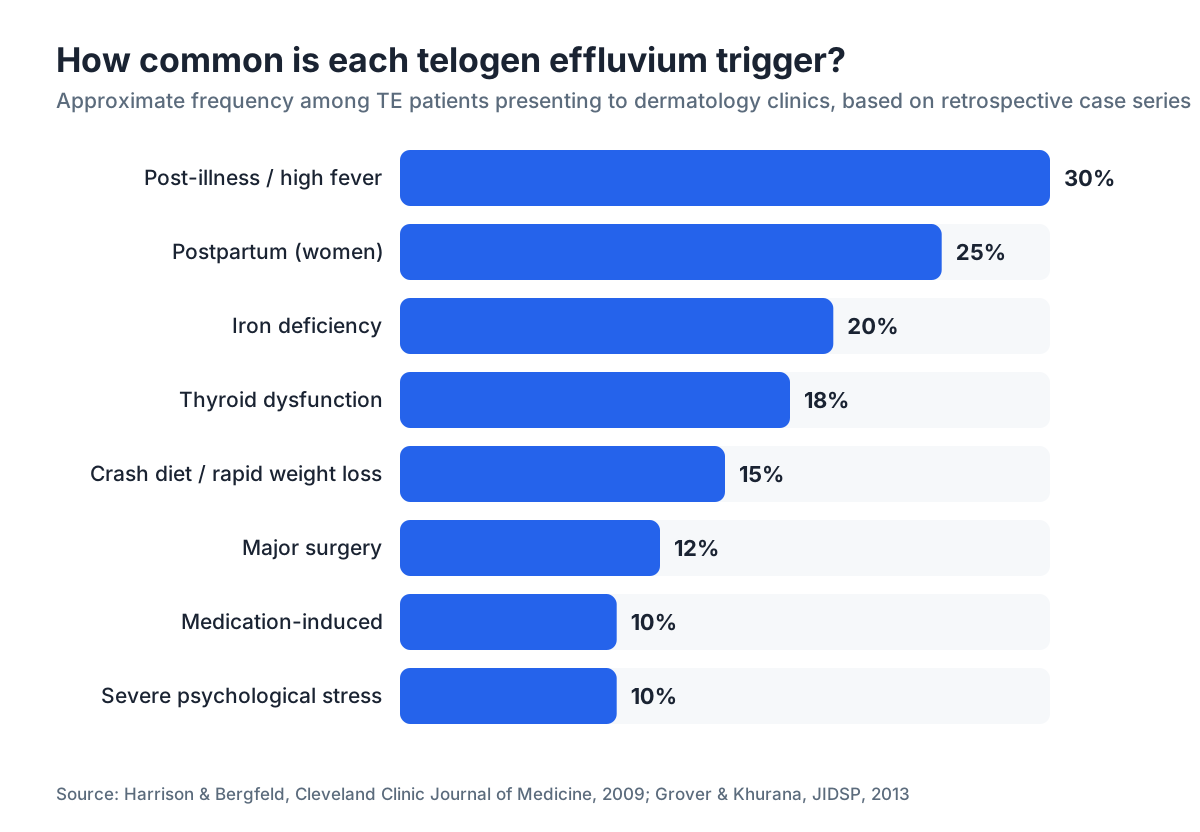
Nobody has clean data on how often each of these missed causes shows up across all populations. The closest published figures come from retrospective case series at dermatology referral centers, which almost certainly overrepresent complex cases. The real-world distribution of TE causes in general practice is harder to know with any precision.
Sources
- American Academy of Dermatology, Hair loss types: Telogen effluvium overview
- American Academy of Dermatology, Telogen effluvium: Diagnosis and treatment
- Harrison S, Bergfeld W. Diffuse hair loss: Its triggers and management. Cleveland Clinic Journal of Medicine, 2009
- Huang C et al. 6-month consequences of COVID-19 in patients discharged from hospital. The Lancet, 2021
- Safer JD. Thyroid hormone action on skin. Dermatoendocrinology, 2011; National Institute of Diabetes and Digestive and Kidney Diseases, Thyroid disease overview
- Trost LB, Bergfeld WF, Calogeras E. The diagnosis and treatment of iron deficiency and its potential relationship to hair loss. Journal of the American Academy of Dermatology, 2006
- Kil MS, Kim CW, Kim SS. Analysis of serum zinc and copper concentrations in hair loss. Annals of Dermatology, 2013
- U.S. Food and Drug Administration, Drug safety communication on biotin interference with lab tests
- Choi S et al. Corticosterone inhibits GAS6 to govern hair follicle stem-cell quiescence. Nature, 2021
- Grover C, Khurana A. Telogen effluvium. Journal of Investigative Dermatology Symposium Proceedings, 2013
- U.S. National Library of Medicine, MedlinePlus: Hair loss
- National Heart, Lung, and Blood Institute, Iron-deficiency anemia overview