

TL;DR: Telogen effluvium is temporary shedding triggered by stress, illness, crash diets, or hormonal shifts. For most people, the hair grows back on its own in 3 to 6 months once the trigger is removed. At home, the highest-value moves are fixing nutritional deficiencies (especially iron and protein), managing the root stressor, and optionally adding minoxidil to speed regrowth. No supplement or shampoo alone reverses it.
What is telogen effluvium and why does it shed so much?
Your scalp normally cycles through three phases: anagen (active growth, 2 to 7 years), catagen (transition, a few weeks), and telogen (resting, roughly 3 months before the hair falls). At any given time, about 10 to 15 percent of your follicles are in telogen [1]. Telogen effluvium happens when a physiological shock pushes a large chunk of growing follicles into telogen all at once. Two to three months later, those hairs shed simultaneously, and the volume feels alarming.
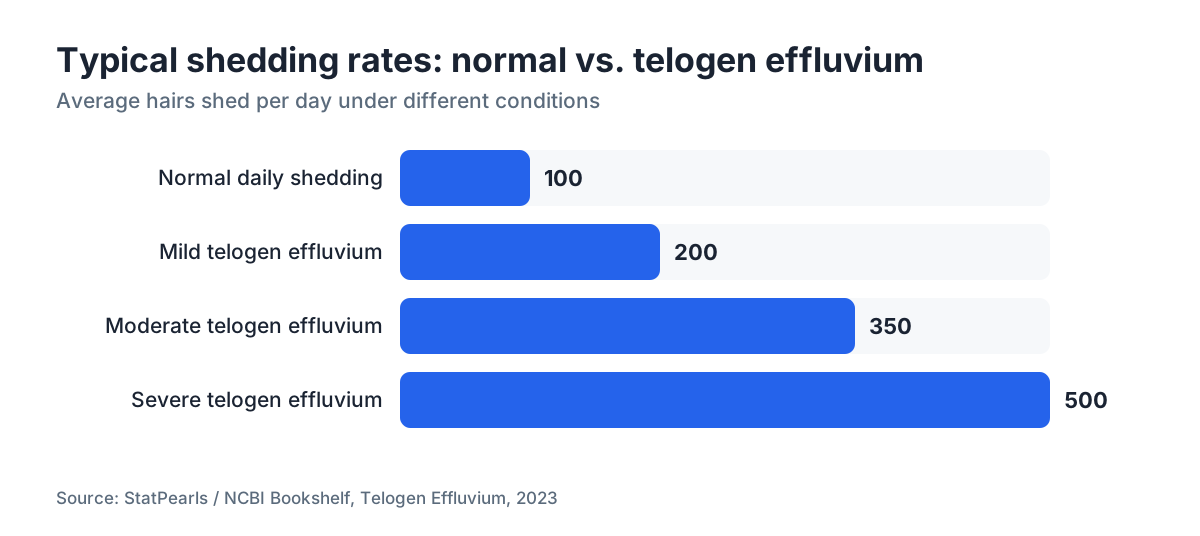
The shedding can be 300 to 500 hairs a day or more, compared with a normal rate of around 100 [2]. That number sounds catastrophic, but the follicles themselves are not damaged. They are alive and resting. Once the triggering insult resolves, those follicles cycle back into anagen and the hair returns.
Here's the single most reassuring fact: telogen effluvium is not the same as androgenetic alopecia (pattern baldness), where follicles actually miniaturize. The mechanism is completely different, and so is the outlook. Most cases resolve without any medication at all.
What are the most common triggers, and do you need to find yours?
Yes, identifying your trigger matters enormously for home treatment. Without removing the cause, shedding can persist as chronic telogen effluvium, which some researchers define as lasting more than 6 months [3].
The most common triggers:
| Trigger category | Typical time to onset after event |
|---|---|
| Major surgery or hospitalization | 6 to 16 weeks |
| High fever / COVID-19 / flu | 6 to 12 weeks |
| Crash diet or rapid weight loss | 6 to 16 weeks |
| Iron-deficiency anemia | Variable, often chronic |
| Thyroid dysfunction | Variable |
| Stopping hormonal contraceptives | 1 to 4 months |
| Childbirth (postpartum) | 3 to 4 months |
| Severe emotional stress | 6 to 16 weeks |
| Starting or stopping certain medications | Weeks to months |
Work backward roughly 2 to 4 months from when you first noticed heavy shedding. That window usually points to the culprit. If you can't identify a clear event and the shedding has been going on for more than 6 months, get bloodwork (see the "when to see a doctor" section below). Guessing without data leads to buying supplements you don't need.
For a broader picture of how different conditions interact, what causes hair loss covers the full landscape.
How long does telogen effluvium last without treatment?
Acute telogen effluvium, the kind tied to a single triggering event, typically peaks around 3 months after the trigger, then tapers over the next 3 to 6 months. Full density usually returns within 6 to 12 months of onset [2].
Chronic telogen effluvium, defined as diffuse shedding lasting longer than 6 months, is a different animal. It often has an ongoing underlying driver, usually nutritional or hormonal, that hasn't been corrected. Or, in some women, it has no identifiable cause and fluctuates for years. Research published in the British Journal of Dermatology found that about half of women with chronic telogen effluvium had no identifiable precipitating factor [3].
The practical takeaway: if you can identify and remove your trigger, most acute cases resolve without any active treatment beyond good nutrition and patience. The home treatments below are about clearing obstacles to recovery and maybe shortening the timeline, not reversing an irreversible process.
Which nutritional deficiencies actually cause telogen effluvium?
Iron is the most studied and the most commonly missed. Ferritin (stored iron) below 30 ng/mL has been associated with increased hair shedding in multiple studies, and some dermatologists target ferritin above 70 ng/mL for hair-specific concerns, though the exact cutoff remains debated in the literature [4]. If you're menstruating, eating little red meat, or have any gut absorption issues, iron-deficiency should be your first suspect.
Protein deficiency is underappreciated. Hair is almost entirely keratin, a protein. Very low calorie diets (under around 1,000 to 1,200 kcal/day) or diets that slash protein below 0.8 g per kg of body weight can trigger shedding. Crash diets are a textbook telogen effluvium trigger [2].
Zinc deficiency shows up in people who restrict meat, vegans, and those with Crohn's disease or other malabsorption conditions. Severe zinc deficiency disrupts the hair cycle, and supplementing corrects shedding when deficiency is confirmed [5].
Vitamin D sits in a grayer zone. The evidence is suggestive but not conclusive. Low vitamin D levels appear frequently in people with telogen effluvium, but whether the deficiency is causal or coincidental is still an open question. The AAD acknowledges vitamin D's role in the hair cycle [6], and since most people in northern latitudes are deficient, supplementing 1,000 to 2,000 IU daily is low-risk [12].
Biotin is oversold. Biotin deficiency is extremely rare in people eating a normal diet. Despite being pushed hard for hair loss, there is no good evidence biotin supplementation helps hair in non-deficient people [4]. The AAD says testing for biotin deficiency before supplementing is the sensible approach. It also interferes with thyroid and troponin lab tests, which matters if you're getting bloodwork done.
For a full breakdown of what's actually in evidence, see hair loss supplements.
What can you actually do at home to treat telogen effluvium?
Here is an honest ranking of home-based approaches by strength of evidence.
Remove the trigger (highest priority, free). Nothing else works as well. Correct the diet, treat the underlying illness, address the stressor, fix the sleep. Skip this step and everything else is noise.
Fix confirmed nutritional deficiencies (high priority, targeted). Get bloodwork before buying supplements. If your ferritin is low, a physician-guided iron protocol makes sense. If your vitamin D is deficient, supplement it. Throwing a hair-growth "stack" at an unknown problem is expensive and sometimes harmful (high-dose selenium, for example, can cause hair loss at toxic levels) [5].
Eat enough protein (high priority, cheap). Aim for at least 1.0 to 1.2 g of protein per kilogram of body weight daily. Eggs, lean meat, legumes, Greek yogurt. It isn't glamorous advice, but it's what dermatologists actually recommend first.
Minoxidil (moderate evidence, widely available). Topical 2% or 5% minoxidil is FDA-approved for hair regrowth and shortens the telogen phase while extending anagen [7]. It won't stop a shed that's already in progress overnight, but it can speed recovery once you're past the peak. Women should start with 2% or use the 5% foam once daily. Men can use 5% solution or foam twice daily. Use it consistently for at least 4 to 6 months before judging results, and expect shedding to temporarily increase in the first 4 to 8 weeks as resting hairs are pushed out. Before starting, read about minoxidil side effects so you're not caught off guard. There's also a growing body of evidence for oral minoxidil at low doses (0.625 mg to 1.25 mg in women, 2.5 mg to 5 mg in men), but that requires a prescription and medical supervision.
Scalp care (low to moderate evidence). A clean, healthy scalp environment supports follicle function. Zinc pyrithione shampoos reduce dandruff and scalp inflammation, which can worsen shedding. Ketoconazole 1% shampoo (OTC) has a small body of evidence suggesting mild androgenetic effect, though for pure telogen effluvium the benefit is unclear. Gentle handling matters: skip tight ponytails, heat tools above 230°C, and aggressive brushing when hair is wet.
Stress management (moderate evidence, zero cost). Chronic psychological stress elevates cortisol and can sustain a shed. Regular aerobic exercise, adequate sleep (7 to 9 hours), and evidence-based stress-reduction techniques (CBT, mindfulness) are not "soft" advice. Cortisol dysregulation genuinely disrupts the hair cycle [2].
Scalp massage (weak but real evidence). A 2016 study out of Japan tested a standardized 4-minute daily scalp massage and found increased hair thickness after 24 weeks, theorizing that stretching forces on the dermal papilla cells promote hair growth [8]. It's not a cure, but it costs nothing and may help. Don't confuse "may help" with "will fix your telogen effluvium."
Supplements marketed as hair growth formulas (weak evidence). Most contain biotin, collagen, silica, and saw palmetto in combinations that have not been tested in randomized controlled trials for telogen effluvium specifically. If you're not deficient in the nutrients they contain, the money is largely wasted. MyHairline's free AI scan at myhairline.ai/scan can help you triage whether what you're seeing looks like telogen effluvium or something else before you start spending.
Does minoxidil actually help telogen effluvium, or just pattern hair loss?
Here's the honest answer: minoxidil is FDA-approved specifically for androgenetic alopecia (pattern hair loss), not telogen effluvium [7]. Its mechanism, prolonging the anagen phase and increasing blood flow to follicles, is still relevant to any condition where follicles are cycling abnormally short or resting too long.
Some dermatologists do recommend it off-label during recovery from telogen effluvium, particularly in cases where shedding has been prolonged or the patient wants to speed regrowth. The tradeoff is commitment: stopping minoxidil cold after starting it can itself trigger a shed. That's not a catastrophe since telogen effluvium sheds self-resolve anyway, but it's worth factoring in.
For men also dealing with androgenetic alopecia running alongside telogen effluvium (common, and the two can coexist), minoxidil for men covers the full evidence base. The combination of finasteride and minoxidil is often discussed for pattern loss, but finasteride is irrelevant to pure telogen effluvium since it works on DHT-driven miniaturization, a different mechanism entirely. See finasteride for that distinction.
What should you eat to help hair grow back faster?
There's no magic hair-regrowth diet, but genuine nutritional deficiencies are a real brake on recovery. The practical framework:
Protein first. 1.0 to 1.6 g per kg of body weight. Chicken, fish, eggs, lentils, Greek yogurt. If you've been crash dieting, this single correction often does more than any supplement stack.
Iron-rich foods if ferritin is low. Red meat, dark leafy greens, lentils, fortified cereals. Pair non-heme iron (plant sources) with vitamin C to improve absorption. Avoid coffee and tea within an hour of iron-rich meals, since polyphenols inhibit absorption.
Zinc. Oysters, beef, pumpkin seeds, cashews. Most people eating a varied diet get enough. Vegans and people with IBD are the exception.
Omega-3 fatty acids. Salmon, sardines, walnuts, flaxseed. A small 2015 study in the Journal of Cosmetic Dermatology found omega-3 and omega-6 supplementation reduced hair loss in women with non-scarring alopecia, though the study was small and had methodological limitations [9].
Caloric adequacy. You cannot grow hair on a chronic severe caloric deficit. 1,200 kcal/day is a rough floor for women; drop below that and your body deprioritizes "non-essential" protein use like hair production. That's the mechanism behind the crash-diet shed.
Are there any home remedies that actually have evidence (rosemary oil, castor oil, etc.)?
Rosemary oil is the standout. A 2015 randomized controlled trial published in SKINmed compared rosemary oil to 2% minoxidil for androgenetic alopecia over 6 months and found comparable hair count increases at the 6-month mark [10]. The study was small (50 per group) and specific to androgenetic alopecia, not telogen effluvium, but the mechanism (increased scalp microcirculation) is plausible across hair loss types. It's a reasonable, low-cost addition. Apply a few drops of diluted rosemary essential oil (2 to 3% in a carrier like jojoba) to the scalp, massage in, and leave for at least 30 minutes or overnight.
Castor oil. Popular, no credible randomized trials. It conditions the hair shaft and can reduce breakage, which makes existing hair look thicker, but there's no good evidence it stimulates follicle activity. Not harmful. Not a treatment.
Onion juice. One old small study showed regrowth with twice-daily application, but the smell is prohibitive, the study wasn't blinded, and nobody has replicated it convincingly. Skip it.
Dermarolling (microneedling). More relevant to androgenetic alopecia than telogen effluvium. A 2013 study in the International Journal of Trichology found that weekly 0.5mm microneedling plus minoxidil outperformed minoxidil alone for androgenetic alopecia [8]. For pure telogen effluvium where follicles are healthy, the benefit over minoxidil alone is unclear. If you do try it at home, stick to 0.25 to 0.5mm rollers and sterilize properly.
Caffeine shampoos. Marketed on the theory that caffeine penetrates the scalp and extends anagen. In vitro studies support some follicle activity. Human randomized trial evidence is thin. Fine to use, but don't anchor your expectations on it.
When does telogen effluvium need a doctor, not a home treatment?
Home treatment is appropriate when you can identify a clear, resolved trigger and the shedding started in the expected timeframe. See a dermatologist or your GP if:
- Shedding has been going on for more than 6 months without improvement
- You notice the hairline receding or a pattern to the thinning (that's androgenetic, not telogen effluvium)
- You have other symptoms: fatigue, cold intolerance, weight changes, joint pain, menstrual irregularities (these point to thyroid disease, autoimmune conditions, or PCOS)
- Your hair is thinning in patches, not diffusely (could be alopecia areata) [11]
- You've tried correcting nutrition for 6 months and nothing has changed
- The shed started with no identifiable trigger
Bloodwork worth asking for: complete blood count, ferritin (more useful than serum iron), thyroid-stimulating hormone (TSH), vitamin D 25-OH, zinc, and fasting blood glucose. A good dermatologist will add a few more based on your history.
For context on what separates telogen effluvium from pattern thinning that does need medical treatment, receding hairline and DHT blocker cover the androgenetic side. Hair transplants are never appropriate for telogen effluvium since the follicles aren't gone, they're just resting. Hair transplant is a separate conversation for a different diagnosis.
What is the fastest realistic timeline for recovery at home?
Realistic is the operative word. Here's what the evidence actually suggests:
Months 1 to 2: Removing the trigger, fixing nutrition, starting minoxidil if you choose to. Shedding may continue or even briefly spike if you started minoxidil (the so-called "dread shed"). You won't see cosmetic improvement yet.
Months 2 to 4: Shedding rate should begin to slow. Tiny new hairs (baby hairs, technically vellus or fine anagen hairs) may appear at the hairline and part. This is the first sign of recovery.
Months 4 to 8: Meaningful regrowth becomes visible. Hair texture and density gradually improve. Because new hairs start fine and gain caliber over time, full density restoration takes longer than you'd hope.
Months 9 to 12+: Most acute cases have largely recovered. Full cosmetic restoration can take up to 12 to 18 months because growing from stub to full-length telogen hair takes the full anagen cycle.
If you're doing everything right and have seen no improvement at 6 months, revisit the diagnosis. Either the trigger hasn't actually been removed, a deficiency hasn't been corrected, or you have something else going on alongside the telogen effluvium. Run another set of labs before giving up or escalating to prescription medications.
For tracking, photograph your scalp under the same lighting every 4 weeks. Subjective memory is unreliable during a hair loss event. The photos will often show progress that anxiety makes invisible. You can also use the free AI scan at myhairline.ai/scan to get a baseline visual assessment before you start any treatment protocol.
Can telogen effluvium become permanent, or does it always grow back?
Acute telogen effluvium caused by a single resolved trigger almost always grows back fully [2]. The follicles are not destroyed.
Chronic telogen effluvium is more complicated. If an underlying driver (thyroid disease, celiac disease, chronic iron deficiency) is left uncorrected for years, there's theoretical concern about follicle health, but even long-running cases typically regrow once the cause is treated.
There's one scenario where telogen effluvium can mask a more permanent condition: androgenetic alopecia was already present and subclinical when the effluvium hit. The shed unmasks the underlying thinning, and what grows back is visibly finer and sparser than before the event. This is relatively common in men and women genetically predisposed to pattern loss. In that case, the telogen effluvium itself resolves, but the underlying androgenetic loss remains and needs its own treatment strategy.
Permanent scarring alopecia (lichen planopilaris, frontal fibrosing alopecia) does not present like typical telogen effluvium (diffuse, even shedding), but if you have scalp itching, burning, or redness alongside the shed, a dermatologist needs to rule that out.
What should you stop doing immediately when you notice heavy shedding?
A few habits make telogen effluvium worse and delay recovery:
Stop crash dieting. If you triggered this with a very low calorie diet, stopping the diet is step one. The hair won't recover while the body is still in crisis mode.
Stop over-supplementing with unproven products. High-dose selenium can cause hair loss. Excess vitamin A is a documented trigger for telogen effluvium [2]. More is not better with fat-soluble vitamins.
Stop compulsive counting and hair-pulling checks. Psychological fixation on shedding elevates cortisol and makes the stress component worse. Do one weekly check (pull test or the 60-second shed count method), not ten a day.
Stop aggressive heat and chemical treatments. Hair in a telogen effluvium shed is already fragile at the roots. Chemical relaxers, bleach, and very high heat increase breakage on top of shedding, making density look even worse.
Stop applying random kitchen oils excessively. Coconut oil and other heavy oils on the scalp can clog follicles when used in excess, especially if you're not washing them out properly. Light application is fine. Saturating the scalp nightly is not.
Sources
- American Academy of Dermatology (AAD) - Hair loss types: Alopecia areata overview
- StatPearls (NCBI Bookshelf) - Telogen Effluvium
- British Journal of Dermatology - Chronic telogen effluvium in women (Whiting 1996)
- Journal of the American Academy of Dermatology - The role of vitamins and minerals in hair loss (Almohanna et al. 2019)
- National Institutes of Health Office of Dietary Supplements - Zinc Fact Sheet for Health Professionals
- American Academy of Dermatology (AAD) - Do you have hair loss or hair shedding?
- FDA - Minoxidil Drug Approval and Labeling
- International Journal of Trichology - Microneedling with dermaroller vs minoxidil for androgenetic alopecia (Dhurat et al. 2013)
- Journal of Cosmetic Dermatology - Omega-3 and omega-6 supplementation in women with hair loss (Le Floc'h et al. 2015)
- SKINmed Journal - Rosemary oil vs. minoxidil 2% for androgenetic alopecia (Panahi et al. 2015)
- National Institute of Arthritis and Musculoskeletal and Skin Diseases (NIAMS) - Alopecia Areata
- National Institutes of Health Office of Dietary Supplements - Vitamin D Fact Sheet for Health Professionals