
TL;DR: Telogen effluvium (TE) is temporary, diffuse shedding triggered by stress, illness, or nutrient deficiency. Androgenetic alopecia (AGA) is permanent, patterned hair loss driven by genetics and DHT. TE typically reverses once the trigger is removed. AGA does not reverse on its own and needs ongoing treatment like minoxidil or finasteride to slow or partially reverse.
What is the core difference between telogen effluvium and androgenetic alopecia?
Telogen effluvium and androgenetic alopecia are the two most common causes of hair loss in adults, but they work through completely different mechanisms and end in completely different places.
Telogen effluvium (TE) is a reactive shedding condition. Hair follicles get pushed prematurely out of their growth phase (anagen) into the resting phase (telogen), then shed in large numbers two to four months after the triggering event [1]. The follicles themselves are not damaged. Once the trigger is gone, most follicles return to anagen and hair density recovers, usually within six to twelve months.
Androgenetic alopecia (AGA) is a progressive, genetically programmed condition. Dihydrotestosterone (DHT) binds to androgen receptors in susceptible follicles and gradually shrinks them in a process called miniaturization. Each growth cycle produces a thinner, shorter hair, until eventually the follicle stops producing visible hair at all [2]. That follicle loss is permanent unless treatment starts early enough.
Here is the practical upshot. If you're shedding heavily but your part looks normal and nobody in your family went bald, TE is the more likely diagnosis. If you have a widening part, a receding hairline, or a thinning crown that matches a parent's pattern, AGA is the more likely culprit. Plenty of people have both at once, which is exactly why this comparison gets confusing. See what causes hair loss for a broader overview of all the categories.
How do the patterns of hair loss look different?
Pattern is the single fastest diagnostic clue.
In telogen effluvium, shedding is diffuse. Hair thins evenly across the entire scalp. You notice more hair on your pillow, in the shower drain, and on your brush, but in the mirror the density loss is spread everywhere rather than concentrated in one spot. The frontal hairline is usually preserved or only slightly affected [1].
In androgenetic alopecia, thinning follows a predictable anatomical map. In men it tracks the Norwood scale: recession at the temples first, then thinning at the crown, then the two zones merge. In women it tracks the Ludwig scale: diffuse thinning over the top of the scalp with the frontal hairline mostly intact, though some women also see frontal recession [2]. The back and sides of the scalp (the occipital and parietal fringe) are genetically resistant to DHT and usually stay dense.
Here is the overlap that trips people up. Women with AGA often show diffuse thinning on top, which looks superficially like TE. The tell is where the thinning concentrates. AGA in women is denser at the sides and back and thinner at the crown; TE is uniformly thin everywhere, sides and back included.
Dermatologists use a quick bedside test called the pull test. Grasp about 40 hairs, pull gently, and in someone without active shedding you should get no more than two or three hairs. More than six hairs counts as a positive result and points to active TE. AGA rarely produces a strongly positive pull test [3].
What triggers telogen effluvium vs what causes androgenetic alopecia?
The causes could not be more different, and pinning them down changes everything about treatment.
Telogen effluvium is triggered by any physiological or psychological stress big enough to disrupt the hair cycle. Common triggers include [1]:
- Fever or serious illness (COVID-19 has been a very frequent cause since 2020)
- Major surgery or hospitalization
- Crash dieting or rapid weight loss
- Iron deficiency, or ferritin levels below roughly 30 to 40 ng/mL
- Thyroid dysfunction, both hypo- and hyperthyroid
- Childbirth (postpartum telogen effluvium is extremely common, affecting up to 50% of women)
- Severe emotional stress
- Starting or stopping certain medications, including hormonal contraceptives
There is also a chronic form called chronic telogen effluvium (CTE), where shedding drags on longer than six months without an obvious trigger. It shows up more in women and is less well understood.
Androgenetic alopecia is mostly genetic. The condition is polygenic, meaning many genes contribute, and inheritance can come from either parent. The androgen receptor gene on the X chromosome has long been flagged as significant, which is why maternal grandfather baldness got the blame for decades, but research published in PLOS Genetics found over 200 genetic loci tied to male pattern baldness, most of them not on the sex chromosomes [4]. Environment, stress, and nutrition can speed AGA up but are not its root cause.
DHT is the driver. Finasteride works by blocking the enzyme (5-alpha reductase type II) that converts testosterone to DHT, cutting scalp DHT levels by roughly 60 to 70% in most men [5]. See our full explainer on DHT blockers if you want the mechanism in detail.
How are telogen effluvium and androgenetic alopecia diagnosed?
A correct diagnosis saves you months of chasing the wrong treatment.
Dermatologists usually start with history: when the shedding started, what happened two to four months before it (for TE), whether there's family history, and the pattern of loss. Then comes a scalp exam, often with a dermatoscope, a handheld magnifier that lets the clinician see follicle miniaturization directly. Thin, vellus-like hairs mixed in with normal terminal hairs point to AGA. Uniform follicle caliber with a high shed count points to TE [3].
Blood tests help rule out TE triggers. Standard panels include complete blood count, thyroid-stimulating hormone (TSH), ferritin (rather than serum iron), and sometimes zinc, vitamin D, and B12. The American Academy of Dermatology recommends ferritin testing specifically because iron deficiency is one of the most commonly missed and most easily corrected causes of telogen effluvium [1].
A scalp biopsy can settle the question for good. In TE, the ratio of telogen to anagen follicles is elevated (above 25%) but follicle size stays normal. In AGA, miniaturization shows up under the microscope. Biopsies aren't always needed, but they earn their keep in murky chronic cases.
Phototrichogram and TrichoScan are more specialized tools that photograph and measure hair density and the anagen-to-telogen ratio over a standardized scalp area. Those are mostly for clinical research or when a precise treatment response needs tracking.
Want a low-barrier first look before booking a dermatologist? The free AI scan at MyHairline.ai can analyze photos of your scalp and hairline and flag pattern characteristics consistent with AGA versus diffuse thinning. It is not a clinical diagnosis, but it can tell you what you're looking at before your appointment.
How long does each condition last?
Timeline is where the two conditions split apart the hardest.
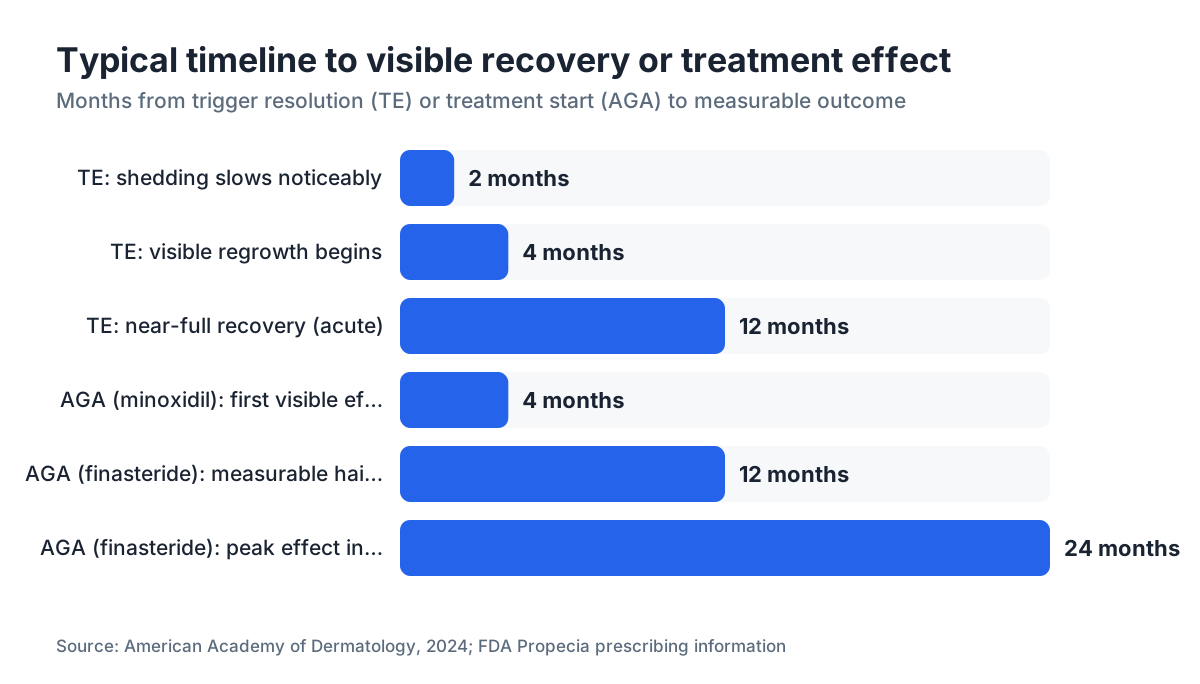
Acute telogen effluvium typically peaks around three to four months after the triggering event, then eases off. Most people see meaningful regrowth by six months and near-full recovery by twelve, assuming the trigger got resolved [1]. If the trigger sticks around (ongoing iron deficiency, untreated thyroid disease, a continuing crash diet), the shedding continues and recovery stalls.
Chronic telogen effluvium is defined as shedding lasting more than six months. It can run for years and fluctuate. It almost always resolves eventually, but it drives a lot of anxiety in the meantime because there's no reliable way to predict when.
Androgenetic alopecia is a lifelong progressive condition. Left alone, it advances continuously, though the pace varies. Some men see rapid progression in their 20s; others lose hair slowly over decades. Hair that has already miniaturized past a certain point will not grow back even with treatment. That is why early intervention matters so much for AGA. Treatments like minoxidil for men or finasteride can slow or partly reverse early miniaturization, but they cannot restore follicles that are already gone.
Side-by-side comparison: telogen effluvium vs androgenetic alopecia
The table below covers the key clinical features at a glance.
| Feature | Telogen Effluvium | Androgenetic Alopecia |
|---|---|---|
| Cause | Physiological trigger (illness, stress, deficiency) | Genetics, DHT-mediated miniaturization |
| Pattern | Diffuse, all over scalp | Patterned (temples, crown in men; crown in women) |
| Onset | Sudden, 2-4 months after trigger | Gradual, over years |
| Daily shed count | Often 200-400+ hairs/day | Usually near normal (100-150) |
| Pull test | Often positive (>6 hairs) | Usually negative |
| Follicle size | Normal on dermoscopy | Miniaturized follicles visible |
| Reversibility | Usually fully reversible | Permanent without treatment |
| Family history | Not required | Usually present |
| Blood tests | May reveal trigger (low ferritin, thyroid) | Typically normal |
| Treatment goal | Remove trigger, support recovery | Halt progression, partial regrowth |
Sources: American Academy of Dermatology [1], NEJM review of androgenetic alopecia [2].
Can you have telogen effluvium and androgenetic alopecia at the same time?
Yes, and it happens more than most people realize.
AGA creates a baseline of progressive miniaturization that quietly drains your density reserve. When TE lands on top of that, the shedding episode looks and feels far worse because there's less hair to spare. After the TE clears, the person often notices their baseline density is lower than before. This is frequently the moment AGA becomes visible: the TE episode strips away the cushion and reveals the underlying pattern.
The overlap also complicates treatment. Minoxidil, for instance, can cause a temporary shed of its own when you first start it (a phenomenon called minoxidil-induced telogen effluvium), because it speeds resting hairs into active growth and flushes the old ones out first. That starter shed on top of existing AGA and possibly existing TE can be alarming. It is not a sign the treatment is failing. More on that specific side effect at minoxidil side effects.
Dermatologists managing both conditions at once usually fix the TE trigger first (correct the ferritin, treat the thyroid, stop the offending medication), then check whether the remaining thinning follows an AGA pattern before committing to long-term DHT-suppressing therapy.
How is telogen effluvium treated?
Treating TE is almost entirely about finding and removing the cause.
Iron deficiency is one of the most fixable triggers. A study in the Journal of the American Academy of Dermatology found that serum ferritin below 30 ng/mL was significantly associated with diffuse hair loss in premenopausal women [6]. Repleting iron through supplements or diet typically shows up as regrowth three to six months later, because follicles need time to cycle back.
Thyroid normalization, zinc repletion, eating enough calories, and stopping causative medications work just as well at reversing TE once you spot the cause. There is no FDA-approved drug made specifically for telogen effluvium.
Some clinicians use minoxidil off-label during TE recovery to nudge follicles back into anagen, though the evidence for this is thin. The honest position: if the trigger is gone, time is the most reliable treatment. Minoxidil earns its place in AGA, not TE.
Platelet-rich plasma (PRP) injections get recommended for TE as well as AGA, but the evidence is inconsistent. A 2019 systematic review in Dermatologic Surgery found positive results in several small trials but flagged weak methodology and no standardization [7]. PRP is expensive (typically $1,500 to $3,500 per course) and not covered by insurance. I would not prioritize it over fixing a nutritional deficiency.
For a full look at supplement options that actually have some evidence behind them for TE, see our guide to hair loss supplements.
How is androgenetic alopecia treated?
AGA has more evidence-based treatment options than almost any other form of hair loss, but the whole game is starting early and staying consistent.
Minoxidil (topical or oral) is FDA-approved for AGA in both men and women. It stretches out the anagen phase and increases follicle size. The 5% topical foam has the best evidence for men; the 2% topical solution carries FDA approval for women [11]. Low-dose oral minoxidil (0.625 to 2.5 mg daily in women, 2.5 to 5 mg in men) has taken off as an off-label alternative with growing clinical support [8]. See our detailed guide to oral minoxidil for the current evidence.
Finasteride (1 mg daily oral) is FDA-approved for men with AGA. In the registration trial, finasteride raised hair count at the vertex by a mean of 107 hairs per square centimeter over two years compared to placebo, and the FDA label states it is not for use in women of childbearing potential because of teratogenicity risk [5]. It does nothing for the small minority of AGA patients with androgen-insensitive follicles, but that is uncommon.
Dutasteride (0.5 mg daily) blocks both type I and type II 5-alpha reductase, suppressing DHT more completely than finasteride. It is FDA-approved for benign prostatic hyperplasia, not hair loss, but gets prescribed off-label and is approved for AGA in Japan and South Korea. Evidence suggests it beats finasteride on hair count while carrying a higher side effect profile.
Hair transplant surgery is the only option that physically relocates DHT-resistant follicles from the back of the scalp into thinning areas. Results are permanent, but surgery should wait until the pattern has stabilized, and medical therapy should continue afterward to protect the remaining native hairs. See our full breakdown of hair transplant options and costs.
Combining finasteride and minoxidil beats either one alone in most studies. The combination is now widely treated as first-line for men with moderate AGA. We cover the details in the finasteride and minoxidil article.
How do you tell apart telogen effluvium from alopecia areata?
Alopecia areata (AA) is a third condition that sometimes gets mixed up with telogen effluvium, so it's worth addressing head on.
Alopecia areata is an autoimmune disease where the immune system attacks hair follicles. It shows up as patchy, well-defined circular areas of complete hair loss, usually one to several smooth bald patches on the scalp, eyebrows, or beard [9]. Telogen effluvium does not cause patchy bald spots. It causes diffuse thinning everywhere.
The difference is usually obvious on exam. AA patches have a clear border, and the skin inside looks completely normal, not scarred or inflamed. Dermatoscopy in AA shows the classic "exclamation mark" hairs (tapered at the base, thicker at the tip) at the patch edges. TE shows nothing like that.
Treatments are entirely different. AA is treated with corticosteroids (intralesional, topical, or systemic), topical immunotherapy, or JAK inhibitors like baricitinib (FDA-approved for severe AA in June 2022) [9]. None of those do anything for TE. Getting this diagnosis right matters.
One more thing. When people search "telogen effluvium vs alopecia areata" or "alopecia areata vs telogen effluvium," they usually want to know which patchy condition they have. If the loss is patchy, AA is the likelier answer. If it's diffuse, TE or AGA is more likely.
Should you see a dermatologist or can you self-diagnose?
You can build a reasonable working hypothesis on your own, but a dermatologist has tools you don't.
If you're shedding heavily and had a clear trigger (COVID, crash diet, birth, surgery) two to four months back, the TE diagnosis is fairly self-evident and the path is clear: fix the trigger and wait. Blood work from your primary care doctor to check ferritin and thyroid is a sensible first move.
If you have a pattern of thinning that matches a parent's hair loss, AGA is likely and you can start researching treatment before your appointment.
Self-diagnosis breaks down in the mixed or ambiguous cases. The woman with diffuse thinning over the crown who might have AGA, TE, or both. The man with heavy shedding who wonders whether it's exposing AGA he never clocked. A dermatologist with a dermatoscope can answer those in a fifteen-minute visit.
The American Academy of Dermatology runs a "Find a Dermatologist" tool and publishes patient-facing guidance on hair loss evaluation [1]. If you want a preliminary read on your pattern before that appointment, running your photos through the MyHairline.ai free scan takes about two minutes and helps you frame the right questions for your doctor.
For context on what a receding hairline looks like and how it maps to AGA staging, the receding hairline article covers the Norwood scale in detail.
What does recovery from telogen effluvium actually look like?
Recovery is gradual and easy to miss month to month.
The shedding usually slows within a month or two of the trigger resolving. The first sign of regrowth is a crop of short, fine "baby hairs" (regrowth in early anagen) visible at the scalp surface, especially along the hairline. People mistake these for breakage, but breakage hairs have an irregular, split end, while new growth tapers to a point.
By six months most people have regained real density. By twelve months, the majority with acute TE have fully recovered. Nobody has great long-term data on CTE, but clinical experience suggests it also resolves, just on a longer and less predictable clock.
One expectation worth setting up front. If you had subclinical AGA before the TE episode, your post-TE density may never return to its pre-shedding level. That is not a sign TE is still active. It is the underlying AGA, always there, finally becoming visible. This is actually a useful diagnostic moment, because it tends to push people to start AGA treatment sooner, which is the right call.
Sources
- American Academy of Dermatology, Hair Loss Overview and Telogen Effluvium Guidance
- New England Journal of Medicine, Androgenetic Alopecia review
- American Academy of Dermatology, Hair Loss Diagnosis and Treatment
- PLOS Genetics, Genome-wide association study of male pattern baldness
- FDA, Propecia (finasteride 1 mg) Prescribing Information
- Journal of the American Academy of Dermatology, Iron deficiency and hair loss in women
- Journal of the American Academy of Dermatology, Low-dose oral minoxidil for hair loss
- FDA, Baricitinib (Olumiant) approval for severe alopecia areata, June 2022
- National Institutes of Health MedlinePlus, Telogen Effluvium
- FDA, Rogaine (minoxidil 5%) labeling for men