TL;DR: DHT (dihydrotestosterone) shrinks hair follicles in women with androgenetic alopecia. The most evidence-backed DHT blockers for women are spironolactone, finasteride (off-label), and minoxidil used alongside them. Natural options like saw palmetto have weak but real data. Blocking DHT during pregnancy is dangerous. Every option involves tradeoffs worth knowing before you spend money.
Why does DHT cause hair loss in women at all?
DHT, dihydrotestosterone, is an androgen made when an enzyme called 5-alpha reductase converts testosterone. Men produce far more DHT than women, but women produce enough, especially after menopause or in conditions like polycystic ovary syndrome (PCOS), that it can bind to androgen receptors in scalp follicles and trigger a process called miniaturization. The follicle shrinks with each growth cycle, produces thinner and shorter hairs, and eventually stops producing a visible hair at all. [1]
This is androgenetic alopecia, sometimes called female pattern hair loss (FPHL). It's the most common cause of hair loss in women. The American Academy of Dermatology estimates it affects around 30 million women in the United States, with prevalence rising to about 40-50% of women by age 50. [2]
Here's the wrinkle: not every woman with FPHL has high DHT in her blood. Many have normal serum androgens but follicles that are simply more sensitive to whatever DHT is present. That matters because blocking DHT is only part of the equation, and it explains why some women respond dramatically to anti-androgens while others see modest results from the same drug.
The pattern of loss matters too. Men typically recede at the temples and crown (Norwood pattern). Women usually get diffuse thinning across the top of the scalp with the hairline largely preserved, called the Ludwig pattern. Both involve DHT-sensitive follicles. If you're not sure which pattern you have, reading about what causes hair loss first will help you figure out whether DHT is actually your main driver.
How do DHT blockers work differently in women than in men?
The mechanism is the same in both sexes: block the 5-alpha reductase enzyme so less DHT gets made, or block androgen receptors so DHT can't bind and signal miniaturization. What differs is which drugs are safe, which are approved, and how hard you can push the dose.
In men, finasteride 1 mg daily is FDA-approved for androgenetic alopecia and blocks roughly 60-70% of scalp DHT production. [3] Dutasteride blocks both type 1 and type 2 isoforms of 5-alpha reductase and is stronger still. Both are absolutely contraindicated in women who are pregnant or may become pregnant, because DHT is required for normal development of male genitalia in a fetus, and the drugs cross the placenta.
In women, the first-line pharmaceutical DHT blocker is usually spironolactone, a potassium-sparing diuretic that also acts as an androgen receptor antagonist. It doesn't cut DHT production much. It blocks the receptor so DHT can't act on the follicle. Finasteride and dutasteride get used in women too, but off-label, and mostly in postmenopausal women or women on reliable contraception.
Minoxidil doesn't block DHT at all. It's a vasodilator that extends the anagen (growth) phase directly. It gets named in the same breath as DHT blockers because it's almost always combined with them. The two approaches hit different mechanisms, which is why the combination consistently beats either one alone. [4]
For a detailed look at how the combination performs, see our piece on finasteride and minoxidil.
What prescription DHT blockers are used in women?
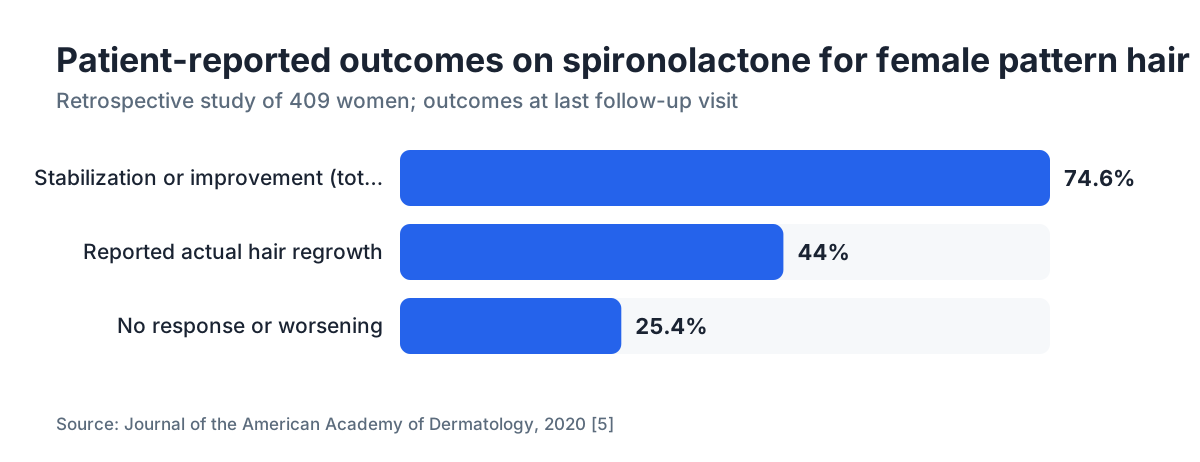
Spironolactone is the most commonly prescribed anti-androgen for women with FPHL in the United States. Typical doses run 100 to 200 mg per day, though some dermatologists start at 50 mg. A 2020 retrospective study in the Journal of the American Academy of Dermatology that followed 409 women found 74.6% reported improvement or stabilization of hair loss on spironolactone. [5] It isn't FDA-approved specifically for hair loss, but it has a long safety record and the prescribing sits well within standard of care.
Side effects are real: menstrual irregularity (very common at higher doses), breast tenderness, frequent urination, and elevated potassium. Women with kidney disease should avoid it. It's absolutely not safe in pregnancy.
Finasteride at 1-2.5 mg daily is used off-label in postmenopausal women. A 12-month randomized trial published in the British Journal of Dermatology found postmenopausal women taking 1 mg finasteride daily had significant increases in hair count compared to placebo. [6] Data in premenopausal women is thinner, and the teratogenicity risk is why most dermatologists won't prescribe it to women who could become pregnant without ironclad contraception.
Dutasteride (0.5 mg daily) is even further off-label in women. It blocks both type 1 and type 2 5-alpha reductase versus finasteride's type 2 only. Small studies hint it may outperform finasteride in women, but the data set is genuinely small and the teratogenicity concern is, if anything, higher. [7]
Bicalutamide is an androgen receptor blocker used in some countries. It's gaining traction in dermatology for FPHL and hyperandrogenism, but it carries a black box warning for liver toxicity in men (the risk in women appears lower based on current data, though not zero). Treat it as experimental for hair loss right now.
For more on how finasteride works and what to realistically expect, that article covers the mechanism and trial data in depth.
Does spironolactone actually regrow hair or just stop loss?
Honest answer: mostly it stops the loss, with real regrowth for a meaningful minority.
The 2020 JAAD retrospective cited above [5] used patient-reported outcomes, which is the weakest kind of evidence, but the sample of 409 is larger than most hair loss trials. Among those who reported improvement, most described stabilization rather than dense regrowth. About 44% reported actual hair regrowth. The drug works best when started before significant follicle death has occurred, which makes early treatment genuinely important rather than just marketing language.
Timeline expectations matter. Most dermatologists tell patients to give it 6-12 months before drawing conclusions. Hair grows roughly half an inch per month, and the drug has to shift follicles from a miniaturized telogen-dominant state back toward anagen before you see any visible change. Quitting at month 3 is one of the most common mistakes.
Had a sudden increase in shedding rather than slow progressive thinning? Spironolactone may be the wrong tool. That pattern points more toward telogen effluvium, which has different causes and different treatments.
What natural substances block DHT in women?
Several natural compounds inhibit 5-alpha reductase or interact with androgen receptors, at least in lab settings. The real question is whether the effect is large enough to matter in a human scalp.
Saw palmetto (Serenoa repens) is the most studied. A 2020 systematic review in Skin Appendage Disorders found saw palmetto showed statistically significant improvement in hair density versus placebo in two randomized trials, though the effect size was smaller than finasteride in head-to-head data. [8] The typical studied dose is 320 mg per day of a lipophilic extract. It's generally well-tolerated. The proposed mechanism is partial inhibition of 5-alpha reductase type 2, similar to finasteride but much weaker.
Pumpkin seed oil had one small randomized trial (76 men, 24 weeks) showing a 40% increase in hair count versus 9.9% in placebo. [9] The trial was in men. Direct evidence in women is essentially absent. The oil contains phytosterols that may have mild anti-androgenic effects.
Green tea extract (EGCG) inhibits 5-alpha reductase in cell studies. Human clinical trial evidence specifically for hair loss in women is lacking.
Zinc at therapeutic doses may modestly inhibit 5-alpha reductase. A zinc deficiency can worsen hair loss through entirely different pathways, so check serum zinc if you haven't. Supplementing past adequacy probably adds nothing.
Spearmint tea has shown anti-androgenic effects in women with PCOS in at least one small RCT (30 women, significant reduction in free testosterone over 30 days). [10] Evidence for hair specifically is indirect. It's low-risk and cheap.
My honest take: natural DHT blockers won't match spironolactone. If you have confirmed androgenetic alopecia and your dermatologist recommends a prescription, natural supplements are adjuncts at best. They're reasonable additions if you're not a candidate for pharmaceuticals, or while you wait for an appointment. For a broader look at the supplement category, see hair loss supplements.
What about topical DHT blockers for women?
Topical anti-androgens are genuinely interesting because they put the drug where you need it while limiting systemic exposure, which matters a lot for premenopausal women who want to avoid body-wide anti-androgen effects.
Topical finasteride is available compounded by specialty pharmacies. A 2022 study in JAAD International found 0.25% topical finasteride applied once daily produced significant reduction in scalp DHT with much lower serum drug levels than oral finasteride. [11] Data in women specifically is limited, but the approach is being studied.
Topical spironolactone (2-5%) is compounded and used by some dermatologists. Clinical trial data is sparse. It shows up in small case series with positive outcomes but hasn't been through a properly powered RCT in women.
Ketoconazole shampoo (2%) has mild anti-androgenic properties and some evidence of modest benefit in androgenetic alopecia when used 2-4 times per week. The effect is real but small. It's OTC in 1% strength; the 2% is prescription.
Topical minoxidil remains the most evidence-backed topical for hair loss in women, FDA-approved at 2% (the 5% foam is technically labeled for men but widely used off-label in women). It isn't a DHT blocker, but it often gets layered in. For a fair look at what can go wrong with it, the minoxidil side effects article covers the real incidence data.
How do you know if DHT is actually the cause of your hair loss?
Get a proper diagnosis before spending money on DHT blockers. The dermatology visit fee is worth it. Several patterns of hair loss in women look alike but respond to completely different treatments.
A dermatologist will typically do a pull test, dermoscopy of the scalp, and blood work. The blood panel for suspected androgenetic alopecia usually includes total and free testosterone, DHEAS, SHBG (sex hormone-binding globulin), prolactin, TSH (thyroid), ferritin, and sometimes 3-alpha androstanediol glucuronide, a marker of peripheral 5-alpha reductase activity. [2]
Around 20-30% of women with FPHL have measurable androgen excess. The rest have normal labs but still respond to anti-androgens, probably because of receptor sensitivity. Normal labs do not mean DHT blockers won't help. It means your problem isn't overproduction. It's oversensitivity.
Irregular periods, acne, excess body or facial hair, or trouble losing weight alongside your hair loss? PCOS is worth ruling out. PCOS-related hair loss is driven heavily by androgen excess and typically responds well to anti-androgen therapy.
If your loss came on suddenly over months rather than slowly over years, telogen effluvium or nutritional deficiency is more likely than androgenetic alopecia. DHT blockers won't fix that.
If you want a quick data-informed starting point before your appointment, the free AI hair analysis at MyHairline can help you map your pattern and identify the questions worth bringing to your dermatologist.
Is finasteride safe for women?
This question deserves a straight answer, not a liability-driven non-answer.
For postmenopausal women, the evidence suggests finasteride is reasonably safe and modestly effective. The teratogenicity risk that dominates discussions of finasteride in women simply isn't relevant if you cannot become pregnant. Multiple trials, including the British Journal of Dermatology RCT mentioned above [6], found no serious adverse events at 1-2.5 mg daily in postmenopausal women over 12 months.
For premenopausal women, the FDA classifies finasteride as pregnancy category X, which means it's contraindicated if pregnancy is possible. The reason is not theoretical. DHT is required for normal masculinization of a male fetus, and case reports document ambiguous genitalia in male infants born to women who took 5-alpha reductase inhibitors during pregnancy. [3] If you're premenopausal and interested in finasteride, most dermatologists will require documentation of reliable long-term contraception (IUD, tubal ligation, consistent hormonal contraception) before prescribing. Some won't prescribe it to premenopausal women under any circumstances. That's a legitimate clinical judgment, not excess caution.
Side effects in women who can safely take it: libido changes, headache, menstrual irregularity in some cases. The sexual side effects that affect a subset of men (post-finasteride syndrome) haven't been systematically documented in women to the same degree, though they're also not well-studied in women.
For the full picture on what finasteride does and doesn't do, see the dedicated finasteride article.
Can women use DHT-blocking shampoos or serums?
The market is full of products claiming to block DHT at the scalp. Most of them don't do much.
Ketoconazole 2% shampoo is the exception with actual clinical backing. It has demonstrated anti-androgenic activity and appears in multiple meta-analyses as having modest but real benefit in androgenetic alopecia when used regularly. [12] The mechanism is partly anti-fungal (reducing scalp inflammation) and partly anti-androgenic. It's cheap, safe, and reasonable to use alongside pharmaceutical treatment.
Beyond ketoconazole, most commercial DHT-blocking shampoos contain ingredients like saw palmetto extract, rosemary oil, or biotin. The contact time in a shampoo, typically 1-3 minutes before rinsing, is too short for meaningful follicle penetration for most of these compounds. Serums and leave-on treatments are pharmacologically more plausible but still lack rigorous clinical trial data.
Rosemary oil at 2% applied topically showed comparable results to minoxidil 2% in one 6-month RCT in male patients with androgenetic alopecia. [13] The proposed mechanism is increased scalp circulation rather than DHT blockade. Data in women is sparse.
Honest summary: DHT-blocking shampoos are fine as an adjunct, fine to spend $15-$25 on if you want to feel proactive, but no substitute for proven treatments.
What happens when DHT blockers stop working?
DHT blockers maintain the follicles you still have. They can't revive dead ones. Stop taking them and miniaturization resumes. If you've been on them for years and hair loss progresses despite treatment, there are a few possibilities.
First, the drug may have lost effectiveness in some follicles as the underlying condition advances. This is common with finasteride in men after 5-10 years. Data in women on long-term anti-androgen therapy is thinner but suggests a similar plateau.
Second, you may have reached a stage where enough follicles are permanently lost that medical treatment can't meaningfully restore density. At that point, a hair transplant consultation becomes worth exploring. Transplantation moves follicles from androgen-resistant donor areas to areas of loss. The transplanted follicles stay DHT-resistant because that's an intrinsic property of the follicle, not the location. [14] But the native follicles around the transplant area can still miniaturize, which is why most hair transplant surgeons keep patients on DHT blockers after the procedure.
For a realistic look at costs and candidacy, see hair transplant.
Third, consider whether something else is compounding the picture. Significant life stress, crash dieting, thyroid changes, or postpartum hormone shifts can cause telogen effluvium on top of androgenetic alopecia. Treating both at once is harder but necessary.
DHT blockers vs other treatments for female hair loss: how do they compare?
Here's a direct comparison of the main options. Evidence ratings reflect the quality and quantity of trials in women specifically.
| Treatment | Mechanism | FDA approval (women) | Typical monthly cost | Evidence quality in women |
|---|---|---|---|---|
| Spironolactone 100-200 mg oral | Androgen receptor blocker | No (off-label) | $10-$30 generic | Moderate (large retrospective, small RCTs) |
| Finasteride 1-2.5 mg oral | 5-AR inhibitor (type 2) | No (off-label) | $15-$40 generic | Moderate (RCTs, mostly postmenopausal) |
| Dutasteride 0.5 mg oral | 5-AR inhibitor (type 1+2) | No (off-label) | $20-$60 generic | Low-moderate (small studies) |
| Minoxidil 2% topical | Vasodilator / anagen extender | Yes (2%) | $10-$20 | High (multiple RCTs) |
| Minoxidil 5% foam topical | Vasodilator / anagen extender | Off-label in women | $20-$40 | Moderate |
| Oral minoxidil 0.25-2.5 mg | Vasodilator / anagen extender | No (off-label) | $5-$20 generic | Growing (multiple recent RCTs) |
| Ketoconazole 2% shampoo | Mild anti-androgen + anti-inflammatory | No | $15-$30 | Low-moderate |
| Saw palmetto 320 mg oral | Mild 5-AR inhibitor | No | $15-$30 | Low (small RCTs) |
| Low-level laser therapy | Photobiomodulation | Yes (some devices) | $20-$80/mo device amortized | Moderate |
Cost ranges are approximate retail US prices as of 2024-2025. Generic prices swing by pharmacy and can drop with discount programs.
For more on the oral version of minoxidil, which has become a serious option in the last few years, see oral minoxidil. If you're also weighing dht blocker supplements marketed for hair, that article breaks down what the ingredient labels actually contain.
What should women avoid when taking DHT blockers?
A few real interactions and precautions worth knowing.
Spironolactone raises potassium levels. Combining it with ACE inhibitors, large amounts of potassium-sparing foods (especially high-dose potassium supplements), or other drugs that elevate potassium (certain NSAIDs, trimethoprim) increases the risk of hyperkalemia. This is a real clinical concern, not a theoretical one. Most dermatologists check a baseline metabolic panel before starting and recheck potassium at 3 months.
Spironolactone also interacts with lithium, potentially raising lithium levels. If you're on lithium, your prescriber needs to know.
Finasteride and dutasteride interact with few common drugs, but they're extensively metabolized by CYP3A4. Strong CYP3A4 inhibitors (certain antifungals, some HIV medications) can raise finasteride levels. This is documented in the FDA prescribing information. [3]
Saw palmetto has mild antiplatelet properties. Having surgery? Mention it to your surgical team.
Alcohol doesn't dramatically interact with these drugs but does affect hormone metabolism and sleep quality, both of which matter for hair. Not a reason to abstain, just worth knowing.
If you're wondering whether supplements like creatine can worsen DHT-related loss, does creatine cause hair loss addresses that question with the actual study data.
Sources
- StatPearls (NCBI Bookshelf), Androgenetic Alopecia
- American Academy of Dermatology, Hair loss types: Androgenetic alopecia
- U.S. National Library of Medicine, DailyMed finasteride prescribing information
- Journal of the American Academy of Dermatology, Combination therapy for androgenetic alopecia (2021)
- Journal of the American Academy of Dermatology, Spironolactone for female pattern hair loss (2020)
- British Journal of Dermatology, Finasteride in postmenopausal women with androgenetic alopecia (RCT)
- National Center for Biotechnology Information, PubMed dutasteride in female androgenetic alopecia
- Skin Appendage Disorders, Saw palmetto for androgenetic alopecia systematic review (2020)
- Evidence-Based Complementary and Alternative Medicine, Pumpkin seed oil RCT (2014)
- Phytotherapy Research, Spearmint tea and androgens in PCOS RCT (2010)
- JAAD International, Topical finasteride for androgenetic alopecia (2022)
- Dermatology, Ketoconazole shampoo meta-analysis for androgenetic alopecia
- Skinmed, Rosemary oil vs minoxidil 2% for androgenetic alopecia RCT (2015)
- International Society of Hair Restoration Surgery, Patient information on hair transplantation