

TL;DR: DHT (dihydrotestosterone) is the hormone that miniaturizes hair follicles and drives most male and female pattern hair loss. Finasteride and dutasteride are the only FDA-approved or well-evidenced oral DHT blockers with strong clinical data. Topical options exist but have far thinner evidence. Most supplement-based DHT blockers have little to no proof they work.
What is DHT and why does it cause hair loss?
DHT stands for dihydrotestosterone. It's a hormone derived from testosterone, converted by an enzyme called 5-alpha reductase (5-AR). Your body makes DHT in the scalp, skin, liver, and prostate. In most tissues it's harmless or even useful. In genetically susceptible hair follicles, it's a slow wrecker.
Here's what happens at the follicle level. DHT binds to androgen receptors in the dermal papilla, the cluster of cells at the base of the hair follicle that controls growth. In people with the genetic variant that makes those receptors hypersensitive to DHT, each binding event shortens the anagen (growth) phase a little more. Over years, the follicle miniaturizes, producing progressively finer, shorter hairs until it eventually stops producing visible hair entirely. This process is called androgenetic alopecia, more commonly known as male pattern baldness or female pattern hair loss.
About 50% of men show significant androgenetic alopecia by age 50, and roughly 85% of men will experience some degree of it by age 70 [1]. The pattern matters too. DHT-driven loss follows the Norwood scale for men, typically starting at the temples and crown, and the Ludwig scale for women. If your loss fits one of those patterns, DHT is almost certainly the main driver. Learn more about what's happening at a mechanistic level in our guide to what causes hair loss.
Two isoforms of 5-AR exist: Type 1 and Type 2. Type 2 is the primary culprit in scalp follicles and the prostate. Type 1 is more active in sebaceous glands. This distinction matters because different DHT blockers hit each isoform differently, which directly affects their potency and side effect profile.
How do DHT blockers actually work?
A DHT blocker is any compound that reduces DHT's ability to drive follicle miniaturization. They do this in one of two ways: either by inhibiting 5-alpha reductase (preventing testosterone from being converted to DHT in the first place) or by blocking androgen receptors (preventing DHT from binding even if it's present).
5-AR inhibitors are the main clinical category and include finasteride, dutasteride, and some topical compounds. Androgen receptor blockers like spironolactone are used primarily in women because they carry feminizing effects that make them unsuitable for most men.
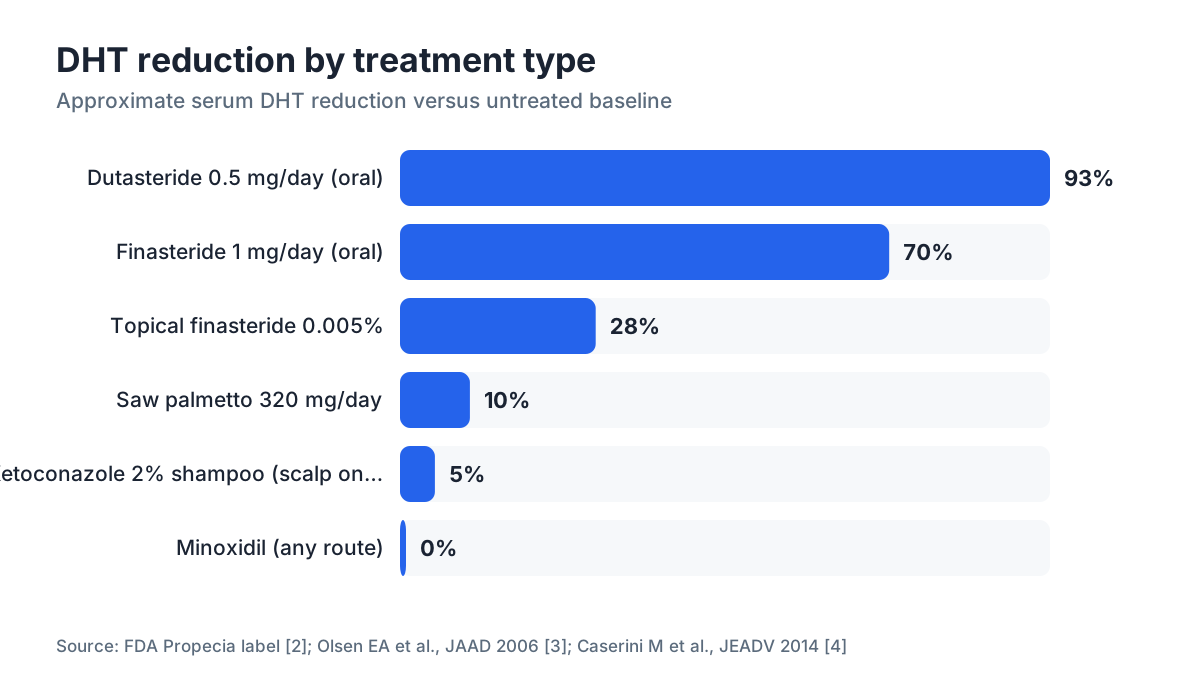
The degree of DHT reduction varies significantly by drug. Finasteride (1 mg/day) reduces serum DHT by about 70% by blocking Type 2 5-AR [2]. Dutasteride (0.5 mg/day) blocks both Type 1 and Type 2 and reduces serum DHT by roughly 90-95% [3]. Topical finasteride reduces scalp DHT significantly while producing smaller systemic reductions, which is one reason it's increasingly studied as a lower-side-effect option.
Reducing DHT doesn't regrow hair by itself. What it does is stop the hormonal signal that was shortening growth cycles. If the follicle is still alive (miniaturized but not scarred shut), halting DHT can allow it to recover and produce thicker, longer hair. If the follicle is dead, no amount of DHT reduction helps, which is why starting early matters.
Which DHT blockers have the strongest clinical evidence?
Most articles lose people here by treating all DHT blockers as roughly equivalent. They're not.
Finasteride 1 mg/day (oral) is FDA-approved for male androgenetic alopecia under the brand name Propecia, approved in 1997 [2]. The trials that won approval showed 83% of men on finasteride maintained or increased hair count over two years versus 28% on placebo. About 66% saw actual regrowth. It works best at the crown, less dramatically at the hairline. Read the full breakdown in our finasteride guide.
Dutasteride 0.5 mg/day (oral) is not FDA-approved for hair loss in the US, but it is approved for that use in South Korea and Japan, and it's widely prescribed off-label by dermatologists. A head-to-head trial found dutasteride produced significantly greater hair count increases than finasteride at 24 weeks [3]. The tradeoff is longer half-life (5 weeks versus 6-8 hours for finasteride), meaning side effects, if they occur, take longer to clear after stopping.
Topical finasteride (0.25% solution) is a newer delivery route. A 2018 study in the Journal of the European Academy of Dermatology and Venereology found topical 0.005% finasteride had similar efficacy to oral 1 mg finasteride in a small trial, with lower systemic DHT reduction [4]. Compounding pharmacies produce various concentrations. The evidence here is real but thinner than the oral data. Several systematic reviews are ongoing.
Spironolactone (oral, women only) is an aldosterone antagonist that also blocks androgen receptors. It's commonly prescribed off-label for women with androgenetic alopecia at 100-200 mg/day. A 2017 review in the British Journal of Dermatology found evidence supporting its use in women with FPHL, though randomized controlled trial data is limited [5].
Topical minoxidil doesn't block DHT at all. It's a vasodilator that works by a different mechanism. It's useful and important (see minoxidil for men), but calling it a DHT blocker is a marketing mistake that confuses a lot of people.
Everything else, saw palmetto, pumpkin seed oil, reishi mushroom, biotin, ketoconazole shampoo (at scalp concentrations), is either unproven, weakly evidenced, or useful only as a complement rather than a standalone treatment. The next section covers each honestly.
Do natural or supplement DHT blockers actually work?
Short answer: there's a little signal in the noise for a couple of them, and near-zero evidence for most.
Saw palmetto is the most studied natural 5-AR inhibitor. It contains fatty acids that inhibit both Type 1 and Type 2 5-AR in vitro. A 2002 randomized controlled trial found a saw palmetto extract (320 mg/day) produced mild improvement in 38% of men with mild-to-moderate AGA versus 24% for placebo [6]. A 2020 review in Dermatology and Therapy found some positive effect across multiple small trials, but described the evidence as preliminary. Nobody has run a head-to-head against finasteride that I'd call methodologically solid. If you want to take it as a low-risk adjunct, that's reasonable. Expecting it to replace finasteride is optimistic.
Pumpkin seed oil had one interesting 2014 RCT published in Evidence-Based Complementary and Alternative Medicine, with 400 mg/day producing a 40% increase in hair count versus 10% in the placebo group in 76 men over 24 weeks [7]. One trial, small sample, open questions about blinding quality. Worth knowing about. Not worth betting your hairline on.
Ketoconazole shampoo (1-2%) has been studied specifically for hair loss. A 1998 study in Dermatology found that men using 2% ketoconazole shampoo every 2-4 days saw hair density and diameter improvements comparable to 2% minoxidil over 21 months [8]. The anti-androgen mechanism at the scalp is plausible. Many dermatologists use it as an adjunct. Still, the evidence is old and the trial was small.
Biotin, collagen, and most hair supplement stacks have no convincing evidence for DHT-mediated hair loss. Biotin only affects hair loss if you're deficient in it, which is genuinely rare. See our review of hair loss supplements for a full breakdown.
For people who want a clear picture of what's actually driving their shedding before picking a treatment, a free AI hair scan (available at myhairline.ai/scan) can help identify whether your pattern matches DHT-related loss or something else, like telogen effluvium.
What are the side effects of DHT blockers?
This is the section most people are scared of, and rightfully so. DHT has functions beyond your scalp. Reducing it systemically has real potential consequences.
Finasteride side effects in the original trials occurred in a small percentage of men. The three most reported: decreased libido (1.8% on finasteride vs 1.3% on placebo), erectile dysfunction (1.3% vs 0.7%), and decreased ejaculate volume (0.8% vs 0.4%) [2]. In the clinical trials, most side effects resolved after stopping the drug.
There's also a more contentious phenomenon called Post-Finasteride Syndrome (PFS), where men report persistent sexual, neurological, and psychological symptoms that continue after stopping. The FDA added a label update in 2012 noting that libido, ejaculation, and orgasm disorders may continue after discontinuation. The incidence and causality are genuinely disputed in the literature. The PFS Foundation has catalogued thousands of cases, and several peer-reviewed studies report the phenomenon, but population-level controlled data on persistence rates are limited. Be aware of this before starting.
Dutasteride has a similar side effect profile to finasteride, with potentially more sexual side effects due to deeper DHT suppression, and a much longer time to clear the drug from your system after stopping due to its 5-week half-life.
Spironolactone in women can cause irregular menstrual cycles, breast tenderness, and is teratogenic (dangerous to a male fetus). Women of childbearing age taking it must use contraception.
Topical finasteride produces meaningfully lower systemic DHT levels than oral finasteride, which is its main safety argument. One study measured systemic DHT reduction of around 25-30% with topical 0.005% versus 70% with oral 1 mg [4]. Fewer systemic side effects have been observed in trials, but long-term safety data is thin relative to oral.
Topical saw palmetto and ketoconazole shampoo have minimal systemic side effect risk. That's part of why some people start there, though the efficacy trade-off is real.
Talk to a dermatologist before starting any prescription DHT blocker. Side effect risk is personal and depends on baseline health, age, and what matters most to you.
How long does it take for DHT blockers to work?
Patience is genuinely required here. Most people underestimate the timeline and quit early.
Finasteride's mechanism acts quickly. DHT levels in your scalp drop significantly within the first two weeks of daily dosing. But hair grows slowly (roughly 1 cm per month), and follicle recovery from miniaturization takes months. The clinical trials saw statistically significant hair count differences at 12 months, with continued improvement at 24 months [2]. Most dermatologists tell patients to wait 12 months before judging the drug fairly.
The first three to six months can feel discouraging. Some men experience an initial shed, likely because follicles shift from one growth phase to another as DHT drops. This is temporary and not a sign the drug isn't working. It's similar to what happens early with minoxidil. See our guide on minoxidil side effects for context on why initial shedding happens.
Dutasteride works faster in some trials, with measurable differences appearing at 12-24 weeks. But the full benefit still takes one to two years.
Natural options like saw palmetto, if they work at all, show modest changes in the studies that exist over six months or longer. Don't expect dramatic results in weeks from any DHT blocker, natural or pharmaceutical.
Can women use DHT blockers for hair loss?
Yes, but the options are different.
Finasteride is not FDA-approved for women and is absolutely contraindicated in women who are or may become pregnant, because DHT is required for normal male fetal genital development and finasteride can cause birth defects [2]. Post-menopausal women have used oral finasteride off-label with some positive results in small studies, though the evidence is weaker than for men.
Spironolactone is the most commonly prescribed DHT blocker for women with androgenetic alopecia in the US. At 100-200 mg/day it can meaningfully slow loss and promote some regrowth [5]. It requires regular potassium monitoring because spironolactone also affects electrolytes.
Topical minoxidil is FDA-approved for women at 2% concentration, and 5% has been used off-label. Oral minoxidil at low doses (0.25-1 mg/day) is increasingly used for women. Learn more in our oral minoxidil guide.
Women with FPHL (female pattern hair loss) should be evaluated by a dermatologist before starting any of these. FPHL can have other contributors like thyroid disease, iron deficiency, or hormonal changes from birth control or pregnancy. A DHT blocker addresses only the androgen-driven component.
Should you combine a DHT blocker with minoxidil?
Most dermatologists consider the combination more effective than either alone, and the evidence supports that view.
Finasteride addresses the cause (DHT signaling). Minoxidil addresses blood flow and growth cycle extension through a different mechanism. They don't interact in a problematic way. A 2015 study published in the Journal of Drugs in Dermatology found the combination produced significantly greater improvements in hair density than finasteride alone [9].
The practical approach most clinicians use is: finasteride or dutasteride for the androgen driver, topical or oral minoxidil for additional growth stimulus. If you're only going to use one, finasteride is the stronger choice for most men with classic DHT-pattern loss. If side effects are a concern with finasteride, some men use topical minoxidil plus a supplement like saw palmetto as a lower-risk starting point, with the understanding that they're trading efficacy for tolerability.
Our full article on finasteride and minoxidil together covers the dosing details, what to expect, and when doctors typically recommend the combination versus monotherapy.
A note on timing: if you're assessing your own pattern before choosing a path, myhairline.ai's free AI scan can help you understand where you fall on the Norwood scale and whether your loss is consistent with androgenetic alopecia. That context genuinely changes which treatment makes sense to start with.
What happens if you stop taking a DHT blocker?
The effect is not permanent. This is one of the most important things to understand before you start.
Finasteride only works while you're taking it. When you stop, DHT levels return to baseline within about one to two weeks. The hair loss process resumes. Most men who stop lose the hair they retained or regrew within 9-12 months of stopping, returning roughly to where they would have been had they never started [2].
This isn't a flaw exactly. It's just the nature of a drug that works by ongoing hormonal modulation rather than structural change. If you start finasteride at Norwood 2 and take it for 10 years, you'll likely still be at roughly Norwood 2 when you stop. But the 10 years of progression you avoided will catch up over the following year or two.
Dutasteride has a long half-life, so the return to baseline DHT is slower after stopping, roughly 6-8 weeks to full clearance. The hair loss rebound is similarly slower.
For men who want a more permanent solution, hair transplant surgery (specifically FUE or FUT) moves DHT-resistant follicles from the back of the scalp to thinning areas. Those transplanted hairs are genetically resistant to miniaturization. But transplants don't stop loss in native (non-transplanted) hairs, so many surgeons recommend continuing a DHT blocker post-transplant to protect the existing hair. Read our hair transplant guide for a realistic cost and outcome breakdown.
DHT blockers vs other hair loss treatments: a direct comparison
Not every form of hair loss is DHT-driven. That's worth stating clearly. Alopecia areata is autoimmune. Telogen effluvium is stress- or nutrient-driven shedding. Traction alopecia is mechanical. DHT blockers will do nothing for any of those.
For androgenetic alopecia specifically, here's how the main options compare:
| Treatment | Mechanism | Evidence level | DHT reduction | Notes |
|---|---|---|---|---|
| Finasteride 1 mg | 5-AR Type 2 inhibitor | FDA-approved RCTs | ~70% serum | Best evidence for men |
| Dutasteride 0.5 mg | 5-AR Type 1+2 inhibitor | Approved SK/JP, off-label US | ~90-95% serum | More potent, longer half-life |
| Topical finasteride | 5-AR inhibitor (local) | Phase II/III trials | ~25-30% serum | Growing evidence, fewer systemic SE |
| Spironolactone | Androgen receptor blocker | Good for women, off-label | No direct DHT drop | Women only (feminizing) |
| Minoxidil | Vasodilator (different path) | FDA-approved | None | Complements DHT blockers |
| Saw palmetto | Weak 5-AR inhibitor | Preliminary RCTs | Unknown/small | Low risk, low certainty |
| Pumpkin seed oil | Possible 5-AR inhibitor | 1 RCT | Unknown | Insufficient data |
| Ketoconazole shampoo | Anti-androgen (topical) | Small old trials | Local only | Reasonable adjunct |
The big picture: prescription 5-AR inhibitors are in a different efficacy category than everything else. The gap between finasteride and saw palmetto isn't small. It's large. If your loss is significant and you're young enough that it matters long-term, having an honest conversation with a dermatologist about finasteride is worth it.
What about DHT-blocking shampoos and topical products sold online?
This is a buyer-beware zone.
Ketoconazole shampoo at 2% concentration (prescription in the US, OTC at 1%) has the best topical evidence. At concentrations available in regular shampoos, the evidence is weak to nonexistent. The exposure time of a shampoo (minutes before rinsing) is short, which limits bioavailability even if an active ingredient is present.
Many products marketed as DHT-blocking shampoos contain saw palmetto extract, zinc, or rosemary oil. Rosemary oil had one small 2015 study in Skinmed journal showing comparable efficacy to 2% minoxidil at 6 months in 100 patients, but this was for overall hair thickness, not specifically DHT inhibition [10]. The mechanism isn't well established. It's probably not harmful. It's probably not a real DHT blocker.
Zinc has weak in vitro evidence as a 5-AR inhibitor. Topical zinc in shampoo concentrations almost certainly doesn't reach follicles at meaningful levels.
The FTC has taken action against companies making unsubstantiated hair loss claims. The FDA has warned multiple companies marketing unapproved hair loss products [11]. If a shampoo's marketing implies it works like finasteride, that's not a medical claim it can legally support.
If you have a receding hairline and you're looking at these products, they're not the answer on their own. Use them if you like, but be clear-eyed about what they are.
Does creatine raise DHT levels?
This comes up constantly in gym communities and deserves a direct answer.
The concern comes from a single 2009 study published in the Clinical Journal of Sport Medicine, in which college rugby players taking creatine for 3 weeks saw a 56% increase in DHT and a 40% increase in the DHT-to-testosterone ratio [12]. That's a real finding from a real study. It's also the only study to demonstrate this effect, and it measured DHT only in serum, not in scalp tissue, and it did not measure hair loss outcomes.
No follow-up study has replicated the DHT elevation finding consistently. Multiple studies since have looked at creatine and DHT without finding the same result. The American Academy of Dermatology has not issued a warning about creatine and hair loss.
So the honest summary: one study found a DHT spike. The mechanism is plausible in theory. Replication has been inconsistent. If you're genetically vulnerable to DHT-driven hair loss and you're already noticing thinning, you might weigh this uncertainty. Our full article on does creatine cause hair loss goes deeper on this.
For someone not yet showing signs of androgenetic alopecia, the current evidence doesn't justify avoiding creatine.
Sources
- American Academy of Dermatology, Hair Loss Overview
- FDA, Propecia (finasteride 1 mg) label and original approval data
- Debruyne F et al., European Urology 2004; and Olsen EA et al., Journal of the American Academy of Dermatology 2006 on dutasteride hair loss trials
- Prager N et al., Journal of Alternative and Complementary Medicine 2002, saw palmetto RCT
- Cho YH et al., Evidence-Based Complementary and Alternative Medicine 2014, pumpkin seed oil RCT
- Pierard-Franchimont C et al., Dermatology 1998, ketoconazole shampoo and hair density
- FDA, Warning Letters to firms marketing unapproved hair loss products
- NIH National Library of Medicine, MedlinePlus: Finasteride