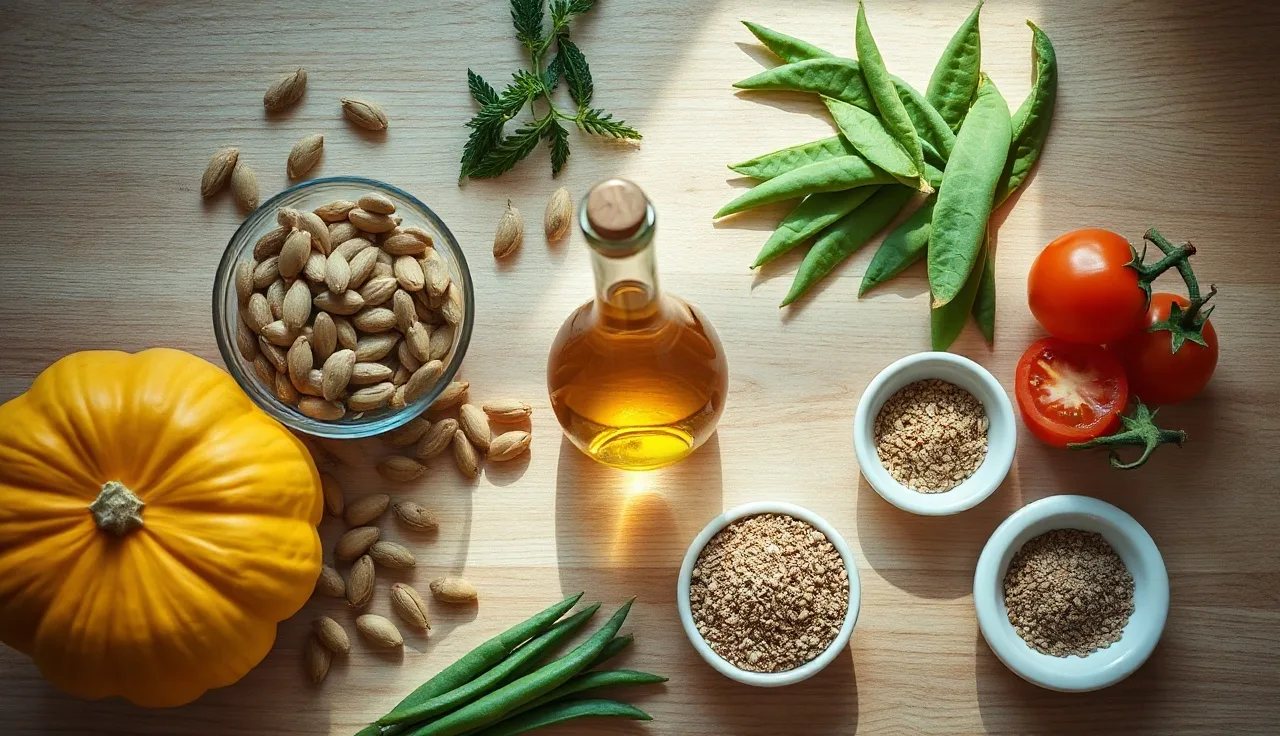
TL;DR: Several foods contain compounds that mildly inhibit 5-alpha reductase, the enzyme that converts testosterone to DHT. Pumpkin seed oil, green tea (EGCG), and saw palmetto have the most human trial data. Effect sizes are real but modest compared to finasteride. No food has been proven to stop androgenetic alopecia, but some are worth adding if you want a conservative first step.
What is DHT and why does it cause hair loss?
DHT stands for dihydrotestosterone. It's an androgen hormone made when the enzyme 5-alpha reductase converts free testosterone in your scalp tissue. Follicles that carry a hereditary sensitivity to DHT gradually miniaturize under sustained androgen signaling, producing thinner, shorter hairs until they stop producing visible hair entirely. That process is androgenetic alopecia, the single most common cause of hair loss in both men and women [1].
The mechanism matters because it tells you exactly where dietary compounds can theoretically intervene: at the conversion step. If a food-derived molecule slows 5-alpha reductase activity even modestly, less DHT reaches the follicle. Whether the slowdown is large enough to matter clinically is the question almost no food study is powered to answer.
For a fuller picture of why hair falls in the first place, what causes hair loss covers the full pathophysiology including non-androgenic causes like telogen effluvium and thyroid dysfunction.
Scalp DHT and serum DHT don't move in lockstep. A compound that lowers blood DHT isn't guaranteed to lower the DHT concentration that hair follicles actually see, and the reverse is also true. Most food studies measure serum DHT, not follicular DHT. Read every result with that gap in mind.
How does 5-alpha reductase inhibition work?
5-alpha reductase comes in two isoforms relevant here: type 1 (found across skin and sebaceous glands) and type 2 (concentrated in the scalp and prostate). Finasteride, the FDA-approved drug for androgenetic alopecia, mainly blocks type 2. Dutasteride blocks both. Most plant-derived 5-alpha reductase inhibitors studied so far show weak, non-selective inhibition of both types in lab assays [2].
The word 'inhibition' covers a huge range. Finasteride at 1 mg/day reduces serum DHT by roughly 60 to 70 percent in clinical trials [2]. The best food-derived compound tested in humans, pumpkin seed oil at 400 mg/day, produced about a 40 percent increase in hair count over 24 weeks in a 2014 Korean RCT. That's meaningful, but the mechanism isn't confirmed to be DHT suppression alone [3]. Green tea's EGCG inhibits 5-alpha reductase in cell culture at pharmacological doses, yet no published human hair trial has shown the same effect in a living scalp.
So here's the honest framing. If you're reading 'natural DHT blocker food' and expecting finasteride-level results from your dinner plate, the evidence doesn't support that. 'Modest and safe, with some upside' fits several foods below.
Which foods have real evidence as natural DHT blockers?
| Food / Compound | Active molecule | Best human evidence | Estimated DHT effect |
|---|---|---|---|
| Pumpkin seed oil | Phytosterols, delta-7 sterols | RCT, 76 men, 24 weeks, +40% hair count [3] | Mechanism unclear, may not be pure DHT inhibition |
| Green tea | EGCG (epigallocatechin gallate) | In vitro 5AR inhibition [4]; no human hair RCT | Unknown in vivo |
| Saw palmetto (as food/supplement) | Fatty acids, phytosterols | Meta-analysis of 7 trials, 82.9% improved/stable [5] | Weak 5AR type 1 and 2 inhibition |
| Lycopene-rich foods (tomatoes) | Lycopene | Animal models only; no human hair trial | Unknown |
| Soy isoflavones | Genistein, daidzein | Small human studies on serum DHT, inconsistent [6] | Modest serum DHT reduction in some cohorts |
| Flaxseed (lignans) | Secoisolariciresinol | One small human trial showing reduced 5AR activity [7] | Weak, inconsistent |
| White button mushrooms | Conjugated linolenic acid | In vitro aromatase and 5AR inhibition [8] | No human hair data |
| Spearmint tea | Rosmarinic acid, flavones | One RCT for PCOS anti-androgen effect [9]; no hair-specific trial | Indirect androgen lowering possible |
Pumpkin seed oil is the single food-derived intervention with a randomized controlled trial that measured hair count as the primary outcome. Everything else either lacks human data or has human data on surrogate endpoints like serum hormones, not actual hair retention.
For context on the stronger pharmaceutical options in this category, the dht blocker overview compares drugs, supplements, and topicals side by side.
What does the pumpkin seed oil trial actually show?
The most-cited study is a 2014 randomized, double-blind, placebo-controlled trial published in Evidence-Based Complementary and Alternative Medicine. Seventy-six Korean men with mild to moderate androgenetic alopecia took either 400 mg of pumpkin seed oil or placebo daily for 24 weeks [3].
At 24 weeks, the pumpkin seed oil group showed a mean hair count increase of about 40 percent versus roughly 10 percent in the placebo group. Scalp photographs confirmed the difference was visible. No serious adverse effects were reported.
Now the limitations. The study ran in Korea, was funded by a company with a commercial interest in pumpkin seed oil, and hasn't been independently replicated in a large multinational trial. The mechanism was hypothesized to be 5-alpha reductase inhibition based on the phytosterol content, but the trial never measured DHT directly. Encouraging, not definitive.
The dose (400 mg of oil) is well above what a handful of pumpkin seeds gives you. If you're eyeing it as a supplement rather than a food, hair loss supplements walks through what to check on labels and how to judge quality.
Does green tea (EGCG) block DHT?
In cell culture, EGCG inhibits both type 1 and type 2 5-alpha reductase at concentrations that vary widely by tissue model [4]. That's real inhibition in a dish.
The problem is oral bioavailability. EGCG from brewed green tea reaches plasma concentrations that sit well below the levels used in most in vitro work, especially without special formulations. A review of green tea and androgens found human trials cluster around prostate cancer and glucose metabolism, not hair, and the androgen-suppression signal in humans is inconsistent [4].
My honest take: two or three cups a day is low-risk and has established cardiovascular and metabolic benefits. Expecting it to slow hair loss by itself is probably too optimistic given the current evidence. As one piece of a diet that already includes several other compounds here, fine.
Can saw palmetto in food or supplements block DHT?
Saw palmetto (Serenoa repens) is technically a plant whose berry gets consumed as a supplement, not a mainstream food. But it shows up on nearly every 'natural DHT blocker food' list, so it earns its own section.
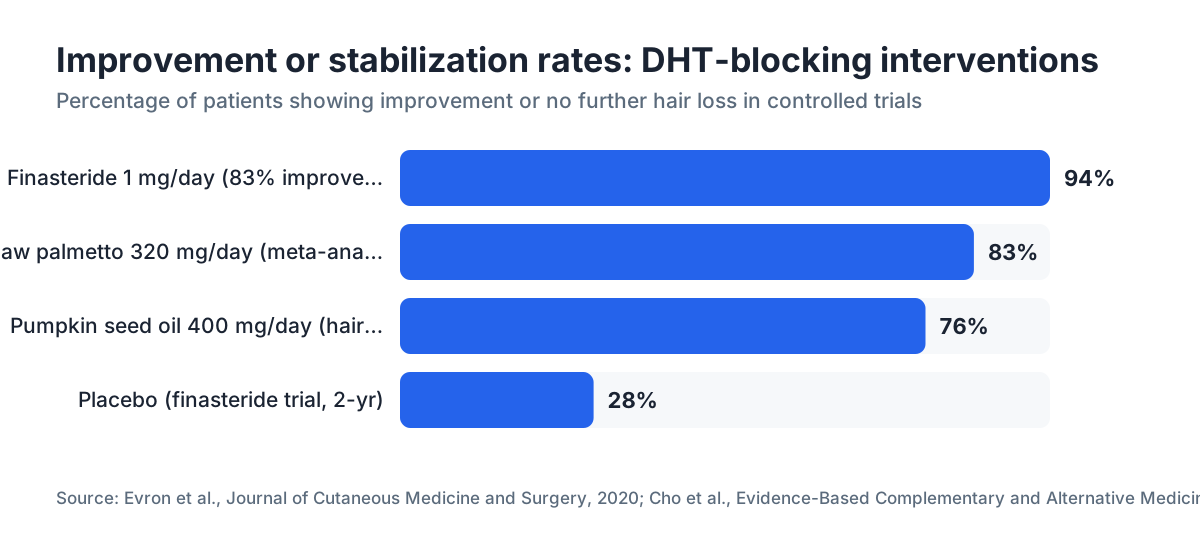
A 2020 systematic review and meta-analysis in the Journal of Cutaneous Medicine and Surgery analyzed seven clinical trials covering 357 patients. It reported that 82.9 percent of patients using saw palmetto showed improvement or stabilization of hair loss, versus 94.1 percent of patients on finasteride [5]. The study's own conclusion: "Serenoa repens appears to be an effective and well-tolerated treatment for androgenetic alopecia."
That 82.9 versus 94.1 percent gap is the whole story. Saw palmetto is meaningfully weaker than finasteride. If your hair loss is moving fast or you're already at Norwood III or beyond, saw palmetto alone probably won't hold the line. To understand how finasteride works and what the real side effect rates look like, that article covers the trial data in detail.
Dose used in most trials: 320 mg of standardized extract daily. The active fractions are fatty acids, mainly lauric acid and oleic acid, which competitively inhibit 5-alpha reductase.
What about lycopene, soy, flaxseed, and other claimed DHT-blocking foods?
Lycopene from cooked tomatoes and tomato paste shows 5-alpha reductase inhibition in prostate cancer animal models. No human hair loss trial exists. Tomatoes are healthy for reasons unrelated to hair. Counting on lycopene to protect your hairline has no evidence base right now.
Soy isoflavones (genistein and daidzein) are phytoestrogens that compete weakly with androgens at the receptor and may modestly reduce serum DHT in some populations. Two small human studies showed reductions in serum androgen levels with high-soy diets, but the effects varied across individuals and neither trial measured hair counts [6]. People who convert daidzein to equol (roughly 30 to 50 percent of the population) may see a somewhat larger effect. You can't easily tell if you're an equol-producer without specific gut microbiome testing.
Flaxseed lignans get converted in the gut to enterolactone and enterodiol, which reduced 5-alpha reductase activity measured via urinary androgen metabolites in one small clinical study [7]. The effect was weak and inconsistent. Flaxseed is still worth eating for omega-3s and fiber, just not primarily for DHT blockade.
White button mushrooms inhibit aromatase and show some 5-alpha reductase inhibition in cell studies [8], but no human hair data exists. Spearmint tea showed a significant anti-androgen effect in a small RCT for women with PCOS (polycystic ovary syndrome), though that trial measured free testosterone and LH, not DHT or hair counts [9].
Here's where it lands. Outside of pumpkin seed oil and saw palmetto, these compounds are biologically plausible but not proven for hair loss specifically.
How much can diet realistically reduce DHT compared to medication?
This is the question most people actually want answered. Here's the blunt comparison.
Finasteride 1 mg/day cuts serum DHT by 60 to 70 percent and scalp DHT by around 60 percent [2]. In a two-year randomized trial, 83 percent of men on finasteride had no further hair loss versus 28 percent on placebo.
Pumpkin seed oil 400 mg/day produced a 40 percent increase in hair count in one trial, with no direct DHT measurement [3]. Saw palmetto 320 mg/day showed improvement or stabilization in 82.9 percent of patients across seven trials, but those trials were mostly shorter and smaller than the main finasteride studies [5].
No food or combination of foods has been proven to match finasteride's DHT reduction. Full stop. If you're deciding between a dietary approach and a pharmaceutical one, the gap in evidence is large. For most people with active, progressing androgenetic alopecia, food changes alone probably won't stop it. They may slow it marginally, they have essentially no side effects, and that makes them reasonable to try first or to layer on top of medication.
The finasteride and minoxidil combination article is worth reading if you're at the point where diet changes feel insufficient.
Are there foods that raise DHT and should be avoided?
This angle is less studied but worth covering. A few dietary patterns track with higher androgen signaling.
High glycemic index diets raise insulin and IGF-1, which increase androgen production. Observational research links high glycemic load diets to greater risk of androgenetic alopecia [10]. This isn't a direct DHT mechanism, but it feeds the same androgen pathway upstream.
Alcohol, beer in particular, has been tied to small increases in serum DHT in some studies, possibly through reduced androgen clearance by the liver. The effect sizes are small and none of the evidence comes from hair-specific trials.
Creatine drew heavy attention after a single South African rugby trial showed a 56 percent increase in the serum ratio of DHT to testosterone after three weeks of loading [11]. That finding has fueled enormous concern online, but the absolute DHT level stayed within normal range and no hair loss outcomes were measured. For a full breakdown of that data, does creatine cause hair loss covers it in detail.
Processed, high-sugar, high-saturated-fat diets aren't doing your hair any favors. But branding any single food as a DHT-raiser you must avoid would overstate the evidence.
How should you build a diet to support hair health?
A useful framing: instead of chasing single magic foods, build a pattern that lowers androgen signaling and feeds the follicle at the same time.
For mild DHT inhibition from food: consider pumpkin seed oil (400 mg supplemented or 1 to 2 tablespoons of the oil daily), green tea (2 to 3 cups), cooked tomatoes, edamame or tempeh for soy, and ground flaxseed (2 tablespoons a day in yogurt or smoothies). All safe, all cheap, all carrying other nutritional value.
For follicle nutrition: adequate protein (hair keratin is protein; aim for 1.2 to 1.6 grams per kilogram of body weight), iron (check ferritin if you're shedding aggressively, since low ferritin is a major driver [12]), zinc, biotin if you have a documented deficiency, and vitamins D and B12. These aren't DHT blockers, but they keep the follicles you still have working.
Want to track whether your diet changes are actually moving the needle? Photograph your hairline at a consistent angle every three months. Myhairline.ai's free AI scan (/scan) gives you a structured baseline and Norwood stage estimate, which makes comparing photos over time far less guesswork.
For people whose hair loss is clearly androgenetic and progressing, minoxidil for men or finasteride are the two treatments with large-scale RCT backing. Diet and supplements are a sensible complement, not a replacement.
If you're dealing with sudden shedding rather than gradual thinning, the pattern may be telogen effluvium rather than androgenetic alopecia, in which case DHT-blocking foods are the wrong focus entirely.
What does the FDA say about foods or supplements that claim to block DHT?
The FDA does not approve dietary supplements or foods for the treatment of hair loss. Under the Dietary Supplement Health and Education Act (DSHEA) of 1994, supplement makers can make structure-function claims (for example, 'supports healthy hair') but cannot legally claim to treat, cure, or prevent any disease, including androgenetic alopecia [13].
Finasteride (Propecia) and topical minoxidil (Rogaine) are the only FDA-approved treatments for androgenetic alopecia in the United States [2]. No food or supplement carries that designation.
This distinction matters when you read product labels. A pumpkin seed oil capsule claiming to 'block DHT' is making a disease claim that technically violates FDA regulations. The actual evidence for pumpkin seed oil, as covered above, is real but modest, and the product itself is unregulated for consistency, purity, and dose.
The American Academy of Dermatology recommends minoxidil and finasteride as first-line treatments for androgenetic alopecia, with options like low-level laser therapy as adjuncts. Dietary supplements appear in AAD guidance only as items to consider for deficiency correction, not as primary DHT-blocking treatments [12].
Should you combine DHT-blocking foods with prescription treatments?
Yes, probably, and here's why: the mechanisms add up rather than compete. Finasteride blocks 5-alpha reductase pharmacologically at high efficacy. Food compounds like pumpkin seed oil and saw palmetto add mild inhibition through different binding affinities and fatty acid profiles. No evidence suggests combining them creates harmful interactions.
The more useful logic is division of labor. Drugs handle DHT suppression. Diet handles what drug therapy doesn't: inflammation, oxidative stress, follicle nutrition, insulin sensitivity. A 2021 review in Dermatology and Therapy noted that dietary antioxidants may reduce follicular oxidative stress, a secondary driver of miniaturization separate from DHT signaling [10].
If you're weighing prescription options but worried about side effects, minoxidil side effects and the finasteride article both give honest breakdowns of reported rates from actual trials, not promotional copy. For advanced loss where neither diet nor medication has been enough, hair transplant covers what modern procedures look like and what they cost.
One last thing. A receding hairline caught early responds far better to both pharmaceutical and dietary approaches than one that's been progressing for years. If you're noticing changes, acting sooner is genuinely better.
Sources
- American Academy of Dermatology, Hair Loss: Who Gets and Causes
- FDA, Drug Approval Package: Propecia (finasteride) 1 mg
- Cho YH et al., Evidence-Based Complementary and Alternative Medicine, 2014. Pumpkin seed oil RCT.
- Liao S, Hiipakka RA. Biochemical and Biophysical Research Communications, 1995. EGCG and 5-alpha reductase.
- Evron E et al., Journal of Cutaneous Medicine and Surgery, 2020. Saw palmetto meta-analysis.
- Nagata C et al., Journal of Nutrition, 2000. Soy isoflavones and serum androgens.
- Sturgeon SR et al., Cancer Epidemiology, Biomarkers & Prevention, 2010. Flaxseed lignans and 5-alpha reductase.
- Grube BJ et al., Journal of Nutrition, 2001. White button mushrooms and aromatase/5AR inhibition.
- Grant P. Phytotherapy Research, 2010. Spearmint tea RCT in PCOS.
- American Academy of Dermatology, Hair Loss: Diagnosis and Treatment (diet and androgenetic alopecia guidance)
- van der Merwe J et al., Clinical Journal of Sport Medicine, 2009. Creatine and DHT.
- American Academy of Dermatology, Hair Loss: Diagnosis and Treatment
- U.S. FDA, Dietary Supplements overview (DSHEA 1994 authority)