

TL;DR: Yes, Zepbound (tirzepatide) can cause hair loss. Clinical trials reported it in 5.7% of patients on the highest dose versus 1.0% on placebo. The likely cause is telogen effluvium, a temporary shedding triggered by rapid weight loss and low calorie intake, not the drug attacking follicles directly. Most cases clear up within 3 to 6 months once your weight settles.
What is Zepbound and how does it work?
Zepbound is the brand name for tirzepatide when it's prescribed for chronic weight management. The exact same molecule, at the same doses, is sold as Mounjaro for type 2 diabetes. Eli Lilly makes both. The FDA approved Zepbound for weight loss in November 2023 [1].
Tirzepatide is a dual agonist. It switches on two receptors at once: GLP-1 (glucagon-like peptide-1) and GIP (glucose-dependent insulinotropic polypeptide). That double action suppresses appetite and slows gastric emptying harder than older GLP-1-only drugs like semaglutide (Ozempic, Wegovy). In the SURMOUNT-1 trial, people lost an average of 20.9% of body weight over 72 weeks on the 15 mg dose [2].
That is a lot of weight. And fast, dramatic weight loss is one of the best-documented triggers of temporary hair shedding in all of dermatology. Hold onto that fact. It explains almost everything below.
Does Zepbound actually cause hair loss, and how common is it?
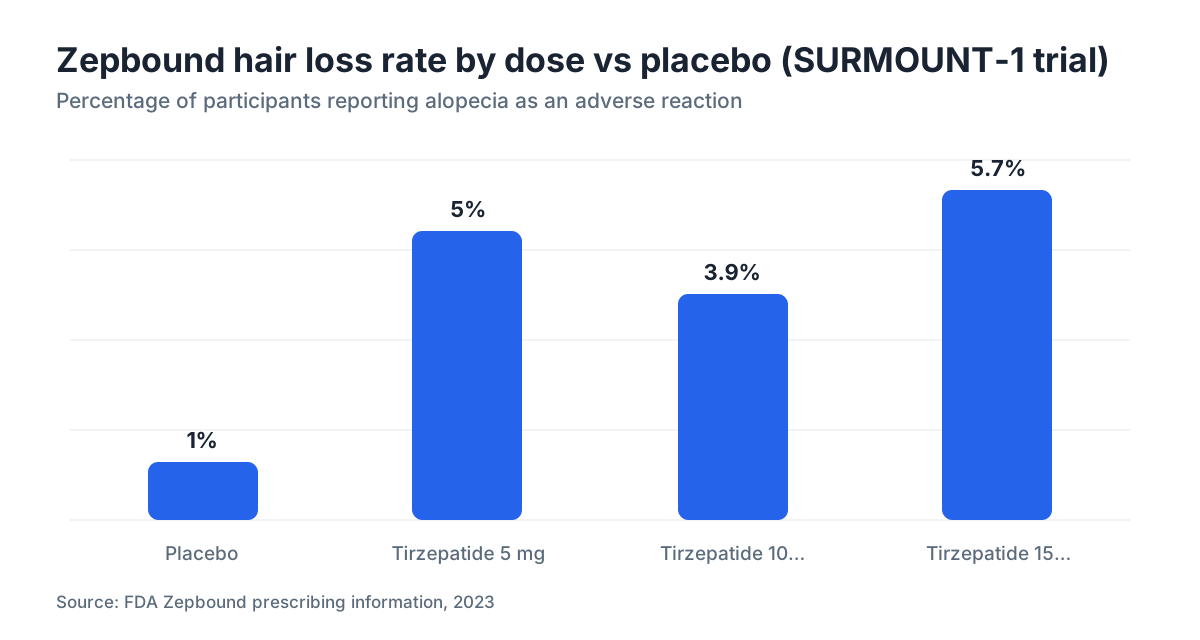
The FDA-approved prescribing information for Zepbound lists alopecia (hair loss) as an adverse reaction. In SURMOUNT-1, hair loss showed up in 5.7% of patients on 15 mg, 3.9% on 10 mg, and 5.0% on 5 mg, against 1.0% in the placebo group [1]. That gap is real, not noise.
So yes, Zepbound users shed at a meaningfully higher rate than people not on the drug. But the word "cause" needs a caveat. Tirzepatide almost certainly doesn't damage hair follicles directly. Nobody has shown any mechanism for direct follicular toxicity. The better explanation, and the one dermatologists lean on, is that the drug sets off telogen effluvium indirectly, by loading the body with physiological stress.
Put it next to other ways people lose weight and the number looks tame. Hair loss after bariatric surgery hits roughly 57% of patients, and most recover within a year [3]. Zepbound's 5% figure is a fraction of that. If you're weighing the side effect against the benefit, that comparison is the one to keep in mind.
Why does rapid weight loss trigger hair shedding?
Hair grows on a cycle. The active growth phase (anagen) runs two to six years for a given follicle. The resting phase (telogen) lasts about three months, and then the hair falls out and a new one starts pushing up underneath. At any moment, roughly 85 to 90% of your follicles are in anagen and 10 to 15% sit in telogen [12].
Hit the body with a big enough shock and a large batch of follicles bails out of anagen and drops into telogen early. Two to three months later, all those hairs let go at once. That's telogen effluvium. Classic triggers include severe illness, surgery, crash diets, aggressive calorie cutting, and rapid weight loss from any source.
With Zepbound, a few things stack up. Calorie intake falls off a cliff. The drug kills appetite so effectively that many users eat far less protein than they need, and hair is basically keratin, a protein, so the follicle can't build a shaft without it. Fast fat loss also shifts leptin, insulin, and other hormones in ways that can tell follicles to rest. On top of that, gaps in iron, zinc, and other micronutrients are common on very low intake, and each one has documented links to shedding [4].
None of this means your follicles are dying. It means they hit pause.
Can testosterone cause hair loss, and does Zepbound affect testosterone levels?
This one gets layered, because big weight loss actually moves hormone levels, testosterone included. So asking whether testosterone causes hair loss is fair game here.
Short answer: yes, but the relationship is not simple. The villain in androgenetic alopecia (pattern baldness) isn't testosterone itself. It's dihydrotestosterone (DHT), a stronger androgen that 5-alpha reductase makes from testosterone. DHT locks onto receptors in genetically susceptible follicles and shrinks them over years, until they produce fine colorless hairs and then nothing [5]. The DHT blocker article walks through that pathway step by step.
Does high testosterone cause hair loss? In men with the genetic setup for it, more androgen generally speeds up pattern loss. But high testosterone by itself, in someone without inherited follicle sensitivity, rarely causes noticeable shedding. The sensitivity is what you inherit. The androgen just steps on the gas.
Does low testosterone cause hair loss? Low testosterone is not a main driver of pattern baldness. Some research hints that very low androgen levels may even slow it slightly. Hypogonadism brings a pile of other symptoms long before it changes hair density much. The hair issue tied to low testosterone tends to be diffuse thinning, which usually has other causes riding along, like thyroid trouble or poor nutrition.
Does high testosterone cause hair loss in women? Women run far lower baseline testosterone than men, but even small jumps, like those seen in polycystic ovary syndrome (PCOS), can speed up pattern loss in women who are genetically primed for it [6]. Female pattern hair loss usually shows up as diffuse thinning across the crown rather than a receding front hairline. More on that in what causes hair loss.
So where does Zepbound land? Losing a lot of fat tends to raise free testosterone in men with obesity, because fat tissue holds aromatase, the enzyme that turns testosterone into estrogen. Less fat, less aromatase, more circulating androgen. The odd result: as Zepbound works and fat drops, some men see a modest testosterone bump that could nudge any underlying pattern loss along, on top of the telogen effluvium. Nobody has clean data on this for tirzepatide specifically. The closest evidence comes from bariatric surgery studies, where free testosterone climbs after the operation [7].
How to tell whether your hair loss is telogen effluvium or something else
Telogen effluvium has a signature. Shedding kicks off two to four months after the trigger, which here means starting Zepbound or the point where rapid weight loss took off. The loss is diffuse across the whole scalp, not concentrated at the temples or crown. You see more hair in the shower drain and on the pillow. The scalp itself looks calm, no scale or redness. And if you look at a shed hair, most carry a tiny white bulb at the root, the sign they finished telogen the normal way.
Androgenetic alopecia (pattern baldness) behaves differently. It's slow. It tracks the Norwood scale in men: temples recede, the crown thins, and eventually the two meet. In women it's diffuse crown thinning with the front hairline mostly holding. It does not resolve on its own.
Not sure which one you've got? A dermatologist can run a pull test (a gentle tug on 40 to 60 hairs; more than 10% releasing points to active effluvium) or a dermoscopy exam to hunt for miniaturized follicles. Blood work covering ferritin, thyroid (TSH), and a basic metabolic panel clears the most common fixable causes.
Want a starting point before the clinic? The free AI hair analysis at MyHairline can help you read the pattern of your shedding and figure out what to ask your doctor.
How long does Zepbound hair loss last?
For telogen effluvium from a weight loss drug, shedding usually peaks around months three to four, recovery becomes visible around month six, and most people are back to normal by month nine to twelve, assuming the trigger has settled down [4].
The one variable that matters most is whether your weight has plateaued. Still dropping pounds fast at month six? The follicles are still stressed and recovery drags. Once weight steadies and protein and micronutrient intake come back up, regrowth follows. The new hairs come in short and fine at first, which some people misread as continued loss. It's the opposite. It's the comeback.
If shedding runs past six months, or speeds up instead of slowing, book a dermatologist. That's the moment to rule out iron deficiency anemia, thyroid disease, or pattern baldness that the stress event dragged into the open.
What can you actually do to reduce hair loss on Zepbound?
There are real steps here. None of them are magic.
Protein is the big one, and the most fixable. Aim for at least 1.2 grams per kilogram of target body weight per day while you're on Zepbound. Most people on appetite-crushing drugs fall well short. The follicle needs protein to build the hair shaft, and when it's scarce the body sends that protein elsewhere and hair production stalls [4].
Iron stores count too. Ferritin below 30 ng/mL is tied to more shedding in women even when hemoglobin reads normal, and some researchers push the target closer to 70 ng/mL for good regrowth [4]. Test ferritin before you supplement, because too much iron carries its own risks.
Slowing the pace of weight loss, if your doctor agrees it's fine, softens the shock. The SURMOUNT-1 protocol escalated the dose gradually over 20 weeks partly to keep the ride tolerable. Losing 0.5 to 1% of body weight a week is easier on your follicles than faster crashes.
Topical minoxidil for men and for women is FDA-approved for androgenetic alopecia, and dermatologists sometimes use it off-label to speed recovery from telogen effluvium. The evidence for effluvium specifically is thin but not zero. A small randomized trial found benefit in women with chronic telogen effluvium [8]. Read the full minoxidil side effects rundown before you start.
For anyone with underlying pattern loss that Zepbound may be speeding up, finasteride (for men) or finasteride and minoxidil together hit the DHT-driven part head on. They won't touch telogen effluvium, but they can stop the pattern loss underneath it from marching forward.
Hair loss supplements get marketed hard, but the evidence is weak. The ones with a real rationale are iron (if you're low), zinc (if you're low), and vitamin D. Biotin deficiency is rare, and taking extra biotin does nothing for hair loss in people who aren't deficient [4].
Should you stop taking Zepbound because of hair loss?
That's a call for you and your prescribing doctor, not a website. But here's the honest framing.
Most people are on Zepbound because obesity carries serious risks: cardiovascular disease, type 2 diabetes, sleep apnea. Temporary, reversible shedding is a genuine trade-off, but for most patients the math still favors staying on the drug and managing the hair loss as it happens.
And there's a trap in quitting. Stopping Zepbound and regaining weight fast is itself a physiological shock that can kick off a fresh round of telogen effluvium. Coming off the drug does not guarantee your hair bounces back sooner.
If the loss is severe, drags past nine months, or comes with scalp pain, itching, or bald patches, see a dermatologist before you touch your dose. Patchy loss in particular can point to alopecia areata, an autoimmune condition with a completely different treatment path.
How does Zepbound compare to other weight loss drugs for hair loss risk?
Here's what the clinical trial data shows across approved weight loss medications.
| Drug | Mechanism | Hair loss rate (trial) | Source |
|---|---|---|---|
| Tirzepatide 15 mg (Zepbound) | GLP-1 + GIP agonist | 5.7% | SURMOUNT-1 [1] |
| Semaglutide 2.4 mg (Wegovy) | GLP-1 agonist | ~3% (estimated) | STEP-1 [9] |
| Orlistat (Xenical) | Lipase inhibitor | Not reported as common AE | FDA label |
| Phentermine/topiramate (Qsymia) | Sympathomimetic + anticonvulsant | Not prominently reported | FDA label |
| Bariatric surgery (Roux-en-Y) | Surgical | ~57% | Review study [3] |
The semaglutide figure is an estimate. The STEP-1 trial noted alopecia but didn't spotlight a clean rate in the public summary data. The pattern across GLP-1 drugs holds: all of them shed hair above placebo rates, and the likely reason is the same one every time (rapid weight loss triggering effluvium) rather than anything specific to the molecule.
Bariatric surgery's 57% rate towers over any medication figure. Surgery forces more sudden and severe calorie restriction, which is why the gap is that wide.
Can creatine or other supplements make Zepbound hair loss worse?
Creatine gets blamed for raising DHT, which would in theory speed up pattern loss in susceptible people. The evidence is one small 2009 study that found a rise in the DHT/testosterone ratio after creatine loading in college rugby players [10]. Larger trials haven't replicated it. The does creatine cause hair loss article goes through this in full.
If you're on Zepbound, worried about hair, and you've got a family history of pattern baldness, this is probably not the moment to start experimenting with creatine. That said, there's no evidence creatine makes telogen effluvium worse. The two run on separate tracks: one is an androgen pathway, the other is a stress response.
A couple of supplements deserve real caution. High-dose vitamin A (retinol) above roughly 10,000 IU a day is a documented cause of hair loss [4]. Selenium toxicity does it too. Both can hide inside high-dose multivitamins. Read your labels.
What does the FDA label actually say about Zepbound and hair loss?
The Zepbound prescribing information, approved November 2023, lists alopecia under other adverse reactions occurring in at least 1% of patients and at a higher rate than placebo [1]. The label states that alopecia was reported as an adverse reaction in clinical trials.
The label does not tag it as a serious adverse event, does not say it's permanent, and gives no specific management advice beyond reporting adverse events to the FDA through MedWatch.
The FDA's MedWatch program lets patients and providers report adverse events [11]. If you shed hair on Zepbound, filing a report adds to the real-world evidence the FDA uses for post-market safety tracking. Trial numbers like 5.7% can undercount what actually happens, because trial participants are watched more closely and fed better than the average patient at home.
When should you see a dermatologist about hair loss on Zepbound?
See a dermatologist if any of these fit: shedding runs past six to nine months with no sign of slowing, you're seeing defined pattern loss (receding temples, crown thinning) instead of diffuse shedding, you have smooth bald patches that could signal alopecia areata, your scalp itches or looks inflamed, or a blood test flags iron deficiency or a thyroid problem.
A dermatologist has tools you don't: dermoscopy, trichoscopy, a scalp biopsy if it comes to that, and the ability to prescribe treatments like higher-concentration topical minoxidil, oral minoxidil (the oral minoxidil article covers what that involves), spironolactone for women, or finasteride for men.
For women, a hair loss workup should cover androgens (free and total testosterone, DHEA-S), ferritin, TSH, and sometimes prolactin. That panel clears the most common fixable hormonal and nutritional causes before anyone pins it all on Zepbound.
Want a clearer read on your pattern before you book? MyHairline's free AI scan gives you a structured starting point and helps you describe what you're seeing to your doctor.
Sources
- FDA Zepbound (tirzepatide) prescribing information, approved November 2023
- Jastreboff AM et al., SURMOUNT-1 trial, New England Journal of Medicine, 2022
- Guo EL, Katta R, Dermatology Practical & Conceptual, 2017
- Almohanna HM et al., Dermatology and Therapy, 2019, Role of vitamins and minerals in hair loss
- American Academy of Dermatology, Hair loss types overview
- Carmina E et al., PCOS and androgen excess in women, Journal of Clinical Endocrinology and Metabolism, 2006
- Pellitero S et al., Testosterone and sex hormone-binding globulin after bariatric surgery, Obesity Surgery, 2012
- Malkud S, Randomized controlled trial of minoxidil in chronic telogen effluvium, Journal of Clinical and Diagnostic Research, 2015
- Wilding JPH et al., STEP-1 trial, semaglutide 2.4 mg for weight management, New England Journal of Medicine, 2021
- van der Merwe J et al., Three weeks of creatine monohydrate supplementation affects dihydrotestosterone to testosterone ratio, Clinical Journal of Sport Medicine, 2009
- FDA MedWatch adverse event reporting program
- Sinclair R, Telogen effluvium, British Medical Journal, 1999