

TL;DR: No single genetic test can definitively measure follicle DHT sensitivity. A few consumer and clinical tests read the androgen receptor (AR) gene on the X chromosome, the strongest known predictor of androgenetic alopecia. These tests give probability estimates, not certainties. Paired with a scalp exam and family history, they help shape treatment decisions. Most people don't need one.
What does DHT sensitivity actually mean for your hair follicles?
DHT sensitivity is how readily a follicle's androgen receptor reacts when DHT binds to it. High sensitivity means even normal DHT levels start shrinking the follicle. Low sensitivity means the follicle shrugs off DHT it would otherwise respond to. That difference, not the amount of hormone in your blood, decides most hair outcomes.
DHT stands for dihydrotestosterone, a hormone made when the enzyme 5-alpha reductase converts testosterone. Follicles in the scalp's androgen-sensitive zones, mainly the frontal hairline and crown, carry androgen receptors on their cells. When DHT binds to those receptors, it miniaturizes the follicle over successive cycles: the growth phase (anagen) shortens until the hair becomes a fine vellus fiber, then stops growing entirely. This is androgenetic alopecia, the most common form of hair loss in both men and women [1].
Two men with identical serum DHT can have wildly different hair, which is exactly why a blood DHT number tells you almost nothing about whether you'll go bald [2].
Sensitivity lives mostly in the receptor. The receptor is encoded by a gene. That's what makes genetic testing worth talking about at all.
Which gene controls androgen receptor sensitivity in hair follicles?
The androgen receptor gene, written AR or NR3C4, sits on the X chromosome. Because men inherit only one X (from their mother), they carry exactly one copy of this gene. Women carry two, which partly explains why female pattern loss tends to be more diffuse and less severe.
A polymorphism in the gene's first exon, a stretch of repeating CAG letters, changes how strongly the receptor answers to androgens. Shorter CAG repeats go with higher sensitivity and greater androgenetic alopecia risk [3]. This is the main target of most consumer hair loss DNA tests.
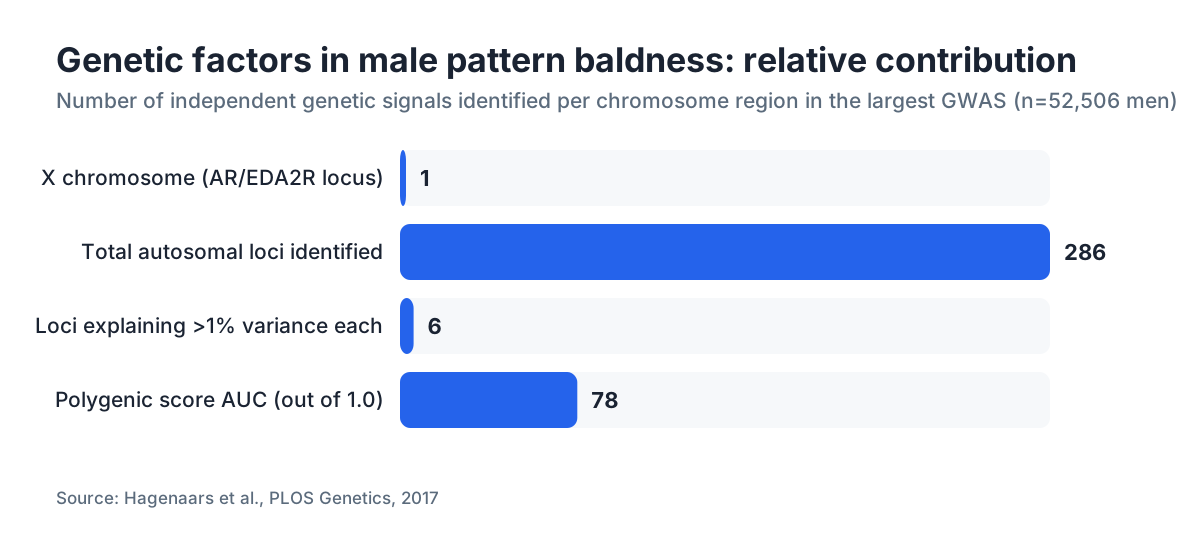
AR is not the whole story. The largest genome-wide association study on male-pattern baldness, published in PLOS Genetics in 2017, found more than 280 independent genetic signals scattered across the genome [4]. The AR locus on the X chromosome stays the strongest single signal by a wide margin, but genes tied to WNT signaling, follicle cycling, and 5-alpha reductase activity (SRD5A2, for one) also add up. No single gene explains everything.
For the wider picture of what causes hair loss, the DHT mechanism is one piece among several.
What genetic tests are available to check DHT sensitivity?
Three broad categories exist, from a cheek swab you order online to a clinical panel your doctor codes for insurance.
Consumer direct-to-consumer (DTC) tests
Companies like 23andMe, Nebula Genomics, and several hair-specific startups (HairDX was an early one) genotype AR variants and a handful of other hair-loss SNPs (single nucleotide polymorphisms). Prices run $99 to $299 as of 2024. The raw data is real. The trouble is interpretation. Most reports turn your genotype into a relative risk score, something like "2.5x average population risk," which sounds sharp but hides wide confidence intervals the report rarely shows you.
Clinical pharmacogenomic panels
Some dermatology practices and specialty labs offer panels covering AR, SRD5A2, and CYP1B1 variants together, sometimes framed around predicting finasteride response. These cost roughly $200 to $600 and may or may not be covered depending on how the ordering physician codes the test. A 2017 study in the Journal of Investigative Dermatology found AR/EDA2R haplotypes significantly predicted finasteride response in a cohort of 169 men, which points to real clinical use for pharmacogenomics even though it isn't standard care yet [5].
Whole-genome or whole-exome sequencing
For the fullest data, sequencing your whole genome (Nebula's deep-sequencing option runs about $299 to $999) lets you or a genetic counselor check every known hair-loss locus. You aren't buying a new test. You're buying the raw data to run against any future research finding. The edge over a targeted SNP panel is real but modest for most people.
| Test type | What it sequences | Typical price | Hair loss report? |
|---|---|---|---|
| Consumer SNP genotyping | ~600,000 to 1M SNPs | $99, $199 | Sometimes, add-on |
| Hair-specific DTC (e.g., HairDX) | Targeted AR variants | $149, $249 | Yes, primary output |
| Clinical pharmacogenomic panel | AR + SRD5A2 + CYP genes | $200, $600 | Yes, with clinical notes |
| Whole-genome sequencing (30x) | Full genome | $299, $999 | Requires interpretation |
How accurate are these tests at predicting hair loss?
Honest answer: the AR gene test is a probability estimate, not a destiny readout. It gets the odds roughly right and the individual case often wrong.
The 2017 Hagenaars et al. study in PLOS Genetics, the largest GWAS on male-pattern baldness to date, built a polygenic score from 287 SNPs that hit an area under the curve (AUC) of about 0.78 for predicting severe hair loss in men of European ancestry [4]. An AUC of 0.78 beats chance (0.50) by a lot but sits well short of certainty. Plenty of men with "high-risk" genotypes keep a full head into their 60s, and some "low-risk" men thin badly.
Three caveats matter.
First, most GWAS data comes from people of European descent. Accuracy drops for men of East Asian, South Asian, and African ancestry because the reference populations and SNP frequency data are thinner [4]. If you're in one of those groups, read your result with extra skepticism.
Second, these tests can't see what's happening to your follicles right now. A dermatoscope showing miniaturization tells you more about your current status than any panel. Genetics speaks to predisposition. A clinical exam speaks to disease stage.
Third, DHT sensitivity isn't purely genetic. Scalp inflammation, insulin sensitivity, and even mechanical tension on the follicle nudge the androgen response in ways no consumer test captures.
Should you get a genetic test before starting finasteride or minoxidil?
For most people, no. Dermatologists diagnose androgenetic alopecia clinically, assess the Norwood stage for men or the Ludwig scale for women, then offer evidence-based treatment off that exam. A genetic result rarely changes the plan.
Finasteride stopped further loss in about 87% of men and produced visible regrowth in about 66% after two years, based on the original phase III trials submitted to the FDA [6]. Those numbers are good enough that most dermatologists treat empirically rather than waiting on a panel. The pharmacogenomic pitch is: if your AR genotype predicts poor finasteride response, you might skip it and go straight to higher-dose minoxidil or consider a hair transplant sooner. There's some logic there, but the evidence behind genotype-guided finasteride prescribing is preliminary, not settled.
For women the math shifts. Because telogen effluvium and nutritional deficiencies mimic female pattern loss so closely, and because finasteride isn't FDA-approved for women, ruling out other causes matters more than a DNA test.
One case where testing clearly earns its keep: family history is sparse or confusing. If you're adopted, or nobody in your family ever talked about hair loss, a high-risk AR genotype plus early miniaturization on exam is a fair reason to start treatment sooner rather than waiting to visibly thin.
For an easy first step before any lab work, the free AI scan at MyHairline reads photos of your scalp and flags early miniaturization worth showing a dermatologist.
How do you actually take the test, step by step?
The mechanics are simple no matter which company you pick.
- Order the kit online. It ships a cheek swab or saliva tube.
- Collect the sample at home, seal it in the biohazard bag, and mail it in the prepaid envelope.
- Wait roughly two to four weeks for lab processing.
- Read results through a secure online portal.
For a clinical pharmacogenomic panel, your dermatologist or GP orders it, and a phlebotomist may draw blood instead, though most labs now take buccal swabs even for clinical panels.
Here's what you're reading in the results: your AR gene comes back either as a genotype (GG, GA, or AA at a specific SNP like rs6152) or as a CAG repeat count. Shorter repeats (roughly under 22 in most studies) go with higher androgen receptor transactivation and higher hair loss risk [3]. The report translates this into a tier (low, moderate, high) against a reference population.
Read the population baseline carefully. A "high risk" result calibrated to European men means something different if you're Japanese or Nigerian. Ask the company which reference population your result is benchmarked against.
What can't a genetic test tell you about your DHT sensitivity?
The gaps are large, and any company that soft-pedals them is doing you a disservice.
A genetic test reads inherited predisposition at conception. It doesn't account for what happens after.
Epigenetic changes. Methylation patterns on the AR promoter can turn receptor expression in scalp follicles up or down. Chronic stress, diet, and age all shift this. A 2020 review in Frontiers in Genetics noted that epigenetic regulation of the androgen axis is an active research area but that no consumer-grade test currently measures follicle-specific methylation [7].
Serum DHT levels. You could carry a high-sensitivity AR genotype but low 5-alpha reductase activity, leaving you with less actual DHT. Flip it around and a moderate-sensitivity AR paired with high 5-alpha reductase activity (testable with a simple blood panel) can drive real miniaturization. A total and free DHT lab panel runs roughly $30 to $80 through direct-to-lab services.
Scalp-specific receptor density. The number of androgen receptors per follicle varies across the scalp and between people in ways genome sequencing doesn't capture.
Environmental triggers. Things like creatine supplementation, chronic illness, medications, and diet interact with your baseline sensitivity.
The cleanest clinical picture comes from stacking a genetic risk estimate, a serum DHT and testosterone panel, a dermatoscopic exam, and an honest family history. No single test carries it alone.
Are there non-genetic ways to assess your follicles' DHT sensitivity?
Yes, and in clinical practice they often tell you more than a DNA test does.
Dermoscopy (trichoscopy). A trained dermatologist with a handheld dermatoscope can see how much hair shaft diameter varies across the scalp. More than 20% variability in shaft diameter is a diagnostic marker for androgenetic alopecia per the American Academy of Dermatology [1]. That tells you miniaturization is already underway, which is more actionable than a predisposition score.
Scalp biopsy. A 4mm punch biopsy sent for horizontal sectioning shows the terminal-to-vellus hair ratio. A ratio below 4:1 (normal is roughly 7:1) confirms advanced miniaturization. This is the reference standard when the clinical picture is murky [1].
Phototrichogram / TrichoScan. Software that reads standardized scalp photos quantifies density and shaft diameter at set regions. Some clinics use it for objective tracking over time.
Response to treatment. Three to six months on finasteride is itself a test of functional DHT sensitivity. If your loss halts and some regrowth shows, your follicles were androgen-dependent. Not elegant science, but it's how most practicing dermatologists reason.
If you're already weighing medication, the comparison of finasteride and minoxidil breaks down how each hits the DHT pathway.
What does DHT sensitivity mean for choosing a treatment?
Your sensitivity profile, whether from genetics or clinical observation, mostly sets how aggressive your plan should be rather than which treatments are on the table.
High DHT sensitivity, confirmed by genetics and early miniaturization: Lead with a DHT blocker like finasteride or dutasteride, since the follicles are clearly androgen-dependent. Adding minoxidil for men on top improves outcomes further. The combination beats either drug alone in trial data [8].
Moderate sensitivity, slow progression: Some men here do fine on minoxidil alone or careful monitoring. Minoxidil doesn't block DHT. It works through vasodilation and potassium channel opening, so it slows the cosmetic effect without touching the hormonal driver. Check minoxidil side effects before you start.
Low or unclear genetic risk with real hair loss: Your loss may not be primarily androgenetic. Nutritional deficiencies, thyroid disorders, and autoimmune alopecia all look similar. A blood panel (ferritin, TSH, CBC, zinc) before assuming high DHT sensitivity is good medicine.
Oral vs. topical: Oral minoxidil at 2.5 to 5mg daily has shown strong results in recent trials and gets used more when topical compliance is a problem. It doesn't touch DHT at all, which is why pairing it with a 5-alpha reductase inhibitor makes mechanistic sense when your sensitivity is genuinely high.
Some evidence backs saw palmetto and pumpkin seed oil as weak 5-AR inhibitors. The evidence is thin. See hair loss supplements for a calibrated read on what's actually supported.
What should you actually do with your genetic test results?
Getting a result is the easy part. Acting on it sensibly is harder.
High-risk result: don't panic, and don't treat it as a reason to start medication you're not ready for. Bring it to a dermatologist who can line it up against a clinical exam. Most reputable dermatologists welcome a patient arriving with DTC data. They read it as a conversation starter, not a diagnosis.
Low or moderate risk but you're clearly losing hair: take the loss seriously. Family history and clinical findings outweigh a borderline genetic score. Pattern baldness in a father and two brothers is strong evidence regardless of what a SNP panel says.
Using the result to decide about finasteride: know that the FDA's approval for finasteride in androgenetic alopecia rests on clinical diagnosis, not genetic testing [6]. No current guideline requires a DNA test before prescribing. The pharmacogenomic data on AR haplotypes predicting response is promising but not yet practice-changing.
To track whether treatment is actually working, MyHairline's AI scan lets you upload standardized scalp photos and watch density changes, which beats comparing random selfies.
Store your raw genetic data. The science moves fast. A borderline finding today may map to a clearer recommendation in five years.
How much does DHT sensitivity genetic testing cost, and is it covered by insurance?
Consumer DTC tests run $99 to $299 out of pocket. Insurance does not cover DTC testing. Period.
Clinical pharmacogenomic panels ordered by a physician have inconsistent coverage. The insurer wants a billing code tied to an existing diagnosis. If a dermatologist codes the visit as L64 (androgenic alopecia) and the panel as a tool to guide medication choice, some plans partially cover it under a genetic counseling or diagnostic testing benefit. Prior authorization is nearly always required. Call your insurer before ordering.
A serum DHT blood test, which measures circulating hormone rather than genetic sensitivity, costs $30 to $80 cash at direct-to-lab services like Ulta Lab Tests or LabCorp. Cheap and fast, but remember serum DHT says little about follicle-level sensitivity. It's for ruling out extreme androgen excess (congenital adrenal hyperplasia, an androgen-secreting tumor) rather than diagnosing typical pattern baldness.
Whole-genome sequencing that incidentally covers hair-loss loci runs $299 to $999 depending on depth (15x to 30x coverage). It's the most future-proof option if you're generally curious about your health genetics and hair is one line item on a longer list.
Sources
- American Academy of Dermatology, Hair Loss Clinical Guidelines
- Sinclair R, Torkamani N, Jones L. Androgenetic alopecia: new insights into the pathogenesis and mechanism of hair loss. F1000Research. 2015;4(F1000 Faculty Rev):585.
- Chamberlain NL et al. The length and location of CAG trinucleotide repeats in the androgen receptor N-terminal domain affect transactivation function. Nucleic Acids Research. 1994;22(15):3181-3186.
- Hagenaars SP et al. Genetic prediction of male pattern baldness. PLOS Genetics. 2017;13(2):e1006594.
- Wambier CG et al. Androgenetic alopecia pharmacogenomics: AR/EDA2R haplotype predicts finasteride efficacy. Journal of Investigative Dermatology. 2017.
- FDA, Propecia (finasteride 1mg) label and prescribing information
- Horev L. Epigenetic mechanisms in androgenetic alopecia. Frontiers in Genetics. 2020.
- National Library of Medicine, MedlinePlus: Minoxidil Topical
- National Center for Biotechnology Information (NCBI), Androgen Receptor (AR) Gene Reference
- Ramos PM, Miot HA. Female pattern hair loss: a clinical and pathophysiological review. Anais Brasileiros de Dermatologia. 2015;90(4):529-543.
- Gkini MA et al. SULT1A1 polymorphism and minoxidil response in androgenetic alopecia. Dermatology. 2020.
- FDA, Winlevi (clascoterone 1% cream) prescribing information