
TL;DR: Nutrafol is not a DHT blocker. It contains saw palmetto and other botanicals that may modestly reduce DHT activity, but no clinical trial has shown it lowers scalp or serum DHT meaningfully. Finasteride reduces DHT by roughly 70% in the scalp; Nutrafol's published studies measure hair counts and thickness, not DHT levels. It's a multi-ingredient supplement, not a hormonal treatment.
What exactly is Nutrafol, and how does it claim to work?
Nutrafol is a daily oral supplement marketed for hair growth. The company positions it around what they call "multi-targeting" of hair loss triggers: stress hormones, inflammation, nutrition gaps, DHT sensitivity, and scalp circulation. The core formula (the Women's and Men's versions differ somewhat) includes saw palmetto, ashwagandha, marine collagen peptides, biotin, curcumin, tocotrienols (a form of vitamin E), and several standardized botanical extracts.
The marketing language is careful. Nutrafol does not call itself a DHT blocker on its label. It refers to "DHT sensitivity" and "hormone balance," which is a meaningful distinction from actually blocking the enzyme (5-alpha reductase) that converts testosterone into dihydrotestosterone.
This matters a lot for men with androgenetic alopecia, which is the most common cause of a receding hairline and is driven primarily by DHT binding to follicle receptors. If you want to understand what causes hair loss at the hormonal level, DHT is the dominant factor in genetic male pattern baldness, and any supplement claiming to address it should be held to that standard.
Does Nutrafol block DHT the way finasteride does?
No. This is the clearest answer in this article.
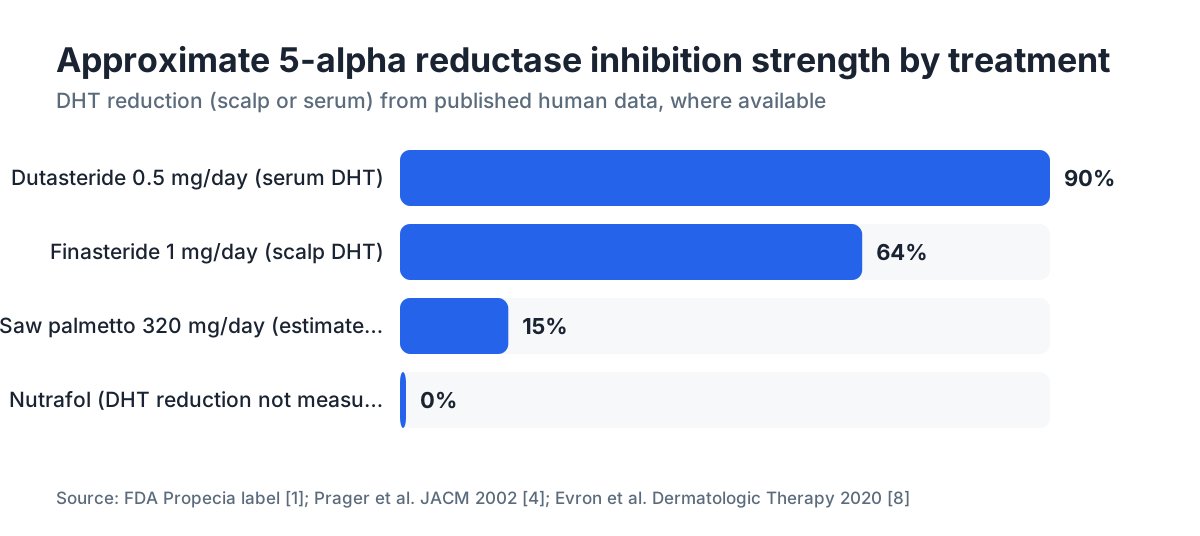
Finasteride (brand name Propecia) is a 5-alpha reductase inhibitor approved by the FDA for androgenetic alopecia. The trials behind its approval showed it reduces scalp DHT by approximately 64% and serum DHT by roughly 68-71% at the standard 1 mg oral daily dose [1]. That is a pharmacological reduction in the hormone itself. Finasteride has a known mechanism, a measurable biochemical effect, and FDA approval for the indication.
Nutrafol has none of those things. It is classified as a dietary supplement under the Dietary Supplement Health and Education Act (DSHEA) of 1994, which means it does not require proof of efficacy or FDA approval before going to market [2]. The company is not allowed to claim it treats androgenetic alopecia. It can say it "supports hair growth" and "may help reduce hair shedding."
The two Nutrafol-sponsored clinical trials published in peer-reviewed journals measured hair growth outcomes (strand counts per cm², thickness, and self-reported shedding), not DHT levels. Neither trial demonstrated a reduction in serum or scalp DHT [3]. Comparing Nutrafol to finasteride on DHT suppression is like comparing a light cardio walk to blood pressure medication: they are different categories of intervention.
If you are weighing actual DHT blocker options, finasteride and dutasteride are the only oral agents with clinical evidence of meaningful DHT reduction in humans. Everything else is a degree of "may modestly modulate."
Which Nutrafol ingredients have any DHT-related activity?
Some ingredients in Nutrafol do have plausible, if modest, interactions with the DHT pathway. Here is an honest breakdown.
Saw palmetto (Serenoa repens) This is the ingredient with the strongest DHT-adjacent claim. Some in-vitro and small clinical studies suggest saw palmetto extracts can weakly inhibit 5-alpha reductase, particularly the type II isoenzyme. A 2002 randomized trial published in the Journal of Alternative and Complementary Medicine tested saw palmetto (320 mg/day standardized extract) against finasteride in 26 men with mild-to-moderate androgenetic alopecia and found 38% of the saw palmetto group showed improvement versus 68% of the finasteride group [4]. The sample was tiny, the outcome was subjective, and no DHT levels were measured. Later work has struggled to replicate consistent 5-alpha reductase inhibition in humans at typical supplement doses.
Ashwagandha (Withania somnifera) Positioned as a cortisol-lowering adaptogen. High cortisol can push follicles into telogen phase (shedding), which is distinct from DHT-driven miniaturization. Ashwagandha does not inhibit 5-alpha reductase. It has no meaningful DHT-blocking activity.
Tocotrienols (vitamin E fraction) A 2010 randomized trial in Tropical Life Sciences Research found tocotrienol supplementation (100 mg/day for 8 months) increased hair count by 34.5% versus 0.1% for placebo in 38 volunteers [5]. The proposed mechanism is antioxidant reduction of scalp oxidative stress, not DHT suppression.
Curcumin Some in-vitro data suggest curcumin can inhibit 5-alpha reductase activity in cell cultures, but oral bioavailability of curcumin is extremely poor without enhanced delivery forms. Human evidence for curcumin reducing DHT in the scalp is essentially absent.
Marine collagen peptides and biotin Neither has any mechanism related to DHT. These address structural protein availability and B-vitamin status, respectively. Biotin deficiency is genuinely rare in adults eating a normal diet, and the FDA has noted that high-dose biotin supplementation can interfere with thyroid and troponin lab tests [6].
So the honest picture is: saw palmetto is the one ingredient with a real (if weak) theoretical link to 5-alpha reductase inhibition, and the human evidence behind it is thin. The rest of the formula works through completely different pathways.
What does the clinical evidence actually show for Nutrafol?
There are two company-sponsored, peer-reviewed trials worth knowing.
The first, published in the Journal of Drugs in Dermatology in 2018, was a randomized, double-blind, placebo-controlled trial in 40 women with self-perceived hair thinning. After six months, the Nutrafol group showed statistically significant improvements in hair growth rate, thickness, and shedding versus placebo [3]. The trial was funded by Nutrafol and conducted by investigators with financial ties to the company, which does not make it wrong, but it does warrant independent replication.
The second trial, also in the Journal of Drugs in Dermatology, enrolled women with postpartum hair loss. Results again favored the supplement over placebo for thickness and shedding reduction.
No trials measured DHT. No trials enrolled men specifically. No independent replication has been published as of mid-2025. The American Academy of Dermatology (AAD) notes that while some supplements show promise in preliminary studies, "more rigorous, independent research is needed before they can be recommended as standard treatment" for hair loss [7].
This is the gap in the Nutrafol story: the published trials measure the outcomes people care about (hair counts, thickness), but they cannot tell you whether any effect comes from DHT modulation, cortisol reduction, improved micronutrient status, or placebo effect in a small trial. For hair loss supplements generally, this ambiguity is the norm, not the exception.
How does Nutrafol compare to proven DHT-blocking treatments?
Here is a direct comparison across the treatments most men and women researching this topic actually consider.
| Treatment | DHT reduction | FDA approved for hair loss | Typical monthly cost (USD) | Evidence quality |
|---|---|---|---|---|
| Finasteride 1 mg (oral) | ~70% (scalp) [1] | Yes (men, androgenetic alopecia) | $15-$80 (generic) | Phase III RCTs, long-term data |
| Dutasteride 0.5 mg (oral) | ~90% (serum) | No (off-label use) | $30-$90 | Multiple RCTs, no FDA hair loss approval |
| Nutrafol (4 capsules/day) | Not measured; likely minimal | No (dietary supplement) | $79-$88 | 2 small funded trials |
| Saw palmetto standalone | Weak in-vitro; unclear in humans | No | $10-$25 | 1 small RCT (n=26) |
| Minoxidil topical | None (works differently) | Yes (men and women) | $10-$30 | Multiple Phase III RCTs |
Finasteride and minoxidil for men used together produce the best-documented outcomes for androgenetic alopecia in men. See our detailed look at finasteride and minoxidil combined. Nutrafol does not compete in the same category; it is a different kind of product with a different risk profile and a different (and genuinely lower) evidence base.
That is not a reason to dismiss it entirely. For someone with stress-related shedding (telogen effluvium), nutritional gaps, or postpartum hair loss, the ingredients targeting cortisol and micronutrient status are at least plausible. It is a misaligned choice, though, for someone whose primary problem is DHT-driven miniaturization.
What about the men's formula specifically?
Nutrafol Men contains a higher dose of saw palmetto than the women's formula, which the company explicitly ties to DHT sensitivity. The men's version ("Nutrafol Men") lists saw palmetto root lipid extract at 325 mg per serving, alongside the ashwagandha (Sensoril branded, 225 mg), tocotrienols (50 mg), marine collagen, and a curcumin extract.
The reasoning is: more saw palmetto means more potential for 5-alpha reductase inhibition. But 325 mg of saw palmetto is still in the range studied in the 2002 trial, which showed effects about half as strong as finasteride in a 26-person study. That is a far cry from the 70% scalp DHT reduction finasteride produces.
For men dealing with significant androgenetic alopecia, the honest conversation is whether the modest, uncertain DHT-adjacent effect of saw palmetto is worth $79-$88 per month when finasteride generics cost $15-$30 per month and have 30 years of clinical data. That is a question worth asking your dermatologist. For men who cannot or will not take finasteride due to concerns about minoxidil side effects or finasteride's sexual side effect profile, a multi-ingredient supplement might fit as a lower-risk adjunct.
Are there any safety concerns with Nutrafol?
Nutrafol is generally considered low-risk for healthy adults. The ingredients are not novel and have long histories of use in food and supplement contexts.
A few specific concerns worth flagging:
Saw palmetto can have mild anticoagulant effects and may interact with blood thinners like warfarin. Anyone on anticoagulation therapy should flag this with their prescriber.
Ashwagandha has rare but reported cases of liver injury in the medical literature. The cases involve idiosyncratic reactions, not dose-dependent toxicity, but they exist.
Biotin at high doses (the Nutrafol formulas contain biotin, though the dose varies by product) can interfere with certain immunoassay-based lab tests, including thyroid panels and cardiac troponin tests. The FDA issued a safety communication on this in 2019 [6]. If you are having bloodwork done, tell your doctor you take a biotin-containing supplement.
The FDA does not pre-approve dietary supplements for safety or efficacy. This does not mean supplements are dangerous, but it does mean the quality control and purity verification depend on the manufacturer. Nutrafol has not, to public knowledge, been subject to major FDA enforcement action, which is a neutral data point.
For most healthy adults, the actual side-effect risk from Nutrafol is low. This is meaningfully different from finasteride, which has documented, if uncommon, sexual side effects in men, and is contraindicated in women who are or could become pregnant.
Should you take Nutrafol if you're already on finasteride or minoxidil?
There is no published trial examining Nutrafol combined with finasteride or minoxidil. No known harmful interaction exists between these, but the absence of a known interaction is not the same as evidence of safety in combination.
The more useful question is whether adding Nutrafol provides anything finasteride or minoxidil does not already cover. Finasteride handles DHT suppression. Minoxidil handles scalp vasodilation and direct follicle stimulation. What Nutrafol adds, theoretically, is cortisol modulation, antioxidant support, and structural protein provision.
For someone who also has significant stress-triggered shedding layered on top of androgenetic alopecia, there is at least a logical argument for the ashwagandha and tocotrienol components as adjuncts. But paying $79-$88 a month on top of finasteride and minoxidil for that specific benefit is a judgment call. You could get comparable adaptogens and antioxidants for far less in single-ingredient supplement form if the cost-benefit matters to you.
Want an objective baseline before you build a stack? MyHairline's free AI hair scan at myhairline.ai/scan can help you identify what type of hair loss you're actually dealing with before committing to a supplement stack.
If you are seriously considering a hair transplant at some point, transplant surgeons almost universally recommend stabilizing hair loss with finasteride and/or minoxidil before surgery. Nutrafol is not a substitute for that stabilization.
Who is Nutrafol actually a reasonable choice for?
Being honest here: Nutrafol makes the most sense for a specific subset of people.
Women with diffuse shedding driven by stress, postpartum changes, or nutritional depletion are the best-fit population. The two published trials both enrolled women. The cortisol-reduction and micronutrient angles are genuinely relevant to these presentations. The DHT pathway is less central in female hair loss (though not irrelevant).
Men with early, mild androgenetic alopecia who are not ready to start finasteride due to side-effect concerns might reasonably try Nutrafol as an interim or adjunct step. The saw palmetto dose is at least plausible, the safety profile is favorable, and for someone losing hair slowly, the modest potential benefit may outweigh the cost.
People with confirmed nutritional deficiencies (iron, zinc, B vitamins) contributing to hair loss should fix the deficiency first, ideally through diet or targeted single-ingredient supplementation directed by a physician, before reaching for a $79/month multi-ingredient product.
Nutrafol is a poor primary choice for men with moderate-to-advanced androgenetic alopecia (Norwood 3 and above) who want to stop miniaturization. That job requires actual DHT suppression, which means finasteride or dutasteride. The difference in mechanism and evidence is not a close call.
What does the research actually say about saw palmetto as a DHT blocker?
Since saw palmetto is the main DHT-adjacent ingredient in Nutrafol, it deserves its own look.
Saw palmetto is the fatty acid extract of the American dwarf palm berry. Its proposed mechanism is partial inhibition of 5-alpha reductase, the same enzyme finasteride targets, though finasteride binds irreversibly and saw palmetto does so weakly and reversibly.
The 2002 randomized trial by Prager et al. in the Journal of Alternative and Complementary Medicine remains the most-cited human hair loss data for saw palmetto [4]. At 320 mg/day for 21 weeks in 26 men, 38% showed "good to excellent results" versus 68% on finasteride. The investigators rated improvement by physician assessment, which is a subjective endpoint.
A 2020 review in Dermatologic Therapy analyzed 7 studies of saw palmetto for androgenetic alopecia and concluded it "showed benefit in 6 of 7 studies, but trials were small and methodological quality was variable" and that saw palmetto could be considered for men who prefer a natural alternative to finasteride while acknowledging inferior efficacy [8].
The core finding across the literature: saw palmetto probably does something in the 5-alpha reductase pathway in humans, but the effect size is clearly smaller than finasteride, DHT levels are rarely measured, and no large, independent, well-powered trial has been completed. Describing saw palmetto as a "weak DHT blocker with uncertain human efficacy" is probably the most accurate single sentence.
For a fuller picture of how DHT blockers differ in strength and evidence, that comparison is worth reading before spending money.
What should you actually do if you're worried about DHT-driven hair loss?
Start with a diagnosis. DHT-driven androgenetic alopecia looks different from telogen effluvium (diffuse shedding from stress or illness) and from does creatine cause hair loss-type lifestyle-triggered shedding. A dermatologist can distinguish these in a single visit.
If you have androgenetic alopecia and want to slow or stop it, the evidence hierarchy is clear. Finasteride first, minoxidil as an adjunct. Both have decades of Phase III trial data and FDA approval for the indication. That is the standard of care. Nutrafol is not in that tier.
If you want to use Nutrafol alongside proven treatments, the risk is low and there may be marginal benefit from the cortisol and antioxidant components. Just do not let it replace finasteride if finasteride is what you actually need.
If finasteride side effects concern you, discuss dutasteride (which some patients tolerate differently) or low-level laser therapy with a dermatologist. The AAD's hair loss treatment guidelines cover these options [7].
MyHairline's free AI scan (/scan) is a useful starting point for mapping your pattern against Norwood stages before your derm appointment, so you go in with context rather than questions.
One last thing. Be skeptical of any supplement claiming meaningful DHT reduction without a trial that actually measured DHT levels. That measurement is not hard to do. If a company funded multiple clinical trials and chose not to measure the thing their marketing implies, ask why.
Sources
- FDA, Propecia (finasteride) prescribing information
- FDA, Dietary Supplement Health and Education Act (DSHEA) overview
- Prager N et al. Journal of Alternative and Complementary Medicine, 2002; saw palmetto vs. finasteride RCT
- Beoy LA et al. Tropical Life Sciences Research, 2010; tocotrienol supplementation RCT
- FDA, safety communication on biotin interference with lab tests (2019)
- American Academy of Dermatology, hair loss treatment overview
- Evron E et al. Dermatologic Therapy, 2020; saw palmetto systematic review
- NIH Office of Dietary Supplements, biotin fact sheet
- NIH National Library of Medicine, MedlinePlus, finasteride drug entry