
TL;DR: Spironolactone is not a DHT blocker the way finasteride is. It doesn't lower the DHT in your blood. It blocks the androgen receptors inside hair follicles, so DHT can't dock and shrink them. For women with androgenetic alopecia it's one of the best-studied oral options, and 40 to 75 percent of women in clinical series report their hair got better on it.
What does spironolactone actually do to DHT?
Spironolactone does not reduce the DHT circulating in your blood. That single fact throws people off, because "DHT blocker" makes everyone picture a drug that lowers how much DHT is floating around, the way finasteride does by shutting down 5-alpha reductase. Spironolactone doesn't do that.
It's an androgen receptor antagonist. It binds to androgen receptors, including the ones in the dermal papilla cells at the base of each follicle, and sits in the spot DHT wants to grab. Your blood DHT stays at roughly the same level. It just can't dock and send its miniaturization signal. You're changing the lock, not taking away the key.
There's a second, milder effect. Spironolactone interferes with enzymes in the steroid-making pathway, so it slightly drops androgen production in the adrenal glands and ovaries. Total androgen output in women does fall a bit. But the receptor blockade is the main event for hair [1].
Here's the part that confuses patients. Test your DHT before and after starting spironolactone and you might see a small drop, or none at all, depending on dose and your own physiology. That is not the drug failing. The receptor blockade happens whether or not your blood DHT moves.
How does androgenetic alopecia connect to DHT in the first place?
Androgenetic alopecia, the pattern loss that affects roughly 50 million men and 30 million women in the United States, comes from follicles that are genetically sensitive to dihydrotestosterone [2]. The enzyme 5-alpha reductase converts testosterone into DHT, mostly in the skin and liver. In susceptible follicles, DHT cuts the growth phase short, shrinks the follicle a little more each cycle, and eventually turns terminal hairs into fine, colorless vellus hairs.
Women are more complicated. Androgens drive it, but estrogen and progesterone also shape how follicles behave, and the loss usually shows up as diffuse thinning across the crown rather than a sharp receding front. Blocking androgen signaling at the follicle still works in women for the same reason it works in men, which is how spironolactone became a standard off-label pick for female pattern hair loss long before any FDA approval existed for that group. Our overview of what causes hair loss and the broader guide to DHT blockers go deeper on the mechanics.
One caution. Androgenetic alopecia is not the only reason hair thins. Telogen effluvium, thyroid disease, iron deficiency, and scarring scalp conditions all cause hair loss with zero androgen involvement. Spironolactone does nothing for any of those. Get the diagnosis right first, or you'll burn months on a drug that was never going to help.
Is spironolactone FDA-approved for hair loss?
No. As of mid-2025, spironolactone has no FDA approval for any kind of hair loss, in men or women [3]. It's approved as a diuretic, for heart failure, for primary hyperaldosteronism, and for hypokalemia. Every hair prescription is off-label.
Off-label doesn't mean fringe. It's legal and routine in dermatology. The American Academy of Dermatology lists spironolactone among its recommended options for female pattern hair loss, with doses of 100 to 200 mg per day [4]. Plenty of dermatologists reach for it as a matter of course in women, often paired with minoxidil or oral minoxidil.
Men are a different story. Spironolactone blocks testosterone and DHT action across the whole body, more than at the scalp. In men that means feminizing effects: breast tissue growth (gynecomastia), sexual dysfunction, dropped libido. With finasteride and dutasteride available and far more targeted, the risk math almost never favors spironolactone for male hair loss. Most dermatologists won't prescribe it to men for that reason.
"Spironolactone is not FDA-approved for the treatment of hair loss, but it is commonly used off-label by dermatologists for female pattern hair loss," per the AAD's clinical guidance for clinicians [10].
What does the clinical evidence say about spironolactone for hair growth?
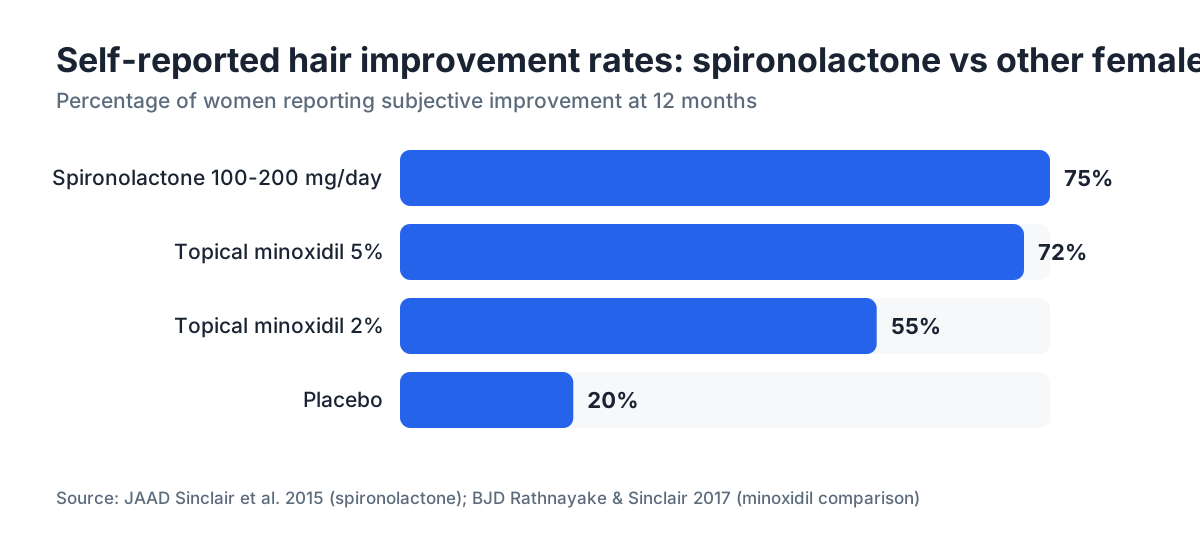
The evidence is decent, not airtight. The biggest real-world dataset, a retrospective study of 1,111 women published in the Journal of the American Academy of Dermatology in 2015, found that 74.6 percent of women reported their hair loss improved on spironolactone [5]. That's patient-reported, not a blinded measurement, so it runs optimistic. A three-in-four response rate in ordinary patients still means something.
A smaller, tighter study in the British Journal of Dermatology in 2017 put spironolactone up against minoxidil 5 percent in women with androgenetic alopecia. Both groups improved at 12 months, and the gap between them wasn't statistically significant. Read plainly: spironolactone works about as well as topical minoxidil in these women [6].
Randomized trial data stay thin next to what finasteride and minoxidil have. Part of the reason is money. Spironolactone is generic and cheap, so no drug company has a patent worth defending with a big trial. What exists is mostly retrospective or open-label. In evidence terms, spironolactone sits a rung below finasteride and minoxidil, even though doctors have used it for decades and know it well.
Timing matters. Most women who respond see nothing obvious before 6 to 12 months of steady use. Stop the drug and the loss comes back within months, because it never touched the underlying genetics.
How does spironolactone compare to finasteride for hair loss?
| Feature | Spironolactone | Finasteride |
|---|---|---|
| Mechanism | Blocks androgen receptors | Inhibits 5-alpha reductase (cuts DHT production) |
| FDA approval for hair loss | No | Yes (men, 1 mg Propecia) |
| Used in women | Yes, common | Off-label, limited data |
| Used in men | Rarely (feminizing side effects) | Yes, first-line |
| Typical dose for hair | 100-200 mg/day | 1 mg/day |
| Effect on serum DHT | Minimal to modest | Reduces by ~65-70% [7] |
| Pregnancy category | Contraindicated (teratogenic) | Contraindicated (teratogenic in males) |
| Monthly cost (generic) | ~$15-40 | ~$10-30 |
For a man with a receding hairline or thinning crown from androgenetic alopecia, finasteride is the clear first oral choice. Two randomized trials with thousands of men, FDA approval, a side-effect profile people have studied to death. Spironolactone just isn't the right tool for most men.
Women get a real conversation instead. Finasteride has been tested in post-menopausal women with mixed results. A 2012 randomized trial in post-menopausal women found no significant benefit at 1 mg/day versus placebo [8]. Higher doses (2.5 or 5 mg) look more promising in some series, but the data are thinner. Many dermatologists default to spironolactone in pre-menopausal women because its safety in women is well mapped from decades of other uses, and it tends to match or beat low-dose finasteride in that group.
Spironolactone plus minoxidil is a common pairing and makes sense on paper: one blocks the androgen signal, the other pushes follicle activity through a separate pathway. Our article on finasteride and minoxidil covers combination logic in more depth.
What are the side effects of spironolactone women should know about?
The usual complaints at hair-loss doses are menstrual irregularities, breast tenderness, and peeing more often. Spironolactone is a potassium-sparing diuretic, so it can push blood potassium up (hyperkalemia), which in bad cases messes with heart rhythm. In healthy women under 45 with no kidney disease or diabetes, real hyperkalemia is uncommon, and many clinicians skip routine potassium checks in that group. Any kidney impairment changes that. Those women need monitoring.
Menstrual changes hit a real minority of women. Irregular periods or spotting show up, especially in the first few months. That's one reason it often gets paired with an oral contraceptive, which also blocks ovarian androgen production for an extra hair benefit and handles contraception at the same time.
Contraception matters for a bigger reason: spironolactone is teratogenic. Animal studies show it feminizes male fetuses. It should not be taken during pregnancy, and the FDA label says so directly [3]. Any woman who could become pregnant needs reliable contraception before starting it for hair.
Less common: dizziness (usually on standing, from the blood-pressure drop), fatigue, headache, and GI upset. Serious events at dermatologic doses are rare. The drug has been used at higher doses for conditions like primary hyperaldosteronism for decades, so its long-term behavior is well understood.
If any of this applies to you, a free AI-based hair analysis at MyHairline can help sort out whether androgenetic alopecia is even the problem before you take that question to your doctor.
Can spironolactone work for women with PCOS-related hair loss?
Yes, and it's one of the better-supported uses. Polycystic ovary syndrome runs on elevated androgens, which thin the scalp in an androgenetic pattern and often drive unwanted hair on the face and body (hirsutism). Spironolactone hits both at once, which is why endocrinologists and gynecologists prescribe it as readily as dermatologists do.
In PCOS, spironolactone lowers hirsutism scores in most patients at 100 to 200 mg/day, with body-hair effects usually visible within 3 to 6 months. Scalp hair takes longer, 6 to 12 months, and the payoff can be smaller. A Cochrane review of antiandrogens for hirsutism in PCOS found spironolactone among the most effective drug options [9].
Androgen excess in PCOS sometimes also triggers a telogen effluvium shed layered on top of the androgenetic thinning, so a shedding phase and a miniaturization process can run together. Spironolactone helps the androgenetic part but doesn't target the shedding trigger. Fixing insulin resistance and the other metabolic pieces of PCOS often matters just as much.
What dose of spironolactone is used for hair loss?
The range most cited in dermatology is 100 to 200 mg per day, taken orally [4]. Most prescribers start low, often 25 or 50 mg, and titrate up over a few weeks based on how you tolerate it and what your blood pressure does. Splitting the dose morning and evening softens the peak diuretic effect and cuts the dizziness.
Some clinicians get results at just 50 mg/day in certain patients. Going above 200 mg/day doesn't seem to improve hair much but does pile on side effects. The AAD's 100 to 200 mg/day range is where the literature shows the steadiest signal.
For most women, this is indefinite. Spironolactone treats the symptom (androgen signaling at the follicle), not the cause (genetic sensitivity). Stop it and the loss usually creeps back within 6 to 12 months. It's a maintenance drug, not a cure.
Can men use spironolactone for hair loss at all?
Almost never in practice. The reason is simple. Testosterone and DHT run male sexual function, libido, muscle mass, and secondary sex characteristics. Block androgen receptors across a man's whole body and you get gynecomastia, impotence, dropped libido, and other feminizing effects that most men won't accept.
Finasteride and dutasteride, by contrast, cut DHT specifically (by 65-70 percent and 90-95 percent respectively [7]) while leaving testosterone mostly alone. Their side effects are real but much more contained. Men with androgenetic alopecia have far better options.
There's early interest in topical spironolactone for men, the idea being to deliver receptor blockade at the scalp without much reaching the bloodstream. A few small studies have looked at it. The evidence isn't there yet, and no topical spironolactone product is commercially approved for hair loss anywhere as of mid-2025. If you're a man with a receding hairline, finasteride, minoxidil, or the two together is still the standard.
How long does it take spironolactone to work for hair?
Slow. That's the most consistent thing women who've used it say, and it's worth hearing before you start.
Most dermatologists tell patients not to judge the drug before 6 months. Some women don't see a clear change until 12 to 18 months of steady use. The biology is why: follicles cycle slowly. Even if the receptor blockade kicks in the same day at the molecular level, it takes several hair cycles for shrunken follicles to grow back out and for your scalp to actually look different.
Around months 2 to 4, some women notice a shedding phase, which can rattle you. It usually isn't the drug failing. It may be a cycle-synchronization effect like the one people see with minoxidil. Pushing through it is generally the right call unless side effects are genuinely intolerable.
Photos at the same angle and lighting every 3 months beat mirror impressions by a mile. Dermatologists use standardized photos for exactly this reason, because day-to-day memory of your own scalp is useless.
Should you combine spironolactone with minoxidil or other treatments?
Combining them is common and makes mechanistic sense. Spironolactone and minoxidil run on separate pathways, one blocking the androgen signal, the other driving follicle activity and blood flow, so they don't overlap. The 2017 head-to-head trial didn't test the combination, so there's no clean trial answer, but practice has run well ahead of the data here [6].
Many women with androgenetic alopecia land on spironolactone plus topical or oral minoxidil. A low-androgen oral contraceptive adds a third lever in pre-menopausal women. Some clinicians add hair loss supplements or correct iron if it's low, though the evidence for most supplements as standalone treatments is weak.
If drugs don't get you to acceptable density, a hair transplant is an option for women too. Transplants work best alongside ongoing medical therapy, since the androgenetic process keeps chipping away at the follicles you didn't move.
One honest point: nobody has a proven algorithm for which women respond to which combination. Dermatologists are making informed judgment calls, not following a validated decision tree. If you're not responding at 12 months on 100 to 200 mg, a second opinion or a switch to a different agent is fair.
For an objective read on your current density and loss pattern before you commit to a regimen, the free AI hair analysis at MyHairline gives you a baseline to bring into that dermatology visit.
Are there alternatives to spironolactone for women with androgenetic alopecia?
Several, at different evidence levels.
Minoxidil (topical 2 or 5 percent, or oral at 0.25 to 2.5 mg/day) is FDA-approved for female pattern hair loss and is often tried before any oral androgen blocker. The side effects of minoxidil are worth knowing, especially unwanted facial hair growth with the 5 percent formula in some women.
Finasteride at higher doses (2.5 to 5 mg/day) is used off-label in post-menopausal women. Prescribe it to pre-menopausal women and it demands strict contraception, same teratogenicity issue as spironolactone.
Flutamide and bicalutamide are other androgen receptor blockers used in some countries. Liver toxicity with flutamide and thin long-term data with bicalutamide keep them as second or third choices in most practices.
Topical clascoterone (Winlevi) is an androgen receptor inhibitor approved for acne that some researchers are studying for hair loss. No FDA approval for that use yet.
For women whose loss isn't androgen-driven at all, fixing the real cause (thyroid, iron, stress) matters far more than any drug above. Confirm androgenetic alopecia before you commit to a long-term medication.
Sources
- Endocrine Reviews, Rosenfield & Ehrmann 2016, Pathogenesis of polycystic ovary syndrome
- MedlinePlus (National Library of Medicine), Androgenetic alopecia
- FDA, Aldactone (spironolactone) prescribing information
- American Academy of Dermatology, Hair loss in women: Diagnosis and management
- Journal of the American Academy of Dermatology, Sinclair et al. 2015, Spironolactone for female pattern hair loss
- British Journal of Dermatology, Rathnayake & Sinclair 2017, Randomized comparison of spironolactone vs minoxidil 5% in women
- FDA, Propecia (finasteride 1 mg) prescribing information
- Journal of the American Academy of Dermatology, Price et al. 2000, Finasteride in postmenopausal women
- Cochrane Database of Systematic Reviews, Swiglo et al., Antiandrogens for hirsutism in PCOS
- American Academy of Dermatology, Clinical guidelines for members
- National Library of Medicine, MedlinePlus, Spironolactone drug information