
TL;DR: Kirkland Signature minoxidil is a generic 5% topical minoxidil made by Perrigo and sold at Costco. It has the same active ingredient at the same strength as Rogaine, costs roughly $25 for a 6-month supply versus $80 or more for Rogaine, and is FDA-approved for pattern hair loss in men. The research says it works. The trade-offs: propylene glycol irritation, a greasy feel, and no foam.
What is Kirkland Signature minoxidil and who makes it?
Kirkland Signature is Costco's house brand. The minoxidil in that line, a 5% topical solution for men, is made by Perrigo, the same Irish-American company that produces generic minoxidil for dozens of store brands across the US [1]. Costco is just the retailer. The actual production happens at an FDA-registered pharmaceutical plant under the same quality rules that apply to any OTC drug.
The product is a liquid solution, not a foam. Each bottle holds 60 mL. The standard pack is six bottles, a full six-month supply, sold as one set. That bulk presentation is a big part of why the per-dose cost looks so low next to single bottles at a pharmacy.
People call it 'Kirkland minoxidil' or 'Costco minoxidil.' Same thing. There's no separate women's version under the Kirkland name, though women sometimes use the 5% men's solution off-label with a doctor's sign-off.
Is Kirkland Signature minoxidil FDA-approved?
Yes. Minoxidil 5% topical solution has had FDA approval as an over-the-counter treatment for androgenetic alopecia (pattern hair loss) in men since 1996 [10]. Kirkland's version sells under that same approval framework for the 5% strength. It carries a Drug Facts label and has to meet FDA Current Good Manufacturing Practice rules, the same standards branded products meet [1].
The FDA labeling for topical minoxidil 5% describes the product as intended to "regrow hair" in men with hereditary hair loss at the top of the scalp [2]. That's the approved claim. It doesn't cover frontal hairline regrowth, and it isn't approved for hair loss caused by anything other than androgenetic alopecia.
See a seller offering Kirkland minoxidil on a third-party marketplace at an oddly low price? Be careful. Counterfeiting of popular OTC drugs happens. Buying straight from Costco's own website or a physical warehouse is the safest route.
How does Kirkland minoxidil compare to Rogaine?
The active ingredient is identical: minoxidil 5%. Same concentration. Same mechanism. The real differences come down to inactive ingredients, formulation type, and price.
Rogaine sells both a 5% solution and a 5% foam. The foam uses alcohol and butane as carriers instead of propylene glycol. Plenty of users find the foam less greasy, quicker to dry, and easier on the scalp. Kirkland only comes as a solution, and that solution uses propylene glycol as its main vehicle. Most people tolerate propylene glycol fine, but a meaningful minority, roughly 5 to 7% in clinical use, get scalp irritation or contact dermatitis from it [3].
The price gap is large. Six bottles of Kirkland solution usually run $25 to $30 at Costco, which is about $4 to $5 per month. Rogaine 5% solution, bought as a three-pack at a major pharmacy, typically costs $40 to $55 for three months. The foam costs more still. Over a year, choosing Kirkland saves you $50 to $80 or more depending on where you shop.
| Product | Formulation | Active Ingredient | Typical 6-month cost |
|---|---|---|---|
| Kirkland Signature 5% | Solution (propylene glycol) | Minoxidil 5% | ~$25-$30 |
| Rogaine Men's 5% Solution | Solution (propylene glycol) | Minoxidil 5% | ~$80-$100 |
| Rogaine Men's 5% Foam | Foam (alcohol-based) | Minoxidil 5% | ~$90-$110 |
| Generic store-brand 5% | Solution (varies) | Minoxidil 5% | ~$25-$40 |
For most users, the Kirkland solution and Rogaine solution produce the same results, because the part that does the work is the same. If you tolerate propylene glycol and don't mind the liquid feel, there's no pharmacological reason to pay for the brand name.
Does the research show minoxidil 5% actually works?
Yes, with honest expectations. Minoxidil is one of only two treatments with solid, replicated, randomized controlled trial evidence for androgenetic alopecia. The other is finasteride, covered in the finasteride guide.
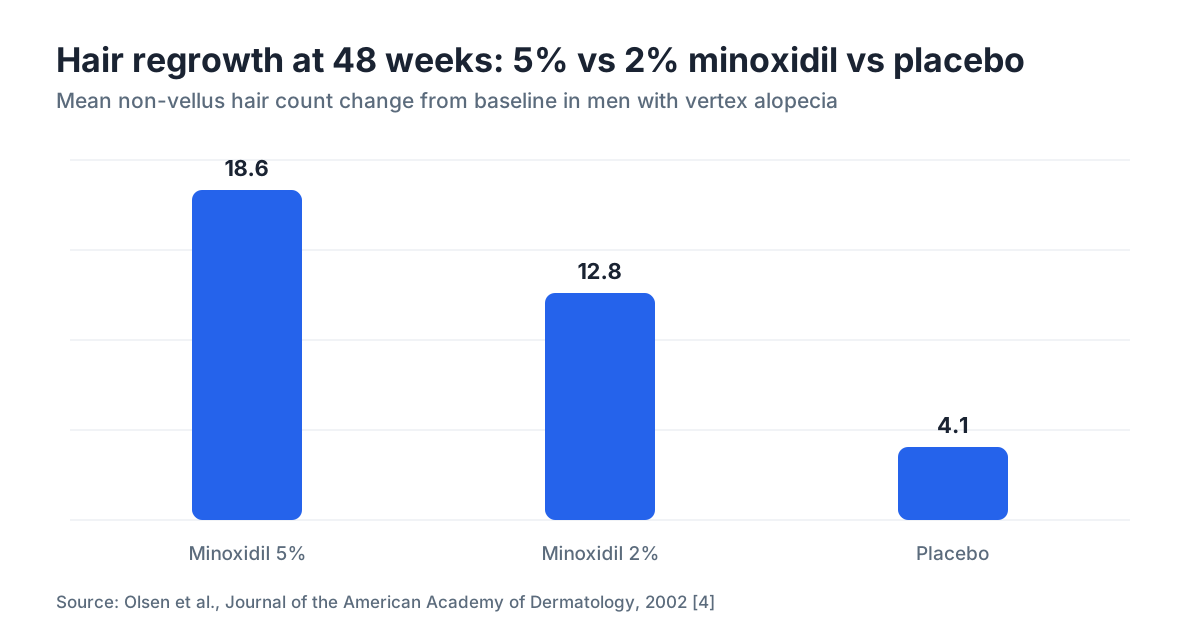
The main trial people cite is Olsen et al., published in the Journal of the American Academy of Dermatology in 2002, which enrolled 393 men with vertex hair loss and ran for 48 weeks. The 5% solution produced 45% more regrowth than the 2% solution, and both beat placebo, with hair counts and patient satisfaction scores both significantly higher at 16 and 48 weeks [4]. The authors concluded the 5% concentration gave superior efficacy over 2%.
The American Academy of Dermatology lists topical minoxidil as a first-line treatment for androgenetic alopecia and rates the evidence as strong [5]. AAD guidance notes results usually show up between three and six months of consistent twice-daily use.
A few caveats worth burning into memory. Minoxidil works best at the vertex (the crown). It does less for temporal recession or a receding hairline. It maintains and sometimes regrows hair, but it doesn't stop the androgen-driven follicle miniaturization that causes pattern loss in the first place. That's why pairing it with a DHT blocker like finasteride is such a common recommendation. And once you stop, most of the hair you gained sheds within three to six months.
How do you use Kirkland minoxidil correctly?
The labeled dose is 1 mL applied to a dry scalp twice a day, morning and evening [2]. The Kirkland kit comes with a dropper for measuring and a spray attachment if you prefer that. Both deliver the same amount. The dropper is more precise.
Technique matters more than most people think. Part your hair to expose the scalp at the thinning area. Spread the 1 mL across the whole area rather than dumping it on one spot. Work it in with a fingertip. Let it dry fully before bed or before any other hair product, which usually takes 20 to 30 minutes. Washing your hair within four hours of applying cuts absorption, so time it around your shower.
Don't up the dose thinking more helps. Twice daily at 1 mL is the FDA-approved amount. Going higher raises systemic absorption and the odds of cardiovascular side effects, including a drop in blood pressure.
Struggling with the twice-daily schedule? Once a day beats skipping entirely, though the efficacy data supports twice daily. There's emerging evidence for once-daily higher-concentration formulas, but that's a different product from what's in the Kirkland bottle. For more on minoxidil for men, including building a routine you'll actually keep, that guide covers the practical side.
What side effects does Kirkland minoxidil cause?
The most talked-about one is early shedding. In the first two to eight weeks, many people notice more hair falling out than before. This is normal and it has a name: minoxidil-induced telogen effluvium [6]. Minoxidil pushes resting (telogen) hairs out of the follicle to clear the way for new anagen growth. It looks alarming. It isn't a sign of failure. It usually settles by week eight and reverses as new growth comes in. If the shedding cycle is new to you, the telogen effluvium article walks through it.
Propylene glycol irritation is specific to the solution. Symptoms are itching, redness, scaling, or a burning feel on the scalp. If that happens, you have two moves: switch to a propylene glycol-free formula (some compounding pharmacies make these, and foam products don't contain it), or cut frequency for a while and see if it calms down.
Systemic side effects are rare with proper topical use but real. Minoxidil started life as an oral blood pressure drug. Topical absorption is usually under 2% of the applied dose on a healthy scalp, but if the skin barrier is broken, or you use more than directed, you can absorb enough to cause unwanted facial or body hair (hypertrichosis), fluid retention, low blood pressure, or a faster heart rate [2]. Uncommon at the labeled dose, but worth knowing.
For the full breakdown, the minoxidil side effects article covers each one with frequency data from the trials.
Anyone with cardiovascular disease should talk to a doctor before starting minoxidil, even the topical version. The FDA label spells this out [2].
Who should not use Kirkland minoxidil?
The FDA label lists clear cautions [2]. Skip it if you have no family history of hair loss, because if your loss comes from something other than androgenetic alopecia, minoxidil probably won't help and you'd be masking a problem that needs a diagnosis. Hair loss from thyroid disease, iron deficiency, autoimmune conditions, or medication side effects needs a different approach. A dermatologist can tell the difference.
Pregnant or breastfeeding women should not use this product. The 5% men's solution isn't approved for women under any circumstances. The FDA-approved women's version of topical minoxidil is the 2% concentration [10].
People under 18 should not use it. Anyone with a known allergy to minoxidil or propylene glycol should avoid this specific formulation.
Have kidney disease, liver disease, or a heart condition? Check with your physician first. Minoxidil is processed by sulfotransferase enzymes, and its clearance can shift with kidney function.
How long before Kirkland minoxidil shows results?
Most trials report meaningful results at 16 weeks (four months) with the 5% solution, and the strongest results land at 48 weeks (about a year) [4]. In the Olsen trial, hair counts and patient-rated improvement were both statistically significant by the 16-week mark.
Personal timelines vary. A rough framework based on the trial data:
- Weeks 1-8: Possible early shedding, no visible improvement, often apparent worsening.
- Weeks 8-16: Shedding resolves. Some users see fine, colorless vellus hairs at the thinning area.
- Weeks 16-32: Vellus hairs may thicken into terminal hairs. Hair count starts climbing.
- Weeks 32-52: Maximal response for most trial participants. This is the real window for judging whether it's working for you.
Used it correctly for 12 months and seen nothing? That's a genuine non-response. Roughly 30 to 40% of men in trials are classified as non-responders or minimal responders [4]. For them, the next conversation is usually about adding finasteride, trying oral minoxidil, or looking at a hair transplant.
Can you use Kirkland minoxidil with finasteride?
Yes, and many dermatologists recommend the combination for men with androgenetic alopecia. The two drugs work through different mechanisms. Minoxidil acts locally on the follicle to extend the growth phase and increase follicle size. Finasteride lowers DHT systemically, which slows the hormonal process that shrinks follicles in genetically susceptible men.
A randomized trial published in Dermatology and Therapy in 2015 found that 5% topical minoxidil plus 1 mg oral finasteride produced significantly greater hair count gains than either drug alone after 12 months [7]. The combination isn't mandatory, and both drugs carry their own side effect profiles. For men who want the strongest evidence-based response short of a transplant, it's a reasonable approach.
Want the detailed comparison and how to run them together? The finasteride and minoxidil article covers the combination data specifically.
Where can you buy Kirkland Signature minoxidil and what does it cost?
The main source is Costco, in-warehouse or through Costco's website. A six-bottle set (six-month supply) usually runs $25 to $30. Membership is required for in-store purchase, though the website sometimes allows non-member orders at a small markup.
You'll also find it on Amazon, eBay, and various online pharmacies, usually through third-party sellers. Prices there run similar or a bit higher than Costco's direct price once you count shipping. The counterfeit risk on third-party marketplaces is real enough that I'd default to Costco's own listings when buying online.
Some CVS, Walgreens, and Walmart locations stock Kirkland minoxidil, though availability swings by region. Generic alternatives like Equate (Walmart) or CVS Health have the same active ingredient and cost about the same if Costco isn't handy.
One thing to sit with: minoxidil is a lifelong commitment if you want to keep the results. At $4 to $5 per month from Costco, the economics stay painless. If you're weighing this against other options, the what causes hair loss article puts the different treatment approaches in context.
Is the Kirkland solution as good as newer minoxidil options?
The Kirkland solution is the proven, boring, reliable pick. Here are the newer options worth knowing.
Low-dose oral minoxidil (typically 0.625 mg to 2.5 mg daily) has drawn a lot of attention in the last five years. A 2021 systematic review in the Journal of the American Academy of Dermatology found low-dose oral minoxidil effective for androgenetic alopecia with a favorable tolerability profile below 5 mg per day [8]. The upside is no scalp application and often better adherence. The trade-off is that it needs a prescription in the US and carries different systemic exposure than topical use. The oral minoxidil article covers it separately.
Higher-concentration topical formulas (10% or 15%) from compounding pharmacies exist, but they're not FDA-approved and have thin comparative trial data.
Minoxidil mixed with other topicals (tretinoin, caffeine, saw palmetto) is common in commercial products, but the evidence for those additives is generally weaker than the evidence for minoxidil alone.
For most people starting out, Kirkland 5% solution is a fine first choice. It's cheap, it's studied, it's FDA-compliant. Moving to a foam or switching to oral minoxidil makes sense if you can't tolerate the solution, not as a default starting point.
Want a data-driven read on your own pattern before spending a dime? MyHairline's free AI hair scan (/scan) analyzes your photos and estimates your Norwood stage, which helps you understand what you're dealing with first.
What happens if you stop using Kirkland minoxidil?
Hair gained on minoxidil is maintenance-dependent. Stop, and the follicles the drug was supporting slide back onto their natural miniaturization path. Studies tracking outcomes after people quit find the gains made during treatment are largely gone within three to six months of stopping [2].
This is why the FDA label says it has to be used continuously to keep results. It isn't a cure. It doesn't touch your genetics or the underlying DHT sensitivity of your follicles.
Quitting after a short trial because of early shedding is a common mistake. The shedding in weeks one through eight looks like the product is making things worse, so a lot of people bail before they ever reach the 16-week mark where real results appear. If you can ride out the early phase, staying through it is almost always the right call.
Worried about the cost of staying on it long-term? The Kirkland supply at roughly $50 to $60 per year is about as cheap as any evidence-based hair loss treatment gets.
Could something else be causing your hair loss besides pattern baldness?
Minoxidil only treats androgenetic alopecia. If your hair loss has a different cause, you could use it for a year and see nothing, because you'd be treating the wrong thing.
Common non-androgenetic causes include iron deficiency anemia, thyroid dysfunction (both under and overactive), crash dieting or rapid weight loss, physical trauma or surgery, autoimmune conditions like alopecia areata, and certain medications such as anticoagulants, chemotherapy, and some antidepressants [9]. Stress-driven telogen effluvium is another frequent one, especially in women.
A basic workup with a dermatologist or primary care doctor, usually a thyroid panel, complete blood count, ferritin, and sometimes a scalp biopsy, can rule these out before you sink months into a treatment. If your hair loss came on suddenly or spread diffusely over months rather than slowly receding at the temples and crown, that picture should prompt evaluation before you start any topical.
The what causes hair loss article goes deeper on the differential. For people whose pattern loss is well-established and want the full menu of evidence-based options, hair loss supplements covers what the supplement evidence actually shows.
A note on MyHairline: the free AI scan (/scan) is a fast way to see whether your loss pattern looks consistent with androgenetic alopecia before you spend time reading about treatments that may not apply to you.
Sources
- FDA, Perrigo Company OTC Drug Registration Records
- FDA, Minoxidil 5% Topical Solution OTC Drug Facts Label (approved labeling)
- DailyMed, NIH National Library of Medicine, Minoxidil 5% Solution Label
- Olsen EA et al., Journal of the American Academy of Dermatology, 2002: 5% vs 2% topical minoxidil randomized controlled trial in 393 men
- American Academy of Dermatology, Hair Loss Diagnosis and Treatment Guidelines
- Malkud S, Journal of Clinical and Diagnostic Research, 2015: Telogen effluvium review
- Hu R et al., Dermatology and Therapy, 2015: Combination finasteride plus 5% minoxidil vs monotherapy RCT, 12 months
- Randolph M, Tosti A, Journal of the American Academy of Dermatology, 2021: Oral minoxidil systematic review
- American Academy of Dermatology, Hair Loss: Causes
- FDA, Over-the-Counter Drug Monograph System, Topical Minoxidil Monograph