TL;DR: Minoxidil stimulates hair follicles by prolonging the growth phase and increasing blood flow to the scalp. Studies show 40 to 60% of users see meaningful regrowth after 6 to 12 months of consistent use. It works better on early-stage thinning than on areas where follicles are already gone. You need to keep using it or any gains reverse within months.
What is minoxidil and how does it work on a thinning hairline?
Minoxidil started life as a prescription blood pressure pill. Researchers noticed an unexpected side effect: patients grew more hair. That accident led to the topical version the FDA approved in 1988 for hair loss [1]. It's now the most widely used over-the-counter hair loss treatment on the market.
The mechanism isn't fully understood, and dermatologists are honest about that. What we know is that minoxidil is a potassium channel opener. It widens blood vessels, which is thought to increase oxygen and nutrient delivery to hair follicles. The bigger effect is on the hair cycle itself: minoxidil extends the anagen (growth) phase and shortens the telogen (resting) phase, so more hairs are actively growing at any given time [2].
At the hairline this matters because androgenetic alopecia (pattern hair loss) miniaturizes follicles slowly, one cycle at a time. Minoxidil can partially reverse early miniaturization and thicken existing terminal hairs. It cannot bring back follicles that have scarred over or gone dormant for years. That's the ceiling everyone hits.
For a closer look at what's driving the thinning in the first place, read our explainer on what causes hair loss.
Is minoxidil FDA-approved for the hairline specifically?
The FDA approved 2% topical minoxidil for women and 5% topical minoxidil for men to treat androgenetic alopecia, the pattern thinning that includes a receding hairline [1]. The label says the product is for use on the "top of the scalp" (vertex), and that's where most trials measured their outcomes.
That wording created some confusion. The vertex is easier to photograph and standardize in a trial, but dermatologists routinely recommend minoxidil for frontal and temporal thinning because the biology is the same: follicles miniaturizing under DHT influence. The American Academy of Dermatology lists topical minoxidil as a first-line recommendation for androgenetic alopecia regardless of the specific zone affected [3].
So the FDA label points to the top of the scalp. In practice, off-label use at the hairline is standard, guideline-supported care. Nobody should tell you it's experimental or unsafe because the box says vertex.
If your hairline is actively receding rather than thinning diffusely, take a look at our guide on receding hairline to understand how the two issues often overlap.
How well does minoxidil actually work? What do the studies show?
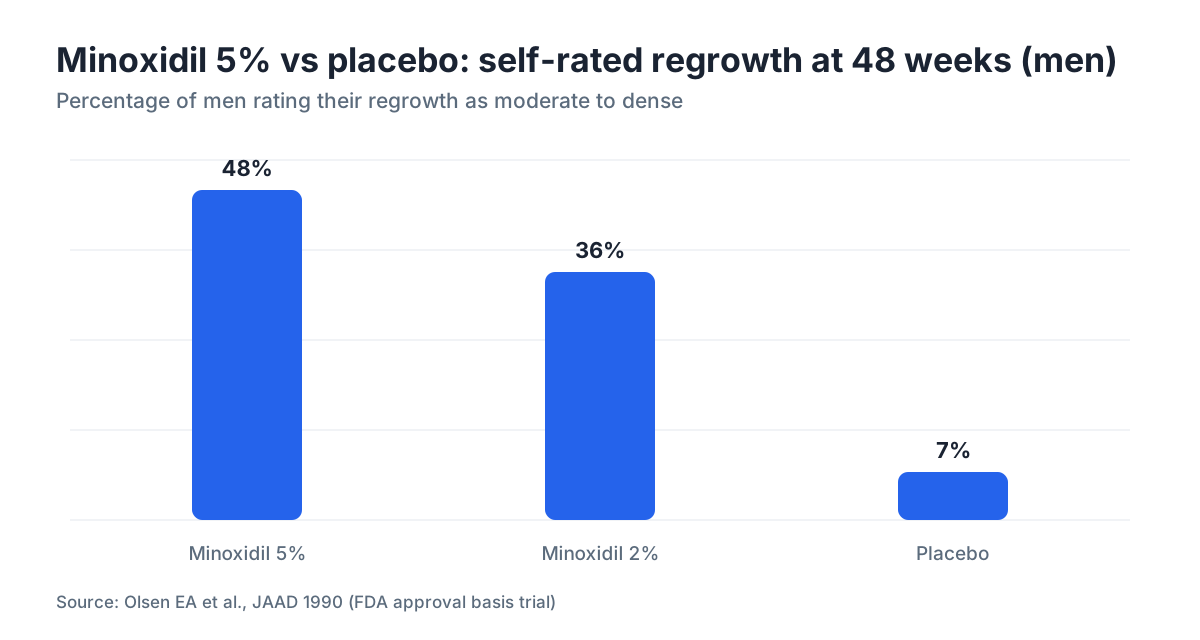
The 1990 controlled trial published in the Journal of the American Academy of Dermatology, the study that formed the basis of FDA approval, found that 5% minoxidil produced significantly more hair regrowth than placebo over 48 weeks in men with androgenetic alopecia [4]. Roughly 48% of men using 5% minoxidil rated their regrowth as moderate to dense, compared to about 7% on placebo.
A later comparison trial showed 5% foam outperformed 2% solution in half the daily application time [4]. For women, the 2% solution trial showed about 19 hairs per square centimeter regrown versus 7 in the placebo group over 32 weeks [2].
Here's what those numbers mean for you. About 40 to 60% of consistent users see noticeable improvement. A smaller group sees dramatic thickening. Roughly a third see minimal response. Nobody can predict which group you'll land in ahead of time, and that's not a dodge, it's just where the evidence sits.
Minoxidil does not stop DHT from attacking follicles. It compensates for some of the damage but leaves the root cause running. That's why pairing it with a DHT blocker like finasteride tends to beat either drug alone, which we cover in detail in our finasteride and minoxidil article.
Realistic expectation: you won't look like you did at 18. You might look like you did two or three years ago, on a good day, after a year of steady use.
How long does it take to see results at the hairline?
Patience is the hardest part of minoxidil. Most people see no visible improvement for the first 2 to 4 months, and many see more shedding in the first 4 to 8 weeks [2]. That shedding is real and common. Minoxidil pushes resting (telogen) hairs out faster so new growth-phase hairs can move in. It feels like the product is making things worse. It usually isn't.
The typical timeline looks like this:
Months 1 to 2: Possible increased shedding. No visible regrowth yet. Months 3 to 4: Shedding slows. Some people notice fine, light "vellus" hairs appearing. Months 5 to 6: Vellus hairs may thicken into terminal hairs. First noticeable change for most responders. Months 9 to 12: Peak regrowth response in most clinical trials.
If you've seen no change at 12 months of consistent twice-daily application, the honest answer is you're probably a non-responder to topical minoxidil at your current dose. That's not a failure. It's data. Moving to oral minoxidil or adding finasteride are reasonable next steps to discuss with a dermatologist.
One thing that trips people up: the early shedding is not the same as telogen effluvium, even though it can look similar. Telogen effluvium is a separate condition driven by systemic stress, illness, or nutritional deficiency.
What's the right dose and how do you apply it to the hairline?
For men, 5% is the standard starting point, whether solution or foam. For women, the FDA-approved dose is 2%, though some dermatologists now recommend 5% foam off-label for women who don't respond to 2% [3]. Standard dosing for topical minoxidil is 1 mL of solution (or half a capful of foam) applied twice daily.
Application technique matters more than most people realize. A few practical points:
Part your hair to expose the thinning area directly. For hairline thinning, pull hair back and apply to the scalp, not the hair shaft.
For the solution, the dropper applicator lets you target specific zones. For foam, dispense onto your fingertips first (it melts fast in warm hands), then massage it into the affected area.
Let it dry fully before sleeping or putting on a hat, usually 2 to 4 hours for solution, less for foam. Pillowcase transfer won't give your partner a beard, but it does mean you're wasting product.
Once-daily dosing: a 2020 study in JAAD found once-daily 5% minoxidil foam was non-inferior to twice-daily dosing for women, which suggests the morning application does most of the work [5]. The data for men on once-daily dosing is thinner. Twice daily stays the standard recommendation.
Don't apply to a wet scalp. Water dilutes the solution and makes it harder to reach the skin. Apply to a dry scalp, wait the recommended dry time, then style normally.
Is topical or oral minoxidil better for a thinning hairline?
Oral minoxidil (low-dose, 0.625 to 5 mg daily) has become more common as an off-label treatment since studies from 2021 and 2022 started showing comparable or better results than topical application for some patients [6]. It's not FDA-approved for hair loss, so this is entirely off-label, and it needs a prescription.
The appeal is convenience: one small pill instead of twice-daily scalp applications. The concern is systemic side effects. Even at low doses, oral minoxidil can cause fluid retention, a faster heart rate, and hypertrichosis (unwanted hair growth on the face and body) [6]. The fluid retention risk means it's usually not the first choice for anyone with cardiac history.
For a thinning hairline specifically, some early evidence suggests oral minoxidil reaches the frontal scalp through the bloodstream at least as well as topical, which depends on penetration through skin. But we don't have a head-to-head trial on frontal hairline outcomes.
The practical answer: start topical. If you don't respond after 12 months, or you can't keep up with twice-daily application, talk to a dermatologist about low-dose oral minoxidil. Read the full comparison in our oral minoxidil article before deciding.
For men specifically, also review minoxidil for men for dose guidance and the pattern hair loss context.
What are the side effects of minoxidil at the hairline?
Topical minoxidil is safe for most people, but side effects do happen. The most common is skin irritation: itching, redness, and flaking at the application site. That's often the propylene glycol, a carrier ingredient in the solution. Foam versions skip propylene glycol and tend to cause less scalp irritation [1].
About 3 to 5% of topical users grow some facial hair, usually on the forehead and temples, from product migration during sleep or application [2]. Washing your hands thoroughly after applying and switching to foam reduces the transfer.
Systemic cardiovascular effects from topical minoxidil are rare because scalp absorption is limited, roughly 1 to 2% of the applied dose reaching the bloodstream [1]. Still, people with cardiac conditions should check with their doctor before starting.
And then there's that early shedding again. Worth repeating because it stops a lot of people who didn't need to quit: increased hair fall in months 1 to 2 is a known, documented effect, not a sign the product is failing you.
For a full breakdown of the risks and how to manage them, see our dedicated minoxidil side effects guide.
Can minoxidil regrow a completely bald hairline?
This is the question people most want a yes to. The honest answer is usually no.
Minoxidil works on miniaturized follicles that are still alive and capable of producing hair. Once a follicle has been fully destroyed, which happens in late-stage androgenetic alopecia or scarring alopecia, neither topical nor oral minoxidil can bring it back. No topical treatment can.
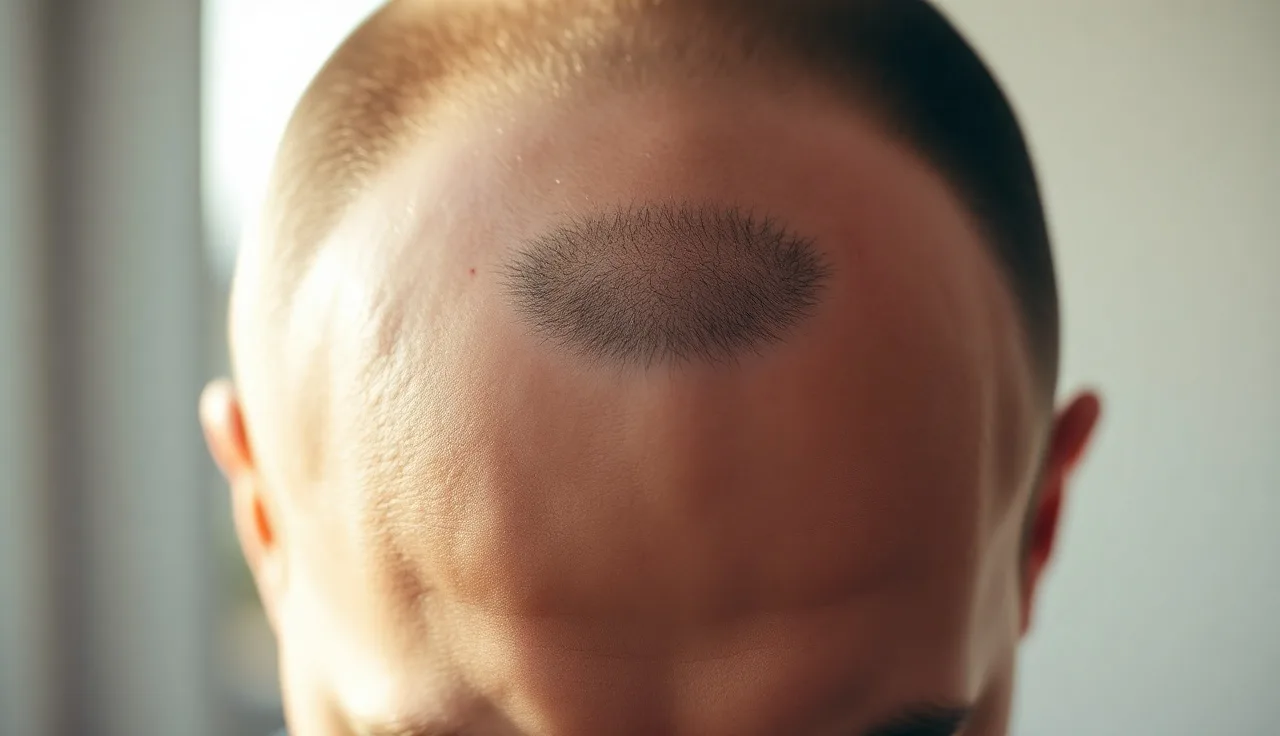
The threshold is roughly this: if you can see fine, light, thin hairs (vellus hairs) in the area, there are living follicles to work with, and minoxidil may thicken them. If the scalp is completely smooth and glossy with no visible hair at all, the follicles are likely gone.
For fully bald spots at the hairline, a hair transplant is the only intervention with evidence for actual restoration. Transplant surgeons generally recommend continuing minoxidil after surgery to protect non-transplanted hairs and help graft survival.
If you're unsure where you land on the Norwood scale and whether your hairline still has follicles worth treating, a proper assessment helps. Our free AI scan at MyHairline can give you a starting map of your thinning pattern before you talk to a dermatologist.
What happens if you stop using minoxidil?
This is the part the box should say louder. Minoxidil does not cure hair loss. It manages it.
When you stop, the follicles drift back to their pre-treatment behavior within 3 to 6 months. Any hair you regrew or held onto with minoxidil sheds. You end up roughly where you would have been if you never started, and sometimes it feels worse because you've now lived through the loss twice.
This isn't unique to minoxidil. Finasteride has the same rebound. It's the nature of treating a chronic condition with a drug that requires continuous use.
Some people decide the trade-off isn't worth it, and that's a fair call. Others find that holding what they have for decades justifies the twice-daily habit. Nobody should start expecting a fixed course of treatment.
If you want to quit, tapering doesn't appear to blunt the rebound based on current evidence, but a transition plan with a dermatologist is still smart, especially if you're thinking about adding finasteride before you stop.
Should you combine minoxidil with finasteride for hairline thinning?
For most men with androgenetic alopecia driving hairline recession, minoxidil plus finasteride beats either drug alone. A randomized controlled trial published in Dermatologic Therapy found that combination therapy produced significantly greater hair density and thickness than monotherapy with either agent [7].
The logic is simple: minoxidil stimulates growth, finasteride slows the DHT-driven destruction. They hit different mechanisms, so they add up instead of overlapping.
For women, finasteride is generally not recommended for premenopausal women who could become pregnant because of fetal risk, though postmenopausal women sometimes use it off-label under physician supervision [3]. Women have fewer combination options, which is one reason minoxidil monotherapy stays the mainstay for female pattern hair loss.
Read the full evidence breakdown in our finasteride article and the combination-specific data in finasteride and minoxidil.
Personal take: if you're a man under 50 with a receding hairline and no contraindications to finasteride, the combination gives you the best shot at slowing progression and keeping coverage. Running minoxidil alone at the hairline while DHT is still shrinking follicles is like jogging on a treadmill set slightly too fast.
How much does minoxidil cost and where do you get it?
Generic topical minoxidil is cheap. A one-month supply of 5% solution usually runs $10 to $25 at major pharmacies and online retailers. Brand-name Rogaine costs more (usually $30 to $50 per month) but contains the same active ingredient [1]. Foam formulations tend to run slightly higher than solution.
You don't need a prescription for topical minoxidil in the United States. It sells over the counter in 2% and 5% concentrations.
Oral minoxidil is prescription-only in the US and prescribed off-label, so pricing depends on your pharmacy and insurance. Without insurance, low-dose oral minoxidil tablets typically cost $15 to $40 per month at compounding pharmacies, though prices vary.
The real cost of minoxidil is the commitment. At $15 to $25 per month for generic topical, that's $180 to $300 per year, indefinitely. Over ten years, you're looking at $1,800 to $3,000 for this one treatment. Factor that into the decision.
For context, a hair transplant runs $4,000 to $15,000 as a one-time cost, but it doesn't stop continued native hair loss without ongoing medical therapy.
Are there alternatives to minoxidil for a thinning hairline?
Minoxidil isn't the only option, though it's the most evidence-backed one you can buy over the counter.
Finasteride (men only, prescription): 1 mg daily cuts serum DHT by about 65%, slowing follicle miniaturization at the source [7]. It's considered as effective as or more effective than minoxidil for preventing further loss, though less dramatic for regrowing already-thinned areas.
Low-level laser therapy (LLLT): FDA-cleared devices (combs, helmets, caps) show modest benefit in several RCTs. The mechanism is unclear. A 2019 meta-analysis in JAAD found statistically significant improvements in hair density, but effect sizes are generally smaller than minoxidil or finasteride [8].
Platelet-rich plasma (PRP): Injections of concentrated growth factors from your own blood show promising early data, but the evidence base is smaller and more mixed than for minoxidil. Cost is steep ($500 to $2,500 per session, often needing multiple sessions).
Ketoconazole shampoo (2%): Has a small but real body of evidence for mild anti-androgenic effects at the scalp. Often used alongside minoxidil, not as a replacement.
Hair loss supplements like biotin, saw palmetto, and pumpkin seed oil have weaker evidence and aren't generally first-line for dermatologists, though a few show minor benefit in specific deficiency cases.
For someone earlier in hair loss progression, minoxidil plus finasteride (if male) covers most of the evidence-based territory. Adding other treatments is reasonable, but go in with realistic expectations.
Sources
- FDA, Rogaine (minoxidil) drug label and approval history
- Olsen EA et al., JAAD 2002, minoxidil 2% vs placebo in women
- American Academy of Dermatology, Hair Loss Diagnosis and Treatment guidelines
- Olsen EA et al., JAAD 1990 to 5% vs 2% minoxidil in men (FDA approval basis)
- Blume-Peytavi U et al., JAAD 2020, once-daily 5% foam in women
- Randolph M, Tosti A, Oral minoxidil for hair loss, JAAD 2021
- Khandpur S et al., Dermatologic Therapy 2002, combination finasteride plus minoxidil vs monotherapy
- Gupta AK et al., JAAD 2019, meta-analysis of LLLT for androgenetic alopecia
- NIH MedlinePlus, minoxidil topical
- NIH National Library of Medicine, androgenetic alopecia overview