
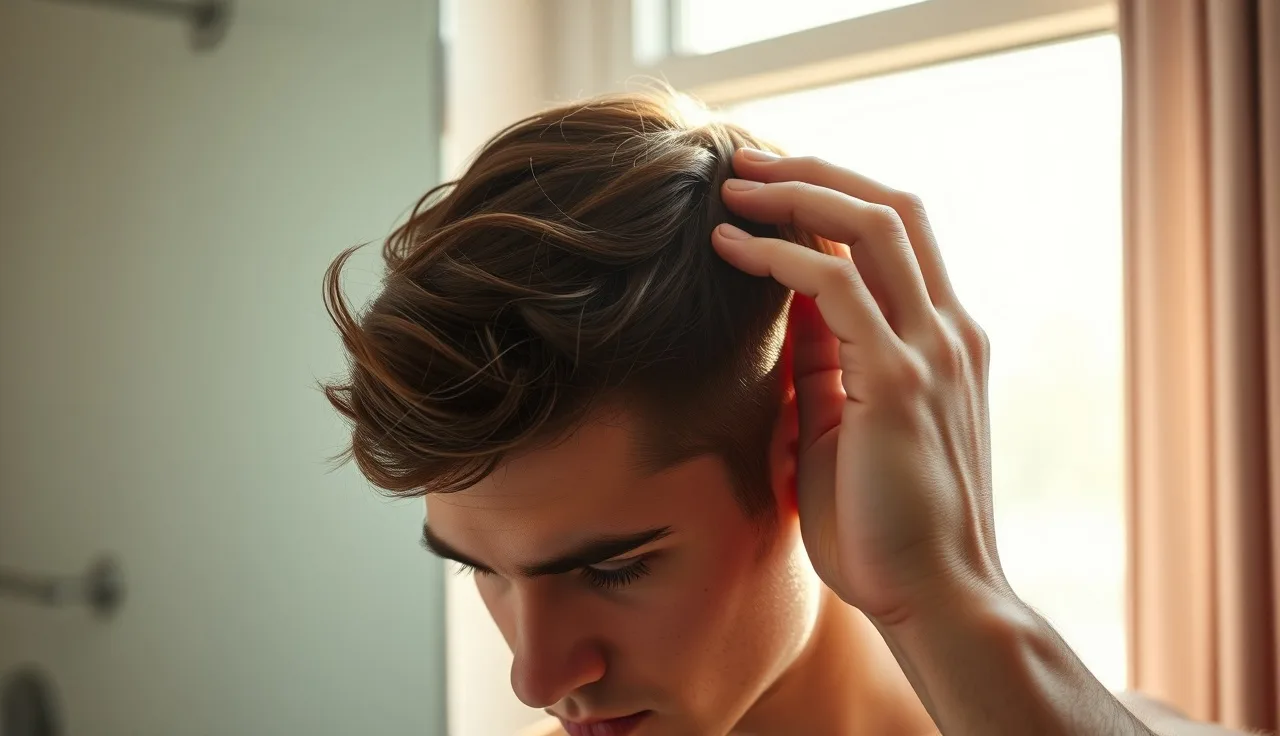
TL;DR: Norwood 2A is a version of stage 2 hair loss where the whole front hairline recedes in a fairly even band, rather than pulling back at the corners alone. It's early androgenetic alopecia. Most men at this stage respond well to finasteride, minoxidil, or both. It's one of the most treatable points on the scale.
What is Norwood 2A and how does it differ from regular Norwood 2?
The Norwood-Hamilton scale is the standard classification for male pattern baldness. It has a main sequence plus a set of "A" variants that describe a distinct recession pattern. Regular Norwood 2 means the hairline pulled back at the temples into the classic V or M shape, while the front-center stays forward. Norwood 2A is different. The "A" variant describes a hairline that recedes across the whole front in a continuous, fairly even band, with little or no deepening at the corners. No central island stays forward. The entire front moves back together. [1]
That distinction matters clinically because the A variants progress differently than the main sequence. Main-sequence recession often gives you years where only the temples move. A-variant recession thins the front more uniformly and, if it advances, tends to stay frontal rather than developing the classic bald crown of higher Norwood stages. A man at 2A who progresses may move through 3A, 4A, and so on, staying primarily a frontal-loss pattern the whole way, without a vertex bald spot forming. [1]
Here's the practical test. Look in the mirror. If your hairline has shifted straight back across the whole front by roughly 2 centimeters or less, with no deep corner recession, you're looking at a 2A picture. If the corners are the main story and the center is still forward, you're probably looking at standard Norwood 2.
How common is Norwood 2A in men, and at what age does it usually appear?
Androgenetic alopecia affects roughly 50% of men by age 50, and it climbs from there. [2] Early stages, including both Norwood 2 and 2A, are the most common presentations in men in their twenties and thirties. The A-variant pattern shows up less often than the main sequence but it's well-documented. The Norwood revision that introduced the A variants described them as a meaningful minority of male pattern cases. [1]
Age of onset swings widely. A family history on either side shifts your risk earlier (the maternal line matters, but so does the paternal). DHT sensitivity in the follicles is the underlying driver, and some men's follicles are sensitive from their late teens. Others see nothing change until their late thirties. Having Norwood 2A in your twenties does not guarantee fast progression, but early onset generally tracks with a higher eventual stage reached over a lifetime. [3]
The honest answer on prevalence: population studies on Norwood staging tend to lump 2 and 2A together or focus on the main sequence. The exact frequency of 2A as its own category isn't nailed down in large datasets. What's clear is that early frontal recession of any pattern is the first thing most men notice.
What does Norwood 2A actually look like? (photos and self-diagnosis guide)
Self-diagnosing your Norwood stage is genuinely tricky. Lighting and camera angle change everything, and the gap between 2 and 2A is subtle at first glance.
Here's a practical checklist for identifying 2A:
- The hairline has receded across the full front, more than at the corners
- Looking straight on, the hairline forms a relatively straight or gently curved horizontal line, not an M-shape
- No temple recession pulls deeper than the rest of the front
- The recession is modest, generally within about 1.5 to 2 centimeters from where your juvenile hairline sat
- The crown (vertex) looks full, with no thinning at the top of the head
A few things make self-assessment harder. Diffuse thinning behind an intact-looking hairline can ride along with 2A and is easy to miss in bathroom lighting. Take photos in daylight, wet your hair and pull it back, or ask someone you trust to look at your scalp under a bright light. If you want a more objective read, MyHairline's free AI scan maps your hairline against the Norwood scale from a photo, which strips out some of the guesswork.
One common mistake: men with a naturally "mature" hairline (a slight, uniform recession that is normal and non-progressive in adult men) sometimes panic that they're at 2A. A mature hairline is stable and symmetric. If your hairline has visibly moved over the past year or two, that movement is the signal that something progressive is going on.
How fast does Norwood 2A progress if you do nothing?
Everyone wants a clean number here. The honest answer is that it varies enormously. Progression depends on genetics, age of onset, DHT sensitivity, and factors researchers still don't fully understand. Some men stay at early stages for decades. Others move from 2A to 4A or beyond within five to seven years. [3]
The long-term descriptive work most often cited is Hamilton's and Norwood's own, and it didn't set precise annual progression rates. More recent research, including the trials used to approve finasteride, shows that untreated men keep losing hair over five-year windows, with placebo groups showing measurable progression. [4]
A reasonable, honest framing. If you're at Norwood 2A in your early twenties, assume the pattern continues without treatment, and plan for that. If you're in your forties and have been stable at 2A for years, your loss may be slow or already plateaued. Dermatologists use dermoscopy (a magnifying tool that reads follicle diameter and miniaturization) to gauge how active the loss is, which tells you more than a single Norwood rating ever will.
Does Norwood 2A affect women the same way?
No. The Norwood-Hamilton scale was designed for and validated in men. Women lose hair by a different pattern, usually described by the Ludwig scale or the Sinclair scale, which captures diffuse thinning across the top of the scalp rather than the frontal recession the Norwood scale tracks. [5]
Some women do get frontal recession, particularly those with frontal fibrosing alopecia (a scarring condition quite different from androgenetic alopecia) or, sometimes, androgenetic alopecia with a more frontal look. Slapping a Norwood 2A label on a woman's hair loss is not standard practice and can send treatment in the wrong direction.
If you're a woman with a receding front hairline, see a board-certified dermatologist. The differential diagnosis is different, the FDA-approved treatments are different, and the prognosis is different. This article is mostly relevant to men.
What are the most effective treatments for Norwood 2A?
Good news: Norwood 2A is the best time to start treatment. Follicles that are miniaturizing but not yet dead can often be stabilized or partly reversed. Once a follicle is gone, no approved treatment brings it back.
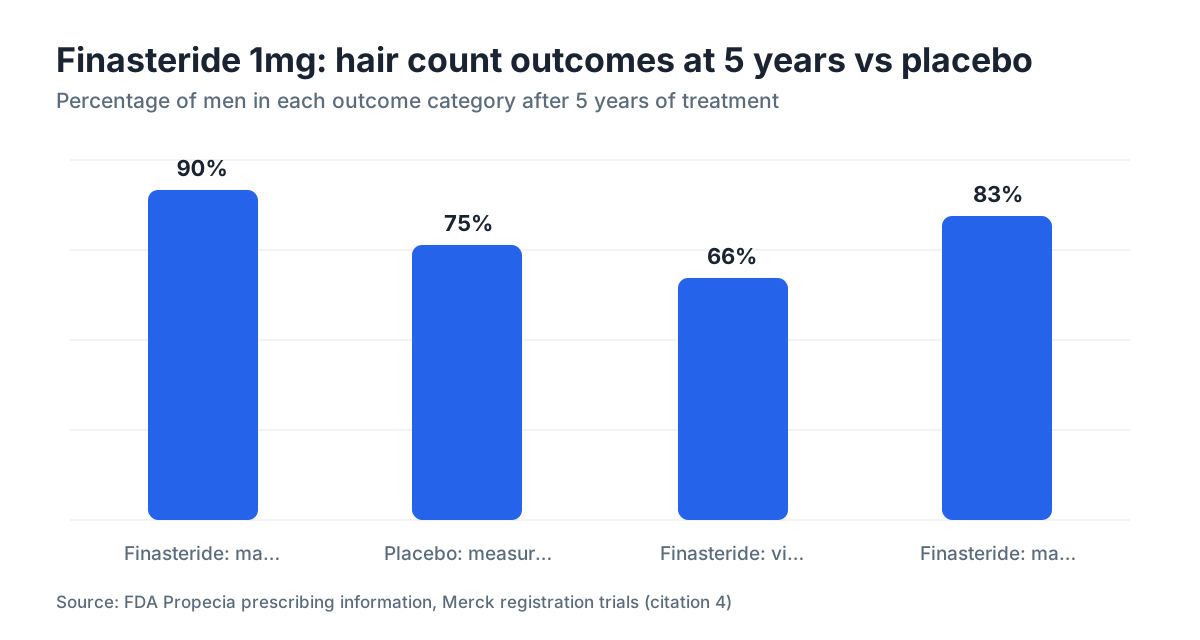
Finasteride (oral 1mg/day) Finasteride is the most studied oral treatment for male androgenetic alopecia and the one with the strongest evidence behind it. It blocks 5-alpha reductase type II, the enzyme that converts testosterone to DHT. In the registration trials submitted to the FDA, finasteride 1mg produced visible growth or slowed progression in most men over two years, with continued benefit through five years of follow-up. [4] The five-year data from Merck's trials showed 90% of finasteride-treated men maintained or improved hair count versus baseline, compared to 75% in the placebo group showing measurable loss. [4] At Norwood 2A specifically, the goal is to stop progression and, ideally, thicken the frontal hair that's already miniaturizing.
Side effects are real and worth knowing. The FDA label reports sexual side effects (decreased libido, erectile dysfunction, ejaculation disorder) in roughly 3.8% of finasteride-treated men in trials versus 2.1% on placebo. [4] Most resolve when men stop the drug. Post-finasteride syndrome, a disputed but reported condition of persistent symptoms, has contested data behind it, and the FDA added a label update in 2012 noting post-discontinuation effects had been reported. [4] Read more about finasteride and decide for yourself.
Minoxidil (topical 5% or oral low-dose) Minoxidil is FDA-approved for topical use in men (5% solution or foam). It widens blood vessels around follicles and extends the hair growth phase. [6] It doesn't block DHT, so it works through a different mechanism than finasteride. For early loss like 2A, minoxidil 5% once or twice daily can slow shedding and, in some men, add modest regrowth. The minoxidil for men page covers the application protocols in detail.
Oral minoxidil (off-label, usually 0.625mg to 2.5mg daily in men) is picking up momentum, and some recent studies show it beats topical for regrowth at equal or lower cost, though the FDA has not approved it for hair loss in this form. [7] Facial hair growth and fluid retention are more common with oral dosing. See the oral minoxidil breakdown for a full comparison.
Combining finasteride and minoxidil The combination beats either drug alone. A 2021 randomized controlled trial in the Journal of the American Academy of Dermatology found combined therapy produced significantly greater hair count improvement than either drug used alone over 24 weeks. [8] For someone at 2A who wants the best shot at stabilization, a dermatologist will often recommend both. Read the finasteride and minoxidil comparison for a side-by-side look at what each one adds.
DHT blockers (topical finasteride, dutasteride, ketoconazole shampoo) Topical finasteride cuts systemic DHT exposure compared to oral, which may lower side effect risk, though the long-term evidence is thinner. Dutasteride (oral) blocks both type I and type II 5-alpha reductase and is approved for hair loss in some countries (South Korea, Japan), though it's off-label for this in the US. Ketoconazole shampoo at 2% has modest evidence for reducing scalp DHT and gets used as an add-on.
What's not worth spending money on at this stage Laser combs and helmets (low-level laser therapy, LLLT) have some supportive evidence but nothing near the strength of finasteride or minoxidil data. Supplements like saw palmetto or biotin are popular, but the evidence is thin. Biotin in particular is overprescribed for hair loss despite no high-quality randomized trial supporting it. See hair loss supplements for an honest breakdown. At Norwood 2A, going straight to the proven options makes the most sense.
Is a hair transplant worth it at Norwood 2A?
Probably not yet, and most experienced surgeons will tell you the same thing.
Hair transplants move permanent follicles from the back and sides of your scalp (the donor zone) to the areas of loss. At Norwood 2A, the recession is minimal, and a good surgeon will hold back for two reasons. First, transplanting into a 2A hairline without stabilizing the underlying loss means the native hair behind the grafts keeps thinning, which can leave you years later with a transplanted front and loss behind it. Second, donor hair is a finite resource. Spending grafts now on a modest problem leaves fewer for later if you progress.
The standard guidance from the International Society of Hair Restoration Surgery: get medically stable first, meaning slow or halt progression with medication, before considering transplant. [9] Some men do get small, strategic procedures at early stages to reinforce the hairline, but they're usually already on finasteride or a similar treatment.
If you're curious about what transplants involve and cost, the hair transplant article covers FUE vs FUT, graft counts, and realistic cost ranges. At Norwood 2A it's good background reading, but it's not where most dermatologists would start you.
How do doctors diagnose and confirm Norwood 2A?
A clinical diagnosis of Norwood 2A is mostly visual. A dermatologist or trichologist looks at your hairline, reads the pattern, checks the crown, and often uses a dermatoscope to evaluate follicle health at the scalp. Miniaturized follicles (producing thinner, shorter hairs) under dermoscopy point to active androgenetic alopecia. [10]
Blood tests sometimes get ordered to rule out other causes. Thyroid disease, iron deficiency, and other systemic conditions can cause shedding that looks like or overlaps with pattern hair loss. A full blood count, ferritin level, thyroid panel, and sometimes androgen levels are common parts of a first hair loss workup. [10]
The Norwood stage itself is not a diagnosis. It's a description. The actual diagnosis is androgenetic alopecia (or another condition, if the blood work or biopsy points elsewhere). Scalp biopsy is rarely needed at early stages but helps when the presentation is ambiguous, especially if scarring alopecia is on the table.
One caveat worth flagging: a lot of early Norwood 2A goes undiagnosed for years because men don't go get checked. By the time many men see a dermatologist, they've moved further along. If you're noticing changes, earlier is always better.
What's the difference between Norwood 2A and other early hair loss conditions?
Not all frontal hairline recession is Norwood 2A, and getting the distinction right shapes the treatment.
Telogen effluvium is a diffuse shedding condition often triggered by stress, illness, surgery, or nutritional deficiency. It can thin the hairline temporarily and mimic early androgenetic alopecia. The key difference: telogen effluvium usually reverses once the trigger clears, and dermoscopy shows uniform (not miniaturized) follicles. [10]
Frontal fibrosing alopecia (FFA) is a scarring condition that causes a band of recession at the front, and it can look superficially like 2A. FFA typically brings eyebrow and eyelash loss too, and it has a distinct dermoscopic look. It's more common in postmenopausal women but does happen in men. Treating FFA with minoxidil or finasteride as if it were androgenetic alopecia misses the underlying inflammation entirely.
Traction alopecia from tight hairstyles causes frontal and temporal recession that can resemble early Norwood patterns. It keeps progressing if the traction continues, and it often responds to removing the cause.
Alopecia areata can occasionally show up at the front, though its patchy nature and typical dermoscopic features usually give it away.
Here's the bottom line: if you're unsure, get a dermatologist to look. The visual pattern alone isn't always enough to tell these conditions apart, and the treatment for each one differs.
Can Norwood 2A be reversed, or is stabilization the realistic goal?
Honest answer: stabilization is the main goal, and it's achievable for most men with early loss. Reversal, meaning measurable regrowth, is possible but not guaranteed and rarely dramatic.
The finasteride trials showed that after two years, 66% of men had some regrowth, meaning more hair than at baseline, and 83% had maintained their hair count or better. [4] After five years, men still on finasteride kept showing benefit, while men who stopped saw their loss resume its pre-treatment course within 12 months. [4] The treatment works for as long as you take it, and it stops working when you stop.
Minoxidil also produces regrowth in some users, especially in the early months. That phase often comes with an initial shed as follicles shift growth cycles, which alarms new users but is actually a sign the drug is doing something.
At Norwood 2A, you have more miniaturizing-but-alive follicles than you'll have at higher stages. That means more to save. The trajectory is better than at Norwood 4 or 5. Start treatment now, stay consistent, and there's a reasonable chance your hairline in five years looks the same as today, or better. That's a genuinely good outcome. Expecting to look like you did at 18 is not.
What lifestyle factors speed up or slow down Norwood 2A progression?
No lifestyle change reverses androgenetic alopecia. DHT sensitivity is genetic and it's the dominant driver. But a few factors influence the rate.
Nutrition matters more than most men realize. Iron deficiency is one of the most common nutritional contributors to hair shedding, and low ferritin (stored iron) can speed up shedding even in men with pattern loss. Protein deficiency, crash dieting, and very low calorie intake all push follicles into telogen. The what causes hair loss article covers the full list.
Chronic stress raises cortisol, which can push follicles into telogen phase and stack on top of pattern loss. Scalp blood flow may improve mildly with exercise, though that isn't a primary treatment. Smoking has been linked to higher hair loss risk in some observational studies, though causation is hard to pin down.
One specific worry that comes up often: creatine. There's a widely cited 2009 study showing creatine raised DHT levels in college rugby players, which raised the question of whether it could speed up hair loss. The study was small, and DHT wasn't tracked over long enough to draw firm conclusions. The does creatine cause hair loss article walks through the evidence honestly.
Sleep, scalp hygiene, and avoiding harsh chemical treatments won't prevent androgenetic alopecia, but they don't deserve to be written off either. A reasonably healthy life keeps your follicles in the best shape to respond to medical treatment.
If you want an objective read on where your hairline actually sits right now, MyHairline's free AI scan maps your pattern against the Norwood stages from a phone photo. It's a useful starting point before you see a dermatologist or pick a treatment.
Norwood 2A treatment comparison: what each option realistically delivers
Here's a plain comparison of the main options, based on the evidence available as of mid-2025:
| Treatment | Evidence level | Primary effect | Approx. monthly cost (US) | Requires prescription? |
|---|---|---|---|---|
| Finasteride 1mg oral | High (RCT, FDA-approved) | Slows/stops progression; some regrowth | $10-$50 (generic) | Yes |
| Minoxidil 5% topical | High (FDA-approved) | Slows shedding; modest regrowth | $15-$30 | No |
| Oral minoxidil 0.625-2.5mg | Moderate (off-label, growing RCT base) | Similar to or better than topical | $10-$30 | Yes |
| Finasteride + minoxidil combo | High (RCT-confirmed additive benefit) | Best combined outcome | $25-$80 | Partly |
| LLLT (laser devices) | Low-moderate | Modest adjunct effect | $20-$60 (device amortized) | No |
| Hair transplant | Moderate (surgical, permanent) | Cosmetic restoration, not medical treatment | $4,000-$15,000 (one-time) | N/A |
| Supplements (biotin, saw palmetto) | Low | Unclear benefit for AGA | $10-$40 | No |
Costs are approximate US out-of-pocket figures based on retail and telehealth pricing as of 2025. Generic finasteride prices vary by pharmacy and run much cheaper through discount programs. Transplant costs depend heavily on graft count, technique, and surgeon.
Sources
- O'Tar Norwood, Southern Medical Journal 1975, Norwood-Hamilton scale description including A-variant classification
- American Academy of Dermatology, Hair loss: who gets it and causes
- NIH National Library of Medicine, Androgenetic Alopecia review, StatPearls
- FDA, Propecia (finasteride 1mg) prescribing information and clinical trial data (Drugs@FDA)
- American Academy of Dermatology, Hair loss information for the public
- FDA, Minoxidil 5% topical solution OTC label (Drugs@FDA)
- Journal of the American Academy of Dermatology, oral minoxidil for androgenetic alopecia, 2021
- Journal of the American Academy of Dermatology, combination finasteride and minoxidil RCT, 2021
- International Society of Hair Restoration Surgery, patient information on hair transplant candidacy
- American Academy of Dermatology, hair loss diagnosis and treatment for the public