TL;DR: Roughly 30 to 40% of people see little or no meaningful regrowth from minoxidil. The most common reasons are: not enough time (under 6 months), wrong application technique, sulfotransferase enzyme deficiency in the scalp, or androgenetic alopecia that's too advanced for minoxidil alone. Adding a DHT blocker like finasteride or dutasteride changes outcomes substantially for most non-responders.
How common is it to not respond to minoxidil?
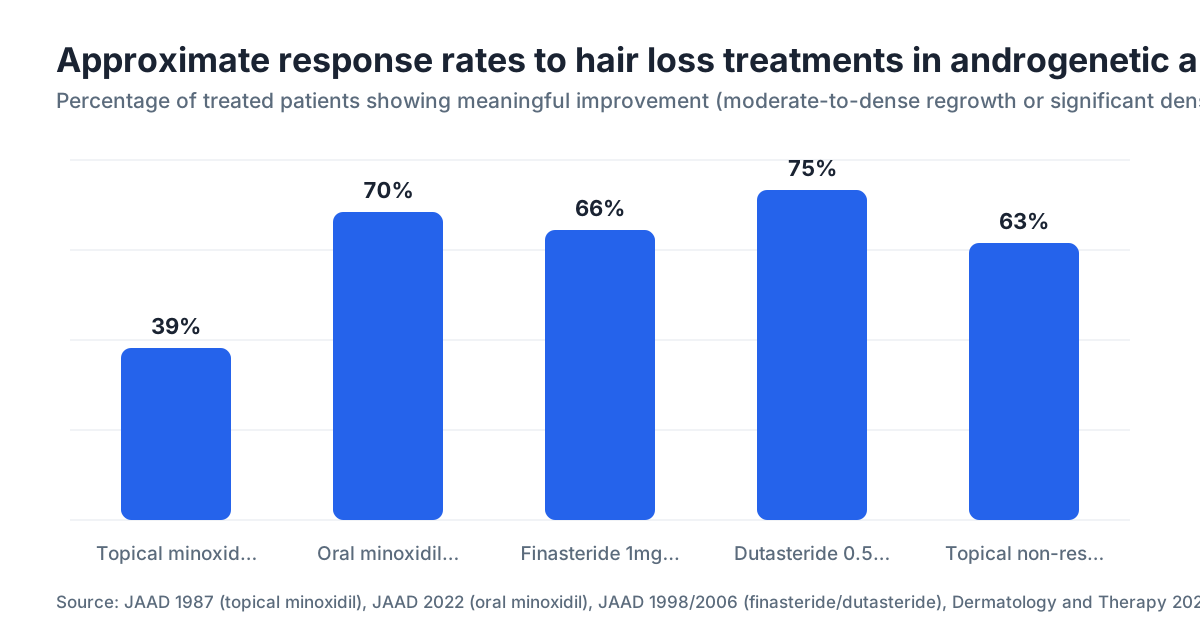
More common than the packaging implies. Clinical trials on topical minoxidil consistently show that somewhere between 30% and 40% of users report unsatisfactory hair density after a full year of use [1]. The 1987 Olsen study in the Journal of the American Academy of Dermatology found that only about 39% of men using 2% topical minoxidil had moderate-to-dense regrowth at 12 months, which leaves the majority with minimal or no visible improvement [1].
That figure gets misread a lot. People see "minoxidil works for hair loss" in headlines and assume they'll be in the winning group. Statistically, the odds are roughly coin-flip that you get a response you'd call satisfying.
The reasons for non-response split into two buckets. Some are fixable, like wrong application or not waiting long enough. Others are biological, specifically a shortage of the enzyme your scalp needs to activate minoxidil in the first place. Which bucket you're in determines what to try next.
See the minoxidil for men guide for a full breakdown of what the drug is actually doing at the follicle level before you decide you've failed it.
How long should you wait before deciding minoxidil isn't working?
Six months is the bare minimum, and 12 months is the honest answer.
Minoxidil works by shifting follicles from the telogen (resting) phase into anagen (active growth). That biological reset takes time. The FDA-approved labeling for Rogaine 5% foam says continuous use for at least 4 months is required to see results, but dermatologists routinely tell patients to commit to a full year before calling it a failure [2].
There's a confounding event that trips people up early: the shedding phase. In the first 4 to 8 weeks of minoxidil use, many people notice more hair fall as follicles get pushed out of telogen. This is called telogen effluvium and it's a normal, if alarming, part of the process. Quitting during that window is the single most common mistake non-responders make.
If you've used a proven formulation (5% topical or oral) correctly, twice daily, for 12 months and you see no change in density on photos taken at 0, 6, and 12 months, then you have a legitimate case of non-response. The photo comparison matters because human perception of density is unreliable without a baseline.
Why doesn't minoxidil work for some people? The enzyme explanation
Minoxidil is a prodrug. The molecule you apply to your scalp or swallow is pharmacologically inactive until your body converts it into minoxidil sulfate. That conversion happens almost entirely through an enzyme called sulfotransferase 1A1 (SULT1A1), present in hair follicle outer root sheath cells [3].
Here's the problem. SULT1A1 activity varies enormously between people, and that variation is largely genetic. People with low scalp SULT1A1 activity make very little minoxidil sulfate at the follicle no matter how much minoxidil they apply. Studies have measured up to a 12-fold difference in SULT1A1 activity between subjects [3].
A 2014 study in the British Journal of Dermatology by Roberts et al. found that scalp SULT1A1 activity before treatment predicted minoxidil response with roughly 90% accuracy: high enzyme activity tracked with good response, low activity with non-response [3]. The test used biopsied follicles from the scalp, so it's not something you can order online, but it does exist in some specialist dermatology settings.
Oral minoxidil sidesteps this problem partially. When you take a low-dose oral tablet (typically 0.625 mg to 5 mg daily), the drug gets metabolized systemically in the liver and other tissues, more than the scalp, so local SULT1A1 deficiency matters less [4]. That's one reason some people who don't respond to topical minoxidil do respond to oral: their scalp enzyme activity is low, but systemic conversion is enough.
This doesn't make oral minoxidil universally better. It comes with a different side effect profile. The minoxidil side effects article covers what to watch for, particularly fluid retention and unwanted facial hair growth.
Could your technique be the real problem?
Before blaming genetics, audit your application protocol honestly.
Common technique errors with topical minoxidil:
- Applying to hair instead of scalp. The drug needs to reach skin, not coat hair shafts.
- Washing hair too soon. Most formulations need at least 4 hours of contact time; overnight is better.
- Skipping the second daily dose. Once-daily application gives meaningfully lower scalp drug levels than twice daily [2].
- Using too little. The standard dose for 5% solution is 1 mL per application. Many people use a few drops and call it a dose.
- Applying to a wet scalp. Dilution cuts absorption and the solution can run off, missing target zones.
If you're using minoxidil foam, the standard dose is half a capful per application. Foam has a slight absorption edge over solution in some studies because it contains less propylene glycol, which can irritate the scalp and push people to apply less or quit.
Check the formulation percentage too. If you've only ever used 2% minoxidil, switching to 5% is not a trivial step: the 5% formula produces statistically significantly more regrowth in head-to-head studies [1].
Is androgenetic alopecia too advanced for minoxidil alone?
Minoxidil prolongs the anagen phase and increases follicle size, but it does not block dihydrotestosterone (DHT), the hormone that miniaturizes follicles in androgenetic alopecia. If DHT keeps attacking follicles at full force, minoxidil is fighting a losing battle.
For men with a receding hairline or significant crown thinning, minoxidil on its own is rarely enough over the long run. That's not a marketing claim, that's what the data shows. The Veterans Affairs Cooperative Study and several later trials found that combining finasteride with minoxidil produced statistically greater improvements in hair count and coverage area than either drug alone [5].
The finasteride and minoxidil article walks through the combination protocol in detail. The short version: if you've used minoxidil for a year without satisfying results, adding a DHT blocker is the most evidence-backed next step before anything else.
For women, the calculus is different. Finasteride is contraindicated in women of childbearing potential. Oral minoxidil at low doses (0.25 mg to 1 mg daily) has decent evidence for female pattern hair loss, and spironolactone is an anti-androgen with established use in women [6].
What about being not responsive to oral minoxidil?
Not responding to oral minoxidil is less common than topical non-response, but it happens. Oral minoxidil bypasses the scalp enzyme issue, so true non-response to oral usually points to either a different underlying hair loss diagnosis or androgenetic alopecia that needs DHT suppression as the main intervention.
A 2022 review in the Journal of the American Academy of Dermatology by Randolph and Tosti evaluated oral minoxidil across multiple hair loss conditions and found response rates of 60 to 80% across their pooled data, still leaving a meaningful minority of non-responders [4]. The review noted that some patients with diffuse unpatterned alopecia didn't respond, which may reflect diagnoses like alopecia areata or chronic telogen effluvium that don't respond to any minoxidil route.
If you're not responding to oral minoxidil while on dutasteride, that's a more specific clinical picture. Dutasteride blocks both type I and type II 5-alpha reductase enzymes, giving more complete DHT suppression than finasteride [7]. If someone is already on dutasteride for DHT suppression and still not responding to oral minoxidil, the working assumption shifts toward a diagnosis question: is this actually androgenetic alopecia, or is the hair loss driven by something else?
Conditions that mimic androgenetic alopecia but don't respond to these treatments include thyroid dysfunction, iron deficiency anemia, lupus-related hair loss, and cicatricial (scarring) alopecias. A full blood panel and scalp biopsy can tell them apart. No amount of minoxidil or dutasteride reverses scarring alopecia.
Does the type of hair loss diagnosis matter for minoxidil response?
Enormously. Minoxidil has regulatory approval for androgenetic alopecia (pattern hair loss) specifically. Its use in other diagnoses is off-label, and response rates vary widely.
For alopecia areata, minoxidil is an adjunct, not a primary treatment, and the evidence quality is lower [6]. For telogen effluvium, minoxidil may help recovery along but the condition often self-resolves once the trigger (nutritional deficiency, illness, stress) is removed. For traction alopecia, removing the traction source is the fix, not minoxidil.
If you haven't had a formal diagnosis from a dermatologist or trichologist, you may be treating the wrong condition. Figuring out what causes hair loss before committing to a multi-year drug regimen is genuinely worth the time.
Blood work that rules out common mimics: TSH (thyroid), ferritin (iron stores, more useful than hemoglobin), total testosterone, DHEA-S, and a CBC. Many dermatologists order these as a baseline panel before starting treatment.
What does the research say about switching from topical to oral minoxidil for non-responders?
The evidence is limited but points in an encouraging direction. There are no large randomized controlled trials designed specifically for topical non-responders who switch to oral, which is an honest gap in the literature.
The best data comes from retrospective case series and the mechanism argument above (bypassing SULT1A1). A 2020 retrospective study by Vañó-Galván et al. in Dermatology and Therapy followed 30 patients classified as topical minoxidil non-responders and switched them to low-dose oral minoxidil. Roughly 63% showed improvement on global photography assessment at 6 months [8]. Small sample, no control group, but it's the kind of signal worth watching.
Oral minoxidil doses used in hair loss run from 0.625 mg to 5 mg daily depending on sex and tolerability. The FDA hasn't approved oral minoxidil for hair loss; the tablets are approved for hypertension, and dermatology use is off-label [4]. That doesn't make it unsafe at low doses, but it does mean you need a prescribing physician and ideally some baseline cardiovascular assessment.
The oral minoxidil article has a fuller breakdown of dosing and the available trial data.
What are your real options when minoxidil genuinely isn't working?
Let's be direct about what has actual evidence behind it.
Finasteride or dutasteride: If you're a man with androgenetic alopecia who hasn't tried a 5-alpha reductase inhibitor, this is the most evidence-backed next step. Finasteride 1 mg daily cut scalp DHT by about 60% in clinical trials and showed statistically significant improvements in hair count vs. placebo at 12 months [5]. Dutasteride suppresses DHT by roughly 90% and beat finasteride in a head-to-head study by Stough et al. [7]. See the finasteride article for full trial data and the side effect picture.
Low-level laser therapy (LLLT): The FDA has cleared several devices for hair growth (cleared for safety and an efficacy claim, not approved the way drugs are). A 2013 randomized trial in the American Journal of Clinical Dermatology found a laser comb device produced statistically significant increases in hair density versus a sham device in men and women with androgenetic alopecia [9]. Effect sizes are modest. This isn't a rescue treatment; it's a reasonable adjunct.
Platelet-rich plasma (PRP): The evidence is growing but still inconsistent. A 2019 meta-analysis in Aesthetic Surgery Journal pooled 6 RCTs and found meaningful improvement in hair density and count with PRP vs. controls, but flagged high heterogeneity between studies [10]. Cost is significant, typically $1,500 to $3,500 for a three-session course, and insurance doesn't cover it.
Hair transplant: If you've been stable on DHT blockers for at least a year, have realistic expectations, and have sufficient donor density, surgery can deliver permanent results in the transplanted area. The hair transplant article covers candidacy, costs, and what results actually look like. Transplants don't stop ongoing loss in non-transplanted areas, which is why surgeons typically want you on finasteride or dutasteride before operating.
Ketoconazole shampoo: Modest evidence as an adjunct. A small RCT found it produced hair density improvements similar to 2% minoxidil when used as a shampoo, though the mechanism likely involves anti-inflammatory and mild anti-androgen effects at the scalp rather than any match to systemic DHT blockade [9]. Cheap, low-risk, worth adding. Not a standalone treatment.
A tool like the MyHairline free AI scan can help you categorize your current Norwood stage and hair loss pattern, useful context when you're deciding whether to escalate treatment or look at surgical candidacy.
Should you get tested for SULT1A1 enzyme activity before giving up?
In theory, yes. In practice, it's not widely available outside specialist research centers.
The test involves taking a small punch biopsy from the scalp, isolating follicle tissue, and measuring SULT1A1 activity in a lab. The assay predicts minoxidil response with reported 90% accuracy in the Roberts 2014 study [3]. Some private dermatology clinics in the UK and parts of Europe offer it commercially, but it's not a standard test in most US dermatology practices as of 2025.
A more practical proxy: if you've used topical minoxidil diligently for 12 months and gotten nowhere, the clinical outcome itself is evidence of low enzyme activity. You don't strictly need the test to decide to switch to oral minoxidil or add a DHT blocker. The test matters most if you want a biological reason before committing to oral minoxidil's side effect profile.
There are commercial hair tests marketed as "minoxidil response predictors." Some look at SULT1A1 gene variants rather than actual enzyme activity. The predictive validity of genotype-only tests (vs. functional enzyme assays) is less well established. I'd be cautious about paying for those without independent clinical validation.
What role do nutrition and lifestyle play in minoxidil non-response?
Less than supplement marketing wants you to believe, but nutrition isn't irrelevant either.
Iron deficiency is the most clinically relevant nutritional factor. Ferritin below roughly 30 ng/mL is associated with increased hair shedding, and some studies suggest optimal ferritin for hair may sit above 70 ng/mL [6]. If your ferritin is low, you may be losing ground faster than minoxidil can help, regardless of enzyme activity.
Zinc, biotin, vitamin D: deficiencies are linked to hair loss, but supplementing when you're already replete does essentially nothing. A large 2017 review in JAMA Dermatology found insufficient evidence to support routine micronutrient supplementation for hair loss in non-deficient people [6]. Check your levels first, then supplement only what's actually low.
The hair loss supplements article covers the evidence for specific products honestly. Most don't move the needle unless you have an underlying deficiency.
Sleep, chronic stress, and significant caloric restriction can all increase telogen shedding. If you've had a rough 6 to 12 months, that context matters for reading why minoxidil seems to not be working.
What should you actually do if you've decided minoxidil isn't working for you?
A practical step sequence, based on what the evidence supports.
First, verify your timeline and technique honestly. If you haven't done 12 months of correct twice-daily application at 5%, that's your first action, not your last.
Second, get a diagnosis confirmed by a dermatologist, more than pattern-matching against photos online. Basic bloodwork rules out thyroid and iron issues fast.
Third, if you're a man with confirmed androgenetic alopecia who hasn't tried finasteride or dutasteride, add one. The combination of a DHT blocker and minoxidil beats either drug alone in most trials [5]. This is the single highest-probability move for most male pattern non-responders.
Fourth, if you've been using topical and haven't tried oral, consider the switch or addition under a physician's supervision. Oral minoxidil at low doses has a growing evidence base and bypasses the scalp enzyme problem.
Fifth, if you've been stable on medical therapy for 12 or more months and still have hair loss that bothers you, consult a transplant surgeon. Surgery and medication aren't alternatives; they're often used together.
The what causes hair loss article and the dht blocker article are good next reads. And if you want a clearer picture of where your hairline stands right now, the MyHairline free AI scan at /scan gives you a Norwood stage estimate from photos you upload.
Sources
- Olsen EA et al., Journal of the American Academy of Dermatology, 1987 – Topical minoxidil in early male pattern baldness
- FDA – Rogaine (minoxidil) approved labeling / DailyMed
- Roberts J et al., British Journal of Dermatology, 2014 – Scalp SULT1A1 activity predicts minoxidil response
- Randolph M, Tosti A – Journal of the American Academy of Dermatology, 2022, Oral minoxidil treatment for hair loss
- Kaufman KD et al., Journal of the American Academy of Dermatology, 1998 – Finasteride in the treatment of men with androgenetic alopecia
- Guo EL, Katta R – Dermatology Practical & Conceptual, 2017 and JAMA Dermatology review – Diet and hair loss
- Stough D et al., Journal of the American Academy of Dermatology, 2006 – Dutasteride vs. finasteride in male pattern hair loss
- Vañó-Galván S et al., Dermatology and Therapy, 2020 – Low-dose oral minoxidil in non-responders to topical treatment
- Lanzafame RJ et al., American Journal of Clinical Dermatology, 2013 – Low-level laser therapy for androgenetic alopecia
- Giordano S et al., Aesthetic Surgery Journal, 2019 – Meta-analysis of PRP for androgenetic alopecia