

TL;DR: Telogen effluvium (TE) at the crown means a shock to your body pushed a large batch of hair follicles into the resting phase at once. The crown often looks thinnest because those hairs shed last and regrow slowest. Most cases resolve on their own within 6 to 12 months once the trigger is removed, though chronic TE can persist longer.
What is telogen effluvium and why does it hit the crown hardest?
Telogen effluvium is diffuse hair shedding set off by a systemic shock, anything from a fever to surgery to rapid weight loss, that pushes a large share of growing hairs (anagen phase) into the resting phase (telogen) early. Normally about 5 to 15 percent of scalp hairs sit in telogen at any moment. After a major trigger, that share can jump to 30 percent or more, meaning thousands of follicles stop growing and get ready to shed at roughly the same time [1].
The reason the crown looks so bad comes down to two things. First, crown hairs naturally have a slightly longer telogen duration than temporal or occipital hairs, so they shed a few weeks later and the density loss shows up there first. Second, crown hairs grow back more slowly, so even after the rest of your scalp begins to fill in, the vertex stays visibly thin for months longer. For people who already have some underlying androgenetic alopecia (female- or male-pattern hair loss), TE can expose crown thinning that was already starting but not yet obvious.
TE is not the same as androgenetic alopecia. It does not miniaturize the follicle. It does not respond to DHT. The follicle is healthy and fully capable of cycling again once the trigger passes. That distinction matters enormously for choosing the right response. Read more about what causes hair loss to understand how TE sits in the broader landscape of shedding conditions.
What triggers telogen effluvium crown thinning?
The trigger almost always comes 6 to 16 weeks before the visible shedding, because that is roughly how long a hair in early telogen takes to travel down the follicle and fall out. People connect their shedding to whatever is happening right now (high stress at work, a new shampoo) when the real cause was something months ago. Common triggers include:
- Fever above 39°C / 102°F, especially prolonged illness or COVID-19
- Major surgery or general anesthesia
- Childbirth (postpartum effluvium, which affects the crown conspicuously)
- Crash dieting or caloric restriction below roughly 1,200 kcal/day
- Iron deficiency or ferritin below approximately 30 ng/mL [2]
- Thyroid disorders (both hypo- and hyperthyroidism)
- Protein deficiency
- Stopping oral contraceptives or other hormonal changes
- Certain medications including isotretinoin, beta-blockers, and anticoagulants [3]
- Severe psychological stress (though this is harder to prove as a standalone cause)
Nutrient deficiencies deserve special attention because they are correctable and frequently overlooked. A 2019 review in Dermatology and Therapy found that iron, zinc, vitamin D, and certain B vitamins all have documented associations with telogen effluvium, though the authors noted that supplementing without confirmed deficiency does not appear to help [2]. Get actual blood work, more than a multivitamin.
For people wondering whether gym supplements could be involved, the evidence on creatine is thin but worth knowing about. See does creatine cause hair loss for a breakdown of what the data actually shows.
How do you know if your crown thinning is telogen effluvium and not pattern hair loss?
This question causes enormous anxiety and the honest answer is: sometimes you cannot tell for certain without a dermatologist, a pull test, and possibly a scalp biopsy or dermoscopy. That said, there are useful distinguishing features.
TE tends to thin diffusely across the whole scalp, including the crown, temples, and sides, while androgenetic alopecia in women typically follows the Ludwig pattern (widening part, diffuse crown thinning with preserved frontal hairline) and in men follows the Norwood scale (temple recession and vertex thinning). TE also often involves rapid shedding, meaning you notice dramatically more hairs on your pillow, in the shower drain, and in your hands when you wash your hair. Pattern hair loss is gradual and usually does not cause a sudden jump in daily shed count.
A dermatologist can perform a pull test: they grasp 40 to 60 hairs between thumb and forefinger, pull gently, and count the hairs that come free. More than 6 hairs out of 60 pulled is considered a positive result suggesting active TE [4]. The hairs pulled in TE will have a white bulb at the root (telogen club hairs), not an anagen hair with a pigmented sheath.
Dermoscopy adds another layer. In TE you see a higher than normal proportion of short regrowing hairs (upright regrowing hairs) alongside normal-diameter follicles. In androgenetic alopecia you see follicular miniaturization: hairs of varying and progressively thinner diameter.
If you want a preliminary read before booking a dermatologist appointment, a free AI hair analysis can give you directional information. The MyHairline AI scan uses photograph-based pattern analysis to flag whether your crown thinning looks diffuse or patterned, which helps you have a more informed conversation with your doctor.
Chronically elevated daily shedding (over 100 to 150 hairs per day persisting beyond 6 months) is a reason to see a dermatologist. Chronic TE is a real entity, documented in the literature, and it behaves differently from acute TE. Learn more about the full picture at telogen effluvium.
How long does telogen effluvium crown thinning last?
Acute telogen effluvium typically runs its course within 3 to 6 months of peak shedding, with most of the regrowth visible at the 6- to 12-month mark [4]. The crown lags a few weeks behind the rest of the scalp because crown follicles have a slightly longer cycle.
Chronic telogen effluvium, defined as shedding lasting more than 6 months, is a distinct condition. It tends to affect women in their 30s to 60s, often cycles with fluctuating intensity rather than resolving cleanly, and can persist for years. A frequently cited study by Whiting (1996) in the Journal of the American Academy of Dermatology described chronic TE as a benign condition with diffuse thinning that typically does not progress to true baldness [5]. Reassuring, but cold comfort if you are living it.
The key variable is whether the trigger has been removed. Shedding that started after a fever will stop once the body recovers, typically within weeks to months. Shedding driven by ongoing iron deficiency or untreated hypothyroidism will continue as long as those conditions persist. This is why blood work is not optional if your shedding is chronic.
Regrowth after TE shows up as short, fine new hairs sprouting across the scalp. At the crown these usually appear as a soft, fuzzy halo of 1 to 3 cm hairs that are lighter in color than mature hair. Full return to pre-shed density can take 12 to 18 months.
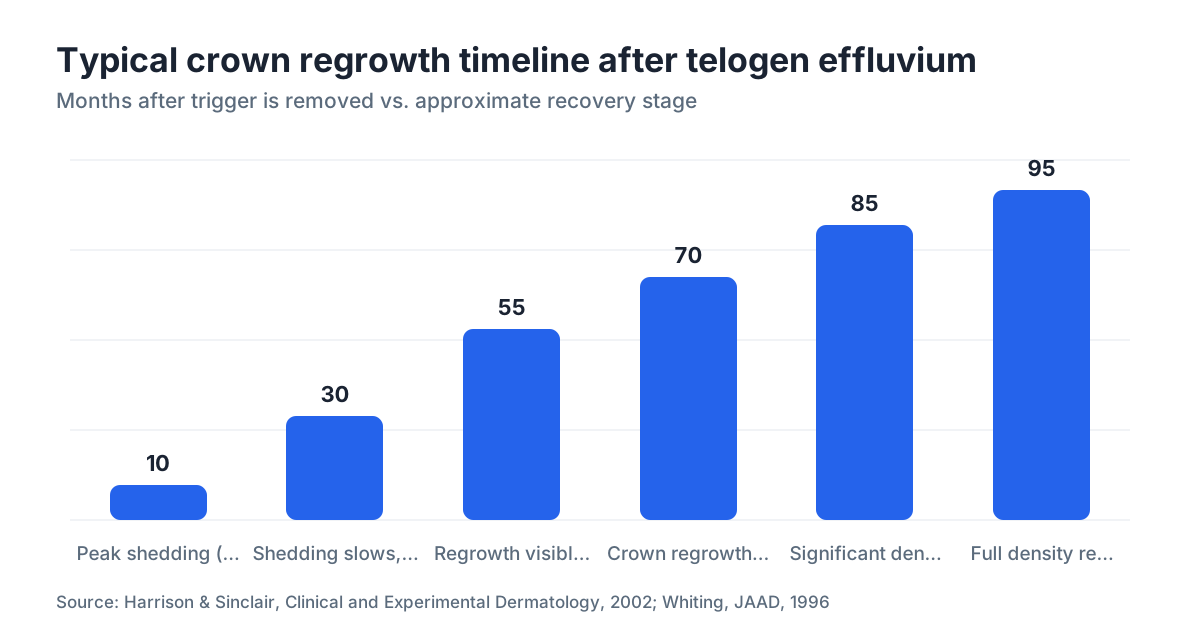
What does the regrowth timeline look like month by month?
People want a concrete timeline. Here is an honest one, built on known hair biology rather than promises.
| Month after trigger removed | What is typically happening |
|---|---|
| 0 to 2 | Shedding may still be at or near peak; most distressing phase |
| 2 to 4 | Shedding starts to slow; new anagen hairs begin entering growth phase |
| 4 to 6 | New regrowth hairs visible as short stubble, especially at hairline and temples |
| 6 to 9 | Crown regrowth becomes visible; density noticeably improving |
| 9 to 12 | Most people see significant density return; crown still may lag |
| 12 to 18 | Full density typically restored if no underlying pattern loss |
These timelines assume the underlying trigger is resolved and no other factors are complicating recovery. Someone with concurrent iron deficiency anemia that goes untreated will not follow this schedule. Someone with underlying androgenetic alopecia may find that the TE resolves but the pattern loss stays.
Can minoxidil help with telogen effluvium at the crown?
Minoxidil is FDA-approved for androgenetic alopecia, not specifically for telogen effluvium. Still, it has two plausible mechanisms that could help in TE: it prolongs the anagen phase of the hair cycle and increases follicular size, which may speed the return of resting follicles to active growth [6].
Some dermatologists do recommend minoxidil for TE, particularly chronic TE or cases where TE sits on top of underlying pattern loss. The rationale is reasonable. But there is one catch worth knowing: minoxidil can itself set off a shedding episode when first started, because it forces follicles already in late telogen to exit that phase and shed before re-entering anagen. Starting minoxidil during active TE can look alarming and pushes people to quit. If you and your dermatologist decide to try it, expect this initial shed and do not read it as failure.
Topical minoxidil 2% (approved for women) and 5% (approved for men) applied twice daily has the strongest long-term safety and efficacy record. Foam formulations tend to be better tolerated on the scalp. Oral minoxidil at low doses (0.25 to 1.25 mg daily for women, 2.5 to 5 mg for men) is increasingly prescribed off-label for diffuse shedding conditions and some evidence supports its use [7]. See oral minoxidil and minoxidil for men for dose-specific details. Also review minoxidil side effects before starting, because hypertrichosis (facial hair growth) is a real side effect for women at higher doses.
Minoxidil does not treat the underlying cause of TE. If the trigger is still active, minoxidil is buying time, not solving the problem.
Does finasteride or a DHT blocker help telogen effluvium?
For pure TE with no androgenetic alopecia component, finasteride and other DHT blockers are not indicated. TE is not driven by DHT, and blocking it does nothing for a follicle that is resting because of a systemic stressor.
The picture changes when TE co-occurs with androgenetic alopecia. This is very common. A good number of men who come in alarmed by sudden crown shedding after illness or stress turn out to have underlying male-pattern hair loss that the TE is dramatically worsening. For those men, finasteride (1 mg daily, FDA-approved for androgenetic alopecia) may help protect the follicles that are at risk from DHT while the TE resolves on its own [8]. See finasteride for a full breakdown of efficacy and side effect data.
For women, finasteride is not FDA-approved for hair loss, and its use is contraindicated in women who are pregnant or may become pregnant because of the risk of fetal harm. Spironolactone and other antiandrogens are more commonly used off-label for women with androgenetic overlap. These are all dht blocker agents with real but different evidence profiles.
The bottom line: if your blood work and clinical picture point to pure TE with a clear trigger and no pattern history, DHT blockers are not the right first tool.
What nutritional deficiencies cause crown thinning from TE, and what should you test?
Nutrition-driven TE is one of the most treatable forms because the fix is concrete: find the deficiency, correct it, wait. The challenge is knowing which labs to order.
Ferritin is the most clinically relevant marker. The American Academy of Dermatology (AAD) notes that ferritin below 30 ng/mL is associated with hair loss, and some experts recommend keeping ferritin above 40 to 70 ng/mL for optimal hair cycling [9]. A full iron panel (serum iron, TIBC, ferritin) tells you more than ferritin alone.
Thyroid function (TSH, free T3, free T4) should be tested in any unexplained diffuse shedding case. Both hypothyroidism and hyperthyroidism cause TE.
Zinc, vitamin D, and B12 have weaker but real associations with shedding. A 2019 paper in Skin Appendage Disorders found that vitamin D receptor gene variants are more common in patients with chronic TE, and that supplementing deficient patients improved outcomes [10]. Test first, then supplement.
Protein intake matters too, though a lab rarely measures it. An adult needs roughly 0.8 g of protein per kilogram of body weight at minimum; many people cutting calories to lose weight fall below this and trigger TE.
For a broader look at which supplements have actual evidence behind them, see hair loss supplements.
Is there anything proven to speed up crown regrowth from telogen effluvium?
Honest answer: not much, beyond removing the trigger and correcting deficiencies. That is not what anyone wants to hear. It is what the evidence supports.
Minoxidil has the best data for speeding hair cycling, though most of its trials focus on androgenetic alopecia rather than pure TE [6]. Platelet-rich plasma (PRP) shows some promise in small trials for diffuse hair loss, but the studies are underpowered and inconsistent in method. The AAD does not currently recommend PRP as standard of care for TE [9].
Low-level laser therapy (LLLT) devices have FDA clearance for hair loss promotion but the evidence specifically for TE is thin. They are unlikely to harm, may help, and cost a lot.
Guo et al.'s 2021 meta-analysis in the Journal of Dermatological Treatment found that no single intervention consistently beat control conditions in telogen effluvium specifically, which points back to the same conclusion: removing the trigger is the primary treatment [11].
Stress reduction is worth mentioning, not as a generic platitude but because elevated cortisol has documented effects on hair cycling. Chronic stress can sustain TE by keeping the HPA axis activated, which influences follicle cycling signals. Addressing sleep and managing acute stressors is legitimate adjunctive care, not woo.
Hair transplants are not appropriate for TE. Crown thinning from TE is temporary in most cases, and transplanting into an actively shedding scalp wastes grafts. If you still have crown thinning 12 to 18 months after the trigger resolves and blood work is normal, that is the point to reassess whether pattern loss is the real culprit and whether a hair transplant consultation makes sense.
How is telogen effluvium diagnosed and when should you see a dermatologist?
Many people with TE never see a dermatologist and recover fine. That is a realistic outcome. But certain situations genuinely warrant professional evaluation.
See a dermatologist if:
- Shedding persists beyond 6 months with no sign of slowing
- You cannot identify a plausible trigger
- You are seeing scalp visibility at the crown or a widening part that is not improving
- Blood work is normal but shedding continues
- You have a family history of androgenetic alopecia and are worried about pattern loss
A dermatologist evaluating suspected TE will usually take a detailed history (looking for that 6 to 16 week lag to a triggering event), perform a pull test, examine the scalp with dermoscopy, and order labs including CBC, ferritin, thyroid panel, and sometimes ANA if autoimmune causes are suspected [4].
A scalp biopsy is rarely needed for typical acute TE but can separate chronic TE from other diffuse hair loss conditions including alopecia areata (incognita form) or early cicatricial alopecia.
The American Academy of Dermatology has published guidance on hair loss evaluation, and their patient-facing resources are a reasonable starting point for understanding what to expect from a clinical visit [9].
If you want to walk into that appointment better prepared, the MyHairline AI scan (/scan) can generate a pattern summary from your photographs that you can show your dermatologist, giving them a baseline visual record of your crown density before treatment begins.
What is the difference between chronic telogen effluvium and female-pattern hair loss?
This is one of the most confusing and frequently searched questions in this space, and the confusion is fair because the two conditions overlap often.
Chronic TE produces diffuse thinning that hits the entire scalp roughly equally. The frontal hairline is usually preserved. The shedding is episodic or fluctuating rather than steadily progressive. Follicles under dermoscopy look normal in caliber.
Female-pattern hair loss (androgenetic alopecia) produces progressive crown and vertex thinning with a characteristic Ludwig pattern: density loss is worst on top, the frontal hairline stays intact for a long time, and over years the thinning expands outward. Dermoscopy shows follicular miniaturization with a mix of thick and thin hairs.
The problem is that chronic TE in a woman with underlying androgenetic alopecia can look like pure female-pattern loss. Whiting's 1996 paper noted that many women diagnosed with female-pattern hair loss actually have chronic TE as a concurrent process [5]. A biopsy can help separate them: chronic TE shows an increased proportion of telogen and catagen follicles but normal follicle diameters; androgenetic alopecia shows miniaturization.
The practical implication: if a woman is losing hair at the crown and the dermatologist finds both conditions, treatment should address both. Correct the deficiencies or stressors driving TE, and consider minoxidil (and in some cases antiandrogens) for the pattern component. Treating only one when both are present explains a lot of treatment failures.
For a broader overview of pattern hair loss and how the two conditions compare, see receding hairline for the male-pattern side and what causes hair loss for the full diagnostic picture.
Can stress alone cause telogen effluvium at the crown, or does something physical have to happen?
Psychological stress is a legitimate but frequently overstated trigger for TE. The mechanistic story is plausible: corticotropin-releasing hormone (CRH) and substance P, both upregulated under stress, have receptors in the hair follicle and can influence cycling [12]. Animal models support stress-induced shedding. Human data is harder to pin down because psychological stress is rarely the only variable.
What the literature does support: severe acute psychological trauma (bereavement, accident, war) has been linked to TE onset at the expected 6 to 16 week delay. What it does not clearly support: everyday work stress or anxiety as a standalone cause of TE bad enough to produce visible crown thinning.
In practice, many people who develop TE after a stressful stretch also stopped eating well, wrecked their sleep, lost weight, or picked up subclinical nutritional deficiencies during that period. The stress may have been the context, not the direct cause. Parsing this out matters because the treatment differs: if it is nutritional, fix the nutrition; if it is purely psychological, a hair treatment alone will not help.
The short version: stress can contribute, but if your crown is visibly thinning and you blame it entirely on stress, check the physical triggers before assuming that is the whole story.
Sources
- Harrison S, Sinclair R. 'Telogen effluvium.' Clinical and Experimental Dermatology, 2002.
- Almohanna HM et al. 'The Role of Vitamins and Minerals in Hair Loss.' Dermatology and Therapy, 2019.
- FDA Drug Safety Communication: Drug-induced alopecia drug class labeling.
- American Academy of Dermatology. 'Hair loss: Diagnosis and treatment.' AAD patient-facing and clinical guidance.
- Whiting DA. 'Chronic telogen effluvium: increased scalp hair shedding in middle-aged women.' Journal of the American Academy of Dermatology, 1996.
- FDA label: Minoxidil Topical Solution/Foam (Rogaine). Approved indications and mechanism.
- Randolph M, Tosti A. 'Oral minoxidil treatment for hair loss.' Journal of the American Academy of Dermatology, 2021.
- FDA label: Propecia (finasteride 1 mg). Approved indication for androgenetic alopecia in men.
- American Academy of Dermatology. 'Hair loss resource center.' AAD clinical guidance.
- Banihashemi M et al. 'Vitamin D and hair loss.' Skin Appendage Disorders, 2019.
- Guo C et al. 'Meta-analysis of interventions for diffuse hair shedding including telogen effluvium.' Journal of Dermatological Treatment, 2021.
- Arck PC et al. 'Neuroimmunology of stress: skin takes center stage.' Journal of Investigative Dermatology, 2006.