

TL;DR: Telogen effluvium causes diffuse shedding across the whole scalp, not the temple-and-crown recession typical of genetic hair loss. The hairline can look thinner, especially at the temples and frontal zone, but the follicles stay intact. Most acute cases resolve within 3 to 6 months of removing the trigger. Thinning that lasts past 6 months needs a dermatologist workup to rule out androgenetic alopecia.
What is telogen effluvium and how does it affect the hair growth cycle?
Your hair follicles run through three phases. Anagen is active growth, lasting 2 to 7 years. Catagen is a short transition of about 2 weeks. Telogen is the resting phase, lasting roughly 3 months before the hair sheds on its own. At any moment, about 85 to 90 percent of your follicles sit in anagen and 10 to 15 percent sit in telogen [1].
Telogen effluvium happens when a big chunk of those growing hairs get shoved into the resting phase early, all at once. Two to four months later they shed together. That's why the classic story is a sudden, frightening spike in daily loss that seems to arrive from nowhere. The trigger actually fired months before the shedding started.
The American Academy of Dermatology calls telogen effluvium one of the most common causes of hair loss, and it's also one of the most reversible [8]. The follicle isn't destroyed. It's resting. That distinction matters enormously when you're staring at your drain wondering if this is permanent.
For a broader look at what else drives shedding, the what causes hair loss guide covers the full diagnostic picture.
Does telogen effluvium affect the hairline specifically?
Yes, and it catches people off guard. Most assume effluvium causes even, all-over thinning, and that's mostly right. But the frontal hairline and temples are usually where people spot it first.
A few reasons for that. The hairs framing your face are fine and short to begin with, so lost density there shows up before it registers anywhere else. Some research also suggests frontal scalp follicles respond more readily to the hormonal and metabolic shifts behind effluvium. A 2015 paper in the Journal of Clinical and Aesthetic Dermatology reported that women with chronic telogen effluvium often named frontotemporal thinning as their main cosmetic complaint, even when trichoscopy showed diffuse loss across the whole scalp [3].
Here's the split from a receding hairline caused by androgenetic alopecia. Telogen effluvium does not single out hairline follicles for miniaturization. The hairline itself, meaning where the follicles actually sit, stays put. You lose density, not the follicles making the hair.
In practice, your hairline can look noticeably thinner, your part can widen, and the temples can turn translucent. But the scalp skin along the hairline usually looks normal. You won't see the smooth, pinkish surface that shows up in advanced androgenetic alopecia, where follicles have genuinely shrunk.
How is telogen effluvium different from a receding hairline?
People confuse these two constantly, and the confusion costs money because the treatments share nothing.
Androgenetic alopecia (male or female pattern baldness) comes from dihydrotestosterone (DHT) binding to follicles that are genetically sensitive to it. Over years, those follicles miniaturize. The hairs get finer, shorter, and eventually invisible. It follows predictable maps: the Norwood scale for men, the Ludwig scale for women. In men the frontal hairline and crown get hit first and hardest. Treatments like finasteride work by blocking DHT conversion, which is why they help pattern baldness and do nothing for telogen effluvium.
Telogen effluvium is a temporary, reversible glitch in the hair cycle set off by systemic stress. It sheds diffusely, without a patterned map, without follicle miniaturization, and without the steady progression of pattern baldness.
The table lays out the practical differences:
| Feature | Telogen effluvium | Androgenetic alopecia |
|---|---|---|
| Onset | Sudden, 2-4 months post-trigger | Gradual over years |
| Distribution | Diffuse, all over scalp | Patterned (hairline, crown, part) |
| Hairline recession | Apparent thinning only | True recession and miniaturization |
| Follicle status | Intact, resting | Progressively miniaturizing |
| Pull test | Often positive during active phase | Usually negative |
| Spontaneous resolution | Yes, in most acute cases | No, progressive without treatment |
| Key lab finding | Often low ferritin, thyroid issues | Elevated DHT sensitivity (genetic) |
A dermatologist can usually tell the two apart with a pull test and trichoscopy in one visit. Here's the shortcut clue: if you're shedding heavily but your hairline shape hasn't actually moved back, that points toward effluvium.
What triggers telogen effluvium at the hairline and across the scalp?
The trigger list runs long, but a handful dominate the clinical literature.
Fever and illness are the loudest triggers. Acute febrile illness, COVID-19 included, produces some of the worst effluvium dermatologists see. A 2021 study in JAAD International reported that 22 percent of COVID-19 survivors had hair loss in the months after infection, with diffuse shedding as the leading pattern [4].
Nutritional deficiencies are just as common but slower to show. Iron deficiency, especially low ferritin (the storage form of iron), tracks strongly with chronic telogen effluvium in women. Zinc deficiency and crash dieting, meaning rapid caloric restriction, are well-documented triggers too [7].
Hormonal shifts are a big category. Postpartum telogen effluvium is nearly universal to some degree. Estrogen that ran high during pregnancy drops sharply after delivery, and hair that stayed in anagen through the pregnancy sheds together around 3 months postpartum. Thyroid trouble in either direction, over or under, disrupts the cycle reliably.
Medications get overlooked. Anticoagulants, retinoids, beta-blockers, and some antidepressants list hair loss as a reported adverse effect on their FDA labels [7]. If you started a new drug 2 to 4 months before the shedding kicked off, mention that timing to your prescriber.
Surgery and physical trauma count. The metabolic stress of general anesthesia reliably sets off effluvium in susceptible people, usually 2 to 3 months after the procedure.
Chronic psychological stress can do it as well, though the mechanism is fuzzier than the acute physiological triggers.
How do you know if your hairline thinning is telogen effluvium or something permanent?
This is the question that keeps people awake, and there's no perfect home test. There are signals, though.
The pull test is a starting point. Grasp a small bundle of 40 to 60 hairs near the scalp and pull with gentle, firm pressure. More than 10 percent coming out (6 or more hairs) suggests active effluvium [8]. It has limits: it misses early androgenetic alopecia and throws false negatives if you've just washed your hair.
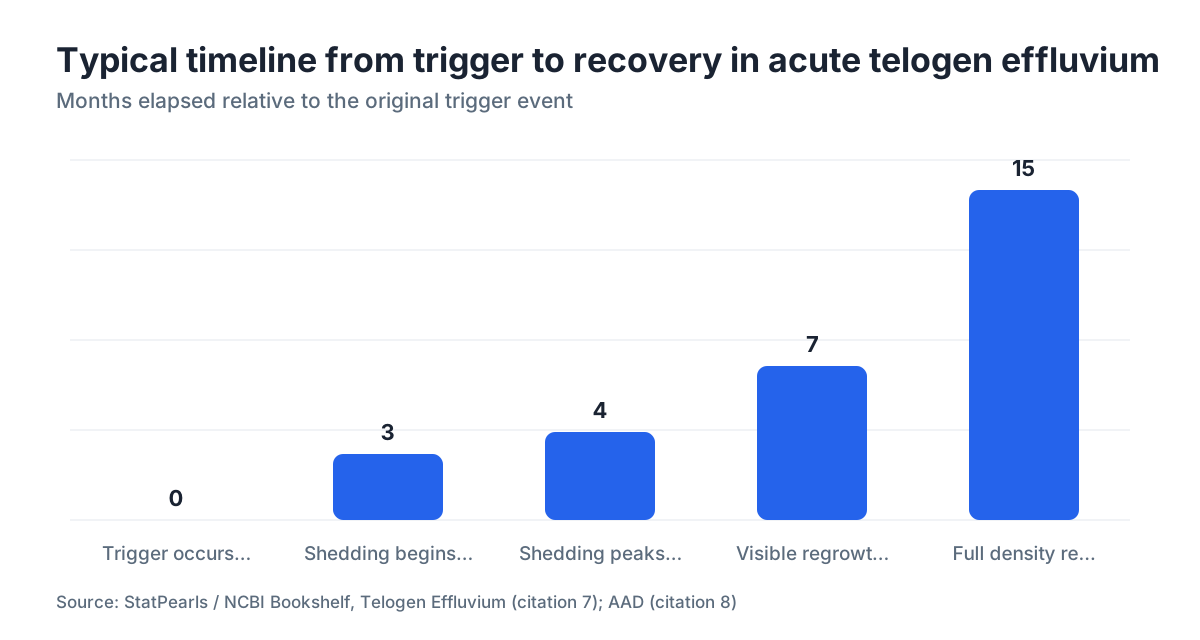
Timeline tells you a lot. Telogen effluvium usually peaks 3 to 4 months after the trigger, then eases over the next 3 to 6 months. If your shedding has run past 8 months and your hairline is physically moving back rather than just thinning, that leans toward androgenetic alopecia, or in some cases chronic telogen effluvium that needs its own workup.
The shed hair itself talks. Telogen hairs, the ones effluvium sheds, have a white bulb at the root. Miniaturized hairs from androgenetic alopecia are thin and short along their whole length, not only at the root. Look at what collects in your brush or the shower drain.
Lab testing is the honest way to rule out nutritional and systemic causes. A useful baseline panel covers ferritin (more telling than hemoglobin), TSH, a complete blood count, and vitamin D. Many clinicians add zinc and B12. The AAD points to ferritin as the most clinically relevant iron marker for telogen effluvium assessment [8].
Dermoscopy or trichoscopy in a dermatologist's office can see follicle miniaturization directly, which is the cleanest way to separate the two conditions [11]. A scalp biopsy is rarely needed but can settle an ambiguous case.
How long does it take for the hairline to recover from telogen effluvium?
Recovery in acute cases, which is the vast majority, follows a predictable arc.
Once the trigger clears, follicles start re-entering anagen. Hair doesn't appear overnight, though. You're waiting for new growth to push out from the scalp surface. At the usual rate of about 0.35 mm per day (roughly half an inch a month), it takes 3 to 6 months from the anagen restart before you see meaningful new length at the hairline [1].
Full density can take 12 to 18 months. That's a long wait when you're inspecting your hairline every morning, but it's the honest number.
At the frontal hairline, the fine short hairs that frame the face come in first, giving the hairline a soft, fuzzy look before the terminal hairs catch up. That's a good sign, not a worry.
Chronic telogen effluvium, defined as shedding past 6 months, has a messier path. It can drag on for years, often because the underlying trigger never got fully addressed. Chronic cases skew toward women over 40, and they're sometimes the first visible sign of androgenetic alopecia that the shedding is unmasking.
Want a baseline to compare against? The free AI hair analysis at MyHairline lets you track your hairline over time instead of guessing from memory.
Can telogen effluvium cause permanent hairline damage?
In its classic acute form, no. Telogen effluvium doesn't scar follicles and doesn't cause permanent loss. That's the medical consensus, and it's the fact to hold onto when the shedding feels like an emergency.
The exception is when something else is riding along. If you carry a genetic tendency toward androgenetic alopecia and then go through a heavy effluvium, the effluvium can expose the pattern faster than it would have shown up on its own. The androgenetic alopecia was already there. The effluvium just made it visible sooner.
There's also a rare condition called chronic diffuse telogen hair loss, where follicle miniaturization runs alongside chronic shedding. That's separate from classic telogen effluvium and needs a biopsy to confirm.
Long-standing nutritional deficiencies, if severe and sustained enough, could in theory wear on follicle health over years, but nobody has good data on how deficiency duration maps to permanent loss. So the practical move is simple: fix nutritional triggers fast, both to stop the shedding and to give follicles the best shot at recovery.
For most people reading this, telogen effluvium is temporary. The hairline that looks thin now will very likely recover once the trigger is found and removed.
What treatments actually help telogen effluvium at the hairline?
The most effective treatment is finding and removing the trigger. Obvious, sure, but worth saying plainly, because it's the step most people skip in favor of buying products.
If ferritin is low, iron supplementation is often the first move. Some clinicians target a ferritin of at least 40 micrograms per liter for hair recovery, though the optimal threshold is debated and the evidence isn't as clean as we'd like. A 2006 review in the Journal of the American Academy of Dermatology found iron deficiency without overt anemia was associated with hair loss but stated the causal relationship was not established for all patients [5].
Minoxidil comes up a lot for effluvium, and the rationale is fair: it stretches the anagen phase and increases follicular blood flow. The FDA has approved topical minoxidil 2 percent for women and 5 percent for both sexes for androgenetic alopecia, not specifically for telogen effluvium. Clinicians do use it off-label during recovery to hold density while natural regrowth catches up, especially at the hairline. If you're weighing it, minoxidil for men covers the evidence, and read minoxidil side effects before you start.
If androgenetic alopecia is running concurrently, treat that DHT-driven component too. In men, finasteride and finasteride and minoxidil combinations are the evidence-based options. DHT blockers won't fix effluvium itself, but they can keep the androgenetic unmasking from becoming permanent.
Supplements beyond iron get murkier. Biotin is marketed hard for hair loss, but the evidence that biotin helps people without a true deficiency (which is rare) is thin. More on that in hair loss supplements.
Scalp microneedling and platelet-rich plasma (PRP) have building evidence for androgenetic alopecia but almost no controlled trial data for telogen effluvium recovery. Neither is something I'd spend money on as first-line care for effluvium.
The honest plan: fix the trigger, fix the deficiency, wait. That works for most people.
Does telogen effluvium affect women and men differently at the hairline?
The biology is the same, but the experience and the look differ by sex in a few practical ways.
Women get telogen effluvium more often. The common triggers, pregnancy, postpartum hormone shifts, thyroid disease, iron deficiency, are simply more prevalent in women. Postpartum effluvium alone affects an estimated 40 to 50 percent of new mothers to some degree [10].
The baseline hairline shape differs too. Men usually have a more defined, angular hairline with a sharp border. Women tend toward a curved, gradual frontal fringe with finer terminal hairs mixed in. In women with effluvium, a widening central part is often the loudest sign, but frontal and temple thinning show up frequently.
For men, here's the complication: the frontal hairline and temples are exactly where androgenetic alopecia strikes first. So a man who spots temple thinning during or after a stressful stretch might have effluvium, early androgenetic alopecia, or both. That's genuinely hard to untangle without a clinical workup, and the distinction matters. One resolves on its own. The other needs long-term treatment to stop progression.
Oral minoxidil has gained ground for both sexes in recent years for diffuse loss, including effluvium-related thinning. See oral minoxidil for dosing and evidence.
When should you see a doctor about hairline changes from telogen effluvium?
See a dermatologist if any of these fit you.
Shedding has run past 6 months without clear improvement. Your hairline is physically receding, meaning the frontal border is moving back and the temples are forming a defined recession, rather than just thinning through an existing hairline. You have patchy loss anywhere on the scalp, eyebrows, or body, which points more toward alopecia areata. Your pull test comes back strongly positive and you have signs of thyroid disease (fatigue, weight changes, temperature intolerance, constipation) or iron deficiency (fatigue, pallor, shortness of breath). You're a man over 25 with temple thinning and a family history of male pattern baldness, because early androgenetic alopecia often coexists with and gets triggered by effluvium.
A board-certified dermatologist can run trichoscopy, order the right labs, and if needed do a punch biopsy that classifies exactly what's happening in your follicles [11]. That information beats six months of guessing and buying supplements.
If a hair transplant ever becomes a long-term option after confirmed, stable androgenetic hair loss, the timing and process in hair transplant are worth reading. Surgeons want telogen effluvium fully resolved before operating, so you're transplanting into a stable baseline.
Are there lifestyle factors that worsen telogen effluvium at the hairline?
Several, and some of them are things people do in the name of health.
Crash dieting is one of the most reliable triggers. Dramatic caloric restriction, especially below 1,000 calories a day, shocks the follicle cycle within weeks. The effluvium shows up 2 to 4 months later, after the diet has ended and the person feels fine, which makes the link easy to miss [7]. There's even some evidence that creatine supplementation can move DHT levels, worth a look in does creatine cause hair loss if that's part of your routine.
Chronic sleep deprivation raises cortisol, which can push follicles toward telogen. The data here comes mostly from animal models and small human observational studies, so I won't oversell the certainty, but the direction of the effect holds up.
High-tension hairstyles aren't telogen effluvium. They cause a separate condition, traction alopecia, that can permanently damage hairline follicles at the temples. Still, if you're already in effluvium, easing mechanical stress on the hairline (tight ponytails, extensions, aggressive brushing) is sensible.
Aggressive chemical treatments, bleaching, and heat don't cause effluvium either, but they add breakage that gets counted in your daily shed, making things look worse than the follicle-level reality.
The MyHairline free AI scan helps you see whether hairline density is actually changing over time or whether the shedding is holding steady, which takes some of the anxiety out of the wait.
Sources
- StatPearls, NCBI Bookshelf - Physiology, Hair
- Journal of Clinical and Aesthetic Dermatology 2015 - Chronic telogen effluvium in women
- JAAD International 2021 - COVID-19 associated hair loss
- Journal of the American Academy of Dermatology 2006 - Iron deficiency and hair loss
- StatPearls, NCBI Bookshelf - Telogen Effluvium
- American Academy of Dermatology - Hair loss diagnosis and treatment
- Journal of the American Academy of Dermatology 2017 - Postpartum hair loss
- British Journal of Dermatology 2016 - Trichoscopy in hair and scalp disorders
- NCBI Bookshelf - Androgenetic Alopecia