

TL;DR: Telogen effluvium is temporary hair shedding triggered by stress, illness, nutritional deficiency, or hormonal shifts. The most reliable remedy is finding and fixing the trigger. Most cases resolve on their own within 3 to 6 months. Minoxidil can speed regrowth, and correcting iron or vitamin D deficiency helps when those are the cause. No single supplement or shampoo fixes it fast.
What is telogen effluvium and why do you shed so much hair?
Hair grows in cycles. Roughly 85 to 90 percent of your scalp hairs are in the anagen (growth) phase at any given time, and only about 10 to 15 percent are in telogen, the resting phase that ends in shedding [1]. A significant physiological stress, anything from a high fever to surgery to a crash diet, can force a large batch of anagen hairs to shift prematurely into telogen. About 2 to 3 months after the trigger, those hairs fall out at the same time, producing the alarming clumps on your pillow or in the shower drain that define telogen effluvium.
The reason that 2-to-3-month lag trips people up is that by the time the shedding starts, the original stressor is often long gone. People think the shedding is the new problem, when it is actually the delayed echo of something that happened earlier.
Shedding more than 100 hairs a day for weeks is the classic presentation, though counting is impractical. A cleaner sign is a positive pull test: if you gently tug 40 to 60 hairs from different scalp zones and more than 10 percent come out easily, that is considered a positive result [2]. Diffuse thinning across the entire scalp, rather than a receding line at the temples, is what separates telogen effluvium from pattern hair loss.
Here is the part that matters. The follicle itself is not destroyed. The hair is gone but the root is alive. That is why telogen effluvium is considered reversible in most people.
What triggers telogen effluvium in the first place?
There is no single cause. Telogen effluvium is a symptom, not a disease, and the remedy you need depends entirely on which trigger is driving yours. The most common ones are:
- Sudden weight loss or very low calorie intake (below roughly 1,000 kcal/day is particularly implicated) [3]
- Iron deficiency, which can push serum ferritin below 30 ng/mL and impair the hair cycle [4]
- Thyroid dysfunction, both hypo and hyperthyroid
- Postpartum hormonal shifts (postpartum hair loss typically peaks around 3 to 4 months after delivery)
- Major illness or surgery, including COVID-19 infection [5]
- Psychological or physical stress
- Vitamin D deficiency (serum 25-OH-D below 20 ng/mL is associated with higher shedding in several small studies)
- Medications, including some blood thinners, retinoids, beta blockers, and antidepressants
Chronic telogen effluvium, where the shedding lasts longer than 6 months, is a different animal. It is more common in women in their 30s and 40s, the trigger is often never cleanly identified, and it can cycle on and off for years. If your shedding has lasted more than 6 months, see a dermatologist rather than self-treating, because chronic cases warrant a full blood panel and sometimes a scalp biopsy to rule out other conditions.
Knowing what causes hair loss more broadly can also help you rule out androgenetic alopecia, which needs different treatment.
How long does telogen effluvium last without treatment?
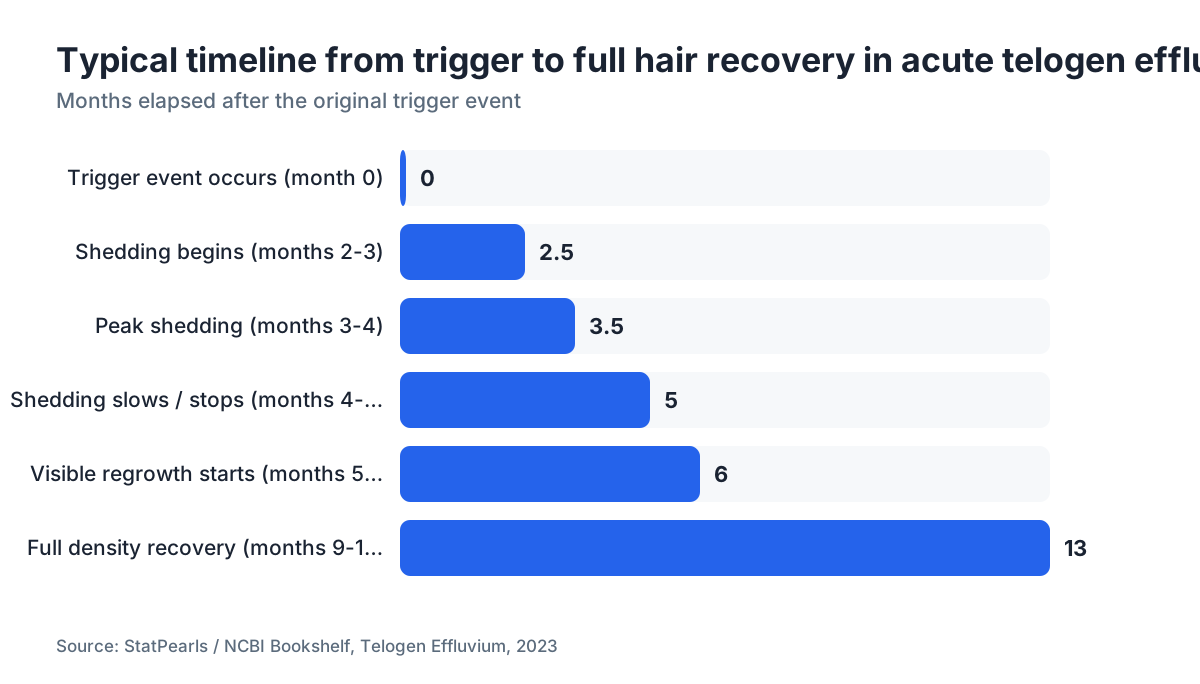
Acute telogen effluvium typically runs its course in 3 to 6 months after the triggering event is resolved [1]. The shed phase lasts roughly 1 to 3 months, and then regrowth begins. You usually see short baby hairs around the hairline first, sometimes within 4 to 6 weeks of the shed slowing down.
Full recovery, meaning your hair returns to its pre-shed density, can take 9 to 18 months because new hairs grow roughly half an inch per month. So the follicles may reactivate quickly, but it takes a long time before you actually notice the difference in the mirror.
The timeline gets worse if the trigger is still active. Ongoing iron deficiency, continued caloric restriction, or unmanaged thyroid disease can stretch acute telogen effluvium into the chronic form. This is why "wait and see" is a legitimate strategy only if you have also investigated and addressed the underlying cause. Waiting with an untreated deficiency is not a remedy. It just delays recovery.
Which remedies for telogen effluvium have real evidence behind them?
Here is where most articles let readers down. The internet is full of supplements and protocols presented with equal confidence regardless of whether they have evidence. So let me separate what we actually know.
Remove the trigger (highest evidence, free) This is the only thing universally supported. Correcting iron deficiency, stabilizing thyroid levels, stopping the offending medication, eating enough calories, managing the stressor: each of these has a direct evidence link to hair cycle recovery [3][4]. No topical or supplement replaces this step.
Minoxidil topical 2% or 5% (moderate evidence) Minoxidil is FDA-approved for androgenetic alopecia, not specifically for telogen effluvium [6]. But because it prolongs the anagen phase and can speed up regrowth, some dermatologists use it off-label during the recovery phase, particularly for cases lasting longer than 6 months. A 2021 review in the Journal of the American Academy of Dermatology found minoxidil shortened the recovery period in telogen effluvium compared with no treatment, though the studies were small [6]. If you try it, read about minoxidil side effects first, because initial shedding (paradoxical effluvium) in the first few weeks is common and alarms people who do not expect it. See the full minoxidil for men guide for dosing details.
Correcting iron deficiency (good evidence) A serum ferritin below 30 ng/mL has been associated with hair loss in several studies, and supplementing to bring ferritin above 70 ng/mL is recommended by some dermatologists [4]. Reviews on ferritin and hair loss suggest correcting levels before expecting hair cycle normalization. Iron supplementation typically takes 3 to 6 months to produce measurable change in ferritin, and another few months before hair density visibly improves.
Vitamin D supplementation (weak but plausible evidence) Vitamin D receptors are present in hair follicles, and low serum 25-OH-D has appeared in multiple cross-sectional studies of women with telogen effluvium [7]. Most of these are association studies, not randomized trials. Supplementing to correct a documented deficiency is sensible. Taking megadoses without testing first is not.
Biotin (very weak evidence) Biotin is in every hair supplement on the market. The reality is that biotin deficiency is rare in people eating a varied diet, and there are no quality randomized trials showing biotin supplementation helps telogen effluvium in biotin-sufficient people [8]. It might help if you are actually deficient, which is uncommon. It also interferes with thyroid and troponin lab tests at high doses, which is a real clinical problem [8]. I would not spend money on it unless your doctor has tested and confirmed deficiency.
Platelet-rich plasma (PRP) (emerging, limited data) PRP injections, where your own platelets are concentrated and injected into the scalp, show some promise in androgenetic alopecia trials. For telogen effluvium specifically, the controlled trial data is thin. It is expensive, typically $500 to $1,500 per session, and not a standard first-line recommendation.
Scalp massages (low harm, low evidence) A 2016 standardized study from Aderans Research Institute found that 4 minutes of daily scalp massage for 24 weeks increased hair shaft thickness [9]. It did not specifically study telogen effluvium, and it measured thickness, not density or shedding rate. But the harm is zero, the cost is zero, and it may help circulation. Fine to include in your routine.
Ketoconazole shampoo (minor adjunct) Some dermatologists suggest 2% ketoconazole shampoo as an adjunct because it has weak anti-androgenic activity and may reduce scalp inflammation. Evidence specific to telogen effluvium is minimal, but it does not hurt if you have a scalp that tends toward dandruff.
Check out our hair loss supplements guide for a full breakdown of what is in popular supplement stacks and what the trial data actually shows.
What should you eat to help telogen effluvium recover faster?
Nutrition is the most directly modifiable factor for most people with telogen effluvium, and it does not require supplements if you are eating a reasonably balanced diet.
Protein matters more than most people realize. Hair is mostly keratin, which is protein. Studies on populations with low protein intake, including those with eating disorders, show clear hair cycle disruption [3]. Aim for 1.2 to 1.6 grams of protein per kilogram of body weight per day during recovery. That is not a high-protein bro-diet level, just enough to give the hair follicle adequate amino acids.
Iron-rich foods include red meat, lentils, spinach (though non-heme iron from plants absorbs less efficiently), and fortified cereals. Pairing plant iron sources with vitamin C meaningfully improves absorption.
Zinc deficiency can also impair hair growth. Oysters, beef, pumpkin seeds, and chickpeas are good sources. Zinc supplementation should stay under the upper tolerable intake of 40 mg/day set by the NIH, because excess zinc actually causes hair loss by competing with copper absorption [10].
One thing almost nobody says clearly: crash dieting is one of the most reliable ways to trigger telogen effluvium and also one of the most reliable ways to prevent recovery. If your hair is shedding and you are restricting calories heavily, the diet is almost certainly part of the problem. Eating enough is not optional during recovery.
Are there prescription treatments for telogen effluvium?
Most dermatologists do not prescribe a telogen effluvium-specific medication because, again, the condition is usually self-limiting once the trigger is gone. But there are situations where prescription treatment makes sense.
If blood tests show hypothyroidism, thyroid hormone replacement is the treatment and the hair loss will follow. If oral contraceptives triggered the effluvium, switching to a lower-androgen formulation or a non-hormonal method may help.
For cases overlapping with androgenetic alopecia, meaning you had a genetic predisposition and the telogen effluvium unmasked it, dermatologists may consider finasteride for men or spironolactone for women. Finasteride works on the DHT pathway that drives pattern loss, not on the telogen shift itself, but if you have both conditions happening at once, treating the androgenetic component makes sense. The finasteride and minoxidil combination is commonly discussed for this overlap.
Oral minoxidil at low doses (0.25 to 1.25 mg/day in women, 2.5 to 5 mg in men) is an off-label option that has gained traction in recent years and avoids the scalp irritation some people get from topical formulations. See our oral minoxidil guide for the tradeoffs.
If you are considering a DHT blocker, understand that those address pattern hair loss, not telogen effluvium. If your diagnosis is purely telogen effluvium with no androgenetic component, a DHT blocker adds no benefit.
How do you know if your hair loss is telogen effluvium or something else?
This question deserves a direct answer because confusing telogen effluvium with androgenetic alopecia, alopecia areata, or scarring alopecias leads to wrong treatment choices.
Telogen effluvium looks like diffuse thinning across the whole scalp, not a receding front hairline or crown thinning in a pattern. The shed hairs typically have a white bulb at the root (telogen hairs) rather than a club-shaped bulb. Onset is usually tied to a recent stressor 2 to 3 months prior.
Androgenetic alopecia, the most common type of hair loss in men and women, follows a predictable pattern. In men it starts at the temples and crown (see the receding hairline guide for more on that). In women it tends to cause central parting widening. It is progressive and chronic, not a sudden shed event.
Alopecia areata presents as round, smooth, well-defined patches rather than diffuse thinning. It has an autoimmune mechanism and needs different treatment.
If you are genuinely unsure, a board-certified dermatologist can do a scalp biopsy or trichoscopy that separates the conditions with high accuracy. Self-diagnosis from internet photos has real limits here, particularly because telogen effluvium and androgenetic alopecia can and do coexist.
If you want a starting point before a clinic visit, the free AI hair scan at MyHairline can help you see whether your pattern looks more like diffuse shedding or patterned thinning, though it does not replace a diagnosis.
What lifestyle changes support telogen effluvium recovery?
These are not exciting recommendations, but they are real.
Sleep. Chronic sleep deprivation raises cortisol, which is a known disruptor of the hair cycle [1]. Seven to nine hours is the range most evidence points to for adults.
Stress management. Easier said than done, but the techniques with the best trial data for cortisol reduction are consistent aerobic exercise, cognitive behavioral therapy, and mindfulness-based stress reduction. What you pick matters less than doing something consistently.
Gentle hair handling. Tight ponytails and braids add traction stress on follicles that are already in a vulnerable phase. Heat styling on high settings is not causing telogen effluvium, but it can break fragile regrowing hairs before they reach visible length. Loose styles and lower heat settings are worth the adjustment.
Stop blaming your shampoo. No shampoo causes telogen effluvium, and no clarifying shampoo cures it. Daily washing does not increase shedding in any controlled study. Washing less does not protect hairs that are ready to shed. They fall out in the shower because that is when you run your fingers through, not because water is the trigger.
What blood tests should you ask for if you have telogen effluvium?
A targeted panel rather than "check everything" is more useful. The American Academy of Dermatology's guidance on evaluating hair loss recommends at minimum a complete blood count, serum ferritin, thyroid-stimulating hormone (TSH), and where indicated, zinc, vitamin D (25-OH-D), and a metabolic panel [2].
Ferritin is the specific one to push for, because standard iron panels often come back "normal" even when ferritin is below 30 ng/mL. Request ferritin specifically, more than serum iron or hemoglobin.
For women, particularly those with irregular cycles, DHEA-S, total and free testosterone, and prolactin can identify hormonal contributors. Estrogen and progesterone are worth checking if you are postpartum or perimenopausal.
Know the difference between "in range" and "optimal." A ferritin of 12 ng/mL is technically above the lab's lower limit but almost certainly insufficient for hair follicle function. Same with vitamin D: a level of 21 ng/mL clears the clinical deficiency threshold but may not be adequate. Push your doctor for the numbers, not a pass/fail.
A full picture of your bloodwork, read against your history, is how you find the real cause rather than guessing and buying supplements.
Which telogen effluvium remedies are a waste of money?
Nobody wants to hear this part, but some of what is sold aggressively to people with hair loss has almost no evidence behind it.
High-dose biotin supplements (5,000 to 10,000 mcg/day) are the biggest offender. The FDA issued a safety communication in 2019 specifically warning that high biotin intake interferes with lab test results, including thyroid tests, troponin (a cardiac marker), and hormone panels [8]. If you are taking high-dose biotin and getting bloodwork done to investigate your hair loss, you may be corrupting the very tests meant to find the cause. The AAD does not recommend biotin supplementation for hair loss without documented deficiency.
Proprietary hair growth shampoos with peptides, caffeine, saw palmetto, or "growth factors" are almost universally underresearched. Caffeine shampoo has a few pilot studies suggesting it may inhibit DHT in the follicle, but the contact time in a shampoo is seconds, and the dosing needed is uncertain. The evidence is nowhere near what the marketing implies.
Laser caps (low-level laser therapy, LLLT) have FDA clearance for androgenetic alopecia, not telogen effluvium. The mechanism (photobiomodulation) is plausible but the clinical evidence for TE specifically is sparse. At $200 to $800 for a device, that is a lot of money for uncertain benefit.
Hair transplants are simply not appropriate for active telogen effluvium. A hair transplant moves healthy follicles from a donor area, and if you have active shedding, the transplanted hairs may themselves enter telogen. Surgeons will (or should) decline to operate while active TE is ongoing. Get the condition under control first.
Can telogen effluvium come back after it resolves?
Yes. And this is something most articles gloss over.
If you had one episode triggered by a diet, illness, or stress event, and you resolved that trigger, the odds of a recurrence from that same trigger are low. But the susceptibility to future triggers remains. A new illness, a new stretch of severe stress, another restrictive diet, these can all produce another round.
Some people, particularly women in midlife, develop what is called chronic telogen effluvium, where the condition fluctuates over years without a cleanly identifiable single trigger. The mechanism is not fully understood, and treatments are less predictable. The key difference from pattern hair loss is that in chronic TE the overall hair density usually stays stable or fluctuates rather than showing a clear progressive downward trend.
If you have had more than two episodes, that pattern itself is worth discussing with a dermatologist. Ongoing nutritional monitoring, thyroid surveillance if you have had thyroid issues, and real stress-management habits are more valuable investments than any supplement for someone with recurrent TE.
Sources
- StatPearls (NCBI Bookshelf), 'Telogen Effluvium'
- American Academy of Dermatology, 'Hair loss types: Diagnosis and treatment'
- Dermatology Practical & Conceptual, 'Diet and hair loss: effects of nutrient deficiency and supplement use' (2017)
- Journal of Korean Medical Science, 'The Role of Scalp Hair Follicles in Serum Ferritin Levels' / review on ferritin and hair loss
- Journal of the American Academy of Dermatology, 'Hair loss as a sequela of COVID-19' (2021)
- Journal of the American Academy of Dermatology, 'Minoxidil and its use in hair disorders: a review' (2021)
- Skin Pharmacology and Physiology, 'Vitamin D and the Hair Follicle' (2012)
- U.S. Food and Drug Administration, 'Biotin (Vitamin B7): Safety Communication' (2019)
- ePlasty (Aderans Research Institute), 'Standardized Scalp Massage Results in Increased Hair Thickness' (2016)
- National Institutes of Health Office of Dietary Supplements, 'Zinc: Fact Sheet for Health Professionals'
- American Academy of Dermatology, 'Hair loss: Who gets and causes'