

TL;DR: Telogen effluvium is temporary shedding triggered by stress, illness, crash dieting, or hormonal shifts. Most cases resolve on their own in 3 to 6 months once the trigger is gone. Self-care means finding and fixing the trigger, correcting nutritional deficiencies, and protecting fragile new growth. No topical product cures it, but a few evidence-based steps genuinely shorten the timeline.
What is telogen effluvium and why does it happen?
Telogen effluvium (TE) is diffuse hair shedding that happens when a large number of follicles get pushed early into the telogen (resting) phase of the hair cycle. Normally about 5 to 15 percent of your scalp hairs sit in telogen at any given time. [1] When a big physical or psychological stressor hits, that percentage spikes, and you shed those resting hairs two to four months later. That delay is what makes TE so disorienting. You lose a job in January, your hair falls out in March, and you can't connect the two.
The trigger list is long. Surgery, high fever, COVID-19 infection, childbirth, rapid weight loss, crash dieting, iron deficiency, thyroid dysfunction, and severe psychological stress all show up over and over in the dermatology literature. [2] Some medications do it too: certain antidepressants, retinoids, anticoagulants, and hormonal contraceptives. The trigger doesn't have to be one dramatic event. A few months of bad sleep stacked on a restrictive diet can push follicles into telogen quietly.
Acute TE usually lasts fewer than 6 months and clears completely once the trigger is gone. [1] Chronic TE means shedding that lasts longer than 6 months. It's less common, more frustrating, and harder to pin on a single cause. Which kind you have changes how aggressively you should approach self-care.
For how TE fits into the larger picture of hair loss, the telogen effluvium overview covers the clinical side in more detail.
How is telogen effluvium different from permanent hair loss?
This is the question that keeps people up at night. Here's the reassuring answer: TE doesn't destroy follicles. The hairs that shed were going to shed eventually anyway. They just got pushed out early. The follicle is still alive, still able to grow a new shaft, and it will once your body stabilizes. That's the opposite of androgenetic alopecia (pattern hair loss), where DHT shrinks the follicle over years until it stops producing visible hair.
How do you tell them apart? TE is diffuse. You lose hair from all over the scalp roughly equally instead of in a set pattern. Pattern loss in men follows the Norwood scale, thinning first at the temples and crown. In women it usually shows as a widening part or crown thinning. A sharp, defined recession at the temples is less likely to be pure TE.
The pull test is a rough at-home screen. Grab a small cluster of about 60 hairs near the scalp, apply gentle traction, and pull slowly. Losing more than 6 hairs counts as positive and suggests active shedding. [3] It isn't diagnostic on its own, but it helps you track whether the shed is slowing.
Shedding more than 100 to 150 hairs a day for more than a couple of weeks is the threshold most dermatologists use to call TE clinically significant. [2] The average person sheds 50 to 100 hairs daily. Counting hairs is tedious and anxiety-feeding, so most people just photograph the same part of their scalp in the same light each week instead of actually counting.
If you're not sure the shedding is TE, what causes hair loss walks through how dermatologists sort the main types apart.
What self-care steps actually help telogen effluvium recover faster?
The single most effective thing you can do is find the trigger and remove it. Everything else is supporting cast. If you're eating 900 calories a day, no supplement overrides that. If your thyroid is off, no scalp massage fixes it.
Here's where evidence-based self-care actually has footing:
Correct nutritional deficiencies first. Iron deficiency is one of the most consistently documented reversible causes of TE. A review in the Journal of the American Academy of Dermatology found iron deficiency in a large share of women with chronic diffuse hair loss. [4] Ferritin is the number to watch, more than hemoglobin. Many dermatologists treat hair loss when ferritin falls below 30 to 40 ng/mL, even when hemoglobin looks normal. A blood panel with ferritin, TSH, B12, vitamin D, and zinc gives you a map of what to fix.
Eat enough protein. Hair is almost entirely keratin, a protein. During calorie restriction or illness, the body deprioritizes hair to keep organs running. Hitting roughly 0.8 to 1.0 grams of protein per pound of bodyweight gives follicles the raw material they need. No shakes required. Eggs, fish, legumes, and Greek yogurt work fine.
Manage the stress response. Easier said than done, but there's a reason dermatologists ask about life stress. Cortisol disrupts the hair cycle. A 2021 study in Nature found that chronic stress raises corticosterone, which blocks hair follicle stem cell activation. [5] Real behavior change here (consistent sleep, regular exercise, less catastrophizing about the hair loss itself) has a biological rationale, more than a feel-good one.
Be gentle with your hair. New hairs are fragile at the root. Tight ponytails, hard brushing, and frequent heat styling can snap them before they establish. Not a cure, but it keeps you from mechanically making a sensitive situation worse.
Scalp massage. The evidence is thin and most studies are small, but a 2016 study in ePlasty found that standardized scalp massage (9 minutes daily for 24 weeks) increased hair thickness in Japanese men. [6] The mechanism may be mechanical stimulation of dermal papilla cells. It costs nothing and the downside is essentially zero.
Which supplements have real evidence for telogen effluvium?
The supplement market for hair loss is full of claims that outrun the data. Here's an honest read of what has backing versus what's mostly marketing.
| Supplement | Evidence level | Notes |
|---|---|---|
| Iron (ferritin repletion) | Strong for deficient individuals | Only helps if you're actually deficient. Excess iron is harmful. Test first. |
| Zinc | Moderate for deficient individuals | Deficiency links to TE; supplementing deficient patients shows benefit. Don't supplement blindly. |
| Vitamin D | Moderate for deficient individuals | Low serum vitamin D is associated with TE in several case-control studies. [7] |
| Biotin | Weak; only helps with biotin deficiency | Biotin deficiency causing hair loss is rare. If your levels are normal, more does nothing meaningful. |
| Protein/amino acids | Strong (whole diet, not pills) | Dietary protein matters; isolated amino acid supplements have weak evidence. |
| Marine collagen/Viviscal | Limited; industry-funded trials | Some small trials show less shedding, but most are sponsored by the maker. |
| Saw palmetto | Weak for TE specifically | More relevant for androgenetic alopecia. See dht blocker for that context. |
The AAD recommends treating confirmed deficiencies rather than supplementing on a hunch. [8] A complete blood count plus a micronutrient panel before you buy anything is the smartest $100 to $200 you can spend.
For a closer breakdown of what the evidence says about specific products, hair loss supplements goes through the clinical data category by category.
Does minoxidil help telogen effluvium?
Minoxidil doesn't treat the underlying TE, but there's a reason some dermatologists mention it. Minoxidil extends the anagen (growth) phase of the hair cycle and may shorten telogen, which can speed the jump from shed follicle to new growth. [9] The FDA has approved topical minoxidil for androgenetic alopecia, not TE, so any use for TE is off-label.
The practical question is whether it makes sense for you during recovery. Some people find it reassuring to feel like they're doing something active. Others can't stand the shedding in the first 4 to 6 weeks of use (normal and expected as minoxidil pushes resting hairs out) on top of the TE shed they already have.
If you do use it during TE recovery, start after you've addressed the trigger and any deficiencies, not at the peak of shedding. The minoxidil for men article covers dosing and formulation, and minoxidil side effects is worth reading first, especially around that initial shed.
Oral minoxidil at low doses (0.25 to 1.25 mg daily) is used more and more in dermatology for diffuse hair loss in women, though it's still off-label for TE. oral minoxidil covers what's known. Neither topical nor oral minoxidil replaces fixing the root cause.
What should you eat to help your hair recover?
There's no miracle hair-growth diet, but there are clear nutritional floors below which recovery stalls. Most TE cases that drag on longer than expected have a nutritional problem underneath.
Calories come first. Severe restriction suppresses hair growth because the body reads it as a famine signal. Studies of patients with anorexia nervosa consistently show diffuse hair loss that reverses with nutritional rehabilitation. You don't need a surplus, but you need to be above roughly 1,200 to 1,400 calories for women and 1,500 to 1,800 for men as a rough minimum, and even those floors can be too low depending on your size and activity.
Protein is next. Aim for at least 50 grams a day at the absolute minimum; more is better during recovery. Eggs earn their place because they carry protein and biotin together in a form the body uses well.
Iron from food: red meat, dark leafy greens, lentils, and fortified cereals all count. Pairing plant iron with vitamin C (a glass of orange juice with your spinach salad) meaningfully improves absorption.
Zinc-rich foods include oysters, beef, pumpkin seeds, and chickpeas. Selenium, in Brazil nuts and seafood, supports thyroid function, which loops back to hair cycle regulation.
Omega-3s from fatty fish, walnuts, or flaxseed have some evidence for cutting inflammation at the follicle, though the data for TE specifically is thin. Salmon twice a week is cheap, healthy anyway, and carries no downside.
What to avoid: very low-calorie diets while hair is already shedding, aggressive juice cleanses (usually far too low in protein), and mega-dose vitamin A supplements. Hypervitaminosis A is itself a documented cause of TE.
How long does telogen effluvium last, and when will hair grow back?
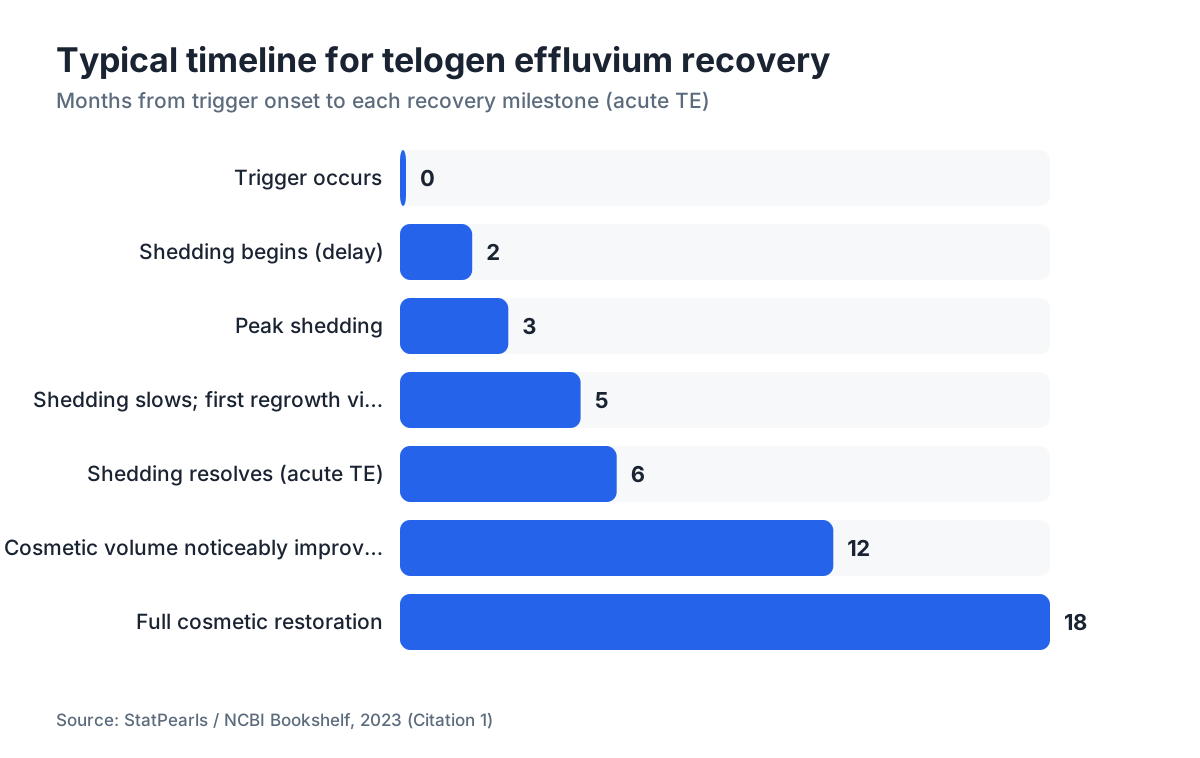
Acute TE, where a single identifiable trigger caused the shed, usually resolves within 3 to 6 months of trigger removal. [1] New hairs show up as short, fine regrowth within 3 to 4 months of the shedding peak. Full cosmetic restoration to your old density can take 12 to 18 months, because hair grows about half an inch (1.25 cm) per month and you're starting from nothing at the scalp.
The frustrating math: lose real density in April, shedding stops by July, and those new July hairs are invisible stubble at the scalp. By October they might be 1.5 inches long. A noticeable jump in volume might not show until early the next year. That timeline is hard to sit with, but it's real.
Chronic TE, meaning shedding beyond 6 months, is a different animal. It goes with ongoing low-grade triggers (continuous psychological stress, persistent iron deficiency, subclinical thyroid dysfunction) rather than one recoverable event. It clears when those ongoing triggers do, which is harder to pull off. In true chronic TE, some dermatologists use low-dose minoxidil to manage the shed while they hunt for the cause.
If you've been shedding for more than 6 months with no clear trigger and your blood work is normal, see a dermatologist for a scalp biopsy. It's the only reliable way to confirm the diagnosis and rule out cicatricial (scarring) alopecias, which don't recover on their own.
To track where you're starting from objectively, MyHairline's free AI scan (/scan) can photograph and analyze your density so you have a baseline to compare against as regrowth comes in.
What makes telogen effluvium worse?
Some habits actively drag out recovery. Worth knowing, because a lot of people do several at once while trying to fix the problem.
Crash dieting during recovery is the biggest self-inflicted mistake. People notice the shed, decide it's because they're overweight, start a very low-calorie diet, and make it much worse. If you want to lose weight while managing TE, keep the deficit modest (300 to 500 calories below maintenance) and protein high.
Over-supplementing vitamin A. Retinol and synthetic retinoids cause TE at high doses. That includes topical tretinoin for skin, which can occasionally trigger some local shedding, but the bigger risk is high-dose vitamin A supplements (over 10,000 IU daily). Multivitamins that stack vitamin A can add up if you also eat a liver-heavy diet.
High reactivity to the shedding itself. Anxiety about hair loss raises cortisol, a documented disruptor of the hair cycle. This is a real physiological loop, more than a mindset issue. Finding a way to tolerate the uncertainty matters for the biology, not only your mental health.
Tight hairstyles and mechanical traction. These add traction alopecia on top of TE. If new regrowth gets pulled out before it establishes, you're stretching recovery out.
Stopping necessary medications. Some people quit antidepressants or thyroid meds they blame for the TE without asking a doctor, and the stress of an undertreated condition drives more shedding. Talk to the prescriber before stopping anything.
When should you see a doctor instead of self-managing?
Self-care works well for acute TE with a clear, reversible trigger. It starts to fail you in a few specific situations.
See a dermatologist if shedding has run past 6 months with no clear cause, if you're seeing patchy loss rather than diffuse thinning (which points to alopecia areata instead of TE), if you have other symptoms like fatigue, weight changes, or brittle nails that suggest thyroid or autoimmune disease, or if you've corrected every apparent deficiency and the shedding hasn't slowed after 3 to 4 months.
A dermatologist can order a full panel: ferritin, serum iron and TIBC, CBC, TSH and free T4, vitamin D (25-OH), zinc, B12, ANA (antinuclear antibody), and sometimes DHEA-S and prolactin. That panel takes most of the guessing out of it.
Scalp biopsy is the gold standard for telling TE apart from other diagnoses. It sounds scary but it's a minor outpatient procedure under local anesthesia. The pathology report can tell you definitively whether you're looking at active telogen effluvium, androgenetic alopecia, or something else.
If androgenetic alopecia turns out to be the concurrent or primary diagnosis, the math changes. finasteride and the combination of finasteride and minoxidil have strong evidence for pattern hair loss specifically, but they're different tools for a different problem. Don't skip the diagnosis step.
How do you manage the emotional side of telogen effluvium?
This section exists because the psychological weight of TE is real and often underestimated by patients and some clinicians alike. Hair is tied to identity, health perception, and social confidence in ways that make a 40 percent temporary drop in volume feel genuinely devastating, even when the prognosis is fully reassuring.
A study in the British Journal of Dermatology found that women with hair loss scored significantly higher on anxiety and depression measures than controls, independent of the actual severity of shedding. [10] Feeling out of proportion to the visible loss is a documented, normal response.
What actually helps: a clear diagnosis and a realistic timeline in hand (uncertainty drives anxiety more than bad news does), connecting with people who've been through TE recovery (the NAAF community and r/TelogenEffluvium have active members with direct experience), and talking to a therapist who understands chronic health anxiety if the obsessive monitoring is eating into daily life.
The monitoring itself can become the problem. Checking the shower drain twice a day, repeating the pull test, and photographing your scalp every 24 hours feeds the anxiety loop without adding useful information. Weekly standardized photos in consistent light are plenty.
Skip the before-and-after rabbit hole on hair loss forums. It's heavily survivorship-biased. The people who didn't fully recover post far less than the people who did.
Are there any proven medical treatments for telogen effluvium beyond self-care?
Past correcting deficiencies and removing triggers, the medical options are limited and mostly adjunctive.
Topical minoxidil (2% for women, 5% for men or women) is the active treatment dermatologists reach for most in persistent TE. The FDA has approved it for androgenetic alopecia [9], so TE use is off-label but widely practiced. It shortens telogen and may help the scalp return to normal cycling faster.
Platelet-rich plasma (PRP) injections have a small but growing evidence base across several hair loss types, with some benefit seen in TE patients, but the studies are small, protocols vary, and it's expensive ($600 to $2,000 per session, typically 3 sessions). Nobody has definitive data here yet.
Nutritional IV infusions get marketed hard at med spas for hair loss and have essentially no quality clinical evidence for TE. Save the money.
Low-level laser therapy (LLLT) devices (helmets, caps, combs) cleared by the FDA for hair loss have very modest evidence. The proposed mechanism is photobiomodulation of follicle stem cells, but the effect size in published trials is small. [11]
Hair transplants aren't indicated for TE at all. A hair transplant is surgery for permanent hair loss where the donor hair is stable. Transplanting during active TE is contraindicated, because the scalp environment is disrupted and the grafts themselves can enter telogen. Any surgeon pushing a transplant for active TE is a red flag.
For people who have both TE and underlying androgenetic alopecia (common), the self-care approach here handles the TE component while the pattern loss may need its own treatment once the shed resolves.
What does a realistic telogen effluvium self-care plan look like week by week?
Putting it into a sequence matters more than any single tip.
Weeks 1 to 2: Investigate, don't act. Get bloodwork before you buy anything. Order ferritin, CBC, TSH, vitamin D, B12, and zinc at minimum. Photograph your part and hairline in good light. Write down your stress and diet history for the past 3 to 6 months. Hunt for the trigger.
Weeks 2 to 4: Address root causes. If bloodwork shows deficiency, start supplementation under doctor guidance. Fix your diet if protein or calories are low. Start managing sleep and stress. Stop anything that could be a dietary trigger (crash diet, mega-dose vitamin A).
Months 1 to 3: Protect and be patient. Switch to a gentle, sulfate-free shampoo. Loosen tight hairstyles. If you're going to use minoxidil, start at the front of this window, after trigger removal, not during peak shedding. Take weekly photos. Do daily scalp massage. Don't change five things at once.
Months 3 to 6: Evaluate progress. Compare week-1 photos to month-3 photos. Shedding should be slowing. You may see short new hairs near the hairline and temples. If shedding hasn't slowed at all by month 3, see a dermatologist.
Months 6 to 18: Wait for cosmetic improvement. The follicles recover before the hair is long enough to see it. This phase is patience, not intervention. Maintain nutrition, keep up any treatment you started, and resist the urge to jump to procedures.
If you can't tell whether you're seeing regrowth or continued loss, a second set of expert eyes helps. MyHairline's free AI scan at /scan can track density changes over time and help you tell whether the trajectory is improving.
Sources
- StatPearls (NCBI Bookshelf), Telogen Effluvium
- American Academy of Dermatology, Hair Loss: Who Gets and Causes
- DermNet NZ, Telogen Effluvium
- Journal of the American Academy of Dermatology, Rushton DH (2002) – Nutritional factors and hair loss
- Nature, Choi S et al. (2021) – Corticosterone inhibits GAS6 to govern hair follicle stem-cell quiescence
- ePlasty, Koyama T et al. (2016) – Standardized scalp massage results in increased hair thickness
- International Journal of Dermatology, Rasheed H et al. (2013) – Serum ferritin and vitamin D in female hair loss
- American Academy of Dermatology, Hair Loss: Diagnosis and Treatment
- FDA, Minoxidil Topical Solution Drug Label
- British Journal of Dermatology, Hunt N and McHale S (2005) – The psychological impact of alopecia
- Lasers in Surgery and Medicine, Avci P et al. (2014) – Low-level laser therapy for hair loss