TL;DR: Minoxidil is an FDA-approved topical (and off-label oral) drug used to slow hair loss and stimulate regrowth, primarily for androgenetic alopecia in men and women. It started as a blood pressure pill. About 40% of users see meaningful regrowth after 12 months. It does not block DHT and must be used continuously to keep results.
What exactly is minoxidil and where did it come from?
Minoxidil started life as a blood pressure drug, an oral pill called Loniten that the FDA approved in 1979 to treat severe hypertension [1]. Doctors noticed something fast: patients on it grew hair in places they did not want it. That side effect, a nuisance in a cardiology clinic, turned out to be worth a fortune.
Upjohn (later Pharmacia, later Pfizer) spent years building a topical version that could act on the scalp without dropping blood pressure to dangerous levels. The result was Rogaine, approved in 1988 for men and in 1991 for women, the first FDA-approved hair loss treatment for both sexes [2]. Generic 2% and 5% topical solutions flooded the market after the patent expired in the late 1990s. That is why a three-month supply now costs under $20 at a drugstore.
The oral form never disappeared. It just stayed in cardiology clinics for decades. Only in the past five or so years have dermatologists adopted low-dose oral minoxidil (0.625 mg to 5 mg daily) off-label for hair loss. More on that below.
How does minoxidil actually work on hair follicles?
The honest answer is that scientists still do not fully understand the mechanism. Here is what they do know. Minoxidil is a potassium channel opener. Applied to the scalp, it widens small blood vessels and is thought to increase blood flow and oxygen delivery to follicles [2]. It also shortens the telogen (resting) phase and pushes follicles into anagen (active growth) earlier than they would go on their own [9].
There is evidence it stimulates follicle cells directly. A 2004 study in the Journal of Investigative Dermatology found that minoxidil raises vascular endothelial growth factor (VEGF) in the outer root sheath of follicles, which promotes new blood vessel formation around them [3]. In plain terms, it may build tiny new vessels to feed the follicle.
One thing minoxidil does not do: block dihydrotestosterone (DHT), the hormone behind most male and female pattern hair loss. That is why pairing it with a DHT blocker like finasteride beats either drug alone [4]. Minoxidil keeps follicles active. Finasteride slows the hormonal damage that shrinks them.
Because the mechanism is partly a black box, predicting who will respond stays imprecise. One clue: sulfotransferase enzyme activity in the scalp. People with higher SULT1A1 activity convert minoxidil to its active form (minoxidil sulfate) more efficiently and tend to respond better. A few specialty labs now sell scalp enzyme tests, but they are not standard care yet.
What hair loss conditions is minoxidil approved or used for?
FDA approval for topical minoxidil covers exactly one condition: androgenetic alopecia (AGA), also called male pattern baldness or female pattern hair loss [2]. That approval covers the 2% solution for women, and both 2% and 5% solution (plus the 5% foam) for men.
Off-label use runs much wider. Dermatologists routinely prescribe or recommend minoxidil for:
- Alopecia areata: an autoimmune condition that causes patchy loss. Evidence is mixed and it is not a primary treatment, but some patients get partial benefit as an add-on.
- Telogen effluvium: diffuse shedding triggered by stress, illness, or hormonal shifts. Minoxidil can help follicles re-enter anagen, though treating the trigger matters more.
- Traction alopecia: loss from tight hairstyles. Topical minoxidil is sometimes used if the follicles are not yet permanently scarred.
- Chemotherapy-related hair loss: limited but growing data suggest oral minoxidil may speed regrowth after chemo-induced alopecia.
- Eyebrow and beard growth: cosmetic off-label use, with small but real trial evidence for modest density gains.
It does nothing on scar tissue. Conditions like lichen planopilaris or central centrifugal cicatricial alopecia kill the follicle for good, and no vasodilator brings those back. Figure out what causes hair loss in your own case before you start anything.
| Condition | FDA-approved? | Evidence level |
|---|---|---|
| Androgenetic alopecia (men) | Yes (2% and 5%) | Strong (multiple RCTs) [2] |
| Androgenetic alopecia (women) | Yes (2%) | Strong (multiple RCTs) [2] |
| Alopecia areata | No | Low-moderate |
| Telogen effluvium | No | Low-moderate |
| Traction alopecia | No | Anecdotal/case series |
| Eyebrow/beard growth | No | Small trials |
How well does minoxidil actually work? What does the research say?
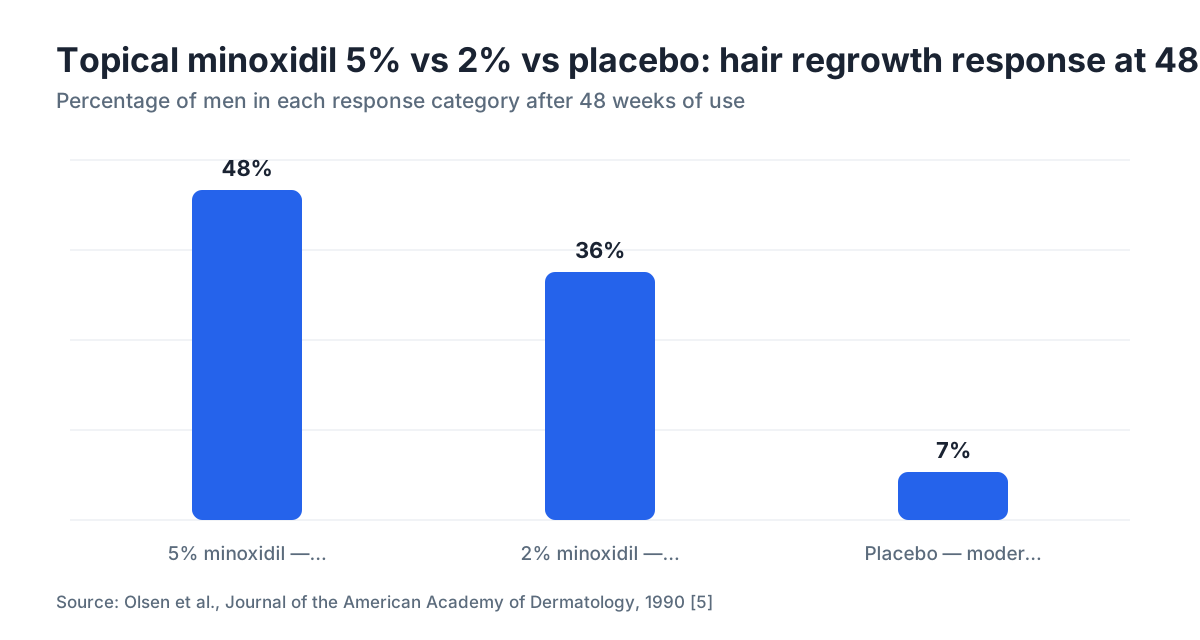
For androgenetic alopecia, 5% minoxidil beats 2%, and both beat placebo. The main trials are decades old but still the reference point. A 1990 multicenter study in the Journal of the American Academy of Dermatology found that 5% topical minoxidil produced 45% more hair regrowth than 2% in men after 48 weeks [5].
Here is the number people quote most: about 40% of men on 5% minoxidil report moderate to dense regrowth after a year, roughly 40% see minimal regrowth, and about 20% see nothing [2]. Those figures are self-reported and shift with study design. Hair counts give something firmer: a mean gain of roughly 18 to 20 hairs per cm² after 48 weeks on 5% solution versus baseline [5].
Women respond well too. The AAD notes that studies show minoxidil 2% significantly raises hair count and weight versus placebo in women with female pattern hair loss [6].
Timing is the part people get wrong. Most users see an initial shed in the first 4 to 8 weeks. That is normal. Minoxidil pushes resting follicles into shedding early so they can restart the cycle. It looks alarming and it is temporary. Real regrowth usually shows up at 3 to 4 months and peaks around 12 months [2].
After that, results plateau. Minoxidil is not a cure. Stop, and most of the regrown hair falls out within 3 to 6 months, because the drug was doing the work, not fixing the follicle.
What is the difference between topical and oral minoxidil for hair loss?
Topical minoxidil (solution or foam, 2% to 5%) goes straight on the scalp once or twice a day. It stays mostly local, with systemic absorption low enough that heart effects are rare at normal doses. This is the over-the-counter, first-line option and where most people start.
Oral minoxidil is a prescription pill, usually 0.625 mg to 2.5 mg daily for women and 1.25 mg to 5 mg daily for men when used for hair. Those are far below the 5 to 40 mg doses used for high blood pressure. A large 2020 study in the Journal of the American Academy of Dermatology found that low-dose oral minoxidil (0.25 mg to 5 mg daily) improved hair density with a manageable side effect profile across a retrospective group of 1,404 patients [7].
Oral has real upsides: no greasy residue, no twice-daily routine, and potentially better coverage for diffuse loss. The downsides are real too. It needs a prescription and blood pressure monitoring, it can cause fluid retention, and about 3% to 4% of patients grow unwanted facial or body hair (hypertrichosis) [7].
Neither form wins for everyone. People who cannot handle topical application (scalp sensitivity, dermatitis) or who forget the twice-daily routine often do better on a once-daily pill. People worried about systemic effects do better with topical. A dermatologist can weigh it against your heart history.
How minoxidil for men differs from women's protocols is worth a separate read.
Who is a good candidate for minoxidil treatment?
Minoxidil works best when you start early. The research is consistent: better outcomes in people with recent or mild-to-moderate loss than in people with long-standing, advanced baldness. If follicles have fully shrunk over many years, there is less for minoxidil to revive.
For androgenetic alopecia, the sweet spot is roughly Norwood II through IV for men and Ludwig I through II for women. People with an early-stage receding hairline often see the clearest benefit.
It is not for everyone. People with cardiac conditions should only use it under a doctor's supervision, especially the oral form. It is not approved for anyone under 18, though off-label pediatric use exists in alopecia areata cases under specialist care. Pregnant women should avoid it: animal studies have shown fetal harm and the FDA labels it pregnancy category C [2].
If your hair loss is sudden, patchy, or comes with other symptoms, do not start minoxidil before seeing a dermatologist. Sudden loss can point to thyroid disease, iron deficiency, lupus, or a dozen other things that minoxidil will not help and could mask.
How do you use minoxidil correctly to get the best results?
For topical minoxidil, the standard from FDA labeling is 1 mL of 5% solution (or half a cap of 5% foam) on a dry scalp twice a day, about 12 hours apart [2][10]. Some dermatologists suggest once daily for women on 2% to cut the risk of facial hypertrichosis from forehead runoff.
Technique matters more than people think. Put it on the scalp, not the hair shafts. Part the hair, apply to the thinning area, spread with your fingertips, then wash your hands. The drug needs about 4 hours on the scalp to absorb before it gets wet. Sleeping on a freshly dosed scalp transfers minoxidil to your pillowcase and then your face, which is how people end up growing cheek hair by accident.
Consistency matters. Missing a dose here and there is fine. Missing weeks defeats the whole thing. Most people who say minoxidil quit working actually quit using it.
Expect nothing visible for at least 3 months. FDA labeling and major dermatology societies say to check results at 4 months and give a full verdict at 12 months [2][10]. Quitting at 6 weeks because you see a shed is the single most common mistake.
Stacking minoxidil with finasteride and minoxidil together outperforms either alone in men with androgenetic alopecia. A 2021 RCT in Dermatology and Therapy found the combination produced significantly greater hair count improvement at 24 weeks than either drug on its own [4].
What side effects should you know about before starting minoxidil?
Topical minoxidil is generally safe but not free of side effects. The most common is scalp irritation (dryness, itching, flaking), which often comes from the propylene glycol carrier in solutions rather than the minoxidil itself. Switching to the foam, which has no propylene glycol, usually fixes it.
The early shed is a side effect of sorts: diffuse increased shedding in weeks 2 to 8. That is the drug working, not failing.
Unwanted hair growth elsewhere is real, usually from solution running down the forehead overnight. Careful positioning and hand washing mostly prevent it.
Systemic effects are rare with topical use but can include dizziness or fluid retention if absorption runs unusually high. With oral minoxidil, fluid retention, lower blood pressure, headache, and hypertrichosis are more common [7]. People with a history of heart disease, pericardial effusion, or angina should not touch oral minoxidil without cardiology clearance.
The full rundown of minoxidil side effects is worth its own read if you are on the fence.
One finding worth keeping in mind: a 2020 systematic review in the Journal of the American Academy of Dermatology concluded that low-dose oral minoxidil had a "favorable safety profile" in dermatological use, with serious adverse events rare, while noting the evidence base is still mostly retrospective rather than large RCTs [7].
Can minoxidil regrow a completely bald area or fix a hairline?
Probably not, if the area has been bald for years. Minoxidil needs living follicles to work on, even shrunken ones. A scalp that has been smooth and shiny bald for more than five years likely has follicles too far gone for any topical vasodilator to recover.
The hairline is its own problem. The frontal hairline responds less than the crown in men. The main 5% minoxidil trials showed the crown (vertex) responding more reliably than the front [5]. That stings, because most men care about their hairline more than their crown.
For real hairline restoration or filling in fully bald patches, a hair transplant is the only option with consistent evidence. Minoxidil can help protect the non-transplanted hair after surgery, which is why many surgeons tell patients to keep using it afterward.
Set expectations honestly: minoxidil slows loss, turns some vellus (wispy, shrunken) hairs back into terminal hairs, and adds density where follicles survive. It rarely delivers results big enough to satisfy someone who started with major bald patches. Starting early is the whole game.
Is minoxidil safe to use long-term?
Topical minoxidil has over 35 years of widespread use behind it, which is a lot of real-world data. Major dermatology guidelines, including those from the American Academy of Dermatology, treat it as safe for long-term continuous use in healthy adults [6].
Blood pressure effects with topical use are minimal. A pharmacokinetic study found systemic absorption of topical 5% minoxidil puts plasma levels far below the threshold needed for any antihypertensive effect in most adults [2].
There is no evidence of tolerance building over time in the usual pharmacological sense. What looks like tolerance is usually the underlying androgenetic alopecia still miniaturizing follicles, which minoxidil slows but never stops. The drug never claimed to fix the root cause.
Annual dermatologist check-ins make sense. For oral minoxidil, blood pressure monitoring and watching for fluid retention is standard. If you are stacking minoxidil with hair loss supplements or prescription drugs, tell your doctor the whole picture.
Pregnancy is the biggest safety concern. If you are pregnant or planning to be, stop minoxidil. The FDA label is explicit. Animal reproductive data showed embryotoxicity and fetotoxicity at doses extrapolated to human use [2].
How does minoxidil compare to other hair loss treatments?
Three treatments carry the strongest evidence for androgenetic alopecia: topical minoxidil, oral finasteride (for men), and hair transplant surgery. Everything else has weaker evidence or applies to fewer people.
Finasteride works through a completely different mechanism, blocking the 5-alpha reductase enzyme that converts testosterone to DHT. It has strong RCT data showing it slows hair loss and improves hair count in men, often better than minoxidil on the hairline. But it carries sexual side effect risk (1.5% to 3.8% of users in trials [8]) and is not approved for premenopausal women who could become pregnant.
Minoxidil has no hormonal mechanism, which makes it safe for women and for men who cannot tolerate finasteride. It is also over the counter, while finasteride needs a prescription.
| Treatment | Mechanism | OTC? | Best for | Evidence |
|---|---|---|---|---|
| Topical minoxidil 5% | Vasodilator | Yes | AGA (men and women) | Strong RCTs [2][5] |
| Finasteride 1 mg | DHT blocker | No (Rx) | AGA (men) | Strong RCTs [8] |
| Minoxidil + finasteride | Combined | No (partially) | AGA (men) | Better than either alone [4] |
| Hair transplant | Surgical | N/A | Advanced loss | High (surgical) |
| Low-dose oral minoxidil | Systemic vasodilator | No (Rx) | AGA, diffuse loss | Moderate (retrospective) [7] |
Platelet-rich plasma (PRP) and low-level laser therapy (LLLT) have evidence bases too, but smaller and less consistent. Red light devices with FDA 510(k) clearance are not the same as FDA approval for efficacy. I would not put them ahead of proven drugs unless you cannot use minoxidil or finasteride.
Not sure where your loss sits on the Norwood or Ludwig scale? The free AI scan at MyHairline gives you a starting point before you pick a treatment tier.
Does minoxidil work for women, and is it different from men's use?
Yes, minoxidil works for women. The FDA-approved dose for women is 2% topical solution twice daily [2]. The 5% foam was later approved for women in some markets, and many dermatologists use it off-label because trials show it works at least as well for female pattern hair loss.
The AAD's clinical practice guidelines, last updated in 2022, list minoxidil 2% and 5% as first-line treatments for female pattern hair loss [6]. Women tend to thin diffusely across the crown (Ludwig pattern) rather than recede at the hairline like men, and that pattern responds reasonably well to minoxidil.
Hypertrichosis is a bigger practical worry for women. Forehead runoff from solutions shows up more. Foam applied at night helps. Some dermatologists prescribe low-dose oral minoxidil (0.625 mg to 1.25 mg) for women precisely because the lower systemic dose causes less facial hair.
Postmenopausal women with FPHL often respond well. Women of childbearing age have to avoid pregnancy while using it. Any woman with sudden or unusual loss should see a dermatologist before assuming minoxidil is the answer.
When should you see a doctor instead of just buying minoxidil over the counter?
Because minoxidil is OTC, it feels like diagnosing and treating your own hair loss is simple. Sometimes it is. A 30-year-old man with classic vertex thinning and a family history of baldness can reasonably start 5% minoxidil without a specialist.
But plenty of situations make self-treating the wrong call. See a dermatologist if:
You have patchy or asymmetric loss, which can mean alopecia areata or a fungal infection rather than AGA. You have rapid diffuse shedding over weeks or months, which points to telogen effluvium driven by thyroid disease, iron deficiency, or systemic illness. You have scalp pain, burning, or visible scarring, which can signal a cicatricial alopecia that minoxidil will not help and may irritate. You are a woman losing hair alongside irregular periods, acne, or hirsutism, which can signal polycystic ovary syndrome (PCOS) where the hormone imbalance itself needs treatment.
Dermatologists have tools OTC shoppers do not: dermoscopy, scalp biopsy, hormone panels, and the pattern recognition that comes from seeing hundreds of cases. Getting the right diagnosis before spending months on minoxidil is worth an appointment. Most insurance plans cover a dermatology visit, and the diagnosis changes the plan a lot.
Sources
- FDA, Loniten (minoxidil tablets) prescribing information
- FDA, Rogaine (minoxidil topical solution) labeling and approval history
- Lachgar S et al., Journal of Investigative Dermatology, 2004 — minoxidil and VEGF upregulation
- Hu R et al., Dermatology and Therapy, 2021 — combination minoxidil and finasteride RCT
- Olsen EA et al., Journal of the American Academy of Dermatology, 1990 — 5% vs 2% minoxidil in men
- American Academy of Dermatology, Hair Loss Clinical Guideline
- Randolph M and Tosti A, Journal of the American Academy of Dermatology, 2020 — low-dose oral minoxidil systematic review
- Merck & Co., Propecia (finasteride 1 mg) prescribing information — FDA label
- Suchonwanit P et al., Drug Design, Development and Therapy, 2019 — minoxidil mechanisms review
- NIH National Library of Medicine, MedlinePlus — Minoxidil Topical