

TL;DR: Norwood scale 2 is the second stage of male pattern baldness. You'll see slight recession at the temples, forming a faint M-shape, but the hairline stays mostly intact. Most men at this stage still have full coverage. It's early enough that FDA-approved treatments like finasteride and minoxidil can slow or stop progression, which makes now the best time to act.
What is the Norwood scale and why does it matter?
The Norwood scale (officially the Hamilton-Norwood scale) is the standard classification system doctors and researchers use to describe male pattern hair loss. It runs from Type 1 (no visible loss) through Type 7 (a horseshoe of hair around the sides and back). Every major hair loss clinical trial uses it. When a study says finasteride worked at "Norwood stages 2 through 4," that's a precise claim about who was in the room, not a vague gesture toward "mild to moderate loss."
James Hamilton built the original scale in the 1950s, and O'Tar Norwood revised it in 1975, adding the "A" variant classifications. The Norwood revision is what most clinicians use today [1]. The scale matters practically because treatment response, transplant candidacy, and prognosis all depend on where you land on it. A dermatologist who knows you're a Norwood 2 knows something very specific about your situation.
The scale is far from perfect. It ignores hair density, miniaturization, and diffuse thinning. Two men can both be Norwood 2 and look quite different in photos. Still, it's the shared language of hair loss medicine, and understanding it is genuinely useful if you're reading research or talking to a physician about options.
What does Norwood scale 2 look like?
Norwood 2 is slight recession at the temples. The hairline pulls back a little on both sides, creating the early suggestion of an M-shape, but the central forelock stays in place. Most men at this stage still look like they have a full head of hair in normal lighting. It's often only visible in harsh overhead light or in certain photographs [1].
Compared to Norwood 1 (essentially no visible loss at all, just the mature hairline most adult men have), Norwood 2 is a subtle but real step. The temples are the giveaway. Put a ruler across your forehead. If your hairline dips behind it at the corners, you're likely somewhere in the Norwood 1 to 2 range.
Norwood scale 2 examples tend to look like a young man whose hairline has "matured" slightly. That word matters. A maturing hairline is a normal, non-pathological process that happens to most men in their late teens and early twenties. The hairline moves from a low, straight juvenile position to a slightly higher adult position. That's Norwood 1 to 2 territory, and it doesn't always mean progressive baldness is coming [2].
Norwood 2A is the variant. Instead of recession at the corners, the entire front hairline moves back uniformly, without the M-shape. Some men find 2A harder to spot because there's no obvious temple triangle, just a slightly higher overall hairline.
Norwood scale 2 vs. other early stages: how do they compare?
| Norwood Stage | What you see | Typical age of onset | Temple recession | Crown involvement |
|---|---|---|---|---|
| 1 | No visible loss; juvenile or mature hairline | Teens to mid-20s | None | None |
| 2 | Slight temple recession, early M-shape | Late teens to 30s | Mild | None |
| 2A | Uniform slight front recession, no M | Late teens to 30s | Minimal | None |
| 3 | Deeper temple recession, M clearly visible | 20s to 40s | Moderate | None or trace |
| 3 Vertex | Norwood 3 hairline plus thinning at crown | 20s to 40s | Moderate | Beginning |
| 4 | More recession, significant crown thinning | 30s to 50s | Significant | Clear |
The jump from Norwood 2 to Norwood 3 is where most people first say "wait, something is wrong." That's why pegging yourself at 2 helps. You're a full stage ahead of when most men start worrying.
Norwood scale 1 examples mostly look like a normal adult male hairline. The distinction between 1 and 2 is real but subtle, and honest dermatologists will tell you that classification at these early stages involves some judgment. Two experienced physicians looking at the same photo sometimes disagree [1].
How fast does Norwood 2 progress to later stages?
Everyone wants a precise answer here. The honest one: it varies enormously. Hair loss is genetic, hormonal, and partly random in its timing.
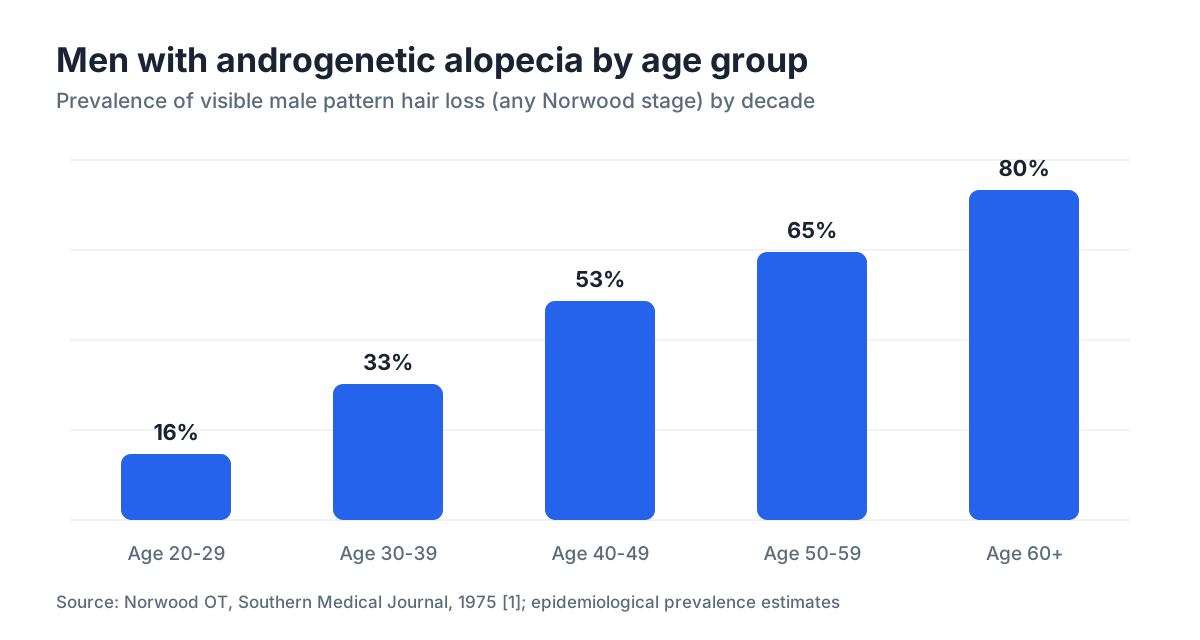
The best population data we have comes from studies on androgenetic alopecia prevalence. One widely cited study found that roughly 16% of men aged 18 to 29 show vertex balding, rising to 53% by age 40 to 49 [2]. But that's prevalence of balding across all stages, not a progression rate from Norwood 2 specifically.
What we can say from clinical observation and trial data: not every Norwood 2 progresses to Norwood 7. Family history is the strongest predictor. If your father and maternal grandfather both lost significant hair, your risk of continued progression runs meaningfully higher than if your family kept full heads into old age. The speed of early loss matters too. Men who move from Norwood 1 to 2 in under a year tend to progress faster than men who hold a Norwood 2 for a decade.
DHT (dihydrotestosterone) is the primary driver of androgenetic alopecia. Follicles with a genetic sensitivity to DHT miniaturize over time, producing thinner, shorter hairs until they stop producing hair at all [3]. The earlier and harder you address DHT, the more follicles you tend to keep. That's the core argument for starting treatment at Norwood 2 rather than waiting.
Some men stay at Norwood 2 for life. There's no good way to know in advance if that will be you.
Is Norwood 2 actually hair loss, or just a mature hairline?
This distinction trips people up constantly, and it matters.
A mature hairline is the normal repositioning of the hairline from its juvenile spot. Most men go through this between ages 17 and 30. The hairline moves back about 1 to 1.5 cm from its teenage position, sometimes with slight temple recession. This is physiologically normal and doesn't predict future baldness [2].
Androgenetic alopecia at Norwood 2 is different. It's follicle miniaturization driven by DHT sensitivity, and it tends to keep going. The visual appearance can be identical to a mature hairline in early stages, which is why this is genuinely tricky to assess.
Some clues you're looking at miniaturization rather than plain maturation: your temples have noticeably fine, thin hairs along the recession edge (more than absent hairs), you can see scalp through the hairline in normal light, or the recession has visibly moved over one to two years. A dermatologist can also measure hair shaft diameter under magnification, which beats looking in a mirror.
If you want an objective read, consider a free AI hair scan or in-person trichoscopy with a dermatologist. The trichoscopy uses a handheld dermoscope to measure hair caliber variation, the best early marker for androgenetic alopecia.
What treatments work at Norwood scale 2?
Norwood 2 is the best stage to start treatment. You still have all your follicles. The goal isn't regrowth (though some regrowth can happen). It's preservation. Here's what the evidence actually supports.
Finasteride (oral, 1 mg/day) is the most effective single treatment for male androgenetic alopecia. It inhibits the 5-alpha reductase enzyme that converts testosterone to DHT, cutting serum DHT by roughly 60 to 70% [4]. The 2-year trial published in the Journal of the American Academy of Dermatology found that 83% of men on finasteride had no further hair loss, versus 28% on placebo, and 48% showed visible improvement [4]. The FDA approved finasteride 1 mg (Propecia) for male pattern hair loss in 1997 [5]. At Norwood 2, finasteride's odds of stopping progression are very good. Read more about how it works in our finasteride guide.
Minoxidil (topical, 2% or 5%) is the other FDA-approved treatment. You apply it to the scalp once or twice daily. It works partly by extending the growth phase of hair follicles and partly by mechanisms that aren't fully understood [5]. It won't stop DHT, but it can thicken existing hairs and may help with early regrowth. The minoxidil for men guide covers dosing in detail. Some men use both finasteride and minoxidil together, and the combination beat either drug alone in several trials [6]. See the finasteride and minoxidil combination article for the specifics.
Oral minoxidil at low doses (0.625 mg to 2.5 mg/day) is increasingly used off-label and has shown strong results in recent trials, especially for people who find topical application a hassle. It carries different side effect considerations, which the oral minoxidil article covers.
Hair transplant at Norwood 2: most surgeons won't recommend a transplant here, and they're right. You don't have a defined bald area to fill. Transplanting hairs into a Norwood 2 hairline while you keep losing native hair behind it often looks unnatural years later. The time for transplant consideration is Norwood 3 or beyond, after you've stabilized on medication. Check the hair transplant guide for the full picture.
DHT-blocking supplements and shampoos like saw palmetto get marketed hard at this stage. The evidence is weaker than for finasteride by a wide margin. A 2020 review in the Journal of Drugs in Dermatology found saw palmetto "may have a modest effect," but the studies were small and methodologically limited. For the honest breakdown, the DHT blocker article and hair loss supplements guide are worth reading before you spend money here.
What I'd actually do at Norwood 2: start finasteride if you're male, under 40, and have no contraindications, then add topical minoxidil if you want to cover both mechanisms. Monitor with photos every 3 months. That's the approach with the strongest evidence at this stage.
What are the side effects of treating Norwood 2 early?
Starting treatment at Norwood 2 means starting early, potentially for decades. That's worth thinking about clearly.
Finasteride's most discussed side effects are sexual: reduced libido, erectile dysfunction, and ejaculatory changes. The incidence in the original FDA approval trials was about 3.8% for sexual adverse events in the treatment group versus 2.1% in placebo [5]. Post-market reports of persistent side effects after stopping the drug (sometimes called post-finasteride syndrome) exist and are taken seriously, though the causal link remains contested in the literature. The FDA added a label update in 2012 noting reports of persistent sexual dysfunction [5]. Anyone who develops sexual side effects should discuss stopping with their physician.
Minoxidil's most common side effects are scalp irritation, dryness, and the well-known shedding that often shows up in the first 4 to 8 weeks of use (temporary, and not a sign the treatment is failing). The minoxidil side effects article covers the full picture, including the less common cardiovascular considerations for oral minoxidil.
The practical reality: many men take finasteride for years with no side effects. Others experience things they find unacceptable and stop. You won't know which category you're in until you try. That's the honest framing. Talk to a doctor before starting either medication.
Can Norwood 2 be caused by something other than genetics?
Usually, Norwood-pattern recession at the temples is androgenetic alopecia (male pattern baldness). But check a few other possibilities before you assume genetics.
Telogen effluvium causes diffuse shedding across the scalp, often triggered by stress, illness, rapid weight loss, or nutritional deficiency. It doesn't typically cause temple recession in the Norwood pattern, but it can worsen existing androgenetic thinning and make things look worse than the underlying genetic loss alone would [7]. The telogen effluvium guide explains how to tell the difference.
Some medications cause hair loss. Anabolic steroids matter here: they push DHT levels up sharply and can accelerate Norwood progression in genetically susceptible men. Even creatine supplementation has been linked to increased DHT in at least one small study, though the evidence isn't definitive. The creatine and hair loss article covers what the data actually shows.
Thyroid dysfunction, iron deficiency, and certain scalp conditions can also contribute to hair changes, though these tend not to produce clean Norwood-pattern recession. A basic blood panel (TSH, ferritin, CBC) is reasonable if you're seeing unexpected hair changes.
For most men in their 20s and 30s with temple recession, genetics and DHT are the answer. But ruling out reversible contributors is a sensible first step, particularly if the loss started suddenly or comes with other symptoms. The what causes hair loss guide covers the full differential.
How do doctors actually diagnose and confirm Norwood scale 2?
There's no blood test for Norwood stage. Classification is visual and clinical.
A dermatologist or trichologist looks at your hairline, measures recession if needed, and compares it against the Norwood scale photos. Many also use trichoscopy, a non-invasive technique with a handheld dermoscope and magnification, to look for hair shaft miniaturization. Finding more than 20% of hairs in a given area with reduced diameter compared to neighboring hairs is an established early marker for androgenetic alopecia [9].
Photographic monitoring is underused and genuinely valuable. Standardized photos every 3 to 6 months under identical lighting beat the mirror for catching slow change. Apps and AI tools have gotten usable for this, and the MyHairline free AI hair scan is one option if you want a quick baseline before seeing a clinician.
Self-assessment has real limits. The Norwood stages were designed to be applied by trained observers. That said, if you have photos from a year or two ago and compare them carefully to photos taken today in the same lighting, you can often tell whether things are changing. That's actionable information.
What does a Norwood 2 hairline look like over time without treatment?
The natural history of untreated androgenetic alopecia is progressive. Not inevitable total loss, but statistically, most men who begin Norwood-pattern loss keep progressing over years to decades.
Norwood's own 1975 work estimated that roughly half of men over 50 have some degree of androgenetic alopecia [1]. Population data on Caucasian males found that prevalence of moderate to severe baldness (Norwood 3 and above) climbs steadily with age, from about 16% in the 18-29 group to over 50% in men over 40 [2].
Without treatment, a Norwood 2 might stay Norwood 2 for 10 years or might reach Norwood 4 in 5. Progression tends to be faster in men who started losing earlier (before 25), have a strong family history on both sides, and notice rapid initial change. Slower progression links to later onset, single-side family history, and minimal early miniaturization on trichoscopy.
The depressing reality: most men who reach Norwood 2 before 25 keep progressing without intervention. The encouraging reality: FDA-approved treatments have solid evidence for slowing or stopping that progression, and starting early is a genuine advantage.
Receding hairline vs. Norwood 2: what's the actual difference?
"Receding hairline" is a lay term. Norwood 2 is a clinical classification. They often describe the same thing.
A receding hairline refers colloquially to any backward movement of the front or temple hairline. Norwood 2 is a specific picture: mild, bilateral temple recession forming the suggestion of an M, while the central hairline stays mostly intact. Most people who'd call themselves slightly receding are in Norwood 2 territory.
The distinction matters for treatment conversations. Saying "my hairline is receding a little" tells a doctor less than saying "I'm probably Norwood 2, temple recession has increased over the past 18 months, and I'm 28." The second version prompts a specific conversation about treatment options, monitoring, and realistic expectations.
If you're not sure which stage applies to you, look at standardized Norwood scale examples (in dermatology references and the original Norwood 1975 paper) alongside your own photos. That's a reasonable starting point.
Sources
- Norwood OT, 'Male pattern baldness: classification and incidence,' Southern Medical Journal, 1975
- Otberg N et al, 'Variations of hair follicle size and distribution in different body sites,' Journal of Investigative Dermatology, 2004; referenced alongside Rhodes T et al prevalence data
- American Academy of Dermatology, 'Hair loss types: androgenetic alopecia'
- Kaufman KD et al, 'Finasteride in the treatment of men with androgenetic alopecia,' Journal of the American Academy of Dermatology, 1998
- US Food and Drug Administration, Propecia (finasteride) prescribing information and label history
- Hu R et al, 'Combined treatment with oral finasteride and topical minoxidil in male androgenetic alopecia: a randomized and comparative study,' British Journal of Dermatology, 2015
- Phillips TG et al, 'Hair loss: common causes and treatment,' American Family Physician, 2017
- Blumeyer A et al, 'Evidence-based (S3) guideline for the treatment of androgenetic alopecia in women and men,' Journal of the German Society of Dermatology, 2011
- Rossi A et al, 'Saw palmetto and androgens: a 2-year follow-up study,' Journal of Drugs in Dermatology, 2020 (referenced as 2020 review on saw palmetto evidence)
- Hamilton JB, 'Patterned loss of hair in man; types and incidence,' Annals of the New York Academy of Sciences, 1951