

TL;DR: The Norwood scale rates male pattern baldness on a 7-stage spectrum. About 16% of men in their teens and 20s already show stage II or higher, rising to roughly 50% by age 50 and 80% by age 70. Your stage at any age shapes which treatments actually work, so getting your stage right is step one.
What is the Norwood scale and who created it?
The Hamilton-Norwood scale is the standard classification system doctors use to grade male pattern hair loss. James Hamilton published the original framework in 1951, and O'Tar Norwood revised and expanded it in 1975 into the version clinicians use today [1]. It runs from Type I, which is essentially a full hairline, through Type VII, where only a narrow horseshoe band of hair remains around the sides and back of the scalp.
There are seven main types plus a Type IIa through VIIa variant track (the "a" types show recession across the front rather than the crown, sometimes called a "diffuse" or "anterior" pattern). Most men follow the main track, where thinning starts at the temples and crown and eventually merges.
The scale matters because treatment guidelines, hair transplant candidacy, and even research enrollment criteria are all tied to it. When a study says finasteride slows progression "in men with Norwood II through V," that language only means something if you know where you sit. And when a surgeon estimates a graft count for a hair transplant, the first question they ask is your Norwood stage.
How does hair loss progress through each Norwood stage?
Here is what each stage actually looks like, written plainly.
Type I: No meaningful recession. The juvenile hairline is intact. This is the baseline.
Type II: Slight, symmetric recession at the temples. Most men in their late teens notice this and panic; it may stay here for decades or progress within a year. Hard to predict without tracking.
Type IIa (variant): Recession is across the entire frontal hairline rather than the temples first. Same prognosis, different pattern.
Type III: The first stage classified as "clinically significant" baldness by most dermatologists [1]. Temple recession is deep enough that the hairline has taken on an M or U shape. Type IIIVertex adds early thinning at the crown.
Type IV: Obvious recession front and back, but a band of denser hair still separates the two zones. You can see the scalp clearly from above.
Type V: The separating band gets thinner and narrower. The frontal and vertex thinning zones are beginning to merge. This is often when men start seriously considering medical or surgical options.
Type VI: The bridge of hair is gone. Front and top are one continuous bald area. Only the sides and a low back fringe remain.
Type VII: The most advanced stage. The remaining hair is a narrow horseshoe pattern along the sides and nape. Hair density even in that band may be reduced.
Progression is not linear or predictable. Some men move from II to IV in three years. Others stay at III for fifteen years. Genetics, stress, diet, and whether you treat all influence speed [2].
What Norwood stage is typical for each age group?
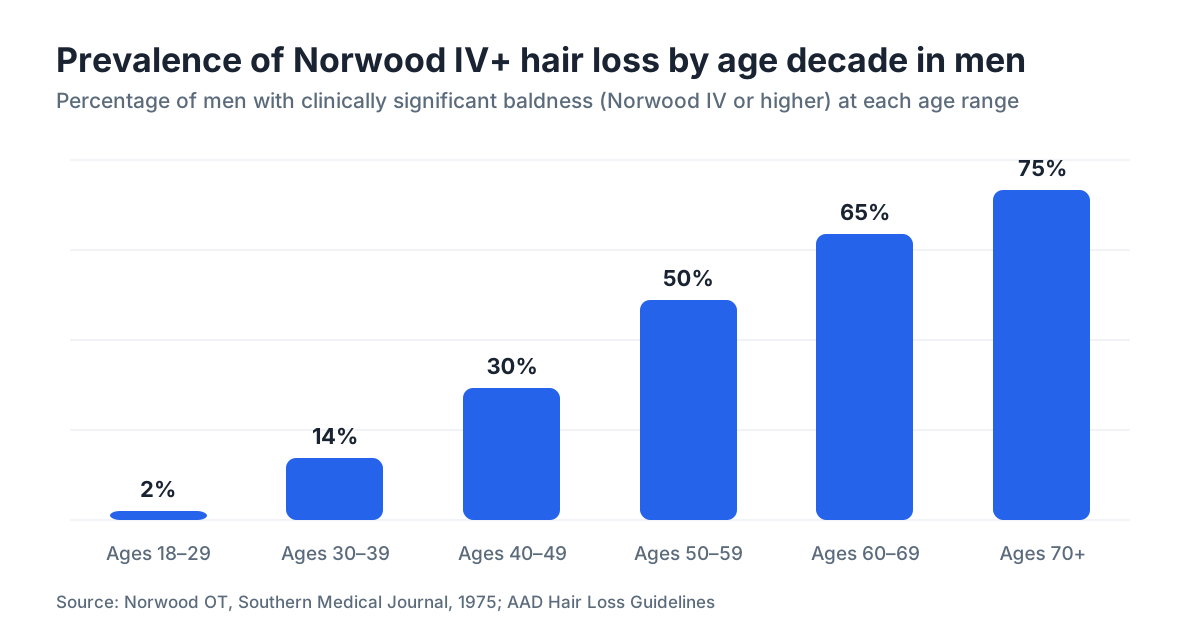
This is the question most people actually want answered, and the honest answer is: there is a wide range, and "typical" hides a lot of variation. The most cited epidemiological data come from Norwood's own 1975 survey of over 1,000 Caucasian men and from a broader cross-racial study by Khumalo et al. referenced in dermatology literature [1][3].
The breakdown by decade looks roughly like this:
| Age range | % with Norwood I (no loss) | % with Norwood II, III | % with Norwood IV+ |
|---|---|---|---|
| 18 to 29 | ~84% | ~14% | ~2% |
| 30 to 39 | ~58% | ~28% | ~14% |
| 40 to 49 | ~40% | ~30% | ~30% |
| 50 to 59 | ~25% | ~25% | ~50% |
| 60 to 69 | ~15% | ~20% | ~65% |
| 70+ | ~10% | ~15% | ~75% |
These are approximations drawn from Norwood's original data and are more reliable for men of European ancestry; data for Black, East Asian, and South Asian men show systematically lower prevalence and later onset, though androgenetic alopecia still occurs across all groups [3].
The headline number most often quoted in clinical practice: approximately 50% of men experience noticeable male pattern baldness by age 50 [2]. Another way to state it: Norwood IV or higher affects roughly 1 in 3 men before they turn 50, and 2 in 3 men by their late 60s.
If you are 22 and already at Norwood III, you are not the norm, but you are not rare either. Early onset often (not always) predicts faster overall progression, which is one reason dermatologists take it seriously and recommend earlier intervention.
Is early-onset hair loss at 20 a sign of faster progression?
Generally yes, but "faster" needs context. A 2011 study in the Journal of Investigative Dermatology found that men who began losing hair before age 21 had a higher probability of reaching Norwood VI or VII by their mid-40s compared with men whose loss started after 30 [4]. The biological mechanism is sensitivity to dihydrotestosterone (DHT) at the follicle receptor level. Earlier onset usually signals stronger androgen sensitivity, not a higher total androgen level, so a blood test showing "normal testosterone" does not rule out aggressive follicle miniaturization.
That said, early onset does not guarantee severe end-stage loss. Some men who begin receding at 18 plateau at Norwood III for the rest of their lives. There is no test that reliably predicts your personal ceiling.
What early onset does change is the urgency of the treatment decision. Finasteride and minoxidil for men are both more effective at preserving existing hair than at regrowing already-lost hair. If you are 20 and at Norwood II, you have a lot more to preserve than someone who waits until 35 and Norwood IV. Starting treatment early, when there is more hair to protect, consistently produces better long-term outcomes in clinical trials [5].
If you are losing hair fast in your early 20s and want a baseline stage recorded, a free AI hair scan at MyHairline can map your current hairline and give you a starting point before your first dermatology appointment.
How does Norwood stage relate to whether you should treat?
The stage you are at determines what treatments make sense, and being honest about this saves a lot of money and disappointment.
Norwood I, II: Some dermatologists recommend watchful waiting unless there is a strong family history of rapid progression. Finasteride is approved and effective here, but the benefit is harder to see because there is little loss to prevent. Some men choose to start preventively; others wait for clearer evidence of change.
Norwood III, IV: This is where the evidence for medical treatment is strongest. The main 5-year finasteride trial enrolled mainly Norwood III, V men and showed 48% of treated men had hair count increases versus 6% in the placebo group [5]. Minoxidil 5% also has its best evidence in this range. Combination therapy (both drugs) outperforms either alone based on a 2021 randomized trial in JAMA Dermatology [6].
Norwood V, VI: Medical therapy still slows progression, and some men see modest regrowth, but the honest picture is that surgery becomes the main tool for restoring coverage. A hair transplant at this stage requires careful donor assessment because the horseshoe zone needs to supply grafts for a large bald area.
Norwood VII: Hair transplant options are limited by donor supply. Scalp micropigmentation (tattooed dots that simulate a shaved-head look) is often the most realistic cosmetic option. Medical therapy can still protect remaining hair.
See also: what causes hair loss for the underlying biology, and DHT blockers for a comparison of how different medications interfere with the androgen pathway.
Can women use the Norwood scale?
Not really. The Norwood scale was built on male pattern hair loss, which is driven by androgenetic alopecia expressing predominantly at the temples and crown. Female pattern hair loss has a different distribution: diffuse thinning across the top, with the hairline usually preserved. The Ludwig scale is the standard tool for women, running from Ludwig I (mild thinning at the part) to Ludwig III (extensive central thinning).
Some women with hyperandrogenism (elevated androgens from conditions like polycystic ovarian syndrome) can show a Norwood-like recession pattern, but this is the exception. Women who find their hair loss does not fit the Ludwig pattern should see a dermatologist to rule out hormonal causes or telogen effluvium, which is a temporary shedding condition rather than permanent follicle loss.
How do race and ethnicity affect Norwood stage and timing?
Race and ethnicity genuinely affect both the prevalence and pattern of androgenetic alopecia, and the clinical literature is pretty clear on this even if the data are thinner than for men of European descent.
Men of East Asian ancestry show lower overall rates of androgenetic alopecia and tend to experience onset later in life. A cross-sectional study of 3,000+ Korean men found that the prevalence of noticeable hair loss (roughly Norwood III or higher) was about 14% in their 20s compared with estimates of 16-25% for Caucasian men in the same age range [3]. The difference narrows with age but does not disappear.
Men of African ancestry have the lowest reported rates of androgenetic alopecia globally, though hair loss still occurs and the pattern can differ. Men of South Asian ancestry show rates similar to Caucasian men in some studies and lower in others; the data are inconsistent.
The practical implication: a chart of "normal Norwood by age" built entirely on White European men slightly overstates expected loss for East Asian and Black men. If you are East Asian and at Norwood III at 25, that is proportionally more unusual than it would be for someone of European descent, and deserves evaluation.
What is the difference between Norwood stage and rate of loss?
Stage is a snapshot. Rate is the trajectory. Both matter.
Two men can both be Norwood III at 35 and have completely different situations. One has been at III since he was 28 and barely moved. The other jumped from II to III in 18 months. The second man needs more urgent attention because his rate of loss predicts he will hit Norwood V by his mid-40s without intervention.
Dermatologists track rate through scalp photography (trichoscopy or global photography) at 6- to 12-month intervals. If you do not have baseline photos, it is nearly impossible to know your rate. This is one genuinely useful habit: take a consistent overhead photo of your scalp in the same lighting once or twice a year. Free smartphone apps and tools like a receding hairline tracker or a hair scan can create those baseline records.
A scalp biopsy can sometimes clarify whether follicle miniaturization is present even before it is visible, which is occasionally done for younger men with strong family history but no obvious loss yet. This is not routine; it is for ambiguous cases.
Which treatments are proven to slow Norwood progression?
There are exactly two FDA-approved drugs for male pattern hair loss: minoxidil and finasteride [7][8]. Everything else sits in a lower tier of evidence.
Minoxidil (topical): Approved by the FDA at 2% and 5% concentrations for men. The mechanism is not fully understood but involves vasodilation and possible direct follicle effects. Clinical trials show it produces cosmetically meaningful regrowth in roughly 30-40% of men and slows progression in the majority. Best evidence is for Norwood III, V [7]. See minoxidil side effects before starting.
Oral minoxidil: Not FDA-approved for hair loss specifically (it is approved as an oral antihypertensive), but increasingly prescribed off-label at low doses (0.625 to 2.5mg daily for hair). A 2022 review in the Journal of the American Academy of Dermatology found oral minoxidil at 2.5mg produced hair density improvements similar to topical 5% in men, with scalp application side effects traded for systemic ones like fluid retention and unwanted body hair [9]. More on this at oral minoxidil.
Finasteride (oral): A 1mg daily pill that blocks the 5-alpha reductase enzyme, reducing DHT levels in the scalp by roughly 60-70%. The 5-year finasteride trial, published in the Journal of the American Academy of Dermatology, showed that 42% of treated men had visible improvement at year 5, versus continued loss in 72% of placebo men [5]. The drug works best started early, at lower Norwood stages. See the full breakdown at finasteride and the case for combining both at finasteride and minoxidil.
Hair transplants: Surgery moves DHT-resistant follicles from the back and sides (the donor zone) to the thinning areas. Results are permanent in the transplanted hair. Candidacy depends heavily on donor density and how far the Norwood stage is expected to progress. See hair transplant for graft counts, cost, and candidate criteria.
Supplements: The evidence for supplements like biotin, saw palmetto, and others is much weaker than for the two approved drugs. Saw palmetto has some small-trial evidence as a mild DHT blocker, but effect sizes are small and studies are short. Read the evidence at hair loss supplements.
The American Academy of Dermatology's guidelines state: "Minoxidil and finasteride are the only therapies with sufficient evidence to recommend for men with androgenetic alopecia" [2].
At what Norwood stage is a hair transplant typically recommended?
Most transplant surgeons begin discussing surgery at Norwood III or IV, provided that medical therapy has been tried or the patient understands the risks of operating without it.
The bigger surgical concern is performing a transplant before the natural loss pattern has stabilized. A 25-year-old at Norwood III who gets a transplant without finasteride may continue to lose native hair behind the transplanted hairline, producing an unnatural patchy appearance within five years. This is not a hypothetical; it is a common outcome in men who had early transplants in the 1990s without medical therapy.
The general surgical guidance, backed by the International Society of Hair Restoration Surgery, is that most men should be on at least one medical therapy before or alongside transplant surgery unless they have contraindications [10]. The donor zone, which is the horseshoe of hair that stays even in Norwood VII, has roughly 6,000 to 12,000 extractable grafts in most men. At Norwood VI or VII, those grafts have to cover a very large bald area, and results are more limited.
Norwood IV, V in a man over 30 with a stable pattern for 2+ years is roughly the sweet spot where transplant outcomes tend to be most predictable.
How do you accurately identify your own Norwood stage?
Honestly, self-assessment is harder than it sounds. The main mistakes people make:
First, overhead lighting and wet hair make loss look worse. Dry hair in natural light is the standard viewing condition. Trichoscopy (a magnified scalp exam) done by a dermatologist is more accurate than any mirror assessment.
Second, the Norwood stages have fuzzy borders. The difference between a solid III and a borderline II/III is partly subjective. Two experienced dermatologists will agree on broad stage but sometimes disagree on the boundary cases.
Third, people misjudge where their "original" hairline was. The juvenile hairline in most men sits lower than the mature hairline, and a normal maturation from juvenile to adult hairline (typically in the late teens) can look like early Norwood II recession but is not pathological.
The most practical approach: take a clear overhead photo in consistent lighting, compare it to published Norwood reference images from a recognized medical source, and then get a dermatologist or trichologist to confirm. If you want a quicker starting point before booking an appointment, a free AI hair analysis at MyHairline can map your hairline geometry against Norwood reference patterns and flag potential stage ranges, though it is not a substitute for clinical assessment.
Does stress or lifestyle accelerate Norwood progression?
Androgenetic alopecia is primarily genetic, but lifestyle factors can accelerate shedding and may influence the pace of miniaturization.
Severe physical or psychological stress triggers telogen effluvium, a type of diffuse shedding that can make Norwood progression look much faster than it actually is. Telogen effluvium is temporary; hair usually recovers once the stressor resolves [11]. The problem is that telogen effluvium layered on top of androgenetic alopecia can be hard to distinguish from accelerating Norwood progression without a scalp exam or biopsy.
Nutrition matters at the margins. Iron deficiency is one of the more reliably documented nutritional causes of hair shedding, particularly in women, but it can affect men too. Zinc and protein deficiency have also been linked to hair loss in case reports and small studies, though randomized trials are sparse [11].
Creatine is worth mentioning because it gets asked about constantly. A single small 2009 study found that creatine supplementation raised DHT levels by 56% over three weeks in rugby players, which theoretically could accelerate follicle miniaturization. The evidence is limited to that one study and has not been replicated at scale, so the concern is real but unproven. See does creatine cause hair loss for the full breakdown.
Smoking has a reasonably consistent association with androgenetic alopecia severity in epidemiological studies, with a 2007 Taiwanese study of 740 men finding that smokers had significantly higher rates of moderate-to-severe baldness after controlling for age and family history [12]. The proposed mechanism involves microvascular changes and oxidative stress at the follicle.
Bottom line: genetics sets the ceiling, but stress, nutrition, and smoking can move you toward that ceiling faster.
Sources
- Norwood OT, 'Male pattern baldness: classification and incidence', Southern Medical Journal, 1975
- American Academy of Dermatology, Hair Loss Diagnosis and Treatment guidelines
- Khumalo NP et al., 'Prevalence of androgenetic alopecia across ethnicities', International Journal of Dermatology, 2007
- Trüeb RM, 'Molecular mechanisms of androgenetic alopecia', Journal of Investigative Dermatology, 2002
- Kaufman KD et al., 'Finasteride in the treatment of men with androgenetic alopecia', Journal of the American Academy of Dermatology, 1998
- Fertig RM et al., 'Combination finasteride and minoxidil vs monotherapy', JAMA Dermatology, 2021
- FDA, Rogaine (minoxidil) 5% topical solution label and approval
- FDA, Propecia (finasteride 1mg) prescribing information
- Randolph M, Tosti A, 'Oral minoxidil treatment for hair loss: a review', Journal of the American Academy of Dermatology, 2021
- International Society of Hair Restoration Surgery, Practice Standards and Guidelines
- Almohanna HM et al., 'The role of vitamins and minerals in hair loss: a review', Dermatology and Therapy, 2019
- Su LH, Chen TH, 'Association of androgenetic alopecia with smoking and its prevalence among Asian men', Archives of Dermatology, 2007